


Content table
How long do sperm survive in the female body? It’s one of the most common questions when it comes to fertility, and the answer might surprise you.
Sperm don’t die the moment they’re outside the body, but they don’t last long either. Once semen dries, sperm lose the moisture, nutrients, and a steady temperature they need to survive, and that’s the end of the line.
But depending on where they are (inside or out), sperm can survive anywhere from a few minutes to several days. To understand why, it helps to look at how sperm are made and what actually keeps them alive in the first place.
Key Takeaways
- Sperm are produced by a process called spermatogenesis.
- Sperm production takes about 64 days.
- The majority of sperm don’t even make it to the outside of the body.
- Once released, sperm don’t die instantly in the air, but they don’t live long once the semen dries.
- Inside the female body, sperm can survive up to five days.
- Lifestyle factors like weight, smoking, stress, and heat play a big role.
- A semen analysis is the best way to understand your sperm count and health.
- Fertility treatments improve sperm selection but don’t extend sperm lifespan.
How Are Sperm Made in the Human Body?
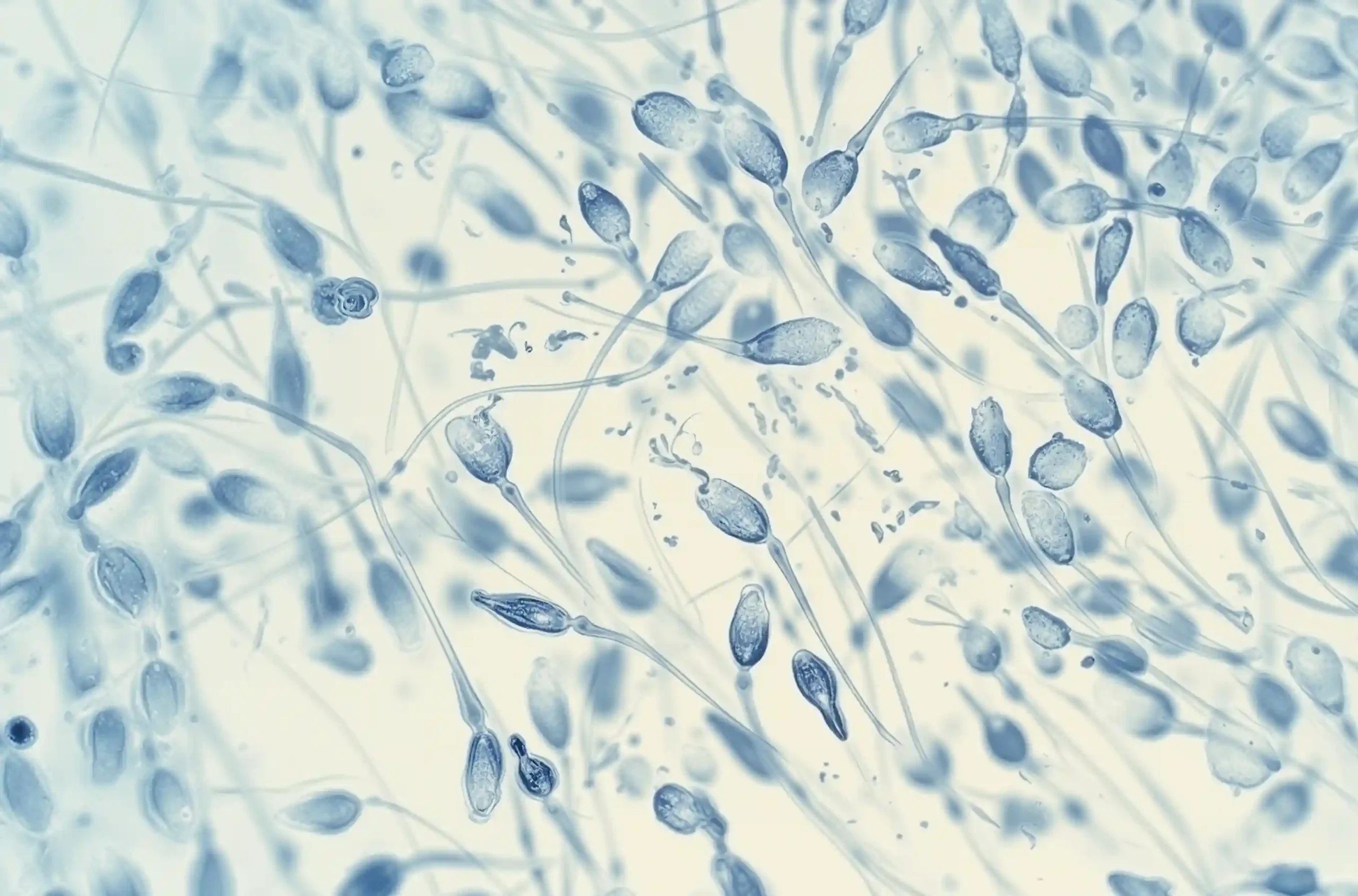
Inside the testes, sperm is produced by a process called spermatogenesis. It starts with early stage sperm (spermatogonia) dividing and evolving through different stages until they finally become full-fledged swimmers (spermatozoa, or sperm).
After they’re made, sperm head outside of the tubules, into the epididymis to mature and prepare for ejaculation. The whole spermatogenesis process takes about 64 days.
On average, men make around 3 to 4 million sperm per gram of testicular tissue every single day. But not every sperm makes it, and most don’t. Things can go wrong during sperm production. Sometimes cells don’t divide or mature properly, which can lead to lower sperm counts or, in more severe cases, infertility.
Know more: How Much Sperm Does it Take to Get Pregnant?
What Happens to Sperm Before Ejaculation?
More than 75% of sperm never make it to ejaculation. They die off through a process called apoptosis, or degeneration. Plus, a good amount of the surviving sperm are abnormal, either with an unusual shape or they’re slow swimmers. That leaves only about 12% of sperm ready for reproduction.
And if sperm don’t get ejaculated, they eventually age and die, and the body handles it. It’s constantly producing new sperm and absorbing and recycling the old, unused sperm to maintain healthy levels.
Know more: Sperm Motility and Fertility: How To Boost Pregnancy Chances
How Long Do Sperm Live Outside the Body?
Sperm don’t last long once ejaculated. How long they survive depends on several factors, including –
- Amount of semen
- Surrounding temperature
- Overall sperm health
According to a 276-page manual from the World Health Organization (WHO), sperm survival and viability are influenced by male fertility factors and the initial condition of the sperm.
Semen plays an important role in keeping sperm alive. It’s a protective mix of sperm suspended in seminal fluid that provides the nutrients and moisture needed. Once semen dries, that support system disappears, and sperm quickly lose their ability to survive.
There’s no solid evidence pinpointing exactly how long sperm can live on skin, fabric, or other surfaces. But in general, it’s only a few minutes to maybe an hour, depending on the conditions. Basically, once the semen dries, the sperm is done.
How Long Do Sperm Survive Inside the Female Body?
This is where sperm really do their best work. After ejaculation during sex, semen (which has sperm and seminal fluids) travels through the cervix and uterus toward the fallopian tubes. If conditions are right (healthy cervical mucus and good timing during the fertile window), sperm can survive for about five days inside a woman’s reproductive tract. That cervical mucus even acts as a quality-control filter, helping block abnormal sperm from going any further.
This extended survival time is thanks to a process called capacitation. Basically, sperm undergo changes that prepare them to penetrate the egg’s membrane. Some studies have even found motile sperm lingering in cervical mucus for more than seven days, though five days is generally considered the max for fertilization potential.
What Affects Sperm Lifespan and Quality?
Now let’s get into what affects how strong and long-lasting sperm are, because it’s not all down to chance. Lifestyle and environment matter a lot, and sperm quality is a big part of the equation.
Certain stressors can make sperm more prone to breaking down early through a process called apoptosis (basically, programmed cell death). That means even if sperm are produced normally, they might not stick around long enough to do their job.
Here’s a look at some of the biggest contributors:
Weight
Carrying extra weight can increase oxidative stress in the body, which damages cells, including sperm. One 14-week weight loss study showed big improvements in sperm health, including better shape (morphology) and movement (motility).
Age
Sperm don’t age as well as we’d like. One study found that as men get older, semen volume tends to drop by 0.03 ml with each passing year, and sperm motility slows down by about 0.7% per year. There’s also a higher chance of DNA damage and gene mutations, which can affect fertility and increase risks in pregnancy outcomes.
Smoking
Cigarettes are especially rough on sperm. Chemicals like nicotine, cadmium, and carbon monoxide damage sperm motility and shape. On average, smokers have 22% poorer sperm quality than non-smokers. The good news? Even cutting back, not just quitting, can help improve sperm parameters.
Alcohol
Heavy drinking isn’t kind to fertility either. It’s been linked to reduced semen volume and longer time to conception. While moderate drinking doesn’t seem to have major effects, going overboard can interfere with reproductive health.
One UK study found that couples took significantly longer to conceive when the male partner drank more than 20 units per week. That’s about 10 pints of regular beer or 10 medium glasses of wine.
Know more: The Complete Guide to The Effect of Alcohol on Sperm
Cell phones, laptops, and hot tubs
Yep, carrying your phone in your pocket or using a laptop on your lap can heat things up down there, and sperm really don’t like high temperatures. Even extra heat from being in a hot tub can interfere with sperm production and lower sperm quality.
Plus, electromagnetic field (EMF) exposure might boost oxidative stress, which damages sperm DNA. One study even found that men who kept their phone in their pants pocket had more sperm DNA damage than those who carried theirs in their shirt pocket. Laptops can have a similar effect when used directly on the lap, increasing scrotal temperature and potentially disrupting sperm production.
There’s still a lot researchers are trying to figure out. We don’t have an exact formula for predicting how long sperm will survive in every situation. But current studies suggest that factors like oxidative stress, chronic inflammation, low testosterone, and low levels of sex-hormone-binding globulin may all play a role in lowering sperm quality and decreasing sperm count, and that usually means a shorter sperm life span.
Know more: 9 Sperm Killers to Avoid When You’re Trying to Conceive
Stress
Stress doesn’t just affect your mood. It can impact your fertility too. Chronic stress can throw off hormone levels, including testosterone, which is crucial in the production of sperm. It can also increase apoptosis (programmed cell death) in sperm, reducing their lifespan and quality.
Overall, lifestyle habits have a huge impact on male fertility. So, if you’re going through fertility testing or planning to conceive, it’s smart to start cutting out risky behaviors now. Small changes can lead to better sperm health and improved chances of success.
Do Fertility Treatments Help Sperm Live Longer?
For fertility treatments such as IUI (intrauterine insemination), doctors use sperm processing to separate out the strongest, healthiest sperm from the rest. This step doesn’t actually extend sperm life, it does increase the chances of success by focusing on quality over quantity.
Processed sperm can stay active for up to 12 hours, and in some lab conditions, possibly up to 24 to 48 hours. But that doesn’t mean their natural life span is extended. It’s not about making sperm live longer, it’s about selecting the strongest, healthiest ones. Sperm processing helps identify the best-quality swimmers to use in assisted reproductive treatments like IUI, giving them the best chance at success.
Understanding sperm lifespan takes a lot of guesswork out of fertility planning. It helps you time intercourse more effectively and make better decisions about your health and habits.
Knowing what helps or hurts sperm survival time puts you in a better position to improve your chances of conception when the timing is right.

FAQs
Pretty decent under the right conditions inside the female body. Not all sperm will last that long, but some can.
Outside the body: minutes to an hour. Inside the female body: up to five days.
Not exactly three months, but sperm are constantly being made. Each cycle takes about 64 days.
There’s no solid evidence that Y chromosome sperm (male) live longer than X (female). It all depends on sperm health.
Yes. If they’re still alive and the timing is right, 3-day-old sperm can totally fertilize an egg.
Low count, slow movement, weird shapes, or DNA damage. A semen analysis is the best way to know for sure.
Thickness doesn’t tell you much. Healthy sperm are judged by movement, count, and shape.
Up to five days, depending on conditions.
It varies. Only a fraction of sperm survive that long, depending on health and the environment.
Outside the body: maybe an hour. Inside the female body: about five days.
Was this article helpful?
Histology, Spermatogenesis – StatPearls – NCBI Bookshelf
Sperm Biology from Production to Ejaculation | Springer Nature Link
Knobil and Neill’s Physiology of Reproduction | ScienceDirect
WHO laboratory manual for the examination and processing of human semen, 6th ed
Factors and pathways involved in capacitation: how are they regulated? – PMC
In vivo survival of spermatozoa in cervical mucus – ScienceDirect
Effect of Oxidative Stress on Male Reproduction – PMC
Sperm parameters: paradigmatic index of good health and longevity – PubMed
The impact of selected modifiable lifestyle factors on male fertility in the modern world – PMC
Impact of weight loss on sperm DNA integrity in obese men – PubMed
The lack of influence of age on male fertility – PubMed
Diagnostic evaluation of the infertile male: a committee opinion – PubMed
Effects of Cigarette Smoking on Adult Male Seminal Fluid: A Retrospective Study
Semen quality and alcohol intake: a systematic review and meta-analysis – PubMed
Negative lifestyle is associated with a significant reduction in fecundity – PubMed
The semen quality of the mobile phone users – PubMed
Lifestyle and fertility: the influence of stress and quality of life on male fertility – PMC
Semen quality and prediction of IUI success in male subfertility: a systematic review – PubMed
The effect of intrauterine insemination time on semen parameters – PMC