How Is Inito Different from Ovulation Tests?
Published on Apr 30, 2026


Summary
Traditional ovulation test kits (OPKs) track one hormone, LH, to predict ovulation. But prediction is not confirmation - which is vital when you're trying to conceive.
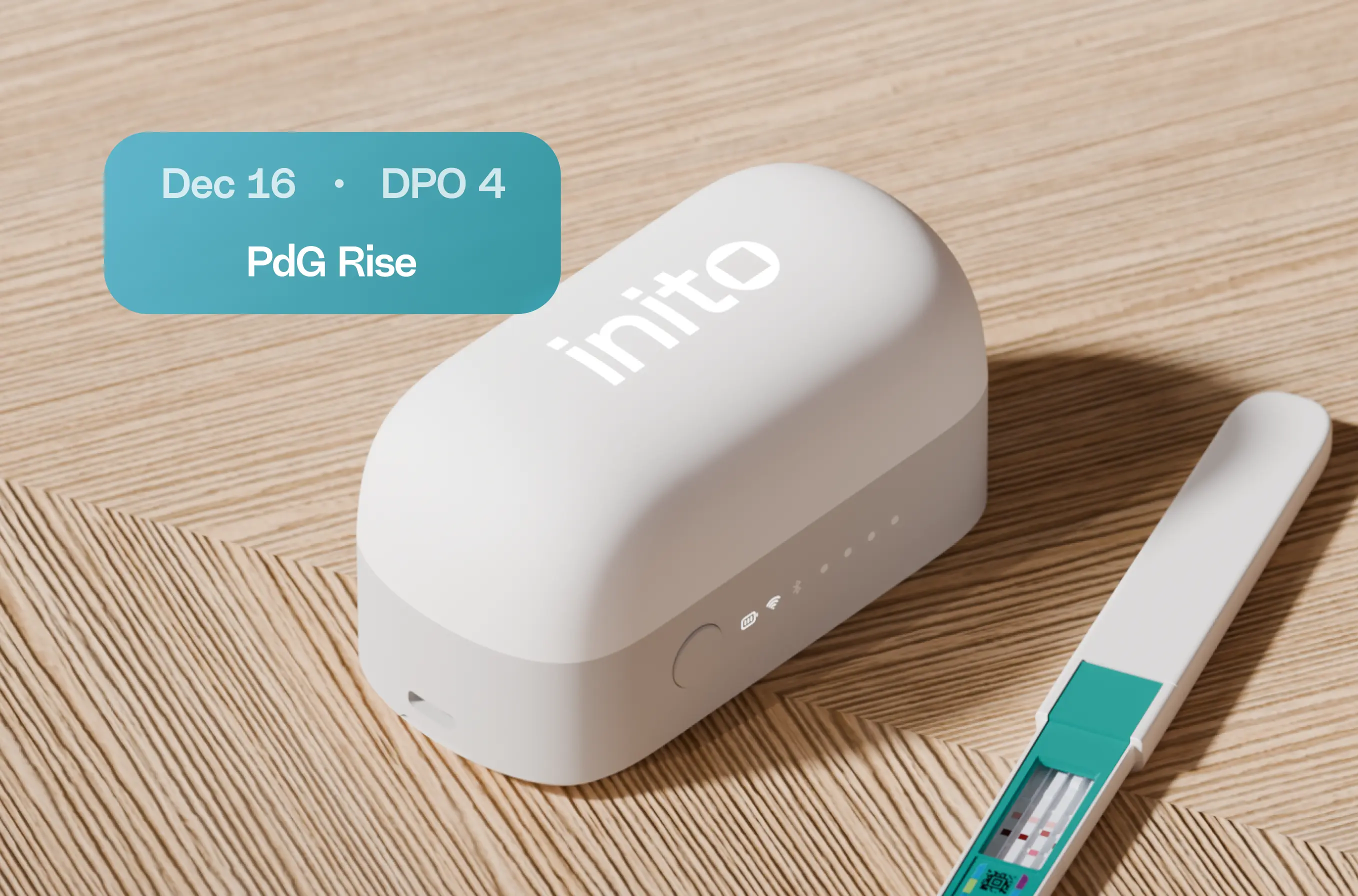
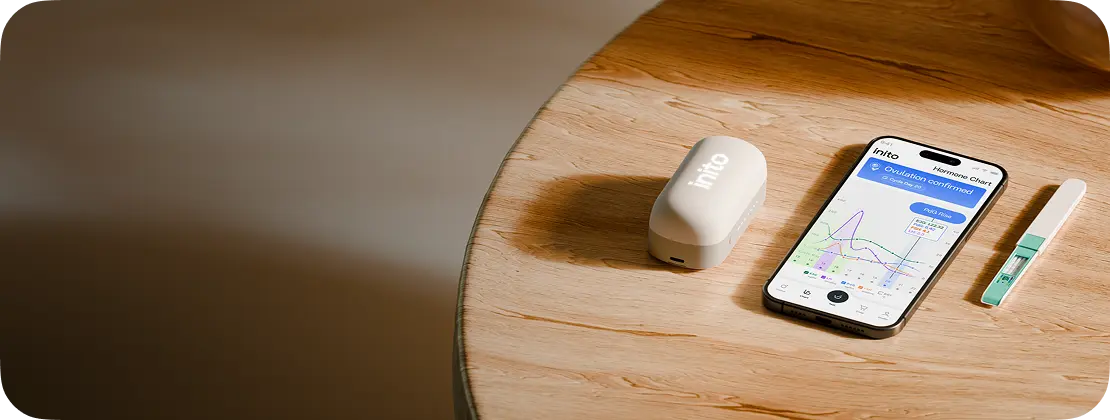
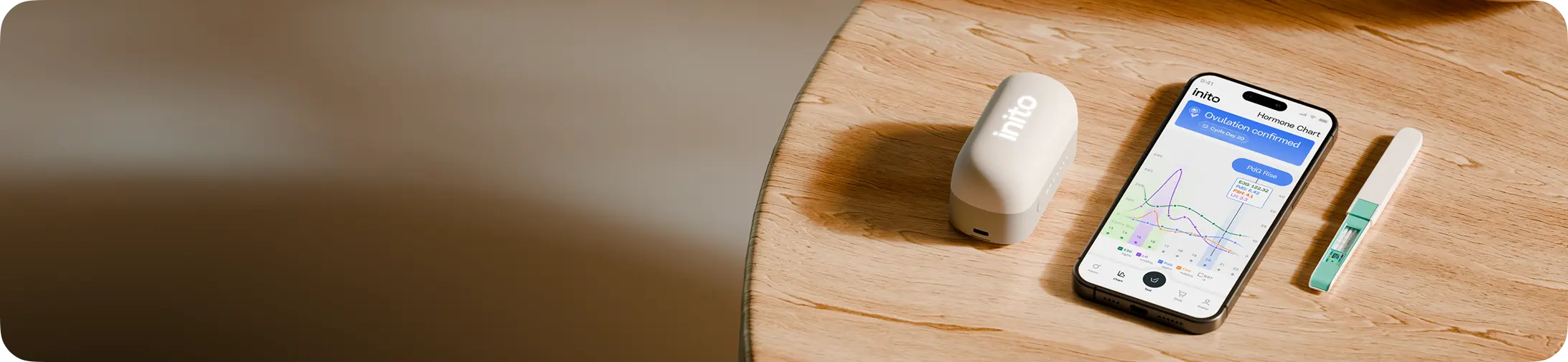
Clinically, ovulation is confirmed by a sustained rise in progesterone. The Inito Fertility Monitor tracks four key fertility hormones in urine across your cycle — E3G, LH, PdG, and FSH — and monitors a sustained PdG rise to help confirm ovulation at home.
Unlike standard OPKs, Inito shows your hormone pattern before, during, and after ovulation, so you can understand what actually happened in your cycle, not just what may have happened.
How Do Ovulation Tests Work and Where Do They Fall Short?
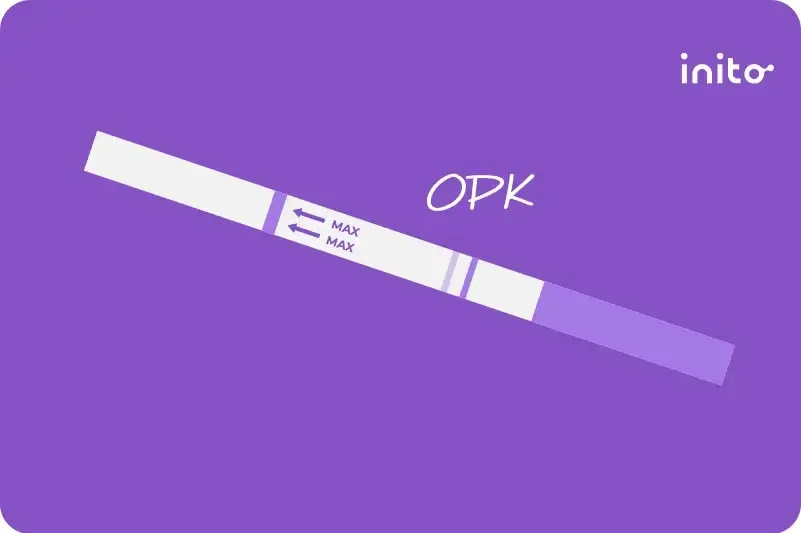
Ovulation Prediction Kits (OPKs) detect a rise in luteinizing hormone (LH) in urine.
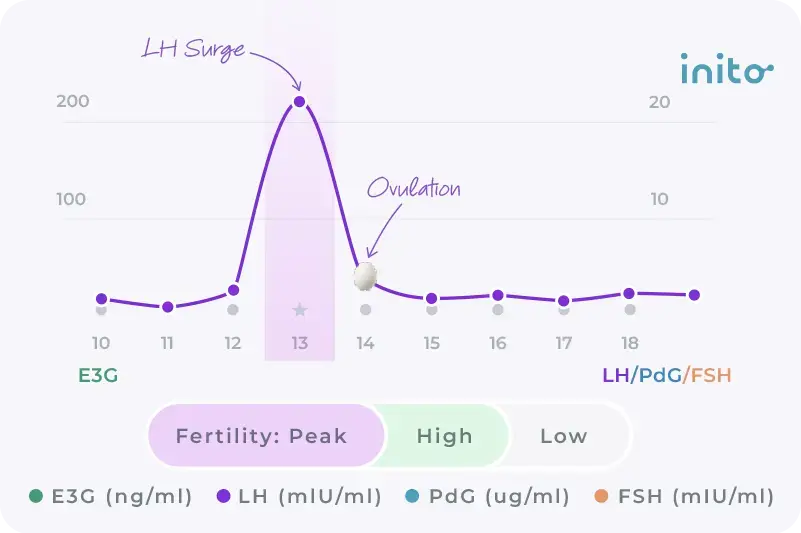
LH is released by the pituitary gland shortly before ovulation and signals that the ovary is preparing to release an egg. When an LH surge is detected, ovulation is typically expected within the next 24–36 hours.
This makes OPKs useful for predicting when ovulation may happen, which is why many people rely on them to time intercourse during their fertile window. But prediction is not the same as confirmation, and that difference matters more than many people realize.
OPKs rely entirely on a single hormone signal. They only tell you that LH has crossed a certain threshold, not whether ovulation actually occurred.
In real-world cycles, LH doesn’t always behave in predictable textbook patterns.
Know more: How Accurate Are Ovulation Tests?
Here’s where the gap shows up:
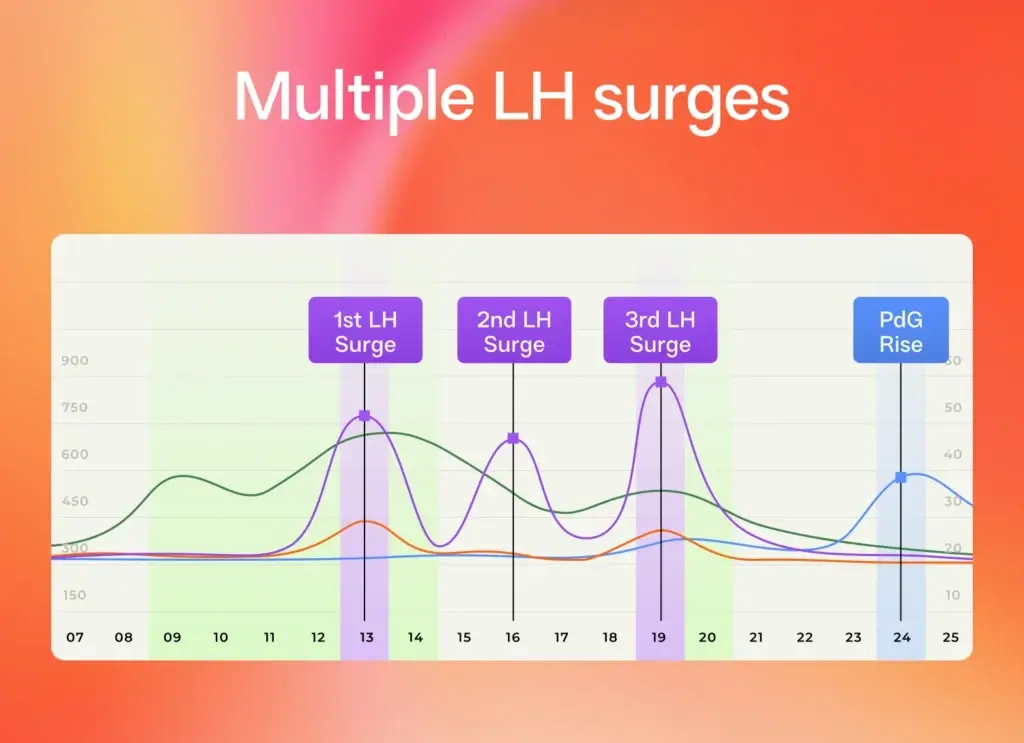
Multiple LH surges: 41% of people experience more than one LH surge in a cycle, including false surges that do not lead to ovulation. An OPK cannot distinguish between them.
Unclear peak timing: LH surge levels vary widely between individuals (from as low as 6.5 mIU/mL to as high as 101 mIU/mL) and still trigger ovulation. Fixed thresholds can therefore misinterpret genuine surges.
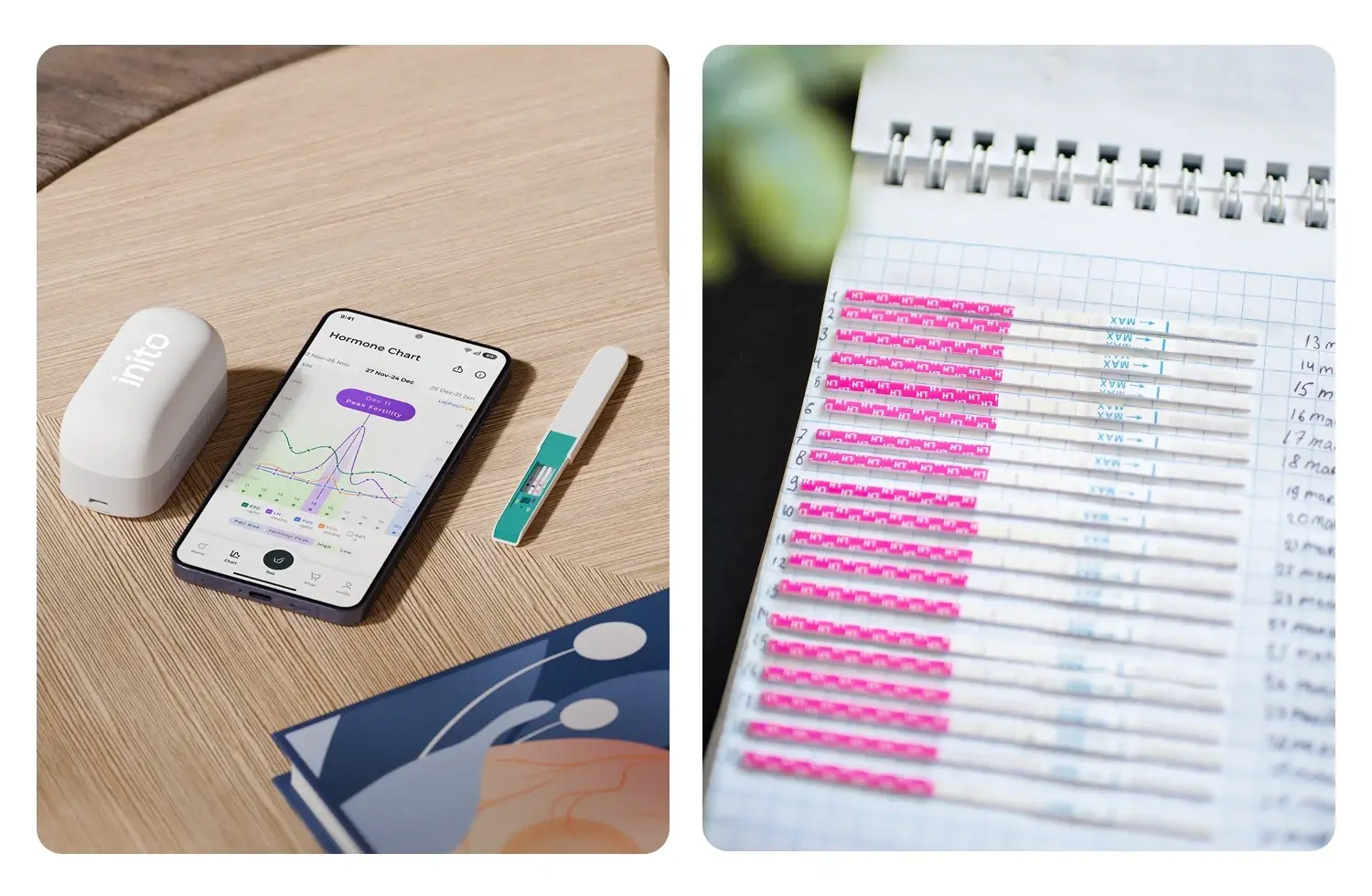
Subjective line reading: Many OPKs rely on darker-versus-lighter lines, which can feel ambiguous depending on lighting, urine concentration, or interpretation.
No ovulation confirmation: Even a clear LH positive does not confirm whether the egg was actually released.
This becomes especially relevant in cycles affected by PCOS, thyroid conditions, or post-pill recovery, where LH patterns can be misleading. What this really means is you may see a “positive,” but still not know what actually happened.
This is exactly where most traditional tests stop, at prediction. But if you’re trying to understand what actually happened in your cycle, you need more than a single signal.
The Inito Fertility Monitor was built differently, with precision at its core. Using patented Spectral Mapping technology, it reads and verifies each test to deliver clearer hormone signals. This makes it particularly helpful for people whose cycles don’t follow textbook patterns.
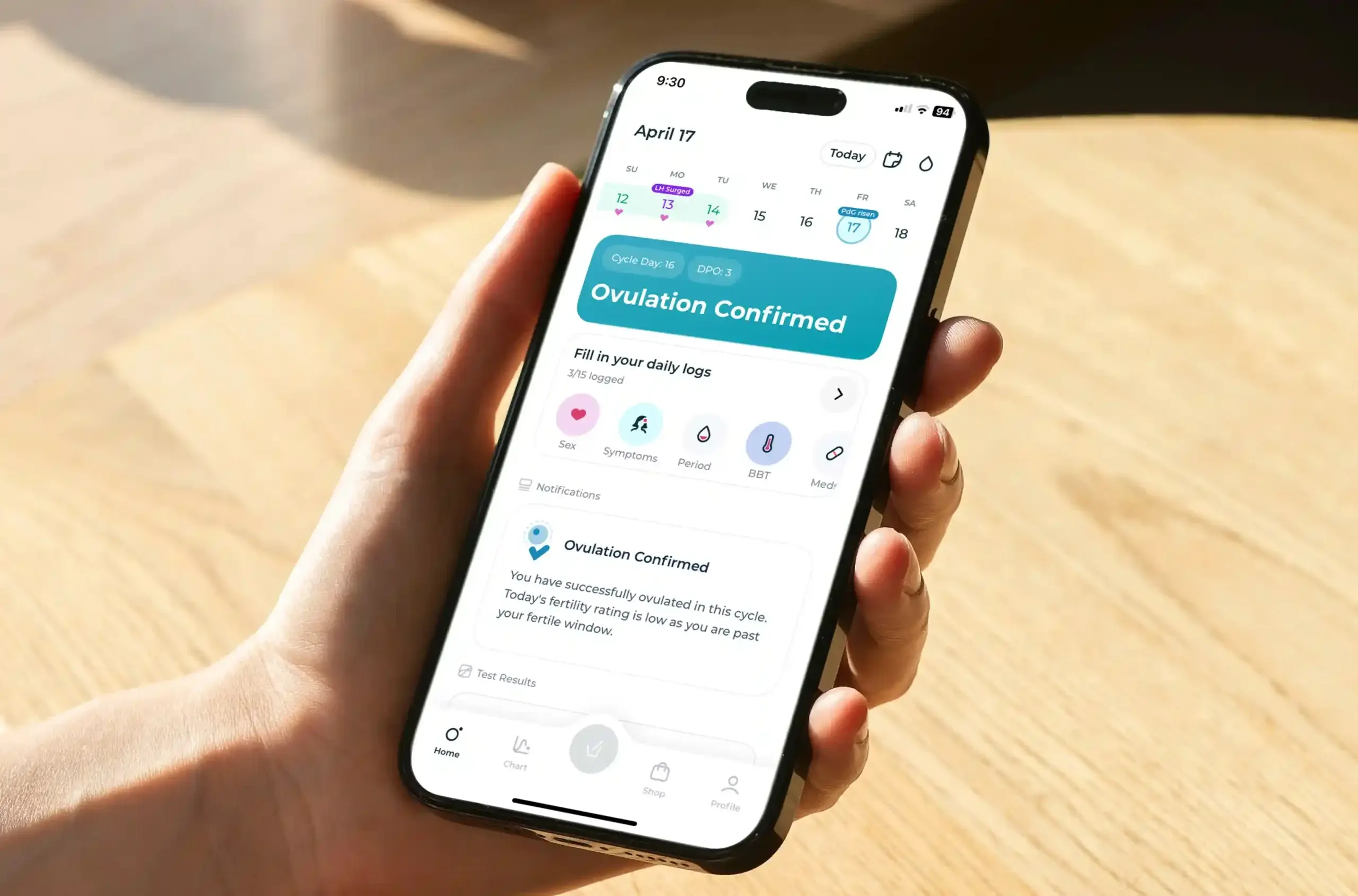
See how ovulation confirmation shows up on an Inito chart →
How Inito Is Different and How Its Technology Benefits You
Inito Fertility Monitor was designed to move fertility tracking beyond prediction and into confirmation. It tracks four key hormones and uses patented Spectral Mapping technology to deliver clear hormone trends you can act on with confidence.
Ready to start your fertility journey?
Get Inito Fertility MonitorWhy does tracking all four hormones matter?
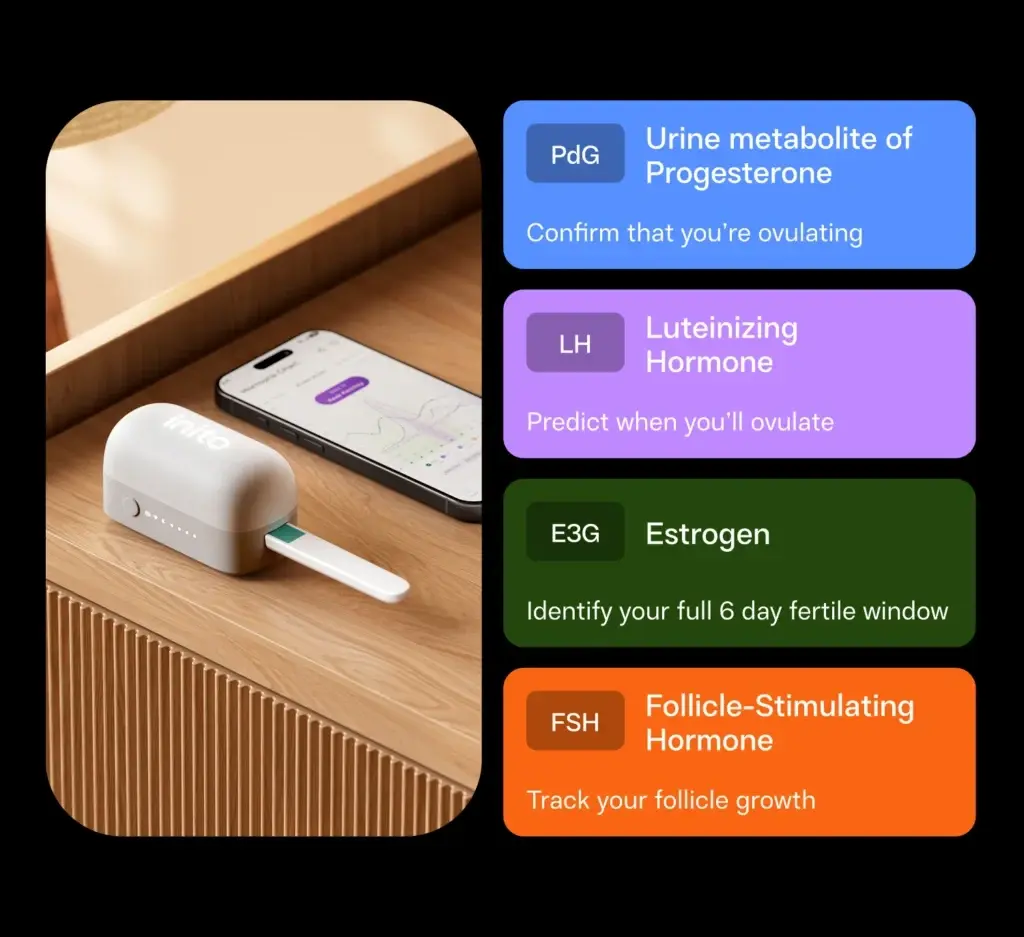
Inito measures Estrogen (E3G), LH, PdG (urine metabolite of progesterone), and FSH, all from a single Fertility Strip.
Unlike OPKs that reduce results to simple visual cues, Inito shows actual hormone values, so you can see how hormones change together across the entire cycle.
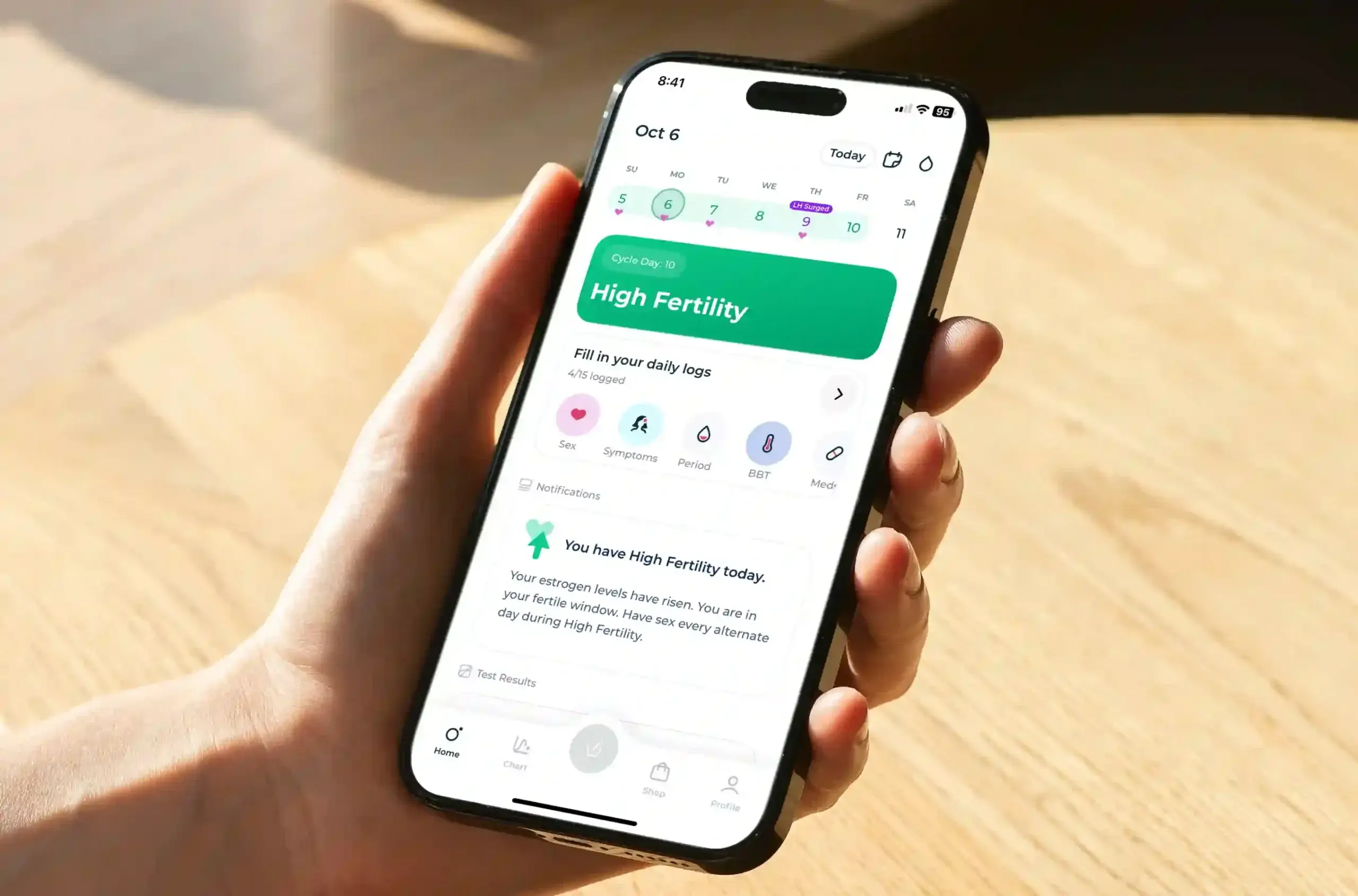
- Estrogen: Rises 3 - 4 days before ovulation, opening your fertile window before an OPK would detect a change
- LH: Surges 24 - 36 hours before ovulation, signaling that egg release is approaching
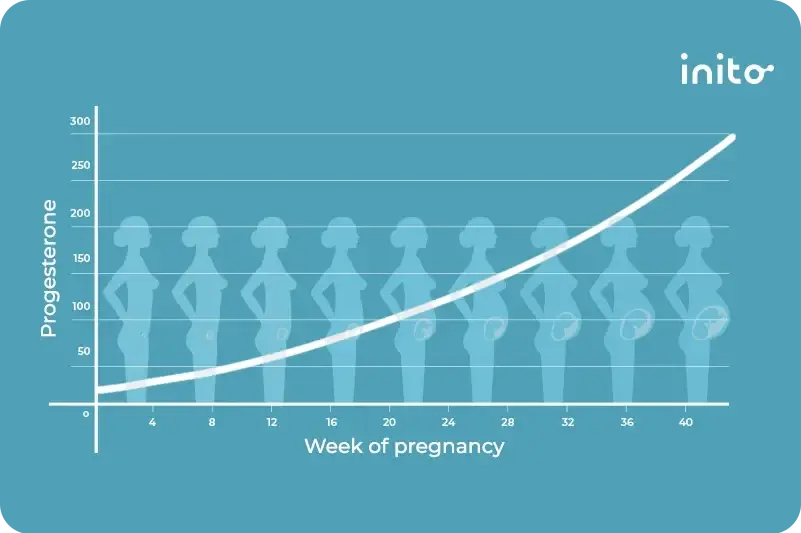
- PdG: Rises after ovulation, confirming the egg was actually released
- FSH: Tracks follicle growth
Seeing these hormones together gives cycle-wide context that a single LH reading cannot provide.
Confirmation, not just prediction
LH helps predict ovulation. PdG helps confirm it.
Inito monitors PdG (urine metabolite of progesterone) daily and looks for a sustained rise for a few days following an LH surge — the same hormonal event used in clinical confirmation.
In published studies comparing Inito’s urinary PdG tracking with mid-luteal progesterone testing:
- Ovulation confirmation via sustained PdG rise demonstrated greater than 99% specificity
- Urinary hormone readings showed 95% correlation with blood hormone trends2
This allows you to observe PdG patterns at home, aligned with how ovulation is confirmed clinically without a blood draw.
“Before Inito I was just tracking my BBT and I wasn’t sure if I was hitting my actual fertility window by doing just that. Inito gave me a much clearer picture and allowed me to narrow it down a lot more precisely. We had been trying for three or four months before I began using Inito. I was worried that I wasn’t ovulating but it helped me see that I was. Inito gave me both peace of mind and hope that we would be able to get pregnant. I felt it gave me a clear picture of where I stood in my fertility which empowered me to ask my doctors for further testing and to also have my husband pursue things on his side. It took a lot of the stress off of me because I was able to confidently know that I was in fact ovulating and to know my fertility window.”
— Lila Smith
Pinpointing the full six-day fertile window
Fertility isn’t limited to one “peak” day. It’s a window.
Sperm can survive inside the body for up to five days, which means the fertile window spans about four days leading up to ovulation, the day of ovulation, and the day after.
OPKs typically identify only the final 1–2 days.
By tracking estrogen before LH and confirming ovulation after with PdG, Inito maps:
- When your window opens
- When ovulation approaches
- When it’s confirmed
So you’re not just reacting to a surge. You’re seeing the full timeline.
The Most precise Monitor in the Market, Powered by Spectral Mapping Technology
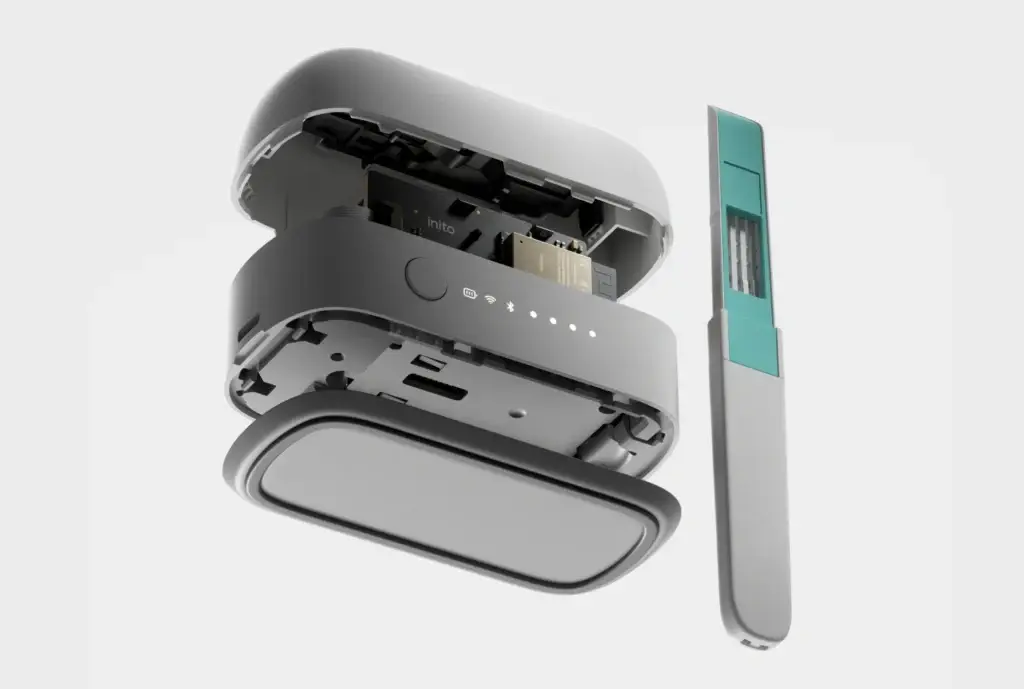
The Inito Fertility Monitor is the most precise¹ at-home fertility monitor for quantifiable hormone values, and the only one powered by patented Spectral Mapping technology.
Most fertility trackers rely on a single detection signal, typically visual color.
In contrast, Inito’s camera-based 2D imaging sensor captures the entire strip surface at once, measuring each hormone separately.
Inito uses two complementary detection modes:
- Fluorescence technology: Highly sensitive, detecting faint hormone signals
- Visual colorimetric imaging: A visible confirmation layer for signal stability
These signals are combined into a 2D spectral map, meaning every reading is double-checked before appearing in the app.
This matters most in cycles where hormone patterns are less straightforward, such as PCOS (polycystic ovary syndrome), thyroid disorders, cycles after a loss, after stopping birth control, and pre-IVF.
What Makes the Inito Fertility Monitor Technically Distinct
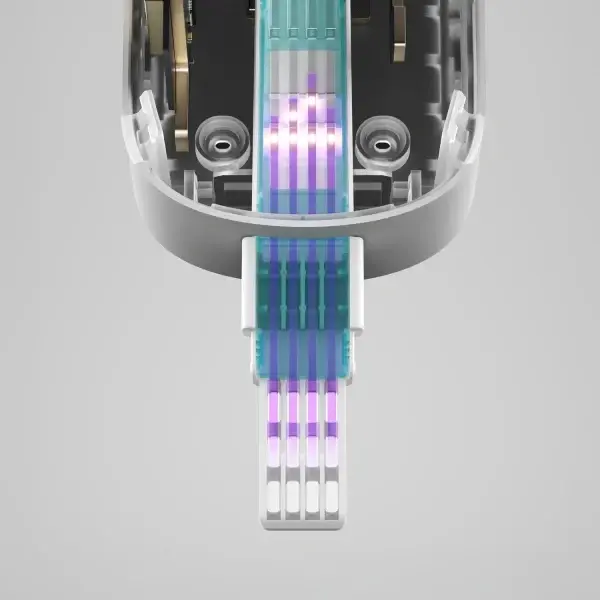
- Built for high-precision hormone measurements: Each hormone is measured separately on one test strip, with fluid control boundaries, preventing cross-contamination.
- Spectral Mapping double-checks every reading: Two detection signals: fluorescence technology and Visual colorimetric imaging, confirm each measurement through independent channels.
- Captures a richer signal: Instead of scanning a narrow line, Inito captures the entire strip surface, taking 100x data to distinguish real hormone changes from noise.
Why Don’t Ovulation Tests Work for Irregular Cycles?
Most ovulation tests are designed around a “standard” 28-day cycle with ovulation on Day 14. But in reality, very few cycles follow that pattern.
Cycle length, hormone levels, and ovulation timing may vary from cycle to cycle — and from person to person. In fact, nearly 7 in 10 women experience cycle variation of up to 6 days, and almost half see variations of 7 days or more.
LH patterns can vary, too. Some cycles have a single clear surge, while others show multiple peaks or lower-intensity rises. Only about 42% of women have a single, rapid LH surge in a cycle.
Inito is designed differently. Powered by insights from over 40MN+ hormone data points, it looks at how your hormones change relative to your own baseline — not against a fixed threshold.
That means it can help you:
- identify your fertile window even when hormone levels don’t follow “typical” ranges
- make sense of multiple LH surges
- understand when ovulation occurs or doesn’t occur
- spot patterns that may be worth discussing with your doctor
This level of precision becomes especially important in real-world cycles, where hormone patterns don’t always follow predictable rules. Because your cycle isn’t standard, your tracking shouldn’t be either.

See how Inito will fit into your unique fertility journey
Take 5 min free fertility assessment and get a personalised hormone report
Inito vs Standard OPKs
Here’s how Inito compares to standard ovulation tests at a glance:
| Feature | Inito | Standard OPKs |
|---|---|---|
| Confirms Ovulation | ✓ via PdG rise | ✗ |
| Quantitative readings | ✓ (mIU/mL) | Yes/No only |
| Urine vs blood test correlation | 95%2 | ~70–90% |
| Works for PCOS / irregular cycles | ✓ | Poorly |
| Spectral Mapping | ✓ | ✗ |
Switch to the most precise1 monitor for fertility hormone values at-home →
Real Experiences from Inito Users
Hear how Inito is helping its users feel clearer, more confident, and less anxious about their cycles:
“With OPKs, I would double peak which led me to believe that my body would often try to ovulate — fail — and try again. I also constantly forgot to wear my temp tracker or had nights where I would wake up freezing one night and sweating the next, and there would be almost no change in my temperature, which led me to question if it was totally accurate. For a while I was doubting I was even ovulating due to getting multiple peaks on other tracking methods. Inito gave me the peace of mind that I could “relax” and not stress about having sex “at the right time” due to the fact that Inito never gave me false confidence that I had ovulated when I actually had not yet ovulated like other trackers would lead me to believe.”
— Elissa Canales-Barrett
Inito has supported 40,000+ pregnancies and is trusted by 200,000+ couples, with 20+ patents behind its hormone tracking technology.
Inito is a hormone tracking tool and not a diagnostic device. Hormone trends should be interpreted alongside medical guidance when making clinical decisions. If you have concerns about your hormone patterns or cycle regularity, speak with your doctor. Your Inito chart is a starting point for more informed conversations — with yourself, and with your healthcare provider.
Disclaimers:
1 - "Most precise" refers to system‑level precision measured in controlled laboratory testing, based on lower between‑device variability across key hormones, concentrations, operators, days, and strip lots. Compares Inito to other U.S. over-the-counter at‑home fertility monitors that provide numeric or graded hormone values and measure the same hormones as Inito.
2 - Accuracy may be reduced in irregular cycles, anovulatory cycles, or when hormone levels are affected by medical conditions, medications, or inconsistent testing. “95% accuracy to corresponding blood hormone trends” refers to published findings showing that Inito’s urinary hormone measurements closely matched the direction and pattern of corresponding serum hormone changes over time. It does not mean urine values are identical to blood values or that absolute urine and blood hormone numbers will match exactly.
Reach your fertility goals with full confidence
FAQs
Contributor

Team Inito
Health Researchers and Writers
Was this article helpful?
Share it on

Get a free guide Luteinizing Hormone (LH) by Inito