Content table
Your hormones are constantly shifting — not just at one point in your cycle, but every single day.
Each phase of your menstrual cycle is guided by a rise and fall of hormones that influence far more than just your period. They affect your energy, mood, fertility, and even how your body feels from day to day.
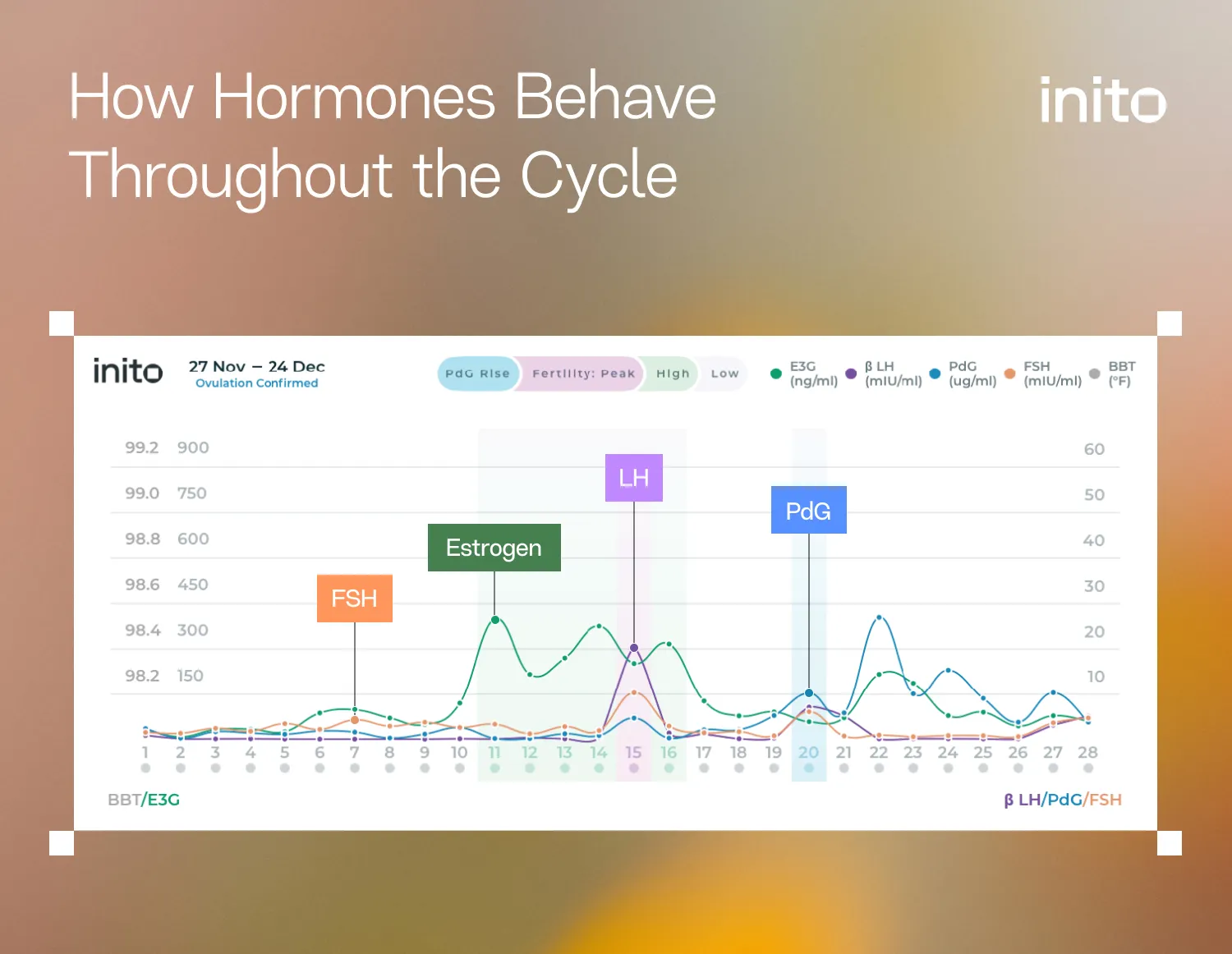
By understanding how FSH (follicle stimulating hormone), LH (luteinizing hormone), estrogen, and progesterone (and its urine metabolite PdG) behave through the menstrual cycle, you can decode your body’s natural rhythm; whether you’re trying to conceive, tracking ovulation, or simply learning what your hormones are trying to tell you.
Key Takeaways
- The menstrual cycle is driven by shifting levels of FSH, LH, estrogen, and progesterone.
- It progresses through four main phases — menstrual phase, follicular phase, ovulation, and luteal phase — each guided by specific hormonal changes.
- FSH rises early to stimulate follicle growth, briefly spikes with LH, and tends to stay low after ovulation.
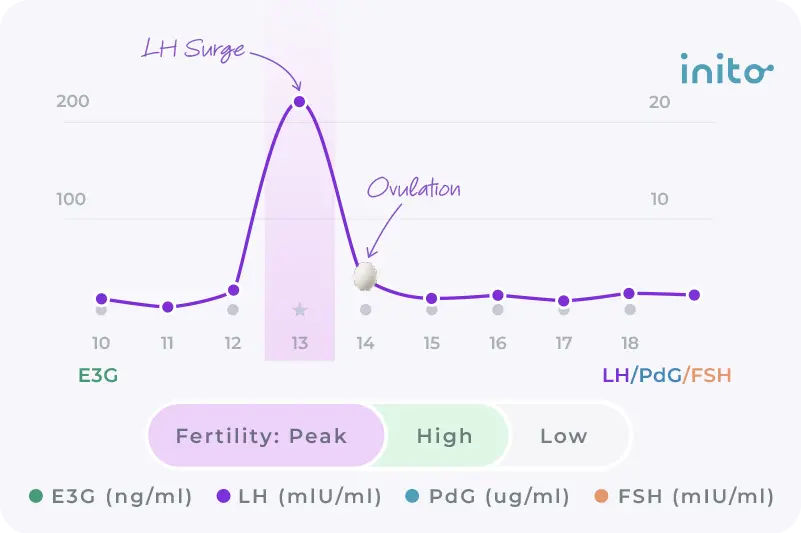
- LH typically remains low in the first half of the cycle and comes into play right before ovulation — it surges 24–36 hours prior to egg release, and declines again in the luteal phase. It may rise in the luteal phase on occasion to boost the function of the corpus luteum.
- Estrogen builds the uterine lining, peaks 3-4 days before ovulation to trigger LH, and rises again in the mid-luteal phase.
- Progesterone and its metabolite PdG rise soon after ovulation, peak around 6–8 days post ovulation, and fall back down towards the end of the cycle.
- Hormonal feedback loops coordinate follicle growth, ovulation, and uterine lining growth across the cycle.
- Variations in hormone levels can result from stress, sleep, nutrition, age, or health conditions.
What Are the Phases of the Menstrual Cycle?
The menstrual cycle is divided into four phases, each guided by specific hormonal changes:
Menstrual Phase
The cycle begins with your period. It is marked by the shedding of the uterine lining (endometrium). All your hormone levels are usually at their lowest.
Follicular Phase
Your follicular phase actually starts with the menstrual phase and continues until ovulation.
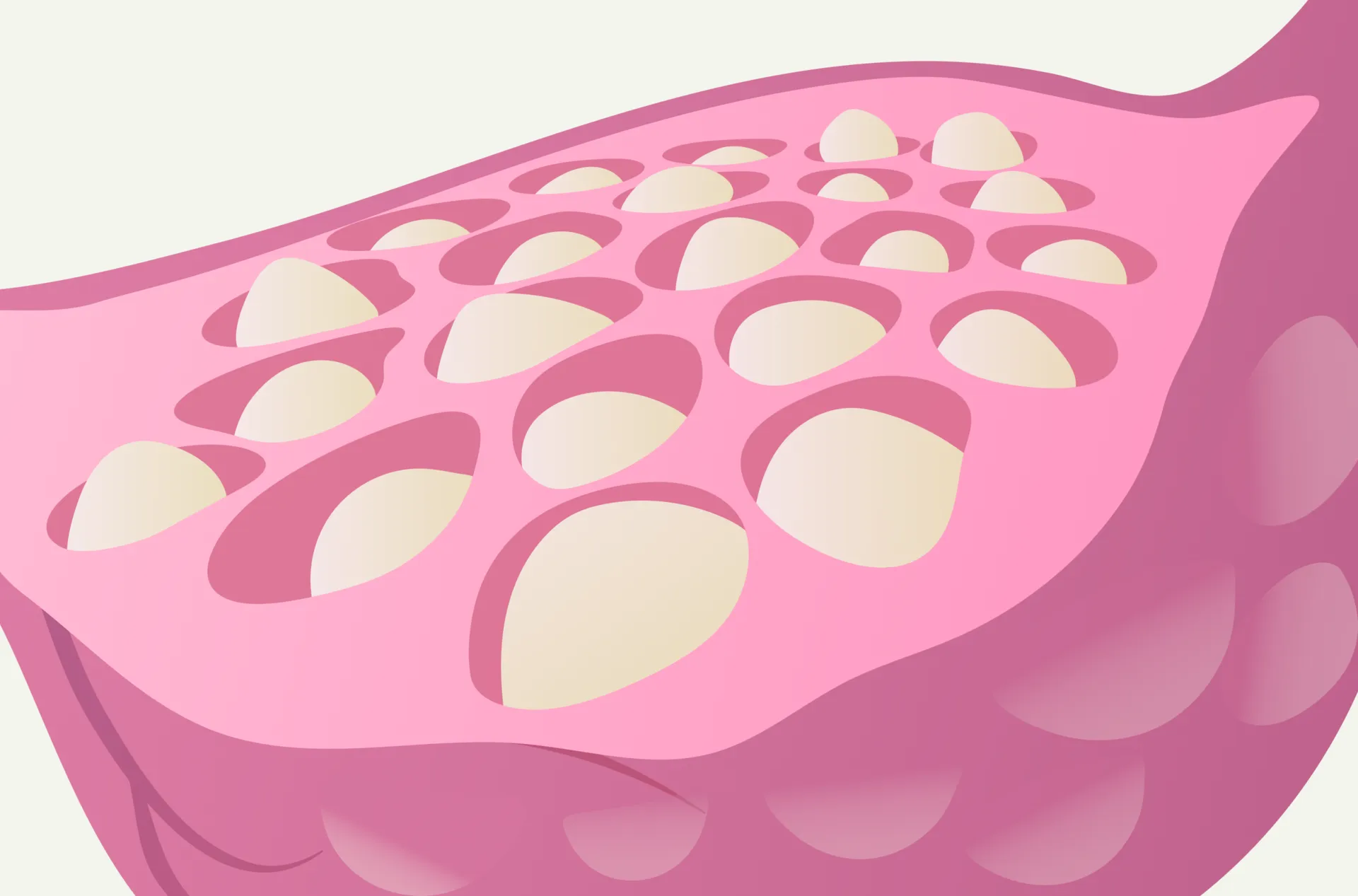
Your brain senses that your hormones are low and stimulates the hypothalamus to secrete GnRH (gonadotropin-releasing hormone). This acts on the pituitary gland and causes it to release FSH (follicle stimulating hormone). FSH stimulates the ovarian follicles to grow and prepare for ovulation. Out of these, one follicle matures to release an egg.
This follicle starts secreting estrogen, which helps in the growth of the uterine lining to prepare for a possible pregnancy.
Know more: Trying to Get Pregnant? Get to Know Your Follicular Phase
Ovulation
High estrogen levels cause the pituitary gland to stop secreting FSH, and start secreting LH (luteinizing hormone) instead. A sharp LH surge triggers ovulation approximately 24-36 hours later — releasing the mature egg.
Know more: What is Ovulation: Symptoms & Pregnancy
Luteal Phase
After ovulation, the remnant follicle forms a structure called the corpus luteum. This secretes progesterone to thicken and maintain the uterine lining and prepare for a potential pregnancy. But if fertilization doesn’t occur, hormones drop — leading to your next period.
Know more: Luteal Phase: All the Science, Simplified
How Do Hormones Behave Through the Menstrual Cycle?
Now that we know how the menstrual cycle works, let’s take a look at each hormone in detail –
FSH (Follicle stimulating hormone)
FSH is the “kick-starter” hormone that begins each cycle. It signals your ovaries to grow follicles — each containing an immature egg.
Think of FSH as the spark that sets your entire cycle in motion. Here’s how it behaves through the cycle:
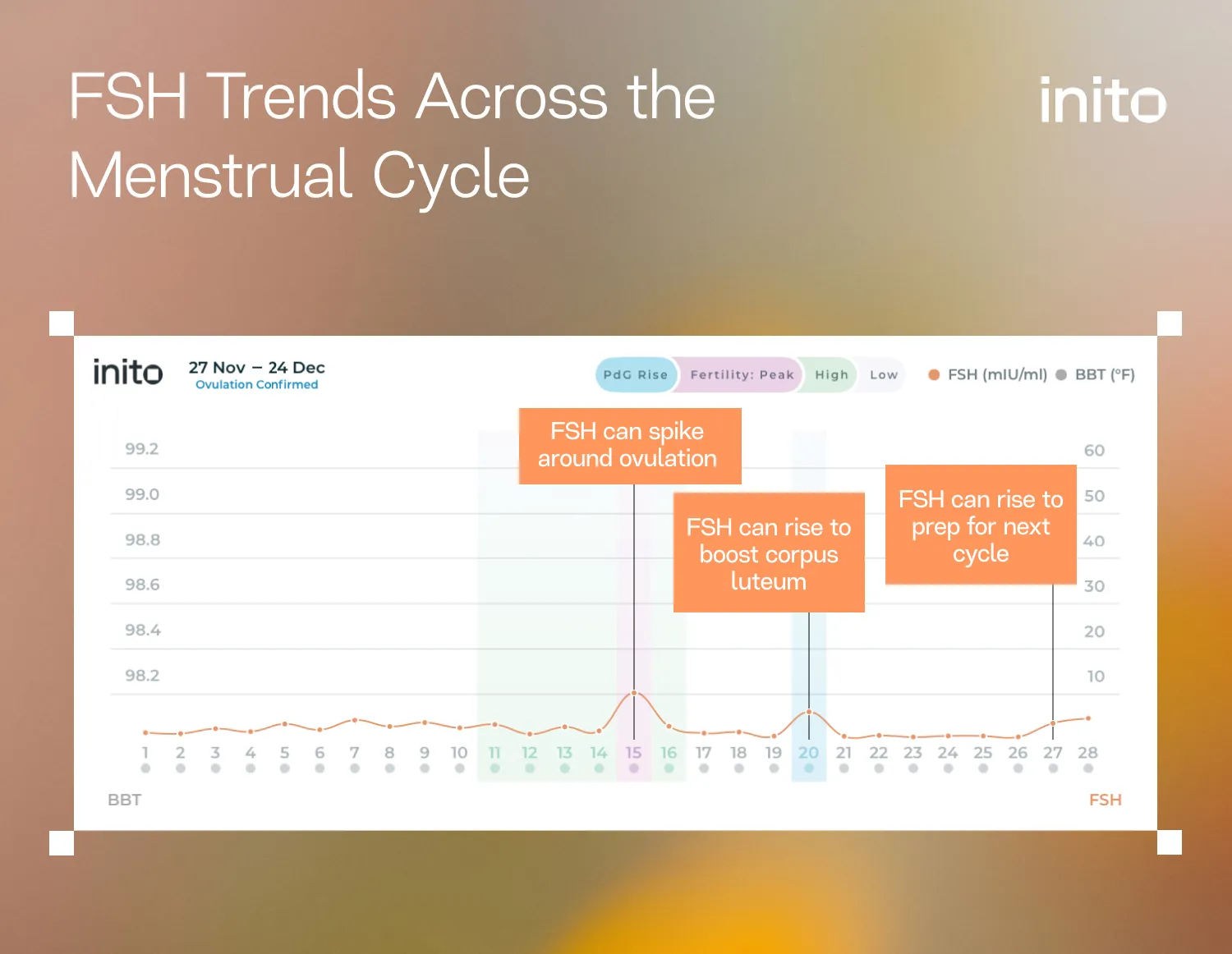
Phase | How FSH behaves |
Early follicular phase | FSH rises at the start of your cycle to recruit and stimulate the growth of several follicles. |
Mid to late follicular phase | As estrogen increases, it slightly suppresses FSH — ensuring only one dominant follicle matures. |
Ovulation | FSH can spike briefly alongside LH to support dominant follicle selection and the egg’s final maturation. One study found that peak FSH levels coincided with the LH surge in about 53% of cycles and in the remaining cycles FSH levels surged before LH. However, another study also found that a surge in FSH may not actually be necessary for ovulation. |
Luteal phase | FSH typically remains low for the rest of the cycle. It rises again only when a new cycle begins. Note: It’s not uncommon to see a mild rise in FSH in the luteal phase. This gentle boost can help sustain the corpus luteum function, ensuring it produces enough progesterone for implantation and a potential pregnancy. |
LH (Luteinizing hormone)
LH is known as the trigger for ovulation. It’s the signal that tells the dominant follicle, “It’s time to release the egg!” Here’s how it behaves:
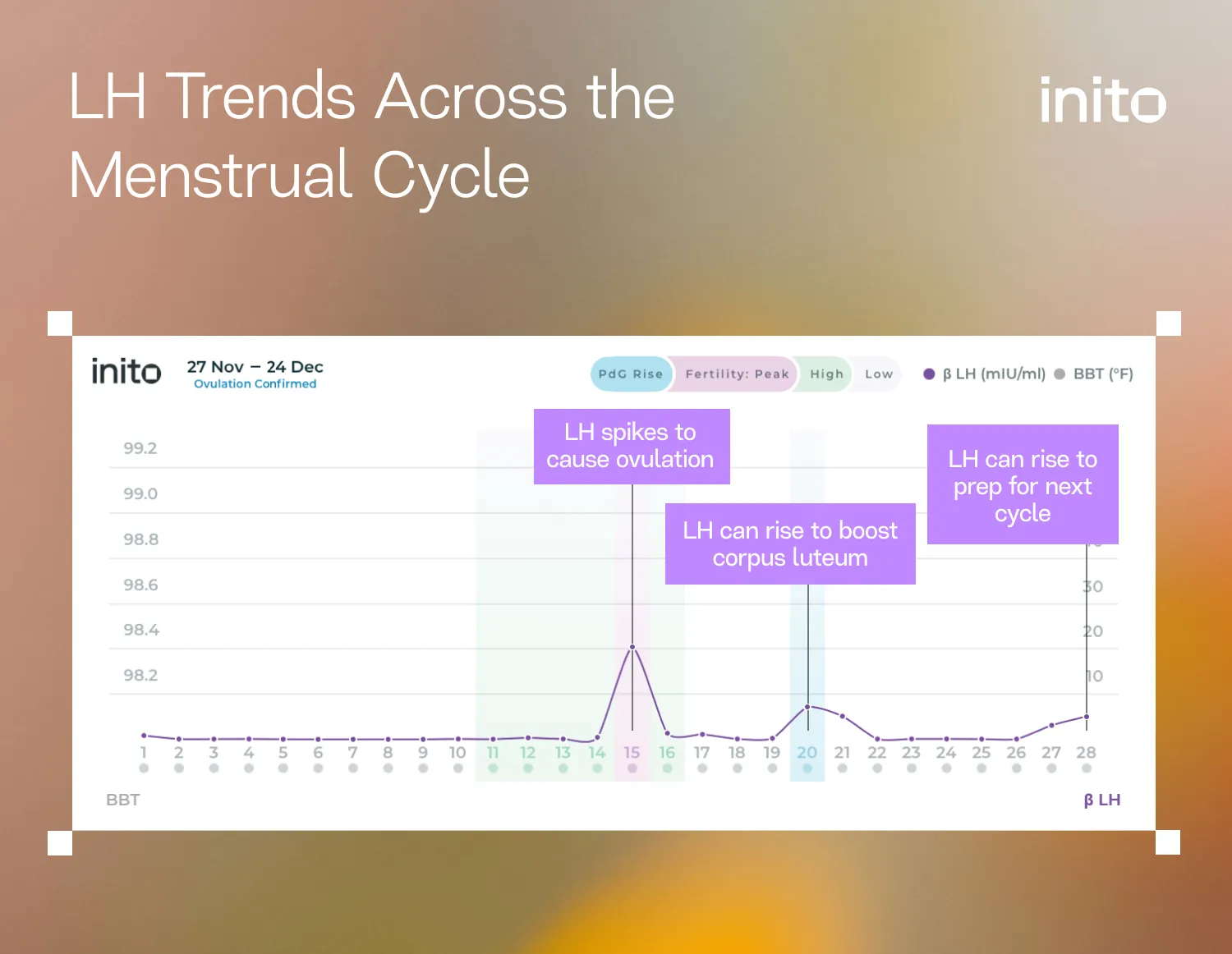
Phase | How LH behaves |
Follicular phase | LH stays relatively low in the beginning of the cycle. Note: Occasional higher levels in the beginning could indicate residual hormone levels from your previous cycles. |
Ovulation | LH levels surge to trigger ovulation, or the release of the egg.
Know more: What Does a ‘Normal’ LH Level Look Like? |
Luteal phase | After ovulation, LH levels typically drop. If you notice your LH spiking even after the Ovulation Confirmed result, it could mean that LH is still supporting corpus luteum function — this helps maintain steady progesterone levels. Additionally, if you see your LH levels increasing towards the end of your cycle, it could be in preparation for your next cycle. |
Know more: LH Rise vs. LH Surge vs. Peak Fertility: What’s the Difference?
Estrogen
Estrogen plays multiple roles — it rebuilds the uterine lining, improves cervical mucus to help sperm travel, and increases libido.
During ovulation, it’s the hormone that helps your body feel energized, social, and confident.
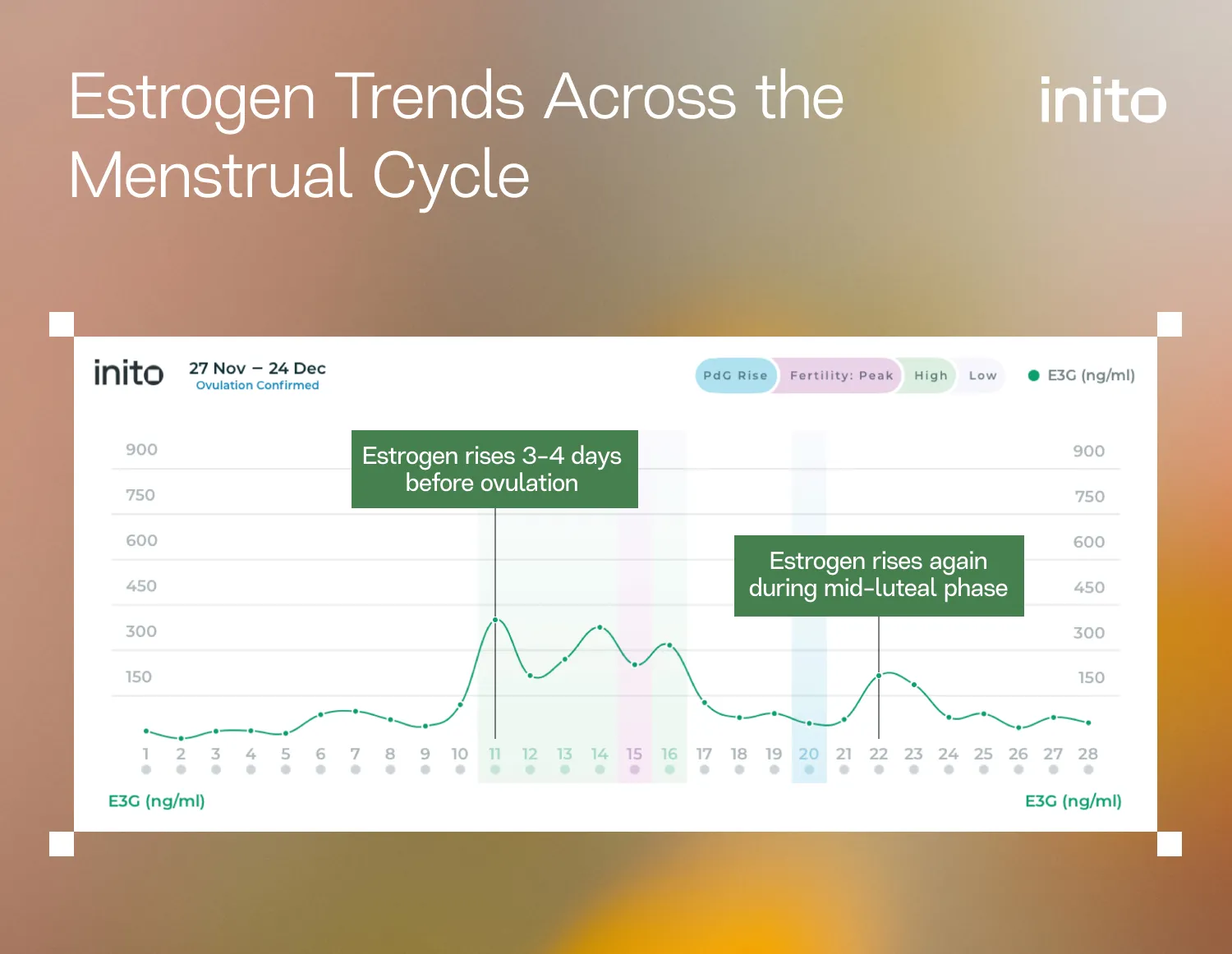
Phase | How estrogen behaves |
Early follicular phase | Remains low at the beginning of your cycle. (Sometimes, if you notice higher estrogen levels at the beginning of your cycle, it could be due to residual hormones from your previous cycle.) |
Mid to late follicular phase | As the follicles grow, estrogen increases. |
Ovulation | Estrogen peaks sharply about 3-4 days before ovulation — this surge is what triggers the LH rise. In fact, one study found that in nearly 90% of all cycles, estrogen reached peak concentrations right before or coinciding with the LH surge. |
Luteal phase | After ovulation, estrogen dips briefly, then rises again (a smaller mid-luteal surge) to help prepare the endometrium for implantation. This secondary rise in estrogen actually occurs in parallel to progesterone. |
Progesterone (and PdG, the urine metabolite of progesterone)
Progesterone dominates the second half of the cycle. It’s produced by the corpus luteum after ovulation and prepares your uterus to nurture a fertilized egg.
Its urine metabolite — pregnanediol glucuronide (PdG) — rises after ovulation, confirming that ovulation occurred.
Note: While the absolute values of blood progesterone and urine PdG are different, they follow the same hormone trends in the menstrual cycle.
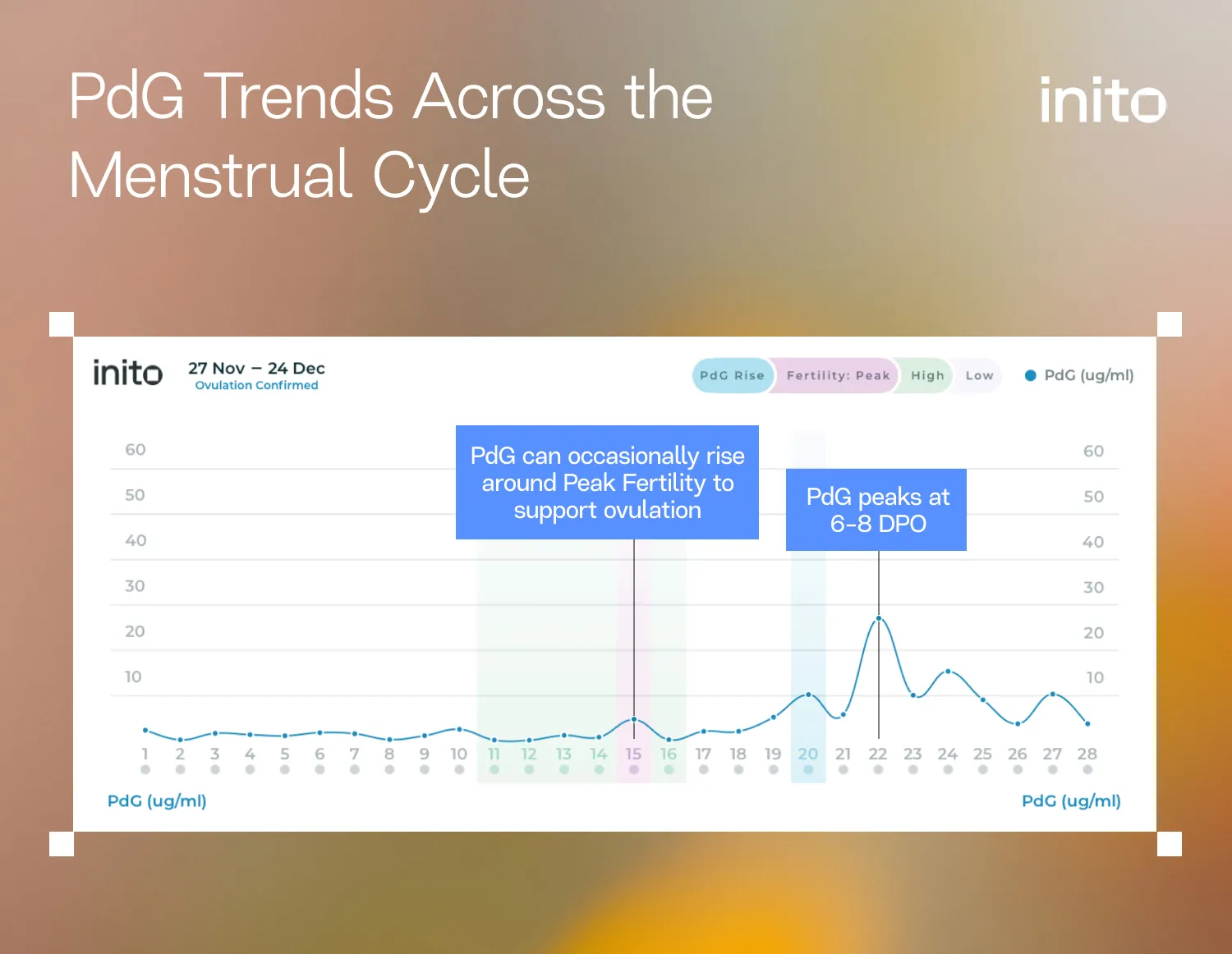
Phase | How PdG behaves |
Follicular phase | Remains low at the beginning of your cycle. (Sometimes, if you notice higher PdG levels at the beginning of your cycle, it could be due to residual hormones from your previous cycle.) |
Ovulation | PdG starts rising soon after ovulation. Note: Sometimes, you might notice a small rise in PdG before or around the time of Peak Fertility. This pre-ovulatory increase is your body’s way of preparing for egg release. |
Luteal phase | PdG peaks around 6-8 days post-ovulation. If pregnancy has not occurred, the corpus luteum regresses around 9-11 days after ovulation, leading to a drop in hormone levels. |
If your LH has surged but PdG hasn’t risen yet, don’t worry; PdG naturally takes time to increase. PdG can take a few days to rise, and typically peaks around 6-8 days past ovulation. Sometimes, it can take up to 9 days for this rise to happen. Keep testing as that rise may often be just around the corner.
Another possibility? You may be experiencing more than one LH surge. In such cases, your body may be preparing for another ovulation attempt. This is not uncommon – only about 48% cycles experience a single LH surge.
How Do These Hormones Work Together?
As you can see, your cycle involves constant, intricate feedback between your hormones. And here’s how they interplay across the different phases:
Phase | FSH | LH | Estrogen | PdG |
Menstrual | Moderate | Low | Low | Low |
Follicular | Rising → falls | Low | Rising | Low |
Ovulation | Spike | Surge | Peaks | Starts rising |
Luteal | Low | Low | Mid-cycle surge, remains low otherwise | High |
When viewed together, these shifts reflect a coordinated, healthy process rather than isolated hormone “events.”
Are These Hormonal Fluctuations Normal?
Short answer: yes—hormone fluctuations are completely normal.
Every woman’s cycle follows its own rhythm — and while that rhythm is natural, it’s also dynamic. Hormones are meant to rise and fall across the cycle, and even from one day to the next. Seeing some variation doesn’t mean anything is “off”; it means your body is responding to real-life inputs.
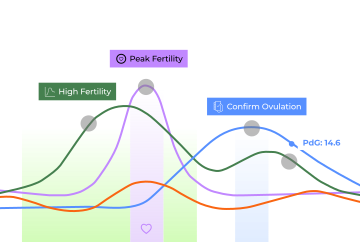
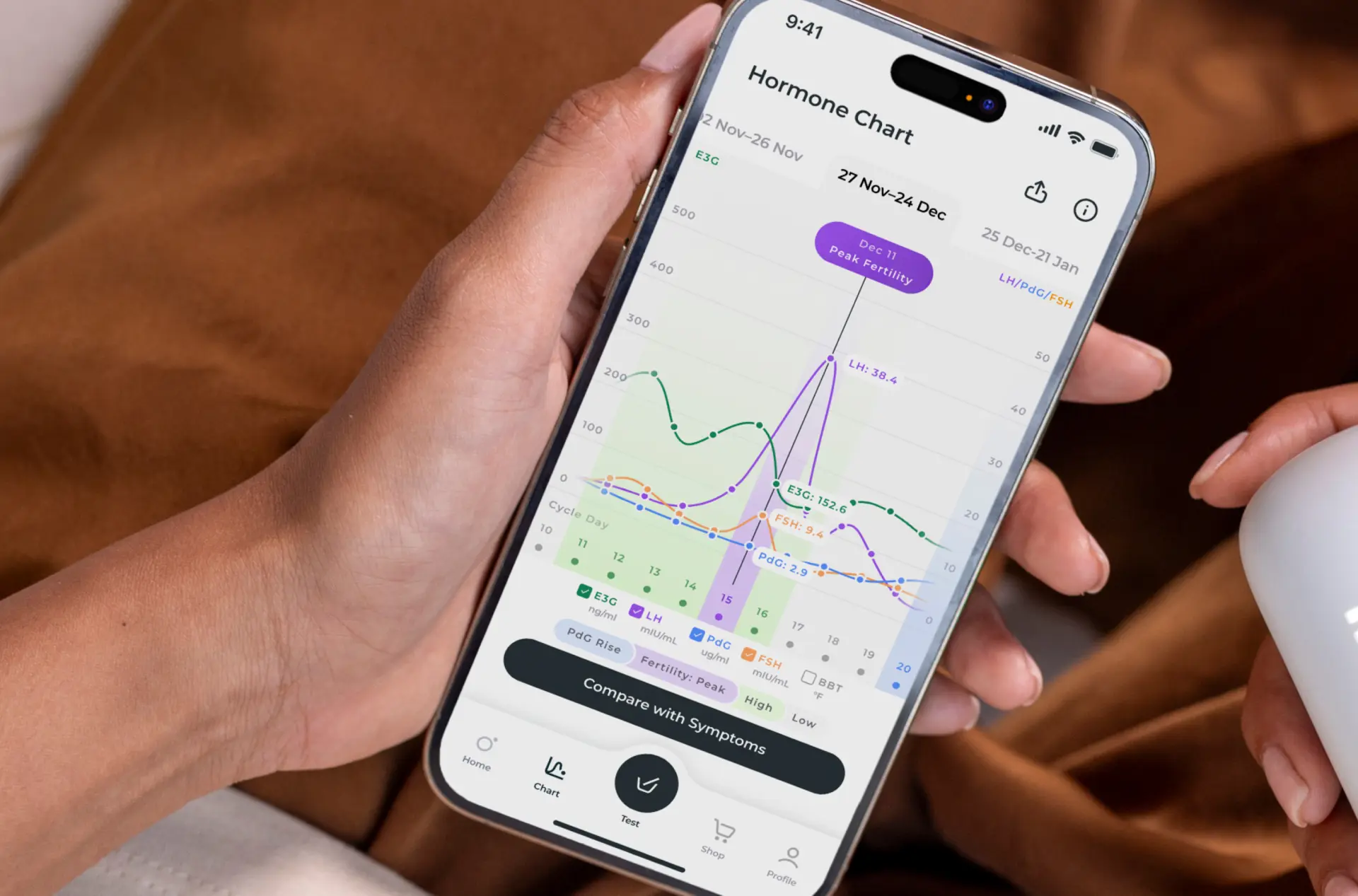
That’s exactly why Inito focuses on trends, not snapshots. By tracking 4 key fertility hormones (LH, estrogen, PdG (urine metabolite of progesterone) and FSH) across your cycle, it helps identify your fertile window and confirm ovulation based on patterns over time. Instead of focusing on single-day values, it allows you to see how these fluctuations fit into the bigger picture of your cycle.
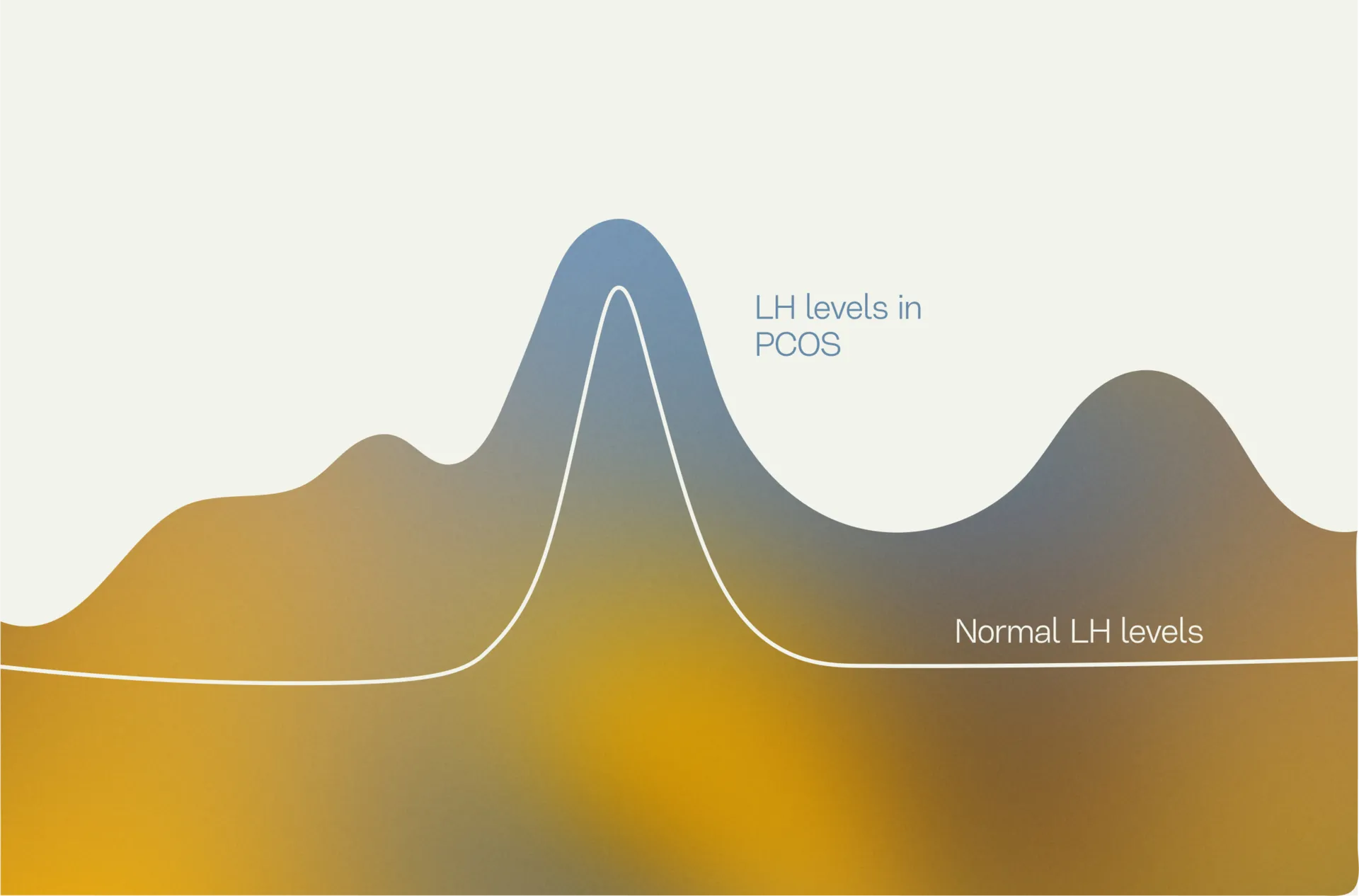
Disclaimer: While Inito helps you track hormone trends over time, it cannot be used to determine whether your hormone levels are ‘normal’ or ‘abnormal’. Hormonal variation is a natural part of every cycle, but certain conditions—such as PCOS, endometriosis, thyroid disorders, or irregular cycles—can cause these patterns to appear more pronounced.
If your hormone trends on your Inito chart feel ‘off’, sharing this data with your doctor can help guide a more informed conversation and support you in advocating for your care.
Why Do Hormone Levels Fluctuate?
Your hormones don’t operate in isolation. They’re constantly responding to signals from your brain, ovaries, metabolism, and environment. Day-to-day lifestyle factors can cause subtle shifts in how your hormones look, including:
Stress
Stress activates the body’s fight-or-flight response, which suppresses reproductive hormones like GnRH, LH, estrogen, and progesterone.
This disruption can delay or prevent ovulation, shorten the luteal phase, and reduce implantation chances.
Know more: Stress and Fertility: Is It Actually Hurting Your Chances?
Sleep
Getting enough quality sleep helps keep your fertility hormones in balance — longer, consistent sleep is linked to well-balanced FSH, estrogen, and progesterone levels.
One study found that:
- FSH levels are around 20% higher in women who sleep longer.
- Estradiol levels are about 60% lower in those with more regular sleep schedules. It also increases by 3.9% for every additional hour of daily sleep.
- Average luteal-phase progesterone rises by about 9.4% with each extra hour of sleep.
On the flip side, disturbed sleep is linked to a 46% higher risk of cycle irregularities, highlighting the strong connection between sleep and cycle health.
Nutrition
A balanced diet plays a key role in reproductive health for both women and men. It supports ovulation, healthy sperm development, and successful implantation.
Diets like the Mediterranean diet — rich in olive oil, fish, whole grains, and legumes — have been shown to improve fertility outcomes.
Limiting refined carbs, trans fats, added sugars, and red meat can support better hormone balance and reproductive health.
Know more: Diet and Fertility: What to Avoid When Trying To Conceive
Exercise and physical activity
Moderate exercise supports healthy hormone balance, but overtraining or very intense workouts can elevate cortisol and lower gonadotropin levels — sometimes resulting in missed periods (exercise-induced amenorrhea).
When Should You Pay Closer Attention?
While variation is normal, it may be worth looking deeper if you notice patterns like:
- Repeated cycles without ovulation
- Very long or very short cycles consistently
- Symptoms that don’t match your cycle phase (e.g., persistent spotting, severe pain, or skipped periods)
- Random hormonal fluctuations without a known cause
When these patterns show up repeatedly, they can sometimes point to an underlying hormonal condition, rather than normal cycle-to-cycle variation. In these cases, tracking trends across cycles and sharing that data with your doctor can help identify whether something needs support.
Summary
Your menstrual cycle is guided by a finely tuned rhythm of four key hormones; FSH, LH, Estrogen, and PdG, that work together to support ovulation and fertility. Everyone’s hormones function a little differently, and small variations are completely normal. Your levels can shift naturally due to stress, sleep quality, nutrition, exercise, or overall health.
A balanced lifestyle that includes nutrient-rich foods, regular sleep, moderate activity, and mindful stress management can help keep your fertility hormones in sync.
Understanding these patterns empowers you to tune into your body’s rhythm, track your fertile window more accurately, and make informed choices on your fertility journey.
Was this article helpful?
Physiology, Follicle Stimulating Hormone – StatPearls – NCBI Bookshelf
Characteristics of the urinary luteinizing hormone surge in young ovulatory women – ScienceDirect
Anatomy, Abdomen and Pelvis, Ovary Corpus Luteum – StatPearls – NCBI Bookshelf
Physiology, Luteinizing Hormone – StatPearls – NCBI Bookshelf
Characteristics of the urinary luteinizing hormone surge in young ovulatory women – ScienceDirect
The Normal Menstrual Cycle and the Control of Ovulation – Endotext – NCBI Bookshelf
Female infertility as a result of stress-related hormonal changes
Female Fertility and the Nutritional Approach: The Most Essential Aspects – PMC
Effect of Exercise on Ovulation: A Systematic Review | Sports Medicine