Content table
You may have heard of the debilitating period pain that occurs in endometriosis.
But endometriosis is a complex condition that goes far beyond the reproductive system. It can affect the body in ways you may never have imagined. There are many symptoms (such as chest pain, frequent urination, and heartburn to name a few) that may seem unrelated, but they are actually a part of this condition.
Read on to learn more about the often misunderstood endometriosis. By taking you deeper into the less obvious endometriosis symptoms, we aim to empower you with information to help you successfully manage this condition.
Key Takeaways
- Endometriosis is a disease where the endometrial tissue, similar to that in your uterine lining, grows outside your uterus.
- Endo affects 1 in 10 women.
- Symptoms of this condition vary a lot from person to person.
- The most common symptoms of endo are pelvic pain, abdominal pain, back pain, irregular or heavy bleeding, pain during sex, painful urination, painful bowel movements, and fertility struggles.
- Uncommon symptoms (less studied) include urinary issues, neuropathy, sciatica, leg pain, fatigue, heartburn, thoracic symptoms, and referred pain.
- Early diagnosis and treatment can help with the management of this disease.
- If left untreated, endometriosis can result in infertility and other issues.
What Is Endometriosis?
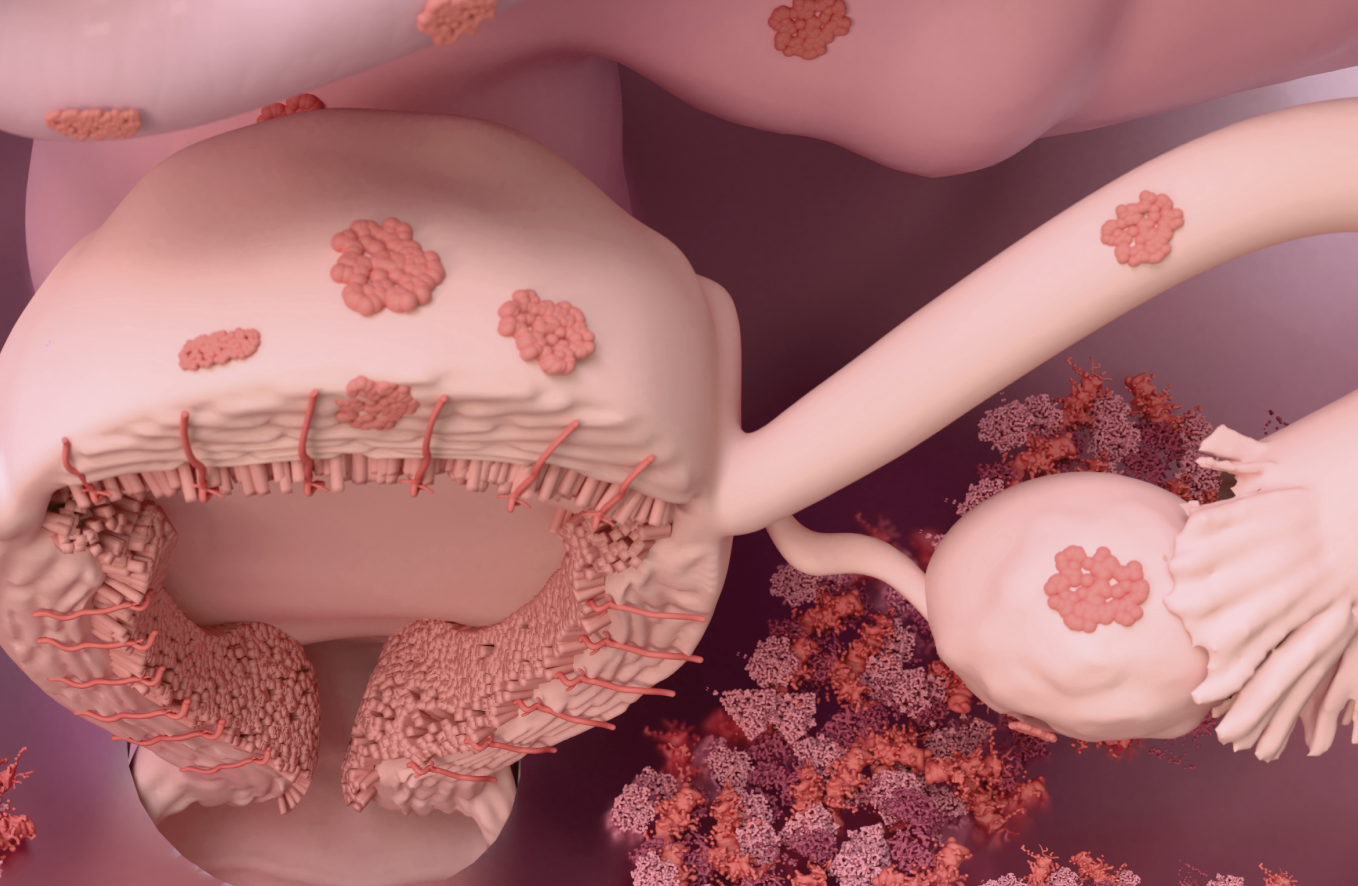
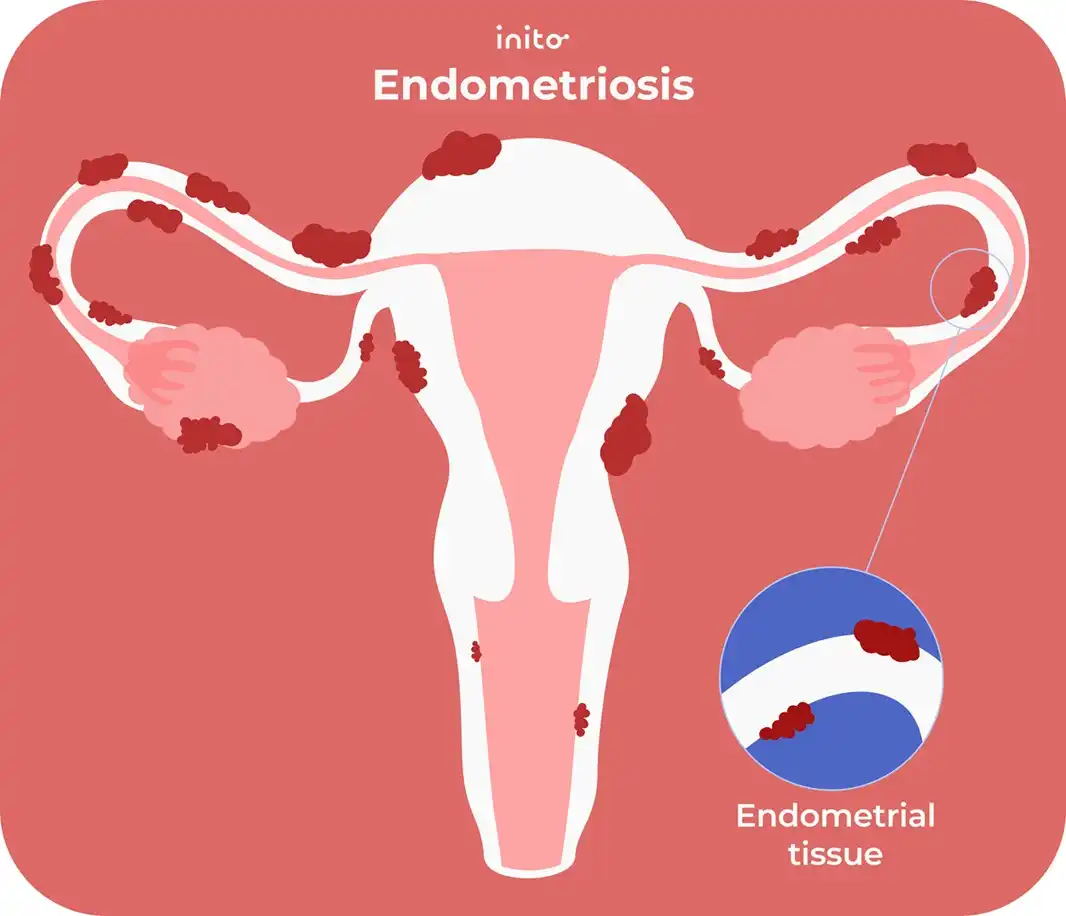
When endometrial tissue grows outside the uterus, it is known as endometriosis.
Your uterus is lined with tissue known as endometrial tissue. Each menstrual cycle, your body grows new tissue to prep for a fertilized egg. But sometimes, this endometrial tissue sets up a home outside of your uterus. This excess endometrial tissue can be found in the fallopian tubes, ovaries, bladder, abdomen, pelvic lining, and the tissue between the rectum and vagina.
It can also make its way to unexpected places such as your appendix, lungs, diaphragm, sciatic nerves, and even the lungs and the brain (in rare cases).
Why is this misplaced tissue a problem?
Because it also responds to the hormones involved in your menstrual cycle.
However, unlike your uterine lining that sheds every month, this misplaced tissue gets trapped, and that can lead to inflammation, pain, and scarring. Depending on its location, this can also manifest as symptoms that seem entirely unrelated to your menstrual cycle.
Let’s take a look at some of those symptoms. However, first, let’s briefly review the most common symptoms of endometriosis.
What Are the Common Symptoms of Endometriosis?
TL;DR: There’s no one-size-fits-all with this condition. However, there are some common symptoms of endometriosis to be aware of.
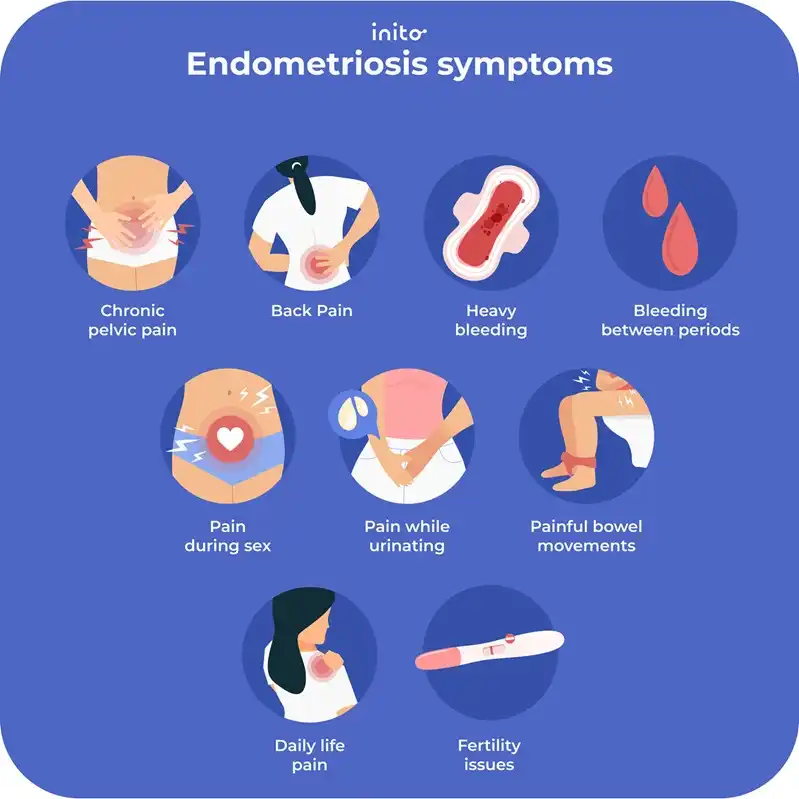
Chronic pelvic pain that increases during your period (Research shows that 29% of women with dysmenorrhea have endometriosis)
- Back pain that worsens during your period
- Abnormal, irregular, or heavy bleeding
- Bleeding between periods
- Pain during sex
- Pain while urinating
- Painful bowel movements
- Pain that interferes with daily life
- Fertility issues
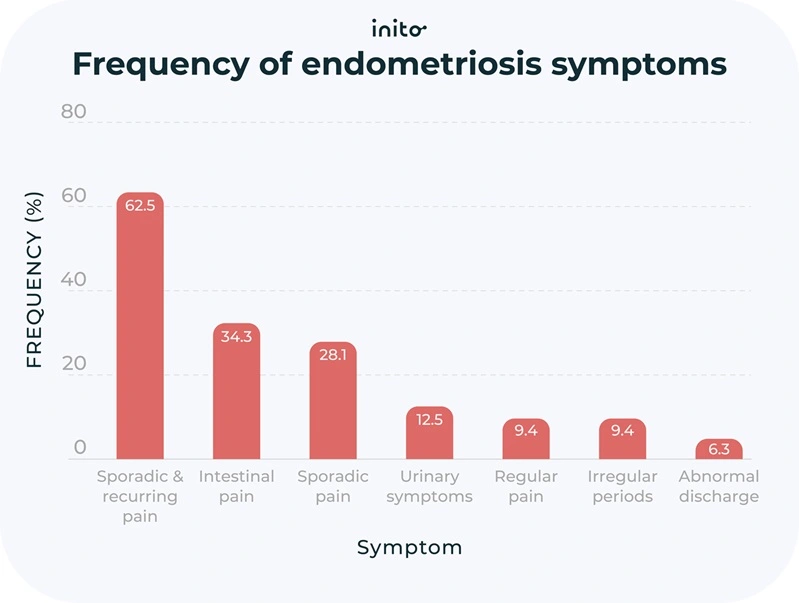
And then there’s the 20-25% of women with endo that have no symptoms at all. This is called silent endometriosis.
Now you may be starting to see how this disease is a mystery. The symptoms are not always obvious, which can make diagnosis tricky.
Speaking of unclear symptoms, it’s time to look at uncommon symptoms of endometriosis that can manifest in the body.
What Are the Uncommon Symptoms of Endometriosis?
Here, “uncommon” doesn’t mean symptoms that rarely happen. Rather, it means symptoms that haven’t been studied as much.
Urinary symptoms
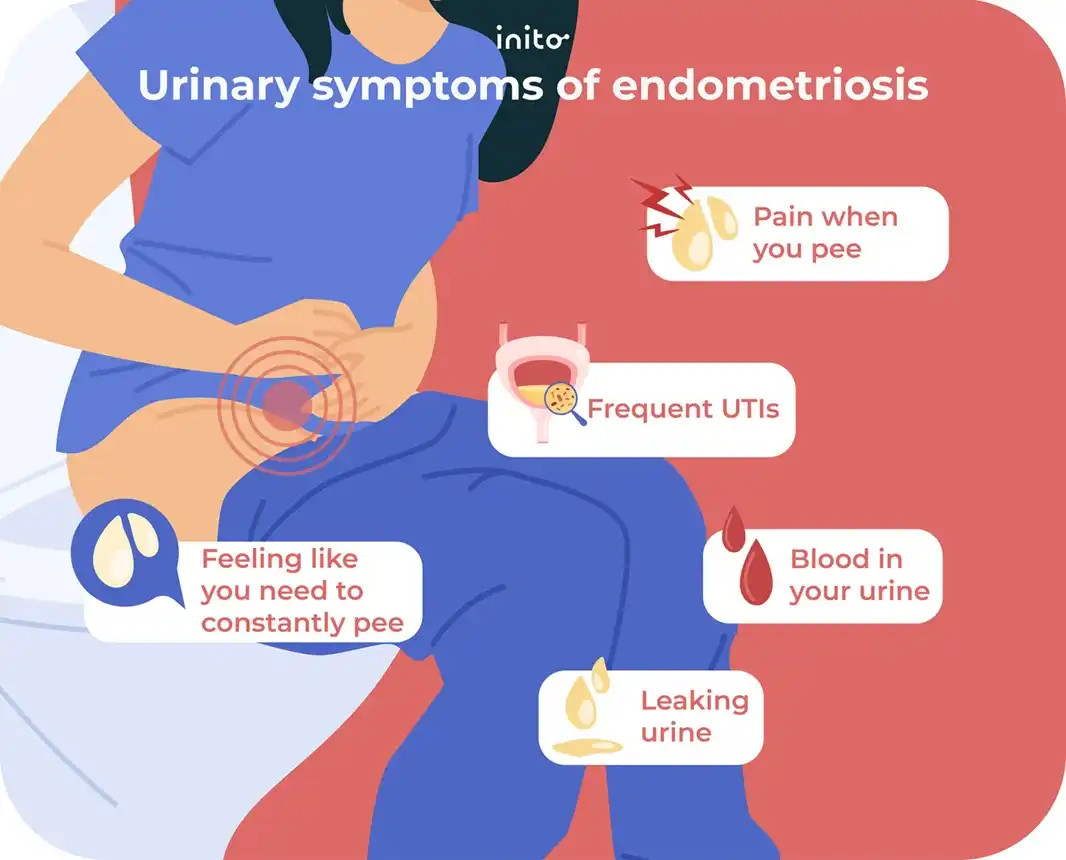
Endo can affect the urinary tract in about 1% of women. And 85% of urinary tract endometriosis exists on the bladder. The symptoms of endometriosis get worse around your period and can be wildly frustrating.
Here’s what you may experience:
- Pain when you pee
- Feeling like you need to constantly pee
- Blood in your urine
- Leaking urine
- Frequent UTIs
All of these uncommon symptoms can make life more challenging and stressful.
Neuropathy
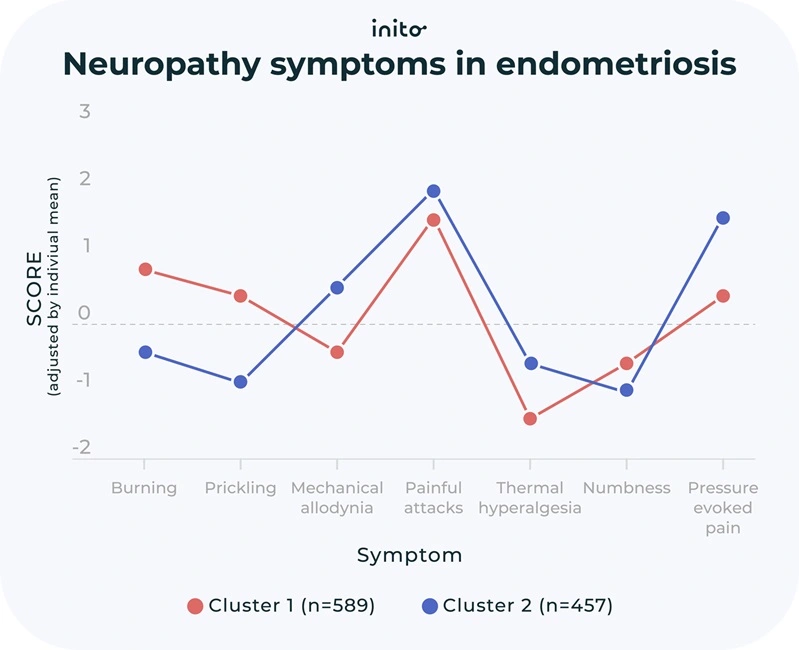
Studies show that in rare cases, endo may affect the nerves and cause neuropathy. This is when the nerves in your body get damaged.
According to a study, these are the most common symptoms associated with neuropathy.
It’s most commonly felt as numbness, tingling, burning, a pin-and-needles feeling, and pain in the leg.
Sciatica
Usually when you hear “sciatica,” you think of a back issue like a bulged disc. But did you know that endo can also cause this problem?
One study looked at a 24-year-old woman experiencing pain in her right hip and buttock. The pain increased during her period and ovulation. Eventually, it became chronic pain, making it nearly impossible for her to sit or lie down comfortably. Meds didn’t help, and doctors turned to an MRI that showed endometriosis on a nerve. This explained both her leg pain and her severe cramps.
We share this to show how endo can affect nerves beyond the pelvic cavity. This disease can appear in unexpected areas of the body and lead to significant health issues.
Leg pain
A study found that 50% of women with endometriosis reported leg pain around and during their period.
Why?
Because most nerves to the legs pass through your pelvis. If one of these nerves passes close to the endometriosis tissue, it can become irritated and manifest as leg pain. You could feel anything ranging from dull aches to throbbing pain.
Many women experience these “uncommon” symptoms, so you’re not alone.
Fatigue
We’ve all had those days where we’ve felt too tired to do anything. With endometriosis, this may be your norm. And it can get even worse right before or during your period.
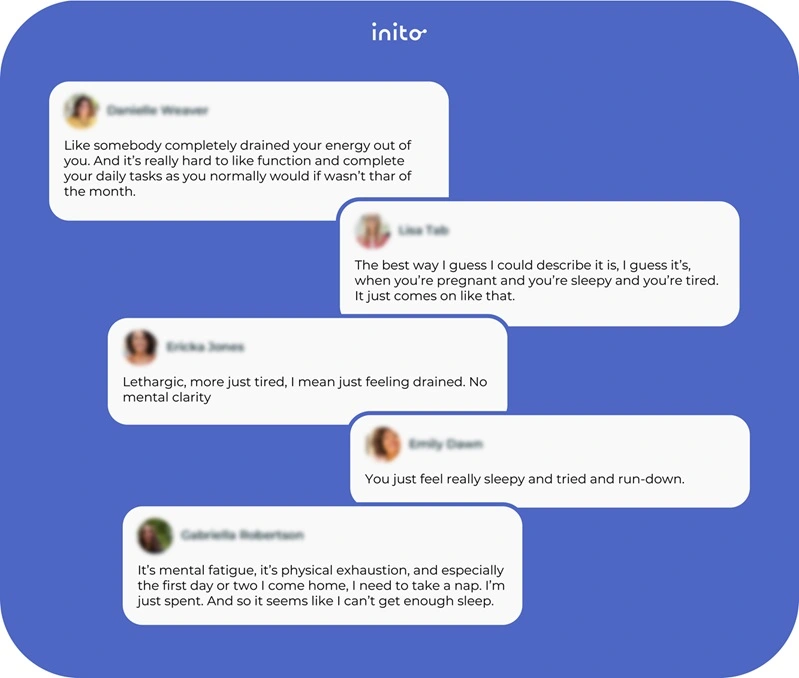
This fatigue is both mental and physical, making simple tasks feel impossible. It may also be due to inflammation and hormonal fluctuations.
But there’s good news. Research shows that patients who experienced less endometrial pain and bleeding also had less fatigue. This means that if you’re able to manage your endometriosis, you may see an improvement in your energy levels.
Here’s what women in one study had to say when asked how to describe their fatigue.
Heartburn
You may be surprised to hear that heartburn can be a symptom of endometriosis. One study found that women with endometriosis are 25% more likely to get heartburn and indigestion.
Further research examined the connection between endometriosis and heartburn. It found that this fire in your stomach may be endometrial tissue in your bowels. This can irritate your digestive system, which equals acid reflux and heartburn.
It could also be thanks to chronic inflammation, which is common for endometriosis patients. This inflammation can affect your gut and cause indigestion. And it may explain why 2.3% of study participants with heartburn had endometriosis.
Other studies have shown a genetic link between endometriosis and gastrointestinal issues.
Thoracic symptoms
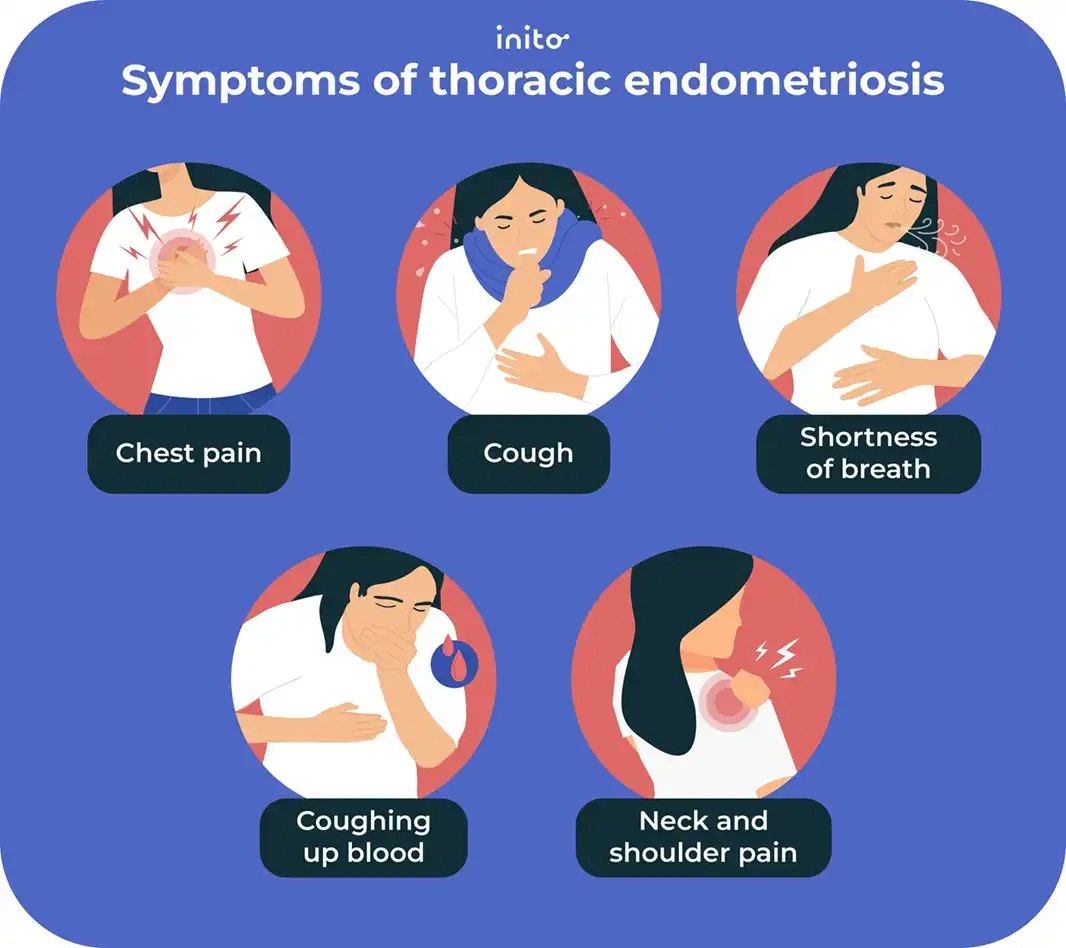
The most common place to find endometrial tissue outside of the abdomen is in your chest (thoracic) cavity. Unexpected, right? This can give rise to symptoms such as shortness of breath, chest pain, and even coughing up blood.
Endometriosis in the chest can rub the lining of your lungs and diaphragm the wrong way. This causes tightness and severe pain as well as issues with the nerves in your chest. You’ll find this pain is worse around your menstruation, right before you ovulate, and even post-sex.
However, not everyone with endometriosis will experience these thoracic symptoms. In fact, many have no symptoms at all.
Random (referred) pain
Referred pain is when pain feels like it’s coming from one place, but the root is actually elsewhere. This can happen with endometriosis. It may feel like the pain is coming from your pelvic floor. But it could really be rooted in your ovaries.
This happens because endometriosis can cause issues with nerve communication. It may send pain signals from the wrong place.
Other symptoms
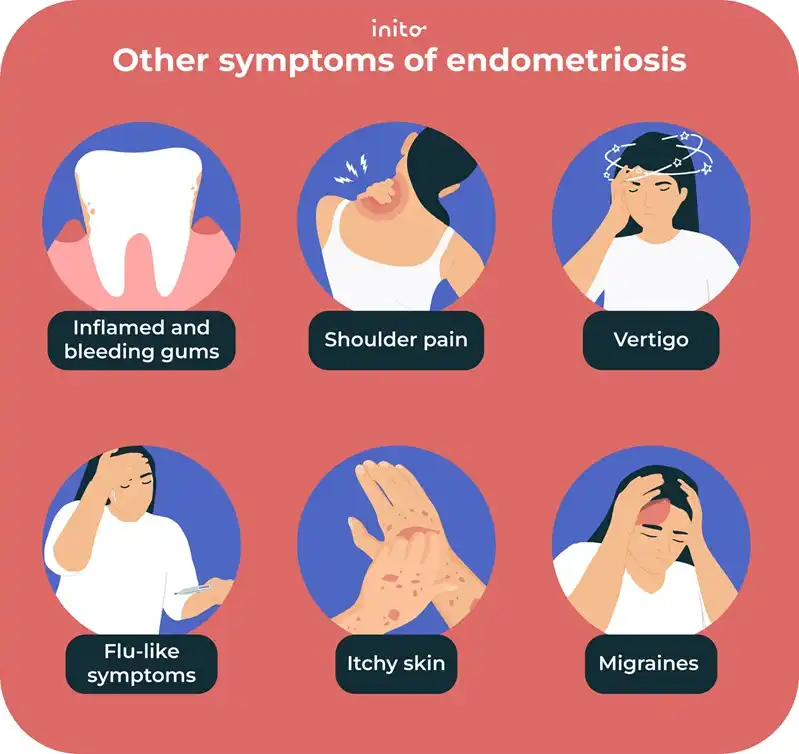
Though not reported in many studies, there are other anecdotal symptoms of endometriosis that patients experience.
They include:
- Inflamed and bleeding gums
- Shoulder pain
- Vertigo
- Flu-like symptoms
- Itchy skin
- Migraines
Many (but not all) women experience symptoms of endometriosis. As you can see, the symptoms can vary significantly. They go beyond the expected pelvic pain.
Understanding the extent and spectrum of symptoms is the first step in improving life with endometriosis.

What Happens if Endometriosis Is Left Untreated?
The handling of endometriosis is a very personal decision. Some patients opt for treatment, while others prefer not to. There’s no wrong answer – there’s only what’s right for you and your unique situation.
Just know that, if left untreated, endo can affect fertility. It can also cause your pain to worsen and put a damper on your quality of life. You may also experience ovarian cysts and issues with urination.
Treating endometriosis can help reduce the chances of these issues. Consult with a healthcare professional to learn how to effectively manage your endometriosis.
The Bottomline
Endometriosis is more than period pain. It can affect nearly every system in your body.
So if you experience any of the 20+ symptoms of endometriosis that we have explained and aren’t related to your reproductive system or are cyclical and correspond with your period, talk to your doctor.
With early diagnosis and treatment, you can manage your endo symptoms. This helps increase your chances of fertility.
FAQs
The first signs of endometriosis may vary woman to woman. But here are some of the common symptoms that may point to endo:
- Pelvic pain that gets worse during your period
- Pain while going to the bathroom or during sex
- Bleeding between periods or abnormal/heavy bleeding in your cycle
- Facing fertility challenges
Yes, it is possible to live a normal, happy life despite having endometriosis. But depending on the exact symptoms you experience, you may want to consider treatment options. Treatment may be especially necessary if symptoms are interfering with your day-to-day life or if you are trying to conceive.
The 4 stages of endometriosis are:
- Stage 1: Minimal
- Stage 2: Mild
- Stage 3: Moderate
- Stage 4: Severe
To determine which stage of endometriosis you have, a doctor will assess the extent of the extrauterine tissue growth that you have.
Doctors and researchers still don’t know the root cause of endometriosis. Some potential culprits could be genetics, environmental factors, or menstrual cycle abnormalities.
Endometriosis begins after a young woman starts puberty and begins having periods. Up to 10% of women between the ages of 15 and 44 are affected by this disease.
For some women, endometriosis tends to flare up during ovulation or menstruation. Symptoms can also worsen after intercourse or due to lifestyle factors like stress and the foods you eat.
While endometriosis doesn’t directly cause weight gain on its own, the symptoms and treatments associated with endometriosis (like fatigue, hormonal imbalances, and certain medications) can contribute to weight gain.
Know more: Can Endometriosis Cause Weight Gain? A Closer Look
Checking for endometriosis usually involves a physical exam, a review of your medical history, and scans such as an ultrasound, or even an MRI or laparoscopy. Each of these is meant to examine the extent and location of the abnormal tissue.
Endometriosis doesn’t typically “go away,” but the intensity of symptoms may fluctuate over time. And with certain interventions like medication, surgery, and lifestyle changes, it’s possible to greatly reduce the intensity of your endo symptoms.
Was this article helpful?
- Polycystic Ovarian Syndrome and Endometriosis as Two Evil Extremes of Health Continuum | NIH
- Recognising, understanding and managing endometriosis | NIH
- Dysmenorrhea and Endometriosis in Young Women | NIH
- Endometriosis and infertility | NIH
- What are your uncommon signs of endometriosis? | Reddit
- Endometriosis and the Urinary Tract: From Diagnosis to Surgical Treatment | NIH
- Neural involvement in endometriosis: Review of anatomic distribution and mechanisms | Wiley
- Is There a Neuropathic-Like Component to Endometriosis-Associated Pain? Results From a Large Cohort Questionnaire Study | NIH
- Endometriosis Involving the Sciatic Nerve: A Case Report of Isolated Endometriosis of the Sciatic Nerve and Review of the Literature | NIH
- A Pilot Study of the Prevalence of Leg Pain Among Women with Endometriosis | NIH
- Patients’ perspectives of endometriosis-related fatigue: qualitative interviews | NIH
- Associations between endometriosis and common symptoms: findings from the Australian Longitudinal Study on Women’s Health | ScienceDirect
- Prevalence of Gastroesophageal Reflux Disease and Proton Pump Inhibitor-Refractory Symptoms | NIH
- Evidence of shared genetic factors in the etiology of gastrointestinal disorders and endometriosis and clinical implications for disease management | Cell
- Thoracic Endometriosis Syndrome: A Review of Diagnosis and Management | NIH
- Pain in Endometriosis | NIH
- Case study of a rare form of endometriosis | NIH