


Content table
Period blood clots are something most women don’t really talk about, even though they’re incredibly common. One study found that 54% of women aged 18 to 45 noticed clots during heavy menstrual bleeding. Another found that 58% of teenage girls experienced the same.
Most menstrual blood clots are considered normal, especially if they’re small and don’t happen often. But if you’re seeing large clots often or dealing with other symptoms, like fatigue or very heavy bleeding, it’s a good idea to talk to your doctor. Most of the time, there’s no need to panic. But it’s smart to pay attention and find out what’s going on.
Key Takeaways
- Menstrual blood is a mix of blood, uterine tissue, cervicovaginal mucus, and other factors.
- Clots usually form when bleeding is heavy and blood pools before it leaves the body.
- Period blood clots are common and often normal, especially when they’re small and occasional.
- Normal clots are soft, jelly-like, dark red or brown, and are smaller than a quarter.
- Clots themselves don’t affect fertility, but the conditions causing them sometimes can.
- Large clots can be a sign of heavy menstrual flow or conditions like fibroids, bleeding disorders, thyroid conditions, or even side effects from certain medications.
- Check with your doctor if clots are large or frequent, bleeding is very heavy, or you have symptoms like dizziness or fatigue.
What Are Period Blood Clots?
First, a quick refresher on your period. Your period blood isn’t technically just ‘blood’ — it’s a mix of blood, shed uterine tissue, mucus, and other secretions. In the medical world, it’s referred to as “menstrual fluid” or “menstrual effluent.” Clots form as a result of menstrual flow pooling and coagulating, leading to jelly-like masses that are a natural part of the process.
When we talk about menstrual blood clots, we’re not talking about the thick, firm clots you’d get from a cut (fibrin clots). Most period blood clots are soft and jelly-like masses of coagulated blood. They’re usually dark red or brown and mixed in with your period flow.
During your menstrual cycle, your body sheds the uterine lining, which mixes with blood cells, mucus, and tissue. That’s what forms menstrual blood clots.
How Are Period Blood Clots Formed?
Clots typically form during heavy menstrual flow, as the blood pools in the uterus and form thick, jelly-like masses of blood. The enzymes that normally break down the blood can’t keep up, and that’s when clots start to form.
For most people, the body handles this process well. Small, infrequent clots are usually not a cause for concern. But when the menstrual flow is especially heavy or slows down, clots form more noticeably.
This doesn’t always mean something serious. Sometimes it’s just your body dealing with a heavier day. But if it’s happening a lot, or you’re noticing large clots frequently, it’s a good reason to get it checked out.
What Do Period Blood Clots Look Like — and What’s “Normal”?
Most period clots are small and nothing to worry about, especially if your periods are regular and your flow is typical for you. Small clots are considered normal and are often part of periods normal for many women.
Bright red clots can show up at the beginning or end of your period when menstrual flow is faster. Here’s what you might notice with normal clots:
- Jelly-like texture
- Dark red or brown color
- About the size of a dime or quarter
- Usually seen on heavier days
But if you’re passing large blood clots (bigger than an inch), and/or you’re soaking through pads or tampons every hour or two, that might be a sign of heavy menstrual bleeding, which is often linked to low ferritin levels or other health issues. Passing golf ball sized clots is not considered normal and requires immediate medical attention.
Patterns matter. A small clot here or there? Probably fine.
Large clots every cycle? Time to check in.
Know more: The 8 Types of Abnormal Menstruation You Should Know About
What Causes Period Blood Clots?
Underlying conditions and medical conditions can contribute to abnormal uterine bleeding and the formation of period blood clots, which is an important part of women’s health and disease control.
Some people naturally have heavier periods. When there’s too much blood, it can pool in the uterus or vagina, and clots form before the blood leaves the body. Menstrual blood clots are usually a symptom, not a condition on their own. They can be caused by different factors, some more common than others.
Hormonal imbalances
Your hormones (especially estrogen and progesterone) help control how your uterine lining builds up and sheds. Hormonal imbalances disrupt the normal menstrual cycle, leading to heavy periods and too much blood, which increases the likelihood of clots forming.
Heavy menstrual bleeding aree caused by hormonal shifts, polycystic ovary syndrome (PCOS), fibroids, or endometriosis. Thyroid disorders can also mess with normal menstrual cycles and cause heavy bleeding and clotting.
Structural causes
Certain changes or growths in the uterus can affect how blood flows, leading to clots. These include:
- Uterine fibroids (non-cancerous growths)
- Polyps (non-cancerous growths)
- Adenomyosis (inner uterine tissue grows into the muscular wall of the uterus)
- Endometrial cancer (less common)
Bleeding disorders
Some people have underlying bleeding disorders that make it harder for blood to clot normally, leading to heavier periods and more clots. Pelvic infections can also lead to heavy menstrual bleeding and the formation of blood clots.
For example, about 80 to 90% of women with von Willebrand disease notice heavy menstrual bleeding with frequent clots. This can cause noticeable clots month after month.
Birth control or IUDs
Some types of birth control, especially copper IUDs, can cause heavier bleeding and make clots more noticeable. This is most common in the first few months after the IUD is placed.
Know more: Can You Get Pregnant After Stopping Birth Control?
Do Period Blood Clots Affect Fertility?
Period clots on their own don’t affect fertility. They’re usually just a sign of something going on during your menstrual cycle.
But if the clots are linked to an underlying condition, like large uterine fibroids or severe endometriosis, those issues can affect the uterine environment or require treatments that could impact fertility.
It’s not the blood clots themselves, but what’s causing them that matters. If you notice a pattern, especially with irregular periods, heavy bleeding, or severe pain, it’s a good idea to talk to your doctor.
When Should You Worry About Period Blood Clots?
It’s important to pay attention to your period, so you know when it’s time to check in with a healthcare provider.
Consider getting a checkup if you:
- Are passing large clots during most cycles
- Need to change pads or tampons every hour for several hours
- Bleed for more than seven days
- Feel dizzy, faint, short of breath, or have a racing heart
- Experience severe cramps or fatigue
These are signs of heavy menstrual bleeding, anemia, or another underlying condition that’s worth looking into.
Also, if you’re on blood thinners, have a bleeding disorder, or a history of severe menstrual problems, it’s a good idea to talk to your doctor if your symptoms are changing or getting worse.
How Should You Track Period Blood Clots?
Tracking your period is one of the easiest ways to understand what’s going on with your cycle. And it’s something you can do at home without any stress.
Here’s what to pay attention to:
Clot size and frequency
Note how often clots show up and how big they are.
- Are they usually small (like a dime or quarter)?
- Do you see larger clots more often?
- Are clots happening in most cycles?
This gives your healthcare provider helpful information to spot patterns or possible issues.
Flow patterns
- How many pads or tampons do you go through each hour?
- Do you experience sudden gushes of blood?
- Do clots appear mostly on specific days of your period?
Other symptoms
Pay attention to things like:
- Dizziness
- Fatigue
- Shortness of breath
- Cramping or feeling faint
These could be signs of anemia or excessive blood loss.
Medications
If you’re on anticoagulants or antiplatelet medications, keep track of any changes after starting them. These can sometimes cause heavier bleeding and more clots.
Track your symptoms
If you’re finding it hard to keep track of your symptoms, consider using the free Inito app. The app tracks 20+ symptoms that helps you effectively keep tabs on your period and gain a deeper understanding of what’s going on in your cycle.
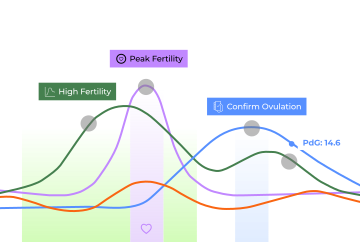
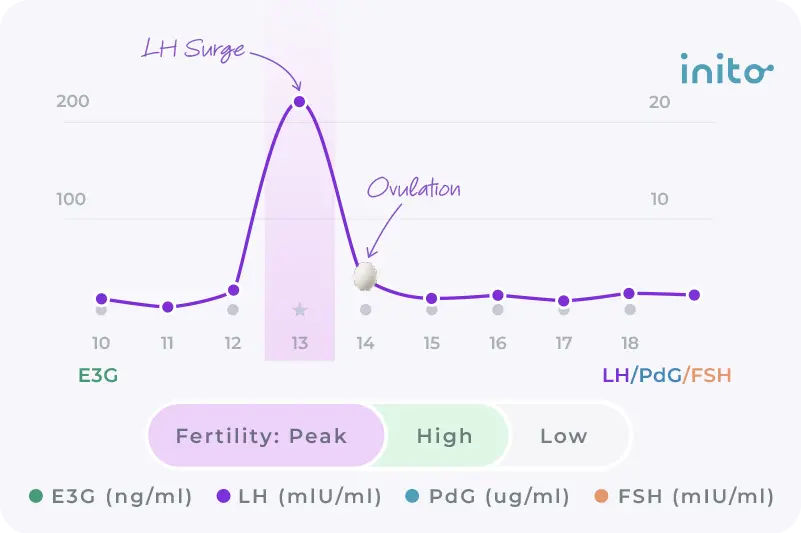
What’s more, the Inito app syncs with the Inito Fertility Tracker which measures four key fertility hormones in your urine. This helps you predict and confirm ovulation, all on a single test strip.
If your results show that you’re not ovulating for two to three cycles in a row, it’s a good idea to check in with your doctor or a fertility specialist.
Summary
Passing period blood clots from time to time is completely normal and usually nothing to worry about.
But if you’re noticing large clots, passing them more often, or having symptoms like soaking through pads or tampons quickly, dizziness or fatigue, or if bleeding lasts more than seven days, your body’s saying, “Hey, let’s get some answers.”
These can be signs of heavy menstrual bleeding or conditions like fibroids, adenomyosis, a bleeding disorder, endometriosis, or even side effects from certain medications.
Also, while period blood clots themselves aren’t usually linked to infertility, the underlying causes (like fibroids or hormonal issues) can sometimes affect it if left untreated.
Paying attention to your period is part of taking care of your overall health. It’s just as important as anything else you do for your body.

FAQs
If you’re passing large clots every cycle, or having them along with heavy flow, dizziness, or fatigue, it’s a good time to talk to your doctor.
Clots that are larger than an inch (about the size of a quarter) and happen almost every cycle are worth checking out. Additionally, if you’re having other symptoms like excessive pain, dizziness, lightheadedness, or shortness of breath, it can indicate an underlying condition.
Track what you see. Note the clot size, how heavy your flow is, and any symptoms like dizziness or tiredness. If anything feels off for more than 2 cycles, check in with your doctor.
If you’re soaking through pads or tampons every hour, passing very large clots repeatedly, or having symptoms like fainting or trouble breathing, go to urgent care or the ER.
Menstrual blood clots include mucus and uterine tissue, not just blood. That’s why they feel soft and jelly-like.
Heavy flow, blood pooling, or conditions like fibroids, PCOS, thyroid issues or hormonal imbalance can lead to larger clots.
No, clots alone don’t affect fertility. But the cause behind them (like fibroids or endometriosis) might, if left untreated.
Large blot clots usually point to a heavier-than-normal flow and might be a sign of heavy menstrual bleeding or an underlying condition like fibroids or a bleeding disorder.
They’re usually dark red, larger than a quarter, and thicker. They may be chunky or stringy and often come with heavy, prolonged bleeding.
Often it’s due to heavy or slow flow. If it’s happening regularly or the clots are large, conditions like fibroids, hormonal changes, or a bleeding disorder could be involved. Track your symptoms for 2-3 cycles and talk to your doctor.
Determinants and Assessment of Menstrual Blood Flow – PMC
The menstrual disorder of teenagers (MDOT) study
Observations on the clotting of menstrual blood and clot formation – ScienceDirect
Evaluation and Management of Abnormal Uterine Bleeding in Premenopausal Women
Abnormal uterine bleeding: The well-known and the hidden face – ScienceDirect
Heavy menstrual bleeding: work-up and management – PMC
Heavy menstrual blood loss in patients with von Willebrand disease: an unsolved problem
Fibroids and reproductive outcomes: a systematic literature review from conception to delivery
Heavy Menstrual Bleeding | ACOG
Primary Hemostasis Disorders as a Cause of Heavy Menstrual Bleeding in Women of Reproductive Age
Heavy menstrual bleeding: assessment and management | Guidance | NICE