Trying to Conceive? How to Increase LH Levels

Published on Jun 29, 2026


Wondering how to increase LH levels? The answer starts with understanding why they’re low.
Luteinizing hormone, or LH, helps your reproductive system work the way it should. In women, LH plays an important role in ovulation. In men, it helps support testosterone production.
Low LH can affect your cycle, fertility, sperm production, and overall hormone balance. Common triggers include chronic stress, over-exercising, poor nutrition, poor sleep, certain medical conditions, or issues with the hypothalamus or pituitary gland.
One common cause in women is functional hypothalamic amenorrhea, or FHA. This stress-related hormone condition accounts for about 30% of secondary amenorrhea cases in women of reproductive age.
We’ll walk through what LH is, why LH levels can run low, how to support LH naturally for men and women, and when it’s time to talk to a doctor.
Key takeaways
- Luteinizing hormone helps trigger ovulation in women and supports testosterone production in men.
- Low LH levels can affect periods, ovulation, fertility, sperm production, energy, and sex drive.
- Stress, under-eating, excessive exercise, poor sleep, obesity, medications, and hormone disorders can lower LH.
- There’s no single food, vitamin, or supplement that can reliably boost LH levels.
- Healthy LH levels depend on communication between the brain, pituitary gland, and reproductive organs.
- Lifestyle changes like better sleep, stress management, enough food, and balanced exercise can help.
- Treatments like clomiphene, gonadotropins, or hCG may be used when medically needed.
- If LH stays low or symptoms continue, it’s best to speak with a healthcare provider.
What is LH?
Luteinizing hormone, or LH, is produced by the pituitary gland, a small hormone-control gland at the base of the brain.
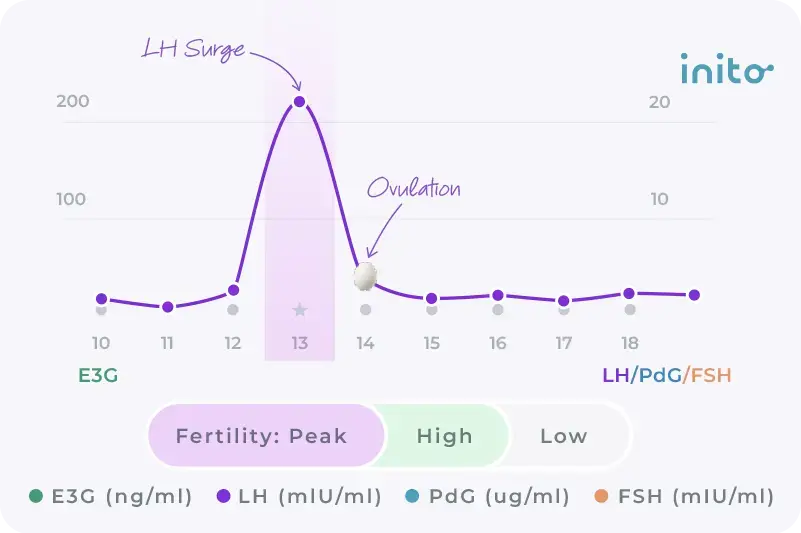
In women, luteinizing hormone helps regulate the menstrual cycle. Its biggest job is triggering ovulation, and after ovulation, it helps support progesterone production.
In men, luteinizing hormone tells the testes to make testosterone. Testosterone matters for sperm production, sex drive, muscle mass, energy, and overall reproductive health.
Women with low LH levels might notice irregular periods or missed ovulation. Men may notice low testosterone symptoms like fatigue or reduced libido. For both, low LH can make fertility more difficult.
Common causes of low LH include:
- Chronic stress
- Excessive exercise
- Obesity
- Poor sleep
- Hormonal imbalances
- Certain medications
- Elevated prolactin levels
- Pituitary disorders like hypopituitarism, pituitary tumors, and Sheehan syndrome
- Genetic conditions like Kallmann syndrome
Know more: How Does LH Surge Impact Ovulation?
Ready to start your fertility journey?
Get Inito Fertility MonitorHow can you increase luteinizing hormone levels?
There isn’t one food, supplement, or shortcut that can boost LH levels overnight. Healthy levels depend on communication between the hypothalamus, pituitary gland, and reproductive organs.
Lifestyle habits play a big role in hormone production and reproductive health. For most people who want to increase LH levels, that's the best place to start.
Stress management
Chronic stress can cause your brain to reduce the signals needed to produce luteinizing hormone. This can interfere with ovulation, fertility, and overall reproductive health.
Activities like mindfulness, yoga, meditation, deep breathing, and relaxation techniques can help regulate reproductive hormones, especially in people with functional hypothalamic disorders.
For women trying to increase LH levels for ovulation, managing stress is often an important place to start.
Healthy body weight and adequate energy intake
If you’re wondering how to increase LH levels in females, energy balance matters a lot.
When body fat gets too low, or you’re not eating enough for your activity levels, your brain may slow down reproductive hormone signals and cause lower LH levels.
Eating more consistently, getting enough protein, adding healthy fats, and giving your body enough recovery time can all help support healthy LH levels.
Know more: How to Naturally Increase Ovulation
Sleep and circadian rhythm support
Inconsistent or disrupted sleep may interfere with GnRH secretion, which can affect reproductive hormone signals and LH production.
Prioritize getting 7 or more hours of restorative sleep each night, maintain a regular sleep–wake schedule, and minimize screen exposure before bedtime.
Balanced diet and nutrition support
No food can directly increase luteinizing hormone. But a balanced diet can help your metabolism and hormone system work better, which can support healthier LH production over time.
High-fiber foods, healthy fats, protein, and key micronutrients give your body the nutrients it needs for healthy hormone production.
Fiber can help regulate estrogen metabolism and support hormonal balance. One study found that dietary fiber can help regulate LH levels.
Know more: 11 Natural Ways and Diet Tips to Balance Your Hormones
Omega-3 fats, protein, and micronutrients like zinc and vitamin D are also linked with better reproductive hormone function and ovulatory health.
Know more: Vitamin D and Fertility: A Complete Guide for Men and Women
How to increase LH and FSH levels in males?
For men, increasing LH and FSH levels often starts with improving the factors that affect hormone signaling.
Low LH can reduce testosterone production, which may affect sperm production, sex drive, energy levels, and fertility.
Lifestyle habits like poor sleep, chronic stress, overtraining, obesity, and not eating enough can slow down communication between the brain and testes.
What medications can help increase LH levels?
The right treatment depends on what’s causing your low LH levels. Your healthcare provider may suggest one or more treatment options.
Clomiphene citrate
In women, clomiphene helps the brain release more LH and FSH, which can support ovulation. It may also improve the chances of an LH surge. In men, clomiphene helps support testosterone production.
Studies show that about 40% to 45% of women taking clomiphene become pregnant within six treatment cycles.
Gonadotropins
FSH and LH injections may be used when the body isn’t making enough reproductive hormones on its own.
In women, they can help stimulate follicle growth and support ovulation during fertility treatment. In men with hypogonadotropic hypogonadism, they can stimulate testicular function and support sperm production.
Human chorionic gonadotropin (hCG)
Human chorionic gonadotropin, or hCG, acts like LH in the body.
In women, hCG injections are used to trigger ovulation in assisted reproductive treatments. In men with hypogonadism, hCG can stimulate testosterone production and support fertility.
Know more: What is Ovulation Induction? A Look at Treatment Options
Can supplements help increase LH levels?
Some supplements and alternative therapies have been studied for reproductive health. However, none have been proven to reliably increase LH levels on their own.
Vitex agnus-castus (chasteberry)
Some studies suggest Vitex may influence prolactin and support the hypothalamic-pituitary-ovarian axis. This may help with luteal phase function and hormonal balance in some people.
A few studies have also looked at LH and FSH, but the results are mixed. So far, Vitex hasn’t been proven to directly or reliably increase LH levels.
Maca root
Maca has long been used as a traditional fertility supplement. Some studies suggest it may support fertility and hormone balance, but the research is still limited.
Know more: Maca Root for Fertility: What the Science Says
D-aspartic acid (DAA)
DAA is a naturally occurring amino acid that’s also available as a supplement. It’s involved in reproductive hormone signaling in the brain and reproductive organs.
Some studies suggest DAA may support luteinizing hormone and testosterone production in men. It may also play a role in follicle development and egg quality in women, but human research is still limited and inconsistent.
Acupuncture
Some research suggests acupuncture may help regulate reproductive hormones in people with infertility or hypothalamic dysfunction.
However, the results have been mixed, and there isn't enough evidence to recommend it as a standalone treatment for low LH levels.
While some supplements have been studied, none have been proven to directly and reliably increase LH levels.

See how Inito will fit into your unique fertility journey
Take 5 min free fertility assessment and get a personalised hormone report
What are “normal” LH levels?
LH levels naturally change based on your age, sex, and reproductive stage. They also rise and fall throughout the menstrual cycle, so one LH test doesn’t always tell the full story. According to the University of Rochester Medicine, “normal” LH levels for men are 1.24 to 7.8 IU/mL. Here are the typical LH ranges for women:
| Time frame | LH level |
|---|---|
| Follicular phase | 1.68 to 15 IU/mL |
| Mid-cycle peak | 21.9 to 56.6 IU/mL |
| Luteal phase | 0.61 to 16.3 IU/mL |
| Pregnancy | < 1.5 mIU/mL |
| Postmenopausal | 14.2 to 52.3 IU/mL |
When should you see a doctor?
You should speak with a healthcare provider if you have:
- Missed or irregular periods
- Difficulty getting pregnant
- Symptoms of low testosterone
- Persistently low LH levels on testing
It’s also important to get checked if you have symptoms that may point to a pituitary or hormone-related issue, like severe fatigue, headaches, vision changes, or unexplained hormone changes.
How to increase LH levels starts with understanding what your body needs.
LH can’t be “boosted” by one food, vitamin, or supplement. It depends on healthy communication between your brain and reproductive organs.
Stress, sleep, nutrition, body weight, hormonal imbalances, and medical conditions can all affect LH levels. Depending on the cause, lifestyle changes, medical treatment, or a combination of both may help improve LH.
If your LH levels stay low, speak with a healthcare provider. You deserve clear answers and the right support.

Reach your fertility goals with full confidence
FAQs
Contributor

Blair Sharp
Women’s Health Writer
Was this article helpful?
Share it on

Get a free guide Luteinizing Hormone (LH) by Inito