


Content table
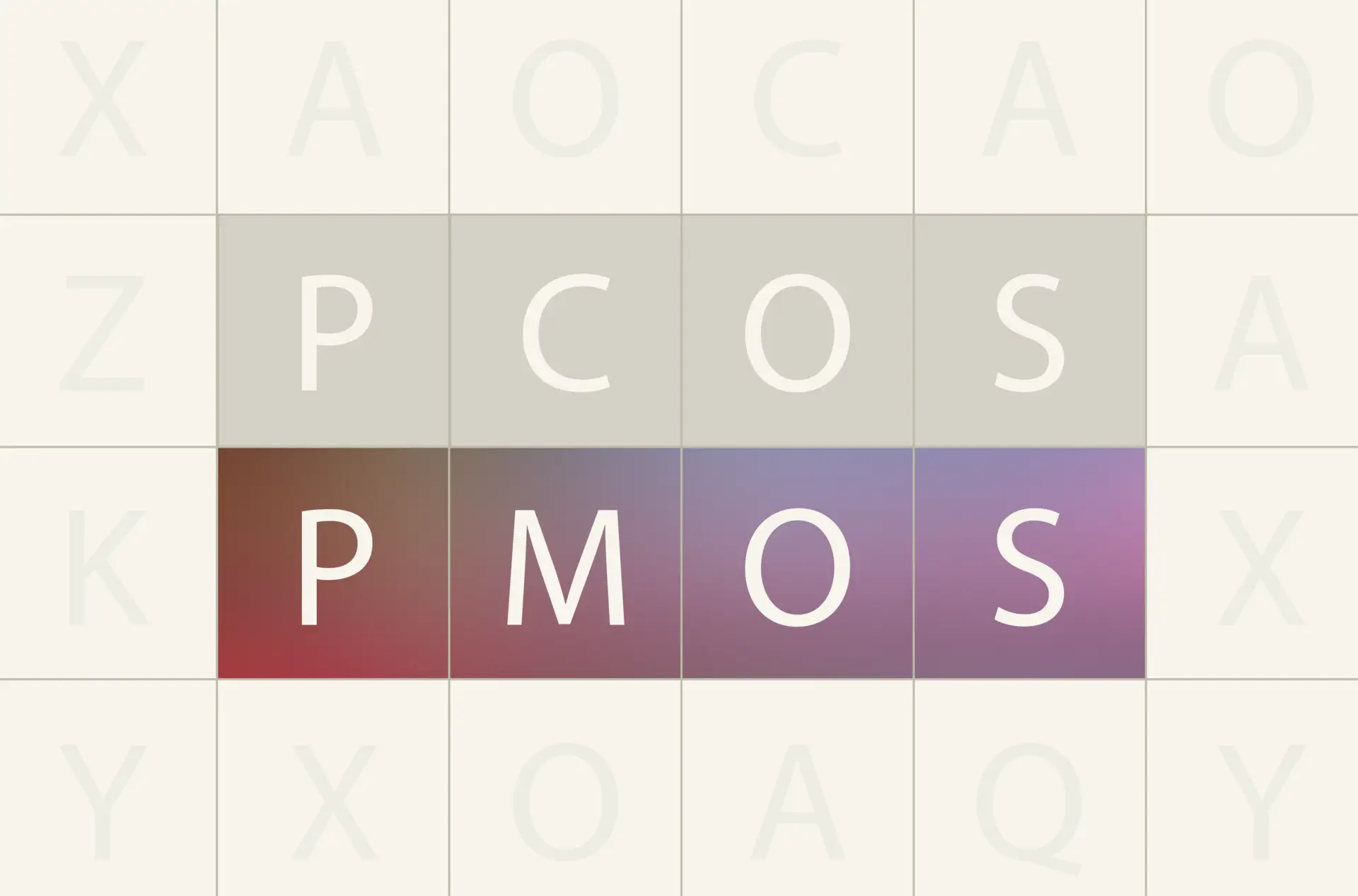
PCOS is now officially being renamed PMOS.
And for the 170 million women worldwide affected by it, this is more than just a medical update.
It reflects a growing understanding that the condition affects far more than just the ovaries — including metabolism, hormones, fertility, and overall health.
So, why was the name changed, and what does it mean for you? Let’s find out.
Key Takeaways
- PCOS has officially been renamed PMOS, which stands for Polyendocrine Metabolic Ovarian Syndrome.
- The proposed name reflects the broader hormonal and metabolic features of the condition.
- The new name was chosen through a global consensus process.
- The name change aims to
- improve awareness,
- reduce stigma,
- support earlier diagnosis,
- and encourage more complete long-term care.
What Is PMOS? What was PCOS?
Key point: PMOS reflects the hormonal, metabolic, and ovarian nature of the condition.
PCOS stands for Polycystic Ovary Syndrome. It is now renamed PMOS —
- P — Polyendocrine: Multiple hormone systems are involved, not just the ovaries.
- M — Metabolic: Insulin resistance and metabolic health are central to the condition.
- O — Ovarian: Your ovaries, ovulation, and fertility still matter — but cysts are no longer the focus.
The condition itself has not changed. But the name has.
Doctors still diagnose using the same criteria previously used. According to the Rotterdam criteria, a diagnosis is made when at least two of the following are present:
- Ovulatory Dysfunction (Irregular or absent ovulation)
- Hyperandrogenism (High androgen levels)
- Polycystic ovaries on ultrasound
Recent international guidelines also allow AMH to be used as an alternative to ultrasound for assessing polycystic ovarian morphology in adults.
In adolescents, only the first two criteria are used.
Over time, researchers realized that the name “PCOS” placed too much focus on the ovaries and “cysts,” when the condition actually involves multiple hormone systems and metabolic processes throughout the body.
Hence the name change.
What Are The Different Phenotypes Of PCOS (now PMOS)?
Key point: PCOS can look very different from person to person.
Because the diagnosis only requires two out of three criteria, PCOS doesn’t look the same in everyone. In fact, there are four distinct presentations — called phenotypes. This variation is one reasons why PCOS has historically been difficult to diagnose and understand.
Phenotype A — Classic PCOS: All three criteria present. Hyperandrogenism, irregular ovulation, and polycystic ovaries. This is the most recognized form.
Phenotype B — Hyperandrogenism and irregular ovulation — but no polycystic ovaries on ultrasound. Some people may not show ovarian changes on ultrasound, but still meet diagnostic criteria.
Phenotype C — Ovulatory PCOS: Hyperandrogenism and polycystic ovaries — but ovulation is regular. Periods may seem normal. This one is easy to miss.
Phenotype D — Non-Hyperandrogenic PCOS: Irregular ovulation and polycystic ovaries — but without signs of excess androgens like acne or excess hair growth.
Here’s why this matters: if your symptoms don’t match the classic image, you may have been told you don’t have it.
These phenotypes help explain why PCOS has been difficult to recognize and diagnose.
Two people with PCOS may have completely different symptoms.
One person may struggle mainly with infertility and irregular periods. Another may primarily experience acne, insulin resistance, or excess hair growth.
This variation is another reason experts felt the old name no longer reflected the full condition accurately. The new term PMOS better captures the broader hormonal and metabolic nature of the disorder.
Why Was the Name PCOS Misleading?
Key point: The old name focused too much on ovarian cysts, when the condition actually involves endocrine, metabolic, and ovarian changes—not just cysts.
The word “cysts” often led to confusion for both patients and, at times, clinicians.
These cysts, which are small fluid-filled structures seen in PCOS, are not true pathological cysts. They are immature follicles that fail to develop properly because ovulation is disrupted.
This also means:
- You can have PCOS without visible polycystic ovaries
- You can have polycystic-appearing ovaries without having PCOS
That confusion can affect diagnosis, awareness, and patient experiences.
Many patients felt dismissed because they didn’t “look like” the typical PCOS presentation. Others experienced delayed diagnosis because healthcare conversations focused too narrowly on ovarian findings instead of the broader hormonal and metabolic picture.
As a result, nearly 70% of cases remain undiagnosed worldwide.
The old name also contributed to:
- Fragmented care that treated symptoms in isolation
- Stigma around weight, fertility, and appearance
- Difficulty navigating research and healthcare policy
- Patient dissatisfaction and a feeling of not being believed
The shift to PMOS is meant to change that.
How Does PCOS (PMOS) Actually Affect Your Body?
Key point: PCOS is a whole-body condition — not just a reproductive one.
PCOS has a genetic and endocrine basis. Here’s what it can affect:
Hormonal:
- Brain signals increase luteinizing hormone (LH).
- This drives excess androgen production from the ovaries.
- Symptoms of high androgen include acne, excess hair growth, and hair loss.
Metabolic:
- Insulin resistance is very common in PCOS, including in many people with lower BMIs. In fact, one study found that around 85% of people with PCOS have insulin resistance.
- This includes around 75% of lean individuals — not just those with higher BMIs.
- This may increase the risk of type 2 diabetes, high cholesterol, and fatty liver disease.
Cardiovascular:
- Research also shows higher long-term risks for cardiovascular disease, stroke, and metabolic complications.
Reproductive:
- Irregular periods, infertility, pregnancy complications.
- Increased risk of endometrial cancer.
Psychological:
- Depression, anxiety, and eating disorders.
- Reduced quality of life.
PCOS (PMOS) touches nearly every system in the body. While the old name focused mainly on the ovaries, we now understand the condition as a broader multi-system disorder.
How Was The New Name PMOS Chosen?
Key point: The new name PMOS was chosen through a global, patient-inclusive process involving clinicians, researchers, and people with lived experience
The effort to rename PCOS has been ongoing for years.
In 2012, the U.S. National Institutes of Health suggested finding a new name. They felt the current term no longer matched what scientists understood.
Earlier attempts were unsuccessful because there was no coordinated global strategy. This time, it was different.
Monash University’s Centre for Health Research and Implementation led the process, which involved:
- 56 academic, clinical, and patient organizations
- More than 14,000 people with PCOS and healthcare professionals worldwide
The group used surveys, workshops, and expert discussions. They found that 84% of people supported a global agreement on a new name.
The goal was to create a name that was:
- scientifically accurate
- easier to understand
- less stigmatizing
- globally acceptable
- practical to implement
The winning terms — “polyendocrine,” “metabolic,” and “ovarian” — were chosen because they accurately reflect how this condition actually affects the body.
And that led to the new consensus name:
Polyendocrine Metabolic Ovarian Syndrome.
How Does the PMOS Name Help Patients?
Key point: PMOS encourages better diagnosis, awareness, and whole-body care.
The new name does not change the diagnosis itself.
But it does change how people understand the condition.
The old name often reduced the condition to ovarian cysts alone. The new name points toward the condition’s actual biology: multiple hormonal systems, metabolic health, and ovarian function.
For patients, this can mean better awareness and a more validated understanding of their experiences.
In practical terms, PMOS may help by:
- Reducing confusion and stigma
- Encouraging care that looks at hormonal, metabolic, and mental health together
- Improving research focus and clinical guidelines
- Supporting more coordinated, long-term management
PMOS is not a shortcut diagnosis. It should prompt a more complete workup — not replace one.
What Happens Next With PMOS?
Key point: Healthcare systems and organizations may adopt the terminology gradually over time.
The name change is now being introduced in healthcare systems. It is also being adopted by research organizations and educational programs. Disease classification systems, including ICD coding, are expected to gradually reflect the updated terminology.
The transition is expected to happen gradually over the next three years. It is supported by a global education and awareness campaign. The campaign targets healthcare professionals, governments, and researchers worldwide.
PMOS is expected to be incorporated in the 2028 International Guideline update.
This process will take time. Many people will continue using the term PCOS during the transition period.
But experts hope the new terminology will eventually improve awareness, diagnosis, and long-term outcomes worldwide.
The underlying condition is the same. But the understanding of it — and the care that follows — is finally catching up.
PCOS Is Now PMOS - The Bottom Line
The shift from PCOS to PMOS is about clarity and accuracy. It reflects a better understanding of the condition as a multisystem disorder involving hormonal, metabolic, and ovarian changes — not just ovarian “cysts.”
For people living with this condition, the change helps reflect what they often experience every day. Symptoms can affect cycles, metabolism, skin, fertility, mental health, and long-term health.
It also helps move the conversation away from a narrow view. Instead, it supports a more complete understanding of the condition.
PMOS does not change the condition itself. It changes how we describe it and understand it.
And this matters because better understanding leads to better awareness, better conversations, and more complete care.

FAQs
Yes. PCOS (Polycystic Ovary Syndrome) has officially been renamed PMOS — Polyendocrine Metabolic Ovarian Syndrome. The condition itself hasn’t changed; only the name has.
PMOS is the new name for PCOS. PMOS stands for Polyendocrine, Metabolic, Ovarian Syndrome. It is a whole-body disorder affecting hormones, metabolism, fertility, skin, mental health, and the heart—not just the ovaries.
There aren’t two types — there are actually four phenotypes:
- Phenotype A: Classic PMOS – all three criteria present
- Phenotype B: Hyperandrogenism + irregular ovulation, no cysts
- Phenotype C: Ovulatory PMOS – hyperandrogenism + polycystic ovaries, but regular ovulation
- Phenotype D: Non-Hyperandrogenic PMOS – irregular ovulation + polycystic ovaries, no excess androgens
They refer to the same condition. PCOS was the old name; PMOS is the new official name. It’s a multisystem disorder. It involves hormonal imbalances (especially androgens), insulin resistance, and disrupted ovarian function.
PCOS alone is not enough to qualify you for Ozempic. Some people with PCOS may be prescribed medications like Ozempic to help manage insulin resistance or weight-related complications, but eligibility depends on individual medical history and clinical evaluation.
Know more: The Good and the Bad of Ozempic for PCOS
The 5 signs of PCOS include:
- Irregular or absent ovulation/periods
- High androgen levels (causing acne, excess hair growth, or hair loss)
- Polycystic ovarian morphology on ultrasound (or elevated AMH in some clinical settings)
- Insulin resistance
- Infertility or difficulty conceiving
Know more: Understanding Signs of PCOS: Is Your Monthly Cycle Actually Normal?
PCOS is a complex, multigene condition where risk can be inherited from either or both parents. Research has shown that a father’s cardiovascular history, in particular, is a clinically meaningful risk signal for daughters.
If you’re being assessed, family history from both sides should be discussed with your doctor.
PMOS stands for :
P – Polyendocrine (multiple hormone systems involved)
M – Metabolic (insulin resistance, metabolic health)
O – Ovarian (ovaries, ovulation, and fertility still matter)
S – Syndrome
There are actually 4 different types of PMOS:
- Classic PMOS – Presence of hyperandrogenism + polycystic ovaries + irregular ovulation
- Hyperandrogenism + irregular ovulation, no cysts
- Ovulatory PMOS – hyperandrogenism + polycystic ovaries, but regular ovulation
- Non-Hyperandrogenic PMOS – irregular ovulation + polycystic ovaries, no excess androgens
PMOS Ssymptoms may vary but span multiple body systems:
- Hormonal: Acne, excess hair growth (hirsutism), hair loss
- Metabolic: Insulin resistance, risk of type 2 diabetes, fatty liver, high cholesterol
- Reproductive: Irregular periods, infertility, pregnancy complications, increased endometrial cancer risk
- Cardiovascular: Higher risk of heart disease, heart attack, and stroke
- Psychological: Depression, anxiety, eating disorders, reduced quality of life
- Polyendocrine metabolic ovarian syndrome, the new name for polycystic ovary syndrome: a multistep global consensus process – The Lancet
- PCOS Renamed PMOS in Landmark Global Consensus – EMJ
- Polyendocrine Metabolic Ovarian Syndrome: New name to improve diagnosis and care of condition affecting 170 million women worldwide | Endocrine Society
- PCOS Is Now PMOS: What the New Name Means – ESSI
- Understanding Signs of PCOS: Is Your Monthly Cycle Actually Normal?


