
Content table
You’re in the “two-week wait.” Every sensation feels amplified. Every trip to the bathroom becomes a mission to find clues.
You notice some spots on your underwear and wonder: “Is this my period starting, or is this early pregnancy discharge?”
Vaginal discharge is a natural, healthy fluid. It’s produced by your body to keep the vagina clean and protected. However, hormonal fluctuations drive the changes in the fluid. This means that the difference between discharge before your period and early pregnancy can be very subtle.
We’re here to provide a comprehensive guide on vaginal discharge before your period vs. early pregnancy. We’ll also chat about the science of cervical mucus and how to know if you should reach for a pregnancy test.
Key Takeaways
- Vaginal discharge is a naturally occurring fluid produced by your vagina and cervix.
- Normal vaginal discharge increases during ovulation and during early pregnancy.
- Pre-period discharge is typically thicker and decreases in volume just before the menstrual period begins.
- In contrast, early pregnancy discharge tends to be thinner and more abundant.
- Hormonal changes — specifically the balance of estrogen and progesterone — are the “engine” behind these changes.
- Increased vaginal discharge alone cannot confirm pregnancy. You should always use a pregnancy test for a definitive answer.
What Is Vaginal Discharge?
Vaginal discharge is a natural fluid produced by the cells lining the vagina and the cervix.
Think of it as your body’s self-cleaning system. It helps by removing dead cells and bacteria from the reproductive tract.
In a healthy, reproductive-aged female, it is normal to produce about 1 to 4 mL of fluid every 24 hours.
This fluid is:
- White or transparent
- Thick or thin (depending on the cycle phase)
- Mostly odorless or has a very mild smell
- Acidic, with a pH of around 4.5 (this helps prevent infections)
This acidic environment is your first line of defense. By maintaining this pH, your body prevents the overgrowth of harmful bacteria that lead to a yeast infection or bacterial vaginosis.
What Does Vaginal Discharge Before Your Period Look Like?
Vaginal discharge before your period is typically called luteal phase discharge (Luteal phase is the time between ovulation and your expected period).
During this time, your hormone levels shift dramatically, which directly impacts your cervical fluid.
The role of progesterone
Once the egg gets released, the empty follicle (the corpus luteum) starts releasing progesterone. Rising progesterone is the main driver of the changes in your vaginal discharge:
- Texture: Progesterone makes the cervical mucus thicker and stickier. It often looks like a thick discharge that is slightly tacky.
- Function: This thicker cervical mucus acts as a protective barrier. It forms a plug in the cervix to prevent bacteria or sperm from entering the uterus and makes fertilization at this time unlikely.
- Volume: As you get closer to your menstrual period, the total amount of vaginal discharge usually decreases. You might feel “dryer” during this time.
The estrogen drop
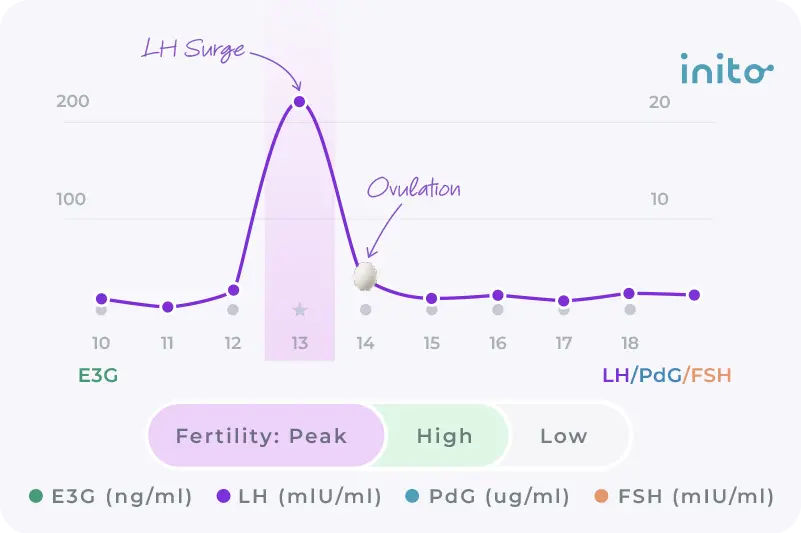
Estrogen peaks right before ovulation. This creates that egg white stretchy mucus.
After ovulation, estrogen production declines. This shift from high estrogen to rising progesterone is why your vaginal discharge changes from watery and stretchy to creamy, thin, or pasty.
What Does Early Pregnancy Discharge Look Like?
Early pregnancy discharge is pretty much the opposite of what luteal phase discharge might look like.
Let’s say a fertilized egg implants into the uterine lining. This causes estrogen levels to rise (instead of their usual luteal phase decline) and also boosts the blood flow to the vagina. These changes ultimately cause an increase in the volume of vaginal discharge during early pregnancy.
- Appearance: It is typically white discharge (milky white) or clear
- Consistency: It usually has a watery discharge consistency or is quite thin
- Purpose: This discharge increases to protect the growing embryo. It helps carry away bacteria and eventually forms the mucus plug in the cervix.
How Does Discharge Before Period Compare To Discharge During Early Pregnancy?
Differentiating between early pregnancy discharge vs. before period discharge means a close look at volume, consistency, and duration.
Feature | Discharge before period (PMS) | Discharge during early pregnancy |
Hormonal influence | Elevated progesterone, falling estrogen. | Sustained high estrogen and progesterone |
Volume | Decreases as the period approaches | Increases and remains abundant |
Consistency | Thicky, sticky, or pasty | Thin, milky, or watery |
Color | White or slightly yellowish | Clear or milky white |
Duration | Lasts a few days and stops with menstruation | Persists consistently throughout gestation |
Pattern | Follows the menstrual cycle | Does not follow a cycle, but continues consistently |
What Are Other Symptoms To Determine Whether It’s PMS or Early Pregnancy?
Because the vaginal discharge before period vs. pregnancy can be so similar, it’s a good idea to look at other symptoms.
Many PMS symptoms overlap with early pregnancy signs, making the “wait” even harder.
Common overlapping symptoms
- Breast tenderness: Both PMS and early pregnancy cause sore breasts or tender breasts. In pregnancy, this is driven by a rapid surge in hormones and increased blood flow.
- Cramping: Cramping in pregnancy can feel like mild tugging or pulling. They’re often called implantation cramps. PMS cramps are usually more intense as the uterus prepares to shed its lining.
- Mood swings: Hormonal fluctuations cause mood swings in both cases.
Symptoms that signal a likely pregnancy
- Missed period: This is the most reliable sign. If your menstrual period is late, it’s time to take a pregnancy test.
- Frequent urination: Rising hormones and increased blood flow to the kidneys can make you pee more often.
- Nausea: Often called “morning sickness” (though it can happen any time) due to rising hCG levels.
- Implantation spotting: A few days before your expected period, you might see very light spotting. Unlike a period, this is usually pink or brown, very light, and only lasts a day or two.
Learn more: PMS vs Pregnancy Symptoms: Spotting the Differences
How Do You Know if You’re Having Abnormal Vaginal Discharge?
Signs of abnormal discharge include:
- Unusual colors: Gray, green, or bright yellow discharge
- Strong odor: A fishy or foul smell (normal discharge is usually odorless)
- Texture changes: Thick discharge that looks like cottage cheese (a classic sign of a yeast infection)
- Irritation: Itching, burning, or redness in the vaginal area
- Additional symptoms: Accompanied by fever or severe pelvic pain
These signs often suggest fungal, bacterial, or yeast infections, or STIs. These conditions affect your reproductive health and require medical evaluation by a healthcare professional.
When Should You Consult a Doctor?
You should contact a healthcare provider if you experience:
- Signs of infection: Any vaginal discharge with a strong foul odor, pain, or unusual color.
- Unusual pain: Severe pelvic pain or burning during urination.
- Pregnancy confirmation: If you get a positive result on a home pregnancy test, you need a doctor to confirm pregnancy.
- Persistent issues: Vaginal discharge that doesn’t follow your typical pattern and causes worry.
Wrapping It Up
Differentiating between discharge before period vs. early pregnancy is a challenge for almost every woman.
Our bodies are complex, and hormonal shifts rarely follow a perfect textbook rule.
Vaginal discharge is a standard and dynamic physiological process. You may have the creamy discharge of the luteal phase or the milky white early pregnancy discharge. Either way, these fluids are doing the hard work of protecting your reproductive health.
Noticing more discharge or a change in consistency can be a clue. But it is not a diagnosis. For women TTC, understanding the patterns of discharge can help reduce confusion and unnecessary worry. However, discharge alone is not a reliable indicator and should not replace confirming pregnancy with a test.
Stay tuned to your body, track your menstrual cycle, and always reach out to a healthcare professional if something feels off.

FAQs
The best way to tell the difference between pre-period discharge and early pregnancy is the volume and consistency.
Pre-period discharge is scanty, thick, and usually dries up right before your period starts. Pregnancy discharge (leukorrhea) remains thin, milky, and increases in volume.
Yes. Early pregnancy discharge is usually thinner and more watery. Premenstrual discharge is thicker and pasty due to the high levels of progesterone.
If you’re pregnant, the “pre-period” discharge can appear clear or milky white and increase in quantity. If you see light pink or brown spotting, it could be implantation bleeding (this happens when the embryo attaches to the uterine lining).
However, the only way to know for sure is by taking a pregnancy test.
Period discharge is actually the shed uterine tissue. Early pregnancy discharge is a thin, white mucus.
If you are pregnant, you will not have a menstrual period. But you may have very light spotting during the implantation.
If you are not pregnant, discharge usually becomes thick, sticky, and white or slightly yellowish.
It often decreases significantly 1-2 days before your period begins.
Discharge before your period is thick and scanty, while discharge during pregnancy appears white and increases in quantity. However, only a pregnancy test can tell you for sure.
Was this article helpful?
Vaginal discharge: evaluation and management in primary care
Patient education: Vaginal discharge in adult women (Beyond the Basics)
Vaginal discharge (vaginitis): Initial evaluation
Vaginal discharge during pregnancy and associated adverse maternal and perinatal outcomes
Cervicovaginal mucus barrier properties during pregnancy are impacted by the vaginal microbiome
Pathological vaginal discharge among pregnant women: Prevalence, pattern and related complications