


Content table
If you’ve just started progesterone treatment, you may be asking yourself, “How long does it take for oral progesterone to work?” That all depends on why you’re taking it, who you are, and what you mean by “work”.
Oral progesterone has many uses. Some women take it for:
- Birth control
- Hormone therapy
- Irregular periods
- Endometrial support (during fertility treatments)
Studies show that oral progesterone gets absorbed pretty fast. Blood levels peak within about 2–3 hours. Progesterone levels stay high for 12–24 hours, depending on the dose and formula.
Since oral progesterone is quickly absorbed, you may notice effects shortly after taking it. However, it can be a while before you see the full benefits of treatment.
Key takeaways
- Oral progesterone begins to work in the body within a few hours of ingestion.
- There are different types of oral progesterone, including natural and synthetic versions.
- Taking progesterone with food and using oil-based capsules can improve absorption.
- Generally, oral progesterone is rapidly absorbed and reaches peak blood levels within 2–4 hours.
- Clinical effects such as cycle regulation, fertility support, or menopausal symptom improvement may take weeks of consistent use.
- Therapeutic outcomes are best measured over time rather than immediately after a single dose.
- Oral progesterone’s overall effectiveness is influenced by factors such as dosage, food intake, metabolism, and formulation.
What Is Oral Progesterone?
Oral progesterone is the progesterone supplement taken by mouth. It may come in capsules or tablets. You may need certain doses at different times of the day.
Not all progesterone is the same. Some progesterone medications are “natural.” Others are synthetic, or man-made.
The two main types include:
- Natural micronized progesterone
- Synthetic progesterone-like hormones (progestins)
Micronized progesterone is natural. Labs process it into very small particles. That makes it easier to absorb.
Progesterone formulations may also be taken other ways, including:
- Injected into the muscle
- Vaginally
- Rectally
- Transdermal (through the skin)
Natural and synthetic progesterone work in similar ways. But there are some key differences you should know.
Check out the table below to see how they match up.
Natural Progesterone | Synthetic Progesterone |
|
|
Why Do Doctors Prescribe Oral Progesterone?
There are lots of reasons your healthcare provider might recommend oral progesterone. Here are some of the big ones.
Fertility and Pregnancy Support
Progesterone helps prepare the lining of uterus for pregnancy. It supports the implantation, which is when the embryo attaches to the uterus.
Oral progesterone may be prescribed during fertility treatments. It can also help women who have had past miscarriages, a threat of miscarriage, or a condition associated with infertility, called luteal phase deficiency.
Know more: Oral Progesterone and Pregnancy? What You Should Know
Irregular or Absent Periods
Progesterone may be used to trigger withdrawal bleeding in women with irregular or skipped periods. It helps get the menstrual cycle back on track. This is useful for women with polycystic ovary syndrome (PCOS) or polyendocrine metabolic ovarian syndrome (PMOS).
Hormone Replacement Therapy (HRT)
If you haven’t had a hysterectomy and you take estrogen, your doctor may add progesterone to your treatment plan. Progesterone helps protect the uterine lining from growing excessively.
This combination can help manage menopause symptoms and support better sleep.
Birth Control
Synthetic progestins are often part of hormonal contraceptives. You may find them in birth control pills, hormonal intrauterine devices (IUDs), implants, and injections.
Summary of Uses
Here’s how one study summed up the many uses of oral progesterone:
Diagnostic use (progesterone or progestin challenge test):
- Primary and secondary amenorrhea
Therapeutic use:
- Primary amenorrhea
- Abnormal uterine bleeding associated with ovulatory dysfunction
- Luteal phase deficiency
- Polycystic ovary syndrome (PCOS)
- Secondary amenorrhea
- Functional hypothalamic amenorrhea
- Premature ovarian insufficiency
- Perimenopause
- Menopause
How Long Does Oral Progesterone Take to Work?
Oral progesterone is absorbed within hours of swallowing it. For instance, 2–3 hours after taking 100–300 mg oral micronized progesterone, blood progesterone levels usually peak.
Levels remain high for about 12 hours. Ultimately, progesterone stays above your baseline for at least 24 hours.
As you keep taking it, progesterone stays higher for longer. Say someone takes 100 mg in the morning and 200 mg at night for five days. The levels of progesterone can stay elevated for up to 36 hours.
After stopping, levels may fully return to baseline after 84 hours (3.5 days).
Vaginal Vs. Oral Progesterone
One study compared oral and vaginal progesterone. Researchers found that after taking 200 mg of oral micronized progesterone, it took four hours to reach peak levels in the blood.
That said, it can take longer to notice clinical effects. Women looking for fertility support, period regularity, or fewer menopause symptoms may say it was weeks or months before they noticed a real difference.
Fertility and Luteal Phase Support
Progesterone can help prepare the uterine lining for implantation soon after it’s absorbed. But doctors may want to give progesterone treatment more time to work before checking its effects.
Oral dydrogesterone is a type of synthetic progestin. It may get absorbed more easily and provide stronger luteal support. Studies show that oral dydrogesterone led to higher clinical pregnancy rates compared to vaginal micronized progesterone.
What Does This Means for Fertility Tracking?
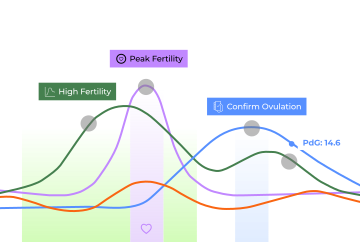
Some women using oral progesterone while tracking with the Inito Fertility monitor may wonder how to interpret their PdG levels.
Note: Inito doesn’t differentiate between the progesterone your body makes and external progesterone supplements. You can confirm ovulation with the help of the Inito fertility monitor by observing a steady and consistent rise in PdG levels before starting progesterone treatment. Once you start taking progesterone, your medication may impact your PdG readings. If you’ve been prescribed progesterone, it’s best to have a chat with your doctor first.
IVF or Early Pregnancy Support
Progesterone treatment typically begins on the day of egg retrieval. It’s continued for 10 to 12 weeks or more afterward.
Progesterone acts fast to support implantation. However, pregnancy outcomes also depend on embryo quality, ovulation timing, and other factors.
Research suggests women taking oral dydrogesterone (30 mg/day) have similar pregnancy success rates to those using vaginal progesterone.
One study reported that pregnancy rates at 12 weeks were:
- 37.6% with oral dydrogesterone
- 33.1% with vaginal progesterone
Another trial found ongoing pregnancy rates of 38.7% with oral dydrogesterone versus 35.0% with vaginal gel.
The first sign of success is a positive hCG test at about 12 days after the embryo transfer. Full confirmation of an ongoing pregnancy comes at 10 to 12 weeks.
Irregular Periods
Women taking progesterone to regulate their periods may notice withdrawal bleeding or menstrual changes within a few days to weeks.
Clinical protocols recommend cyclic progesterone for at least 6 months to achieve and maintain bleeding control.
Standard dosing used in research includes 200 mg nightly for the first 12 days of each calendar month. This is combined with estrogen in post-menopausal women who still have an intact uterus, as hormone replacement therapy (HRT).
Cyclic natural (micronized) progesterone 200 mg/day for 21 days a month may be used for abnormal uterine bleeding, especially if you might get pregnant. But it may cause drowsiness and doesn’t reduce blood loss as much as a progestin does.
Sleep and Menopause Symptoms
Some women feel tired or have better sleep within hours of taking oral progesterone. That’s because progesterone can have calming effects on the brain.
One study found that micronized progesterone significantly improved sleep.
However, relief from menopausal symptoms might not happen right away. Meaningful improvements can happen after several weeks of treatment.
A study of 189 perimenopausal women observed the impact of oral micronized progesterone versus a placebo. Study participants took 300 milligrams every night. The progesterone group had fewer night sweats and better sleep quality during three cycles of treatment.
Another 3-month study gave 133 postmenopausal women 300 mg of micronized progesterone at bedtime. The treatment group had a 55% decrease in symptoms like hot flashes and night sweats. The improvements were even more dramatic in those who started with severe symptoms.
How Can You Tell if Oral Progesterone Is Working?
When it comes to oral progesterone treatment, the term “working” is relative. It depends on what you’re trying to achieve by taking it.
For fertility and luteal support your chance of a successful pregnancy may increase after several cycles of treatment. IVF support may show rising hCG levels (early), followed by ultrasound confirmation of pregnancy when women are consistently using oral progesterone.
Those taking oral progesterone for cycle regulation may have predictable withdrawal bleeding at first. More regular cycles should happen over time.
For sleep and menopause symptoms, improvements can take weeks to develop. But you notice drowsiness or calmness right away.
In general, doctors wait a bit to see the impact of progesterone treatment. They’ll look at different measures, including lab results, cycle patterns, and longer-term effects.
Summary of Effectiveness
Treatment Goal | When You May Notice Effects |
Fertility & Luteal Phase Support | Usually assessed over one or more treatment cycles |
IVF & Early Pregnancy Support | Positive hCG: ~10–14 days after embryo transfer Ongoing pregnancy: 10–12 weeks |
Irregular Periods | Withdrawal bleeding: 2–7 days after stopping treatment Cycle regulation: 3–6 months |
Sleep Improvement | Drowsiness/easier sleep: Within hours to the first night Improved sleep quality: Days to weeks |
Night Sweats & Hot Flashes (Perimenopause) | Improvements typically seen within several weeks and continue over ~3 menstrual cycles |
Menopausal Symptoms | Noticeable improvement within several weeks; maximum benefit often assessed after ~3 months |
Peak Blood Levels | Approximately 2-3 hours after taking oral progesterone |
How Can You Get More Out of the Oral Capsules?
Taking oral progesterone with food boosts oral progesterone absorption.
Age affects progesterone levels. Older women may get higher progesterone levels after the same dose. There are two reasons why. They may absorb more, and it’s not cleared out of their body as fast.
Capsules containing oil and gelatin make oral progesterone even easier to absorb. If you’re not absorbing enough, you may need a higher dose. Higher doses lead to higher levels that stay high for longer.
When Should You See Your Doctor?
Talk to your doctor if you experience severe side effects after taking oral progesterone, such as:
- Dizziness
- Heavy bleeding
- Severe mood changes
- Chest pain
- Shortness of breath
Ask your healthcare provider if you feel like oral progesterone isn’t working for you. They can let you know if you just need more time or if you should try a different dose or formula.
The Bottom Line
Oral progesterone works quickly in the body, but its effects depend on why it is being used. While some changes, like drowsiness or relaxation, may be noticed within hours, clinical benefits such as cycle regulation, fertility support, or symptom improvement usually take consistent use over days to weeks.
Because response varies from person to person, “working” should be understood in context, and progress is best assessed over time with your healthcare provider.

FAQs
When a woman starts taking progesterone, it’s rapidly absorbed into the body within a few hours. Some effects, such as mild drowsiness or relaxation, may occur early, while others develop gradually with consistent use.
After taking progesterone for ten days, steady hormone levels are typically achieved. Depending on the indication, changes may include withdrawal bleeding, cycle changes, symptom improvement (such as sleep or mood), or early support of luteal phase function in fertility treatment.
Progesterone can impact your period. However, every woman will have different effects from progesterone based on several factors.
Your age, body weight, dosage, and baseline hormone levels can impact how much treatment affects you. Only your healthcare provider can figure out the right dose that’s safe and effective for you.
Some forms of oral progesterone can cause drowsiness right away. You may notice calming effects and better sleep on the same day you started treatment.
Other effects (like regulating your period or supporting fertility) can take weeks or months to kick in. Your physician can guide you on what to expect from treatment.
Progesterone can quickly impact mood. The body usually absorbs it within three hours, and it has almost instant calming effects on the brain. However, more stable mood-related benefits (if any) typically require consistent use over time.
Progesterone starts working right away. But noticeable clinical effects may take several days to weeks, depending on the indication and individual response.
The hormone Progesterone helps to prepare the uterine lining for implantation. It promotes attachment of the embryo to the uterus, so it can begin growing and developing into a baby.
Was this article helpful?
- Diagnostic and therapeutic use of oral micronized progesterone in endocrinology | Reviews in Endocrine and Metabolic Disorders
- Oral Natural Micronized Progesterone: A Review of Its Implications in Obstetric Indications | Journal of South Asian Federation of Obstetrics and Gynaecology
- Progesterone: Review of safety for clinical studies | APA PsychNet
- Natural Micronized Progesterone Sustained Release (SR) and Luteal Phase: Role Redefined!! | Journal of Clinical & Diagnostic Research
- Progesterone | Drugs.com
- Progestin | StatPearls
- The Future of Luteal Phase Support in ART and the Role of Dydrogesterone | Frontiers in Reproductive Health
- In vitro fertilisation | Obstetrics, Gynecology & Reproductive Medicine
- A Phase III randomized controlled trial of oral dydrogesterone versus intravaginal progesterone gel for luteal phase support in in vitro fertilization (Lotus II): results from the Chinese mainland subpopulation | Gynecological Endocrinology
- Progesterone 200 mg capsules | EMC
- Abnormal Uterine Bleeding | MSD Manual
- Efficacy of Micronized Progesterone for Sleep: A Systematic Review and Meta-analysis of Randomized Controlled Trial Data | The Journal of Clinical Endocrinology and Metabolism
- Oral micronized progesterone for perimenopausal night sweats and hot flushes: a Phase III Canada-wide randomized placebo-controlled 4-month trial | Scientific Reports
- Progesterone for treatment of symptomatic menopausal women | Climacteric