How to Know If It’s Twins Based on hCG Levels
Published on Mar 23, 2025


Wondering if your high hCG levels could mean twins are on the way?
It’s definitely a possibility. One study found that hCG levels were doubled for twins and nearly quadrupled for triplets. But that doesn’t mean all pregnancies with high hCG mean twins. Keep reading, and we’ll uncover all you need to know about twins, hCG levels, and the signs of a twin pregnancy.
Key Takeaways
- Precise levels of the pregnancy hormone hCG vary quite a bit. So if your early human chorionic gonadotropin (hCG) levels are elevated, it’s hard to tell the exact reason.
- In a twin pregnancy, hCG will be higher. But not all pregnancies with high hCG are a twin pregnancy.
- High hCG can also be seen in a normal singleton pregnancy or a pregnancy with a miscalculated due date. In rare cases, it could be due to a molar pregnancy.
- Your actual hCG levels aren’t as important as the rate at which hCG is rising. So try not to stress too much about your specific hCG levels in early pregnancy!
- Urine pregnancy tests can only tell you if your hCG level is above 20 mIU/mL to confirm pregnancy. But a blood test can give you the exact hCG level.
- Remember, every pregnancy is different. But if you think you’re pregnant with twins? Or if you’re concerned about your hCG levels? Speak to your doctor.
What Are Normal hCG Levels During Pregnancy?
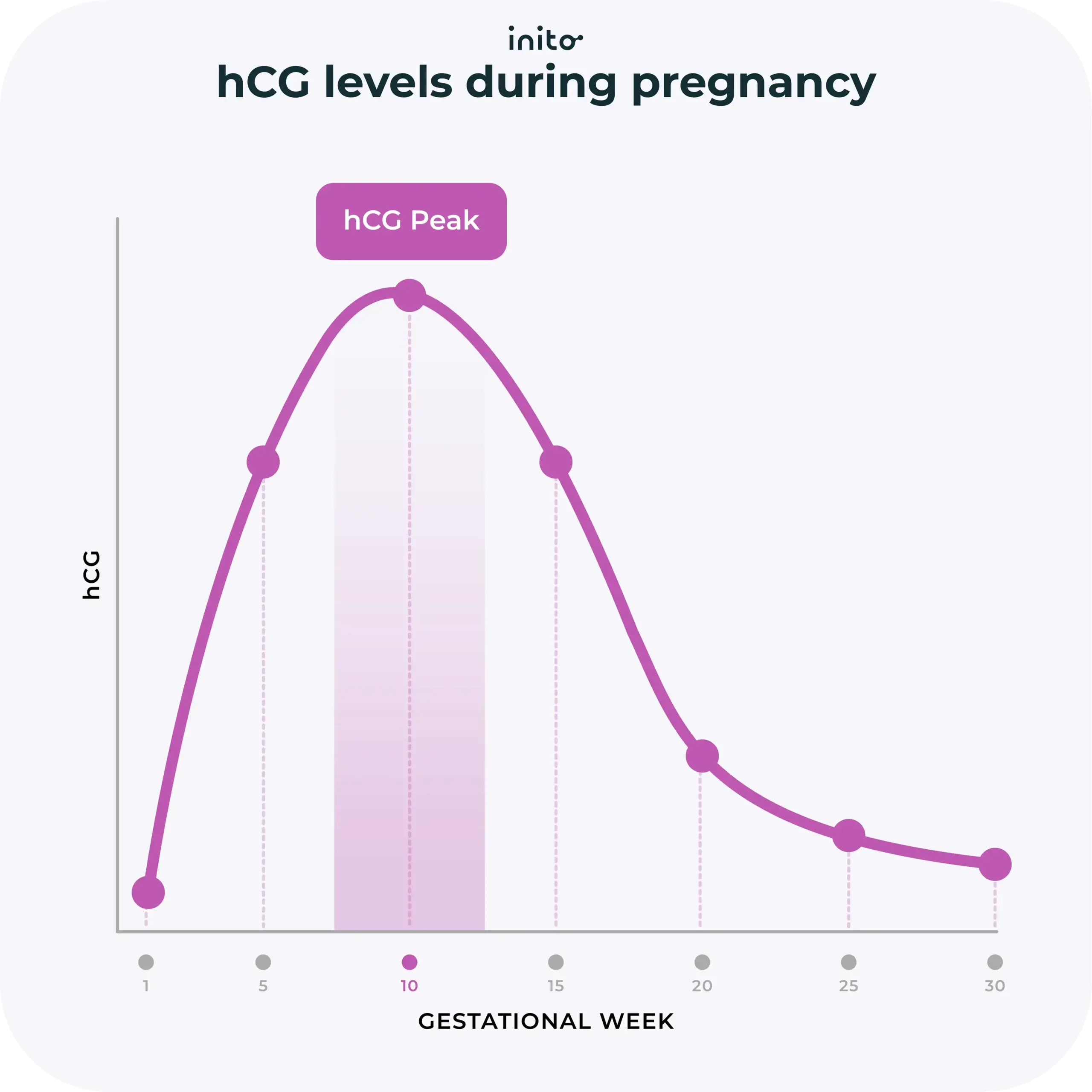
hCG levels vary widely during pregnancy, and there isn’t one “normal” hCG level for every week. What matters more is how hCG changes over time, especially during the first few weeks of pregnancy. In general, your hCG levels double every two days after successful implantation. After about week 6 or 7, this rate begins to slow down. By around 10 weeks of gestation, hCG values typically reach their peak. From there, the levels stay the same or start to decrease. (Either of these routes is normal.) During the remainder of the pregnancy, the normal range of hCG is anywhere from 20,000 to 200,000 IU/L. This is clearly a vast range of hCG levels. So there will be some overlap between singleton and multiple pregnancies. That’s why not every pregnancy with high hCG levels is a twin pregnancy.
Though this trend is seen across all pregnancies, the specific values of hCG vary from woman to woman. In the next section, we’ll first see the general ranges for hCG by week.
Ready to start your fertility journey?
Get Inito Fertility MonitorHow Do hCG Levels Look in a Singleton Pregnancy?
In a singleton pregnancy, hCG levels typically rise quickly during the first several weeks before eventually slowing down and reaching a peak.
hCG levels chart by week for a singleton pregnancy
In the chart below, you’ll see regular hCG ranges for a singleton pregnancy. These values will give you a better idea of how your rising hCG levels compare.
| Week # | hCG Blood Levels (mIU/mL) |
|---|---|
| 3 | 5-72 |
| 4 | 10-708 |
| 5 | 217-8,245 |
| 6 | 152 - 32,177 |
| 7 | 4,059 - 153,767 |
| 8 | 31,366 - 149,094 |
| 9 | 59,109 - 135,901 |
| 10 | 44,186 - 170,409 |
Though the chart shows the normal hCG trend, remember that:
- The values listed here are just for reference. Normal hCG levels vary from woman to woman and pregnancy to pregnancy.
- The rate of hCG increase is more important than your initial hCG levels.
Now that you understand singleton hCG levels, let’s get into what hCG levels look like for multiples.
How Do hCG Levels Compare: Singletons vs. Twins vs. Triplets?
hCG levels tend to be higher in twin and triplet pregnancies than in singleton pregnancies, but the ranges can overlap considerably. This means an hCG value alone cannot reliably tell you how many babies you’re carrying. One study examined over 400 IVF pregnancies and devised a method for calculating predicted hCG levels. The chart below shows predicted hCG levels for twins, singletons, and triplets.
| Blood serum hCG levels by gestation type (in mIU/mL) | |||
|---|---|---|---|
| Number of DPO (Days Past Ovulation) | Singletons | Twins | Triplets |
| 14 DPO | 142 – 211 | 213 – 316 | 422 – 481 |
| 16 DPO | 321 – 476 | 481 – 715 | 954 – 1087 |
| 21 DPO | 1929 – 2867 | 2896 – 4303 | 5745 – 6542 |
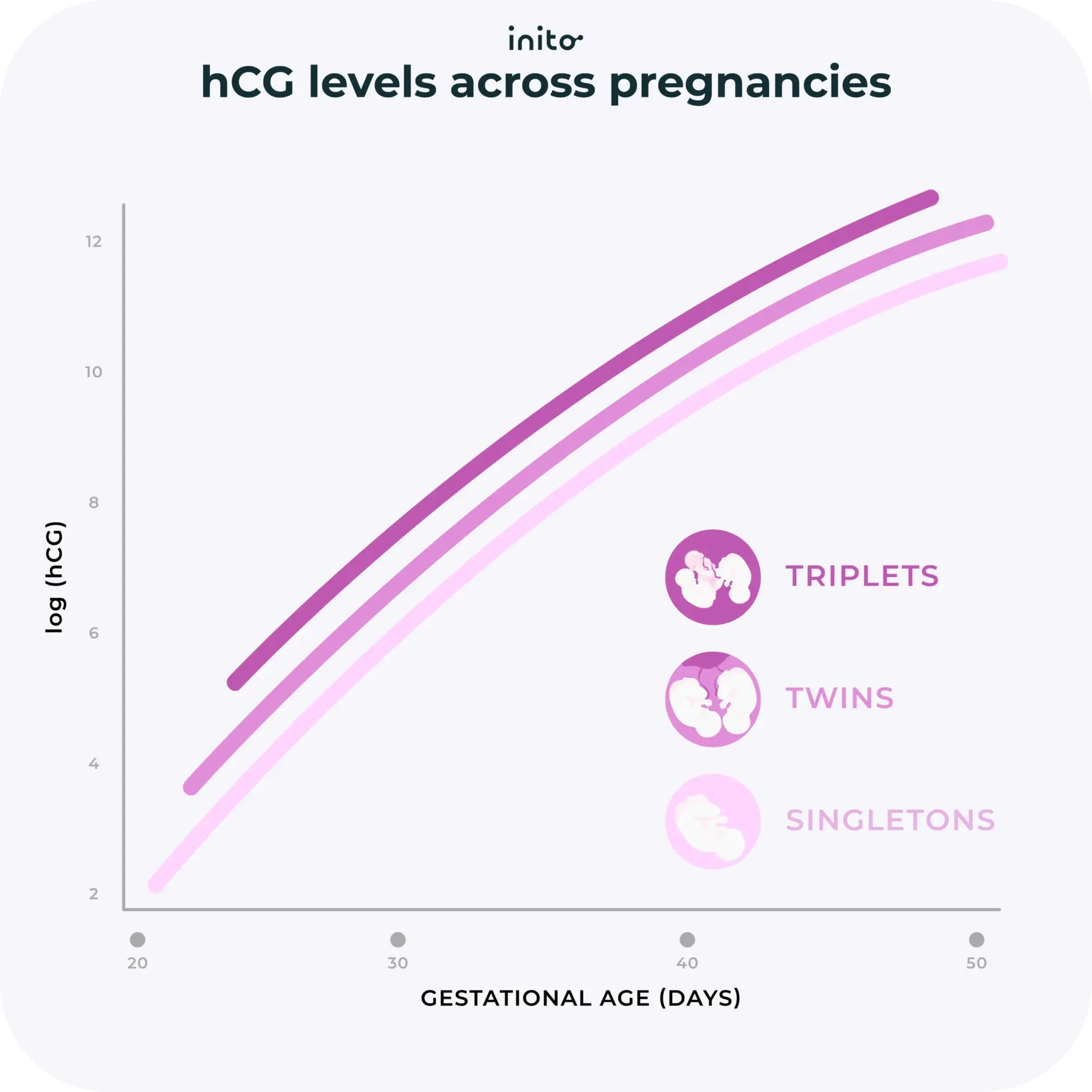
As you can see, the hCG levels for twins at 3 weeks are significantly higher than those for singletons. And for triplets, the levels are 3-4 times higher. However, the general pattern of rising hCG stays the same—the levels double every two days.
Do Twin Pregnancies Always Have Higher hCG Levels?
In most cases, twin pregnancies have higher hCG levels. Research shows that higher hCG levels come with the territory of having twins. However, remember that the range of normal hCG levels varies significantly. Therefore, there will be significant overlap in levels between twin pregnancies and singleton pregnancies. That means high hCG doesn’t always indicate a twin gestation. Therefore, there will be significant overlap in levels between twin pregnancies and singleton pregnancies. That means high hCG doesn’t always indicate a twin gestation. But let’s take a closer look at what the latest studies suggest about twin pregnancy and hCG. Check out this table below for some recent findings:
| Study | Purpose of the study | Findings |
|---|---|---|
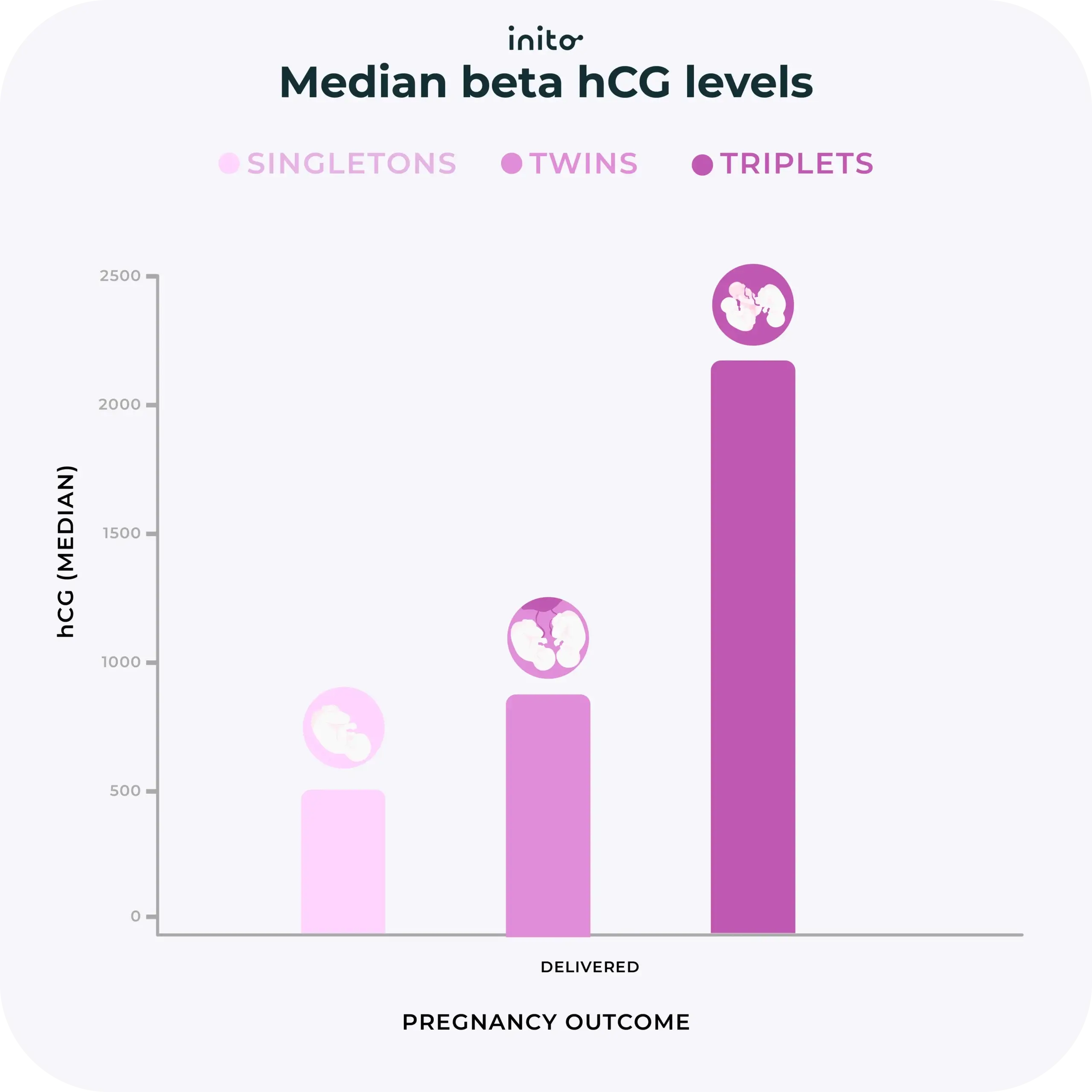
| Study 1 | To assess the role of beta hCG levels in predicting multiple pregnancies. | Median values of beta hCG (in IU/L) in singleton, twin, and triplet pregnancies were - Singletons: 502 Twins: 1,093 Triplets: 2160 These values are statistically significant and can be used to differentiate between singleton and multiple pregnancies. |
| Study 2 | To examine the rise in the rate of hCG in IVF pregnancies. To evaluate the relationship between hCG levels and potential causes. | The hCG rising pattern was the same across singleton and multiple pregnancies. However the starting hCG levels for the twin and triplet groups were higher than the singleton values. |
| Study 3 | To compare beta hCG and estradiol levels in twin and singleton pregnancies undergoing ART. | Levels of hCG and estradiol were more than double the amount for twin pregnancies. |
| Study 4 | To determine hCG’s role in stimulating the thyroid gland in early pregnancy. | Twin pregnancies reached higher hCG peak levels at 9 – 11 weeks of gestation. Levels also remained higher for longer with twins: Singletons - hCG levels stayed above 75,000 U/l for no more than 1 week Twins - hCG levels stayed above 75,000 U/l for up to 6 weeks |
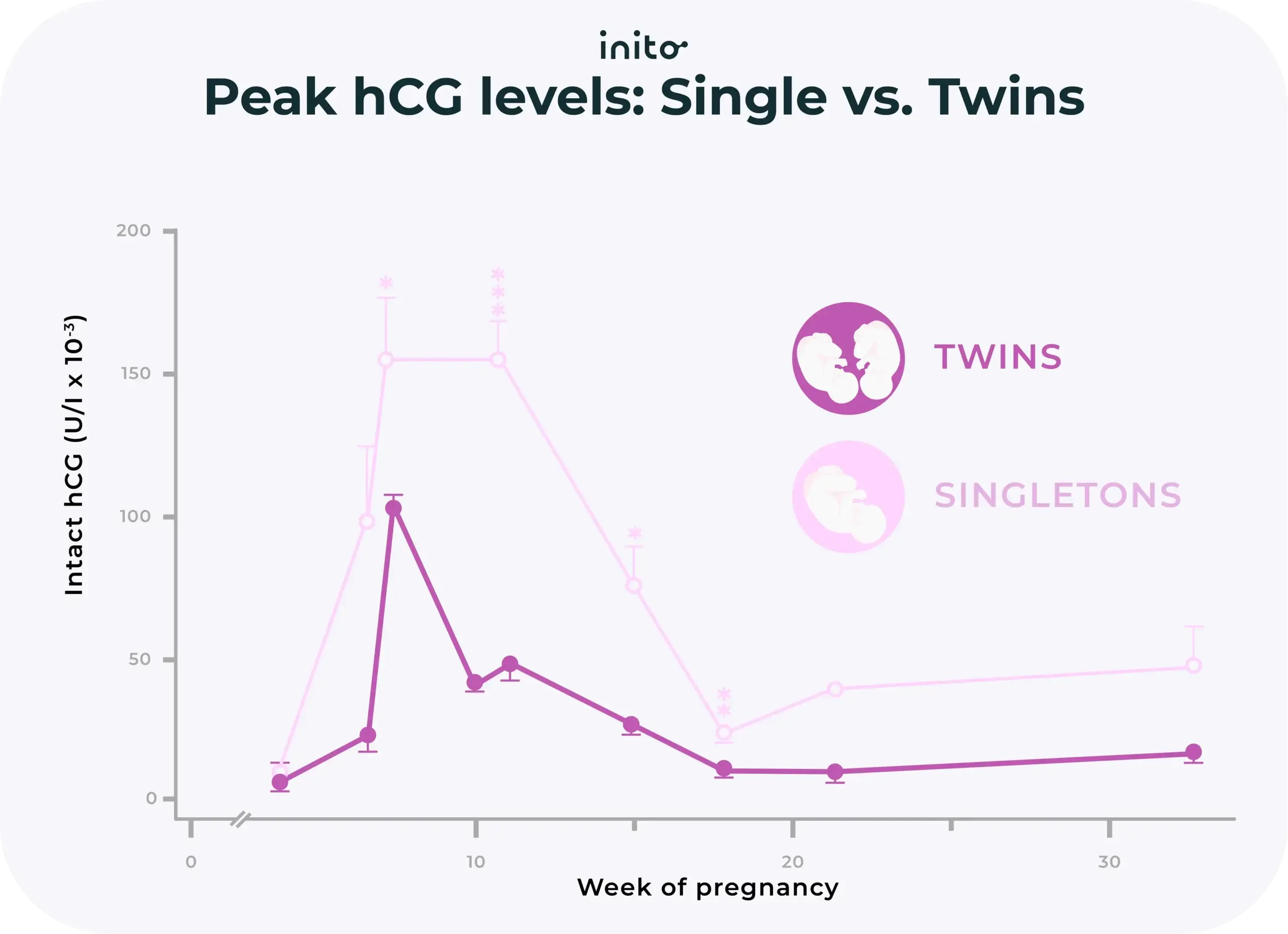
All in all, these studies indicate that twin pregnancies exhibit higher levels of hCG and maintain these levels for a longer period than singleton pregnancies. But when can you be sure if a twin gestation is causing your higher hCG? Let’s discuss.
How Early Can Twins Be Detected?
Twins can often be detected on an ultrasound in early pregnancy, typically around 6-7 weeks, depending on the type and timing of the scan. And if you’re undergoing ART, it could be even earlier. hCG levels may raise suspicion of twins earlier, but they cannot confirm a twin pregnancy on their own, since there's a considerable overlap. In the next section, you’ll learn other factors (besides twins) that can cause higher hCG levels.
What Are Other Causes of High hCG Levels?
As mentioned, not all instances of high hCG are caused by twins or triplets. They can also be related to factors such as individual variations, miscalculated date of conception, or certain pregnancy-related conditions.
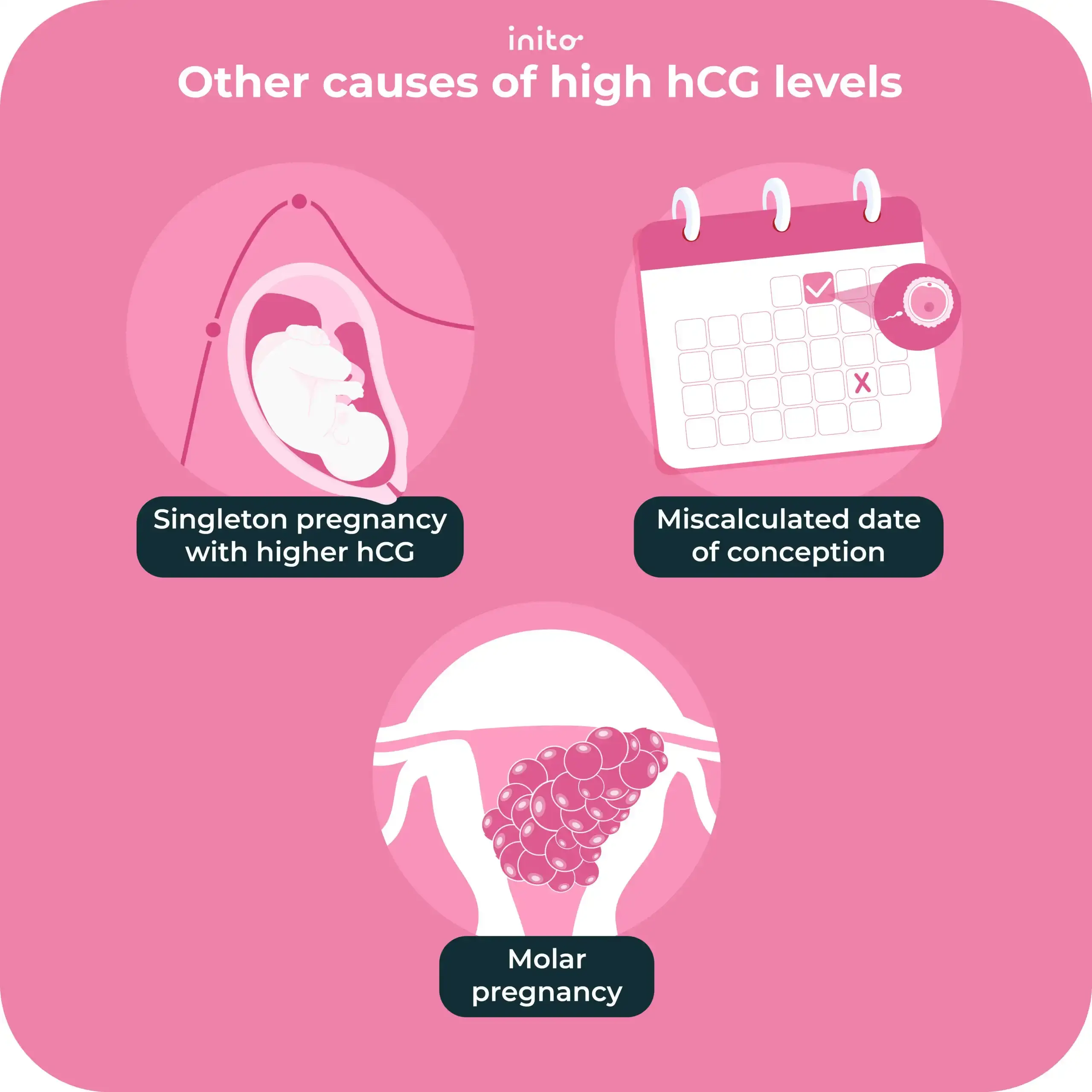
1. Singleton pregnancy with higher hCG
In some singleton pregnancies, higher hCG levels are completely normal. This is because the range for normal hCG levels is very wide. For instance, one healthy pregnancy could have 20,000 mIU/mL hCG levels, and another normal pregnancy could have 200,000 mIU/mL. To determine the health of a pregnancy, it’s better to consider the doubling rate of hCG. And try your best to avoid comparing levels with other women. Every pregnancy is unique.
2. Miscalculated date of conception
You could have higher levels of hCG if you are further along in the pregnancy than you thought. This may happen if you mix up your Last Menstrual Period (LMP) date. It can also occur if you ovulated earlier than you thought.
3. Molar pregnancy
In rare cases, higher hCG could mean a type of pregnancy complication called a molar pregnancy. This occurs in 1 in 1,000 pregnancies. In this type of pregnancy, the fertilized egg continues to divide, eventually forming a blastocyst. The blastocyst can implant into the uterine lining, but it will not lead to a normal pregnancy. Instead, the cells that create the placenta progress abnormally. As a result, the fetus can’t grow normally. If the fetus does grow at all, it will end in a miscarriage, unfortunately. At this point, we’ve seen what can cause higher levels of hCG. But if you’re wondering about other twin pregnancy signs to look out for, keep skimming.

See how Inito will fit into your unique fertility journey
Take 5 min free fertility assessment and get a personalised hormone report
What Are Other Signs You Might Be Having Twins?
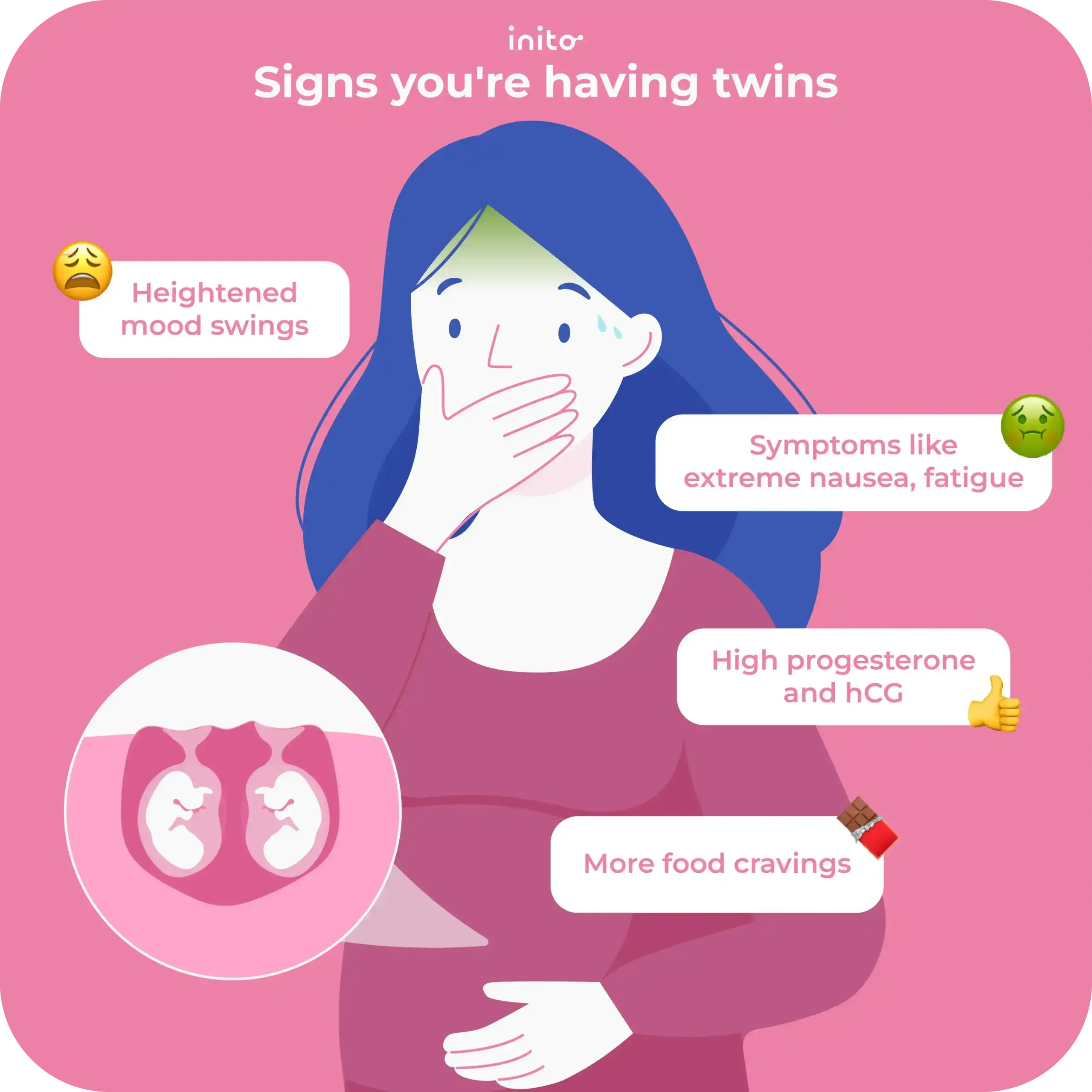
There are no surefire symptoms that can reliably tell you that you’re having twins. But you could experience normal pregnancy symptoms at a higher intensity. This is because twin pregnancies typically have higher levels of hCG and progesterone. And these can lead to more intense symptoms.
The following symptoms could be heightened in a multiple pregnancy:
- Nausea and vomiting
- Fatigue
- Food cravings
- Mood swings
Keep in mind that the intensity of these symptoms will vary from woman to woman in a twin or singleton pregnancy. It all depends on how your body reacts to hCG. That’s why more intense symptoms don’t definitely mean you are having twins. Additionally, there could be a greater chance you’re pregnant with twins if your family has a history of twin pregnancies. All this info about signs and hCG levels is helpful to know in predicting a potential twin pregnancy. But how do you actually keep tabs on your levels of hCG?
How Can I Check My hCG Levels?
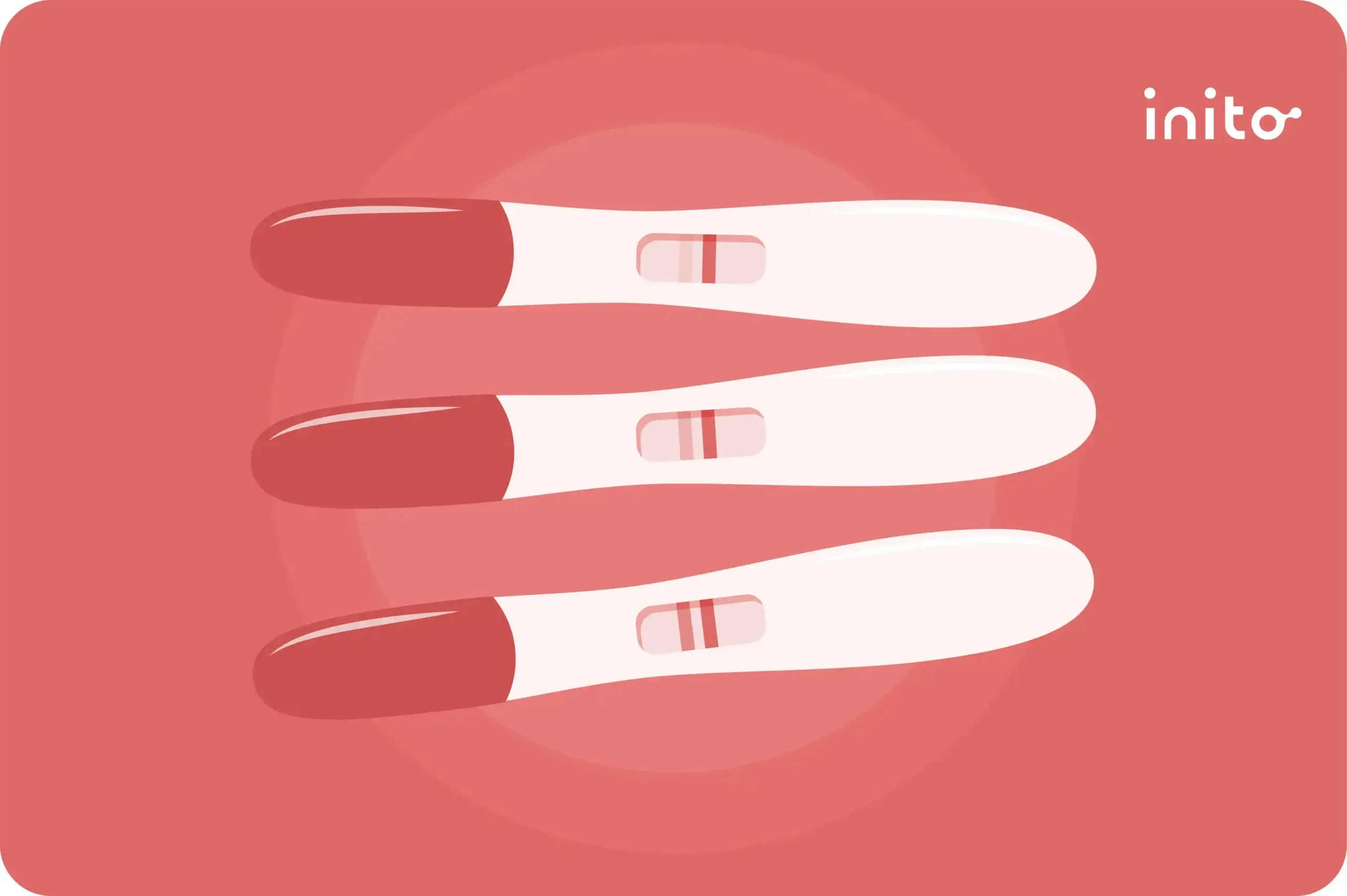
There are two major hCG testing routes: Blood and urine tests. Blood hCG tests are more accurate since they can give you an exact hCG value and help determine if your hCG levels are higher than expected. However, these types of hCG tests are not routine. Typically, you’ll only get an hCG blood test if you’re undergoing any sort of fertility treatment or if your doctor thinks something is wrong. Urine hCG tests can be done at home and are much more common for pregnancy testing. Since these results only give you a positive or negative result, they can’t detect if your hCG levels are higher than normal.


Reach your fertility goals with full confidence
FAQs
Contributor

Paige Figueroa
BSN, RN
Was this article helpful?
Share it on

Get a free guide Luteinizing Hormone (LH) by Inito