

Content table
Do you ovulate with an IUD? This is a fair question, and the answer might surprise you.
IUDs are one of the most popular and effective birth control methods in the United States. And they’re one of the most convenient, too.
There are four FDA-approved intrauterine devices: one hormone-free copper IUD and three hormonal IUDs that release different doses of levonorgestrel (LNG).
Each type of birth control works differently and has a different effect on ovulation.
This article is for you if you’re:
- Tracking your cycle
- Curious about your fertility
- Wondering how IUDs affect your ovulation
Key Takeaways
- You can still ovulate with an IUD.
- Copper IUDs don’t contain hormones and don’t suppress ovulation. They work by impairing sperm function.
- Hormone-releasing IUDs might block ovulation in some cycles, especially in the first year. But most users continue to ovulate.
- With lower-dose-hormone-releasing IUDs like Kyleena and Skyla, the chances of ovulation are much higher than with Mirena (higher dose hormonal IUD).
- IUDs are over 99% effective in preventing pregnancy. They mainly prevent fertilization though, not ovulation.
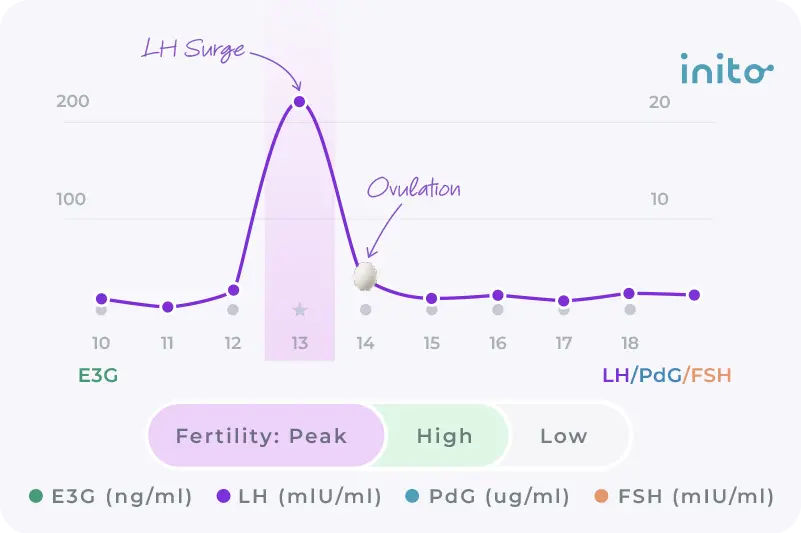
- You might still notice ovulation symptoms like cervical mucus changes or an LH surge while on an IUD.
- Fertility returns quickly after IUD removal. Most women go on to conceive within the next 12 months.
What Is an IUD, and How Does It Work?
An IUD is a small, T-shaped device placed into the uterus by a healthcare provider. It’s one of the most effective forms of birth control available. And it’s one of the most convenient since you don’t have to think about it daily!
There are two types:
- Copper IUDs
- Hormonal IUDs
Do You Ovulate With an IUD?
Surprisingly, yes!
Here’s what the evidence shows for each type.
Copper — Non-Hormonal IUD
Copper IUDs do not have any synthetic hormones, and they have no effect on the reproductive hormones that trigger the monthly release of an egg.
In fact, most copper IUD users continue to have normal ovulatory cycles throughout use.
Instead of stopping ovulation, the copper ions impair sperm motility and fertilization. This makes it much more challenging for sperm to reach the egg.
This type of birth control is approved for up to 10 years.
Fun fact: It can also serve as emergency contraception if it is inserted within five days after unprotected sex!
Hormonal IUDs
These release the synthetic hormone progestin into the uterus. And how long they last depend on the brand. But they’re approved for between 3 and up to 8 years.
The hormone progestin in them thickens cervical mucus, making it difficult for sperm to move towards an egg. This helps prevent pregnancy.
Know more: Progestin vs Progesterone: Are They the Same?
There are various categories of hormonal IUDs:
Mirena (52 mg) LNG — Higher Dose Hormonal IUD
The higher-dose IUD (Mirena) might suppress the release of eggs in some cycles, especially during the first year of use. But this effect decreases over time.
Prescribing information for Mirena shows that about 45% of menstrual cycles were ovulatory in the first year.
By year four, about 75% of cycles were ovulatory. This means that most Mirena users resume ovulation within a few years of insertion.
Kyleena and Skyla — Lower Dose Hormonal IUDs
Lower-dose intrauterine devices are even less likely to suppress ovulation.
Prescribing data for both Kyleena and Skyla show that the majority of users continue to ovulate throughout use:
- Kyleena (19.5 mg LNG): Ovulation was seen in 88% of users in year one. 95% in year two. And all users in year three.
- Skyla (13.5 mg LNG): Ovulation was seen in 97% of users in year one. 96% in year two. And all users in year three.
These findings make one thing clear when asking the question do hormone-releasing IUDs stop ovulation? For most users (especially with lower-dose IUDs or after the first year), the answer is no.
Let’s take a look at a table to summarize the IUD effects on ovulation
Copper | Hormonal IUD | |
Suppresses ovulation? | No | Can cause anovulatory cycles within the first year (but most cycles are ovulatory after that) |
Thickens cervical mucus? | No | Yes |
Impairs sperm? | Yes (decreases sperm motility, viability, and fertilizing capability) | Yes (decreases sperm motility) |
Inhibits fertilization? | Yes | Yes |
Affects endometrium? | Possibly (in-vitro studies show copper affects endometrial gene expression) | Yes (causes changes in endometrial gene expression) |
What Are the Signs of Ovulation on an IUD?
If you’re ovulating with an IUD, you might notice the same signs you’d expect in a normal cycle.
Cervical mucus changes
Mucus shifts from thick and white to clear and stretchy, similar to egg whites.
This typically signals that ovulation has occurred.
Read More: Cervical Mucus 101: What Can Your Cervical Mucus Tell You About Your Body?
Basal body temperature (BBT)
After ovulation, progesterone leads to a slight rise in BBT — usually 0.5-1.0°F.
Read More: Basal Body Temperature for Fertility Tracking: Reliable or Not?
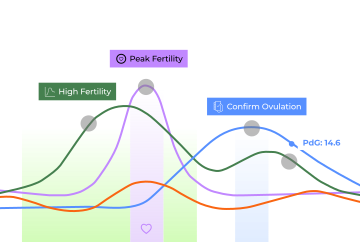
It’s important to note that symptoms may not always be obvious. So, instead of relying on them entirely, a great way to track your ovulation is via the Inito Fertility Monitor.
This monitor measures four key hormones:
- LH
- Estrogen
- PdG (urine metabolite of progesterone)
- FSH
This helps identify your fertile window and confirm ovulation, all from the comfort of your home.
Can You Get Pregnant With an IUD?
IUDs are over 99% effective. Fewer than 1 out of 100 users become pregnant during a year of typical use.
Doctors at the American College of Obstetricians and Gynecologists (ACOG) confirm that IUDs are among the most effective forms of birth control available.
That said, rare IUD failures can occur. They usually happen due to:
- Partial or complete expulsion of the device
- Malposition inside the uterus
- Insertion issues immediately after placement
If you suspect you might be pregnant while using an IUD, see a doctor promptly. Pregnancies with an IUD in place carry an increased risk of ectopic pregnancy. This is a serious condition where the embryo implants outside the uterus.
Know More: Understanding Ectopic Pregnancy hCG Levels
Do You Still Ovulate With an IUD and No Period?
Some hormonal IUD users stop having periods entirely. This can make it hard to know if ovulation is happening.
The answer as to whether you still ovulate with an IUD and no period varies.
Absent periods on a hormone-releasing IUD are usually caused by the thinned uterine lining, not the suppression of ovulation.
Absence of periods do not necessarily mean ovulation has stopped. It just means the body just isn’t building up enough uterine lining to shed.
If you’re unsure, hormone tracking can help. Monitoring estrogen and LH can identify your fertile window and predict ovulation, while PdG can confirm that ovulation occurred.
How Soon Does Ovulation Return After IUD Removal?
One of the biggest benefits of IUDs is how quickly fertility returns after you get an IUD removed.
For copper IUD users, ovulation and normal cycles happen throughout use, so there’s typically no delay after removal at all!
For those on hormonal birth control IUDs, any suppression of the cycle typically resolves soon after the device is removed. A doctor can confirm this is normal, and hormone levels and regular cycles return quickly for most people.
A study found that about 83% of women conceived within 12 months of stopping contraception. And fertility rates after IUD removal was comparable to women who stopped other reversible hormonal birth control methods.
In another study, 75.4% of former levonorgestrel IUD users and 70.4% of former copper IUD users conceived within 12 months.
You can begin trying for pregnancy immediately after IUD removal! There’s no recommended waiting period.
Know More: Chances Of Getting Pregnant After Stopping Birth Control
When Should You See a Doctor?
If you have any of the following symptoms, there might be a problem with your IUD. Call your healthcare provider if you experience any of these:
- Severe pelvic pain
- Unexplained fever
- Unusual vaginal discharge
- Heavy vaginal bleeding
- Feeling the IUD in the cervix or vagina
- Inability to feel the IUD strings or strings that feel longer or shorter than before
- Signs of pregnancy (a positive pregnancy test, missed period, nausea, or breast tenderness)
Complications like IUD expulsion, malposition, or infection are rare. But they do happen and need prompt evaluation.
And if you suspect pregnancy with an IUD in place, a medical evaluation is necessary given the increased risk of ectopic pregnancy.
Conclusion
For most users, you still ovulate with an IUD. Non-hormonal IUDs (copper) don’t affect ovulation at all. And most hormone-releasing IUD users also continue to ovulate, especially with lower-dose devices or after the first year of use.
IUDs are still over 99% effective because they work by making it difficult for the sperm to reach the egg, not by stopping ovulation. So even when ovulation happens, pregnancy is extremely unlikely. And expect to potentially see ovulation symptoms like changes in cervical mucus and/or LH surges.
And when you’re ready to conceive, fertility returns quickly. Using IUDs as birth control methods does not affect long-term fertility, and most people can get pregnant within a year of removal.

FAQs
Track your cervical mucus, basal body temperature, and hormone levels.
Signs of ovulation can be harder to read when you’re on an IUD. The symptoms may be subtle or vary from cycle to cycle.
If you want a clearer picture, the Inito Fertility Monitor tracks all four key fertility hormones to predict and confirm ovulation. It does this via a steady, consistent rise in PdG levels.
Yes. Most copper IUD users always ovulate, and most hormone-releasing IUD users continue releasing eggs, too. This is especially true after the first year and with lower-dose devices.
Common side effects of this birth control include:
- Irregular bleeding
- Cramping
- Changes to your monthly cycle
Hormone-releasing IUDs may cause lighter or absent periods.
And rare but serious risks include:
- Expulsion
- Uterine perforation
- Infection
IUDs require insertion by a healthcare provider and can cause cramping during and after placement.
They don’t protect against sexually transmitted infection. And there are rare complications like expulsion or malposition.
The insertion procedure can be painful and there’s a small risk of expulsion or uterine perforation.
Hormonal IUDs might also cause irregular bleeding, especially in the first few months.
Hormone-releasing IUDs thicken cervical mucus, which stops most sperm from entering the uterus.
Non-hormonal IUDs release copper ions that impair sperm motility and function.
Either way, sperm are prevented from reaching the egg.
Yes. IUDs are over 99% effective regardless of where you are in your cycle.
Their contraceptive mechanisms work all the time, not just on certain days.
Likely, yes. Absent periods on a hormone-releasing IUD are usually caused by a thinned uterine lining, not a stopped cycle because of anovulation.
Many women with no period are still releasing eggs.
Hormone tracking can help confirm this!
It’s very unlikely. IUDs prevent pregnancy by stopping sperm from reaching the egg, not by stopping ovulation.
The pregnancy rate is less than 1% per year.
Yes, but it’s rare. IUD failure is most often caused by expulsion, malposition, or insertion issues, not ovulation itself.
If you think you might be pregnant while using an IUD, contact your doctor right away. Pregnancies with an IUD in place have a higher risk of being ectopic.
If you suspect you are pregnant while an IUD is in place, see a healthcare provider right away to rule out an ectopic pregnancy.
Was this article helpful?
- Intrauterine Contraception | CDC
- Long-Acting Reversible Contraception (LARC): Intrauterine Device (IUD) and Implant | ACOG
- Levonorgestrel IUD: is there a long-lasting effect on return to fertility? | Springer Nature
- Copper-T intrauterine device and levonorgestrel intrauterine system: biological bases of their mechanism of action | Contraception Journal
- Highlights of Prescribing Information, Mirena | Bayer Healthcare
- Highlights of Prescribing Information, Kyleena | Bayer Healthcare
- Highlights of Prescribing Information, Skyla | Bayer Healthcare
- Descriptive analysis of the relationship between progesterone and basal body temperature across the menstrual cycle | ScienceDirect
- Secondary Amenorrhea | NIH
- Clinical study on women with amenorrhea after levonorgestrel intrauterine system | PubMed
- Return of fertility after discontinuation of contraception: a systematic review and meta-analysis | Springer Nature
- Side effects and risks of an IUS (intrauterine system) or hormonal coil | NHS