Menstrual Cycle Basics: The Most Important Things to Know
Published on Jun 18, 2026


Looking to get to know your own cycle better? Or actively trying to get pregnant? No matter where you’re at on your journey, these menstrual cycle basics will give you a helpful starting point for knowing your cycle better.
Key takeaways
- The menstrual cycle is a chain of complex processes. It’s regulated by hormones that communicate between your brain and ovaries.
- The four cycle phases are: menstrual phase, follicular phase, ovulatory phase, and luteal phase.
- Each of the phases plays a key role in getting your body ready to support a potential pregnancy.
- Menstrual cycle lengths and the timing of ovulation varies from person to person and cycle to cycle. This is why it’s important to track and understand your unique patterns.
- Inito helps you know what’s going on with your hormones at each phase. This allows you to plan for your fertile window and confirm ovulation.
Why should you know about your menstrual cycle?
Learning the ins and outs of menstrual health is a key part of staying on top of your fertility and overall wellness. Understanding your menstrual cycle will help you:
- Determine your most fertile days
- Improve your chances of conceiving by timing intercourse properly
- Notice telltale signs of ovulation
- Pinpoint potential hormonal imbalances
- Know what’s normal vs. what warrants a call or visit to your doctor
Ready to start your fertility journey?
Get Inito Fertility MonitorWhat is the menstrual cycle?
The menstrual cycle is a series of functions carried out by a female’s hormones and reproductive organs that allows for pregnancy to occur. Menstruation officially begins during puberty when you get your first period (menarche). This usually happens around 12.4 years old, give or take a few years. It then continues on each month until you reach menopause, usually by age 51. Here are some of the most basic aspects to know:
Function
The purpose of your cycle is to trigger ovulation and prepare the body for supporting a pregnancy. In cycles that don’t lead to pregnancy, your hormone levels “reset” (go back to their baseline levels). This begins a new cycle, aka a new opportunity for conception.
Cycle length
Most people consider a 28-day cycle to be “standard.” But in reality, only 13% of cycles are actually 28 days. A normal menstrual cycle length ranges from 21 to 35 days. A cycle less than 21 days is considered a short menstrual cycle. Meanwhile, a cycle lasting more than 35 days is considered a long menstrual cycle.
Bleed length
Your first day of bleeding is considered cycle day 1 (CD 1). A normal menstrual bleed lasts between 2 - 8 days. If you bleed longer than 8 days, it’s considered prolonged menses. You may occasionally notice changes in your usual menstruation patterns. This may not be cause for alarm!
But in most healthy menstrual cycles, there’s usually some level of consistency in:
- Frequency (cycle length)
- Duration (bleed length)
- Volume of bleeding (the heaviness of your menstrual flow)
Menstruation is one of the main visible components of your cycle. But how does this all play out behind-the-scenes? Keep reading to learn more.
How does the brain play a role in the menstrual cycle?
All the key functions that happen within your body are the result of a chain reaction of different systems and organs working together. The same is true with the menstrual cycle. Your menstrual cycle is controlled by a network called the Hypothalamus–Pituitary–Ovarian (HPO) Axis. You can think of this as back-and-forth cues between your brain and ovaries. Here’s how this series of events unfolds:
- The brain produces a messenger hormone called gonadotropin-releasing hormone (GnRH).
- GnRH then tells your pituitary gland to release follicle-stimulating hormone (FSH) and luteinizing hormone (LH).
- FSH and LH help your ovaries develop mature follicles to trigger ovulation, as well as produce estrogen and progesterone.
- The ovaries communicate back to the brain in the form of hormonal feedback signals. This tells your brain whether or not more cues are needed to stay in hormonal balance.
As you can see, this is a pretty complicated domino effect of reactions. So let’s look more closely at what happens during each key part of the menstrual cycle.
What are the four phases of the menstrual cycle?
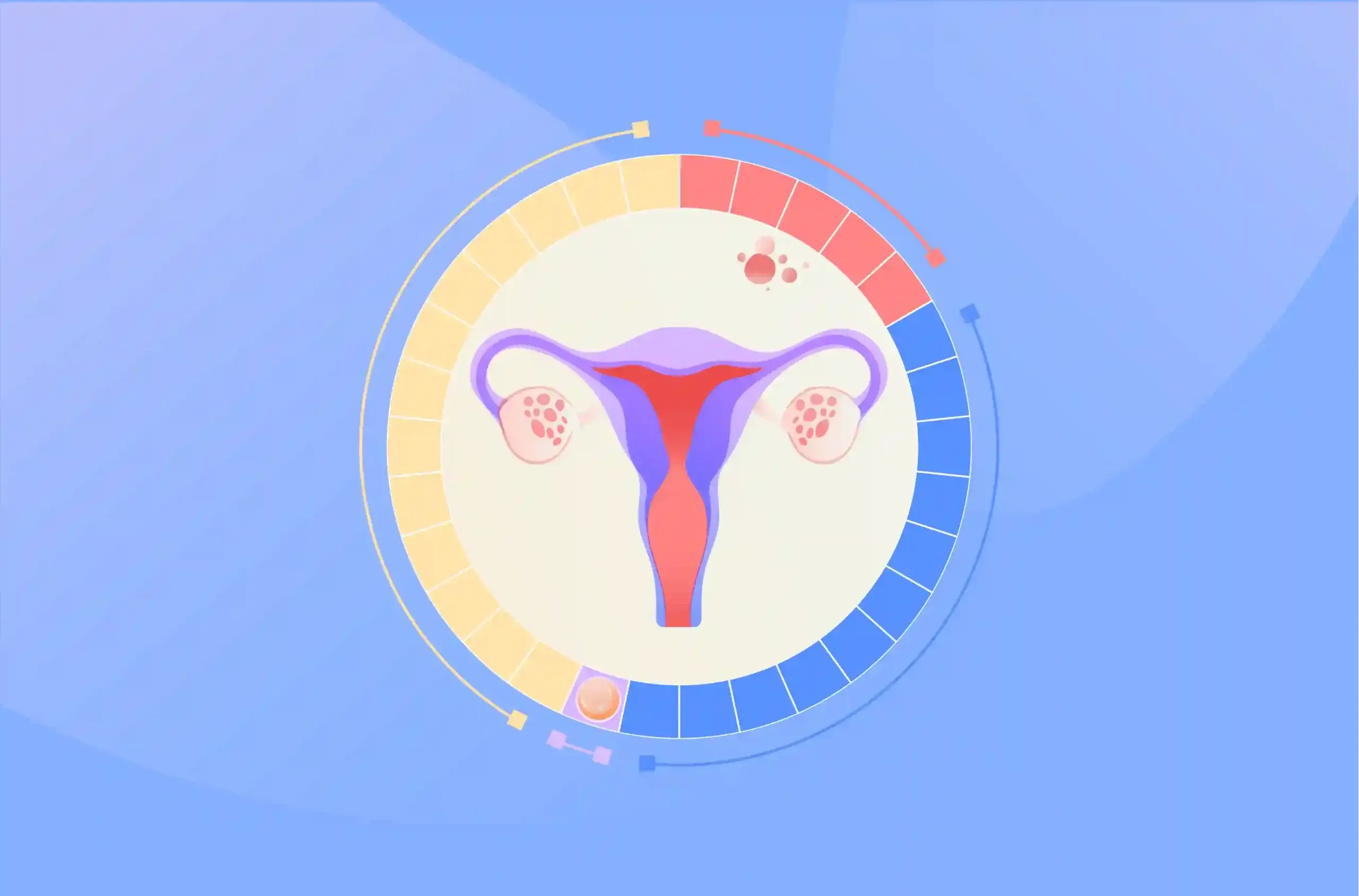
The four phases are: menstruation, follicular phase, ovulation, and luteal phase.
See below for the unique and complex role each cycle phase plays:
What is the menstrual phase?
As you can guess, this phase begins with Aunt Flo, aka menstruation, or your period. This is the time of your cycle when your body sheds the lining of your uterus that built up in the previous cycle. When you start your period, your hormone levels are mostly at their baseline values. This means that LH, FSH, progesterone, and estrogen are all fairly low.
During your menstrual phase, common symptoms you’ll notice are:
- Vaginal bleeding
- Extra tiredness or fatigue
- Tender or sore breasts
What is the follicular phase?
After your menstrual bleed winds down, you’re in the follicular phase. This phase starts when your period ends and lasts until ovulation. In the follicular phase, your pituitary gland produces FSH. As its name suggests, this hormone is responsible for stimulating and maturing your ovarian follicles. Each follicle (which looks like a fluid-filled sac) houses an immature egg. During the follicle growth process, one follicle will grow bigger than the others. This is the one considered to be the dominant follicle, and it’s the one that gets released during ovulation. In this stage, the dominant follicle secretes estrogen. Estrogen helps to thicken your endometrium (uterine lining) to create a homey environment for a potential developing embryo. Your rising levels of estrogen are a telltale sign that you’re nearing your fertile window. (Your fertile window includes the 6 days in your cycle when you're most likely to get pregnant.) Why only 6 days? Male sperm can live for a maximum of 5 days inside of the female reproductive tract, while the egg survives for 24 hours. So your fertile window generally includes the 4 days prior to ovulation, the day of ovulation, and the day after ovulation. If you want to accurately track your most fertile days, using the Inito Fertility monitor can be a huge help! Common follicular phase symptoms you may notice include:
- Bloating, cramps, and nausea (in the early follicular phase)
- Improved mood, increased libido, and changes in cervical mucus (in the late follicular phase)
Know more: Your Guide to Follicular Phase Symptoms
What is the ovulatory phase?
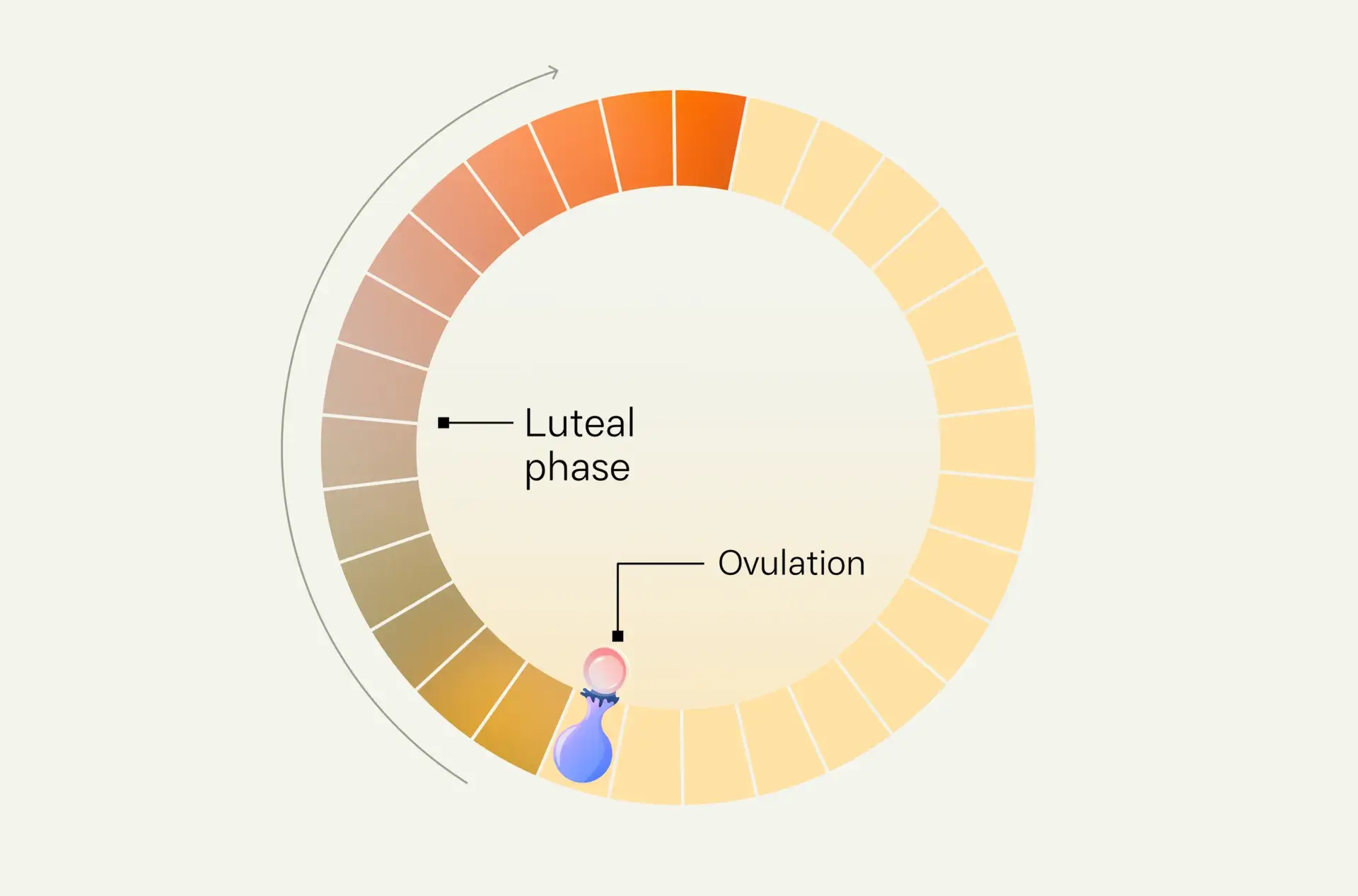
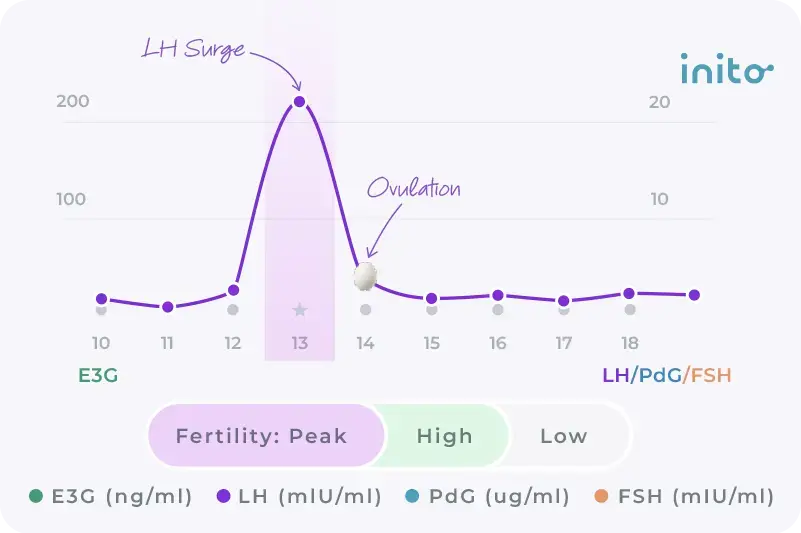
This is the spotlight moment of your menstrual cycle when your body is gearing up for a possible pregnancy. During this phase, estrogen levels rise to their peak. This then signals to the hypothalamus and pituitary gland that a mature egg is available for release. Your peak estrogen also tells the pituitary gland to no longer produce FSH and to instead release LH. When your LH surges, it cues that dominant follicle to let the mature egg go (aka ovulation). In thinking of the larger timeline, ovulation happens roughly 12-14 days prior to the start of your next cycle. More zoomed in, it occurs 24–36 hours after your LH begins to surge (or around 8-20 hours after your peak LH levels). This is the time of peak fertility (aka when your chances of conception are highest)! Once you ovulate, the egg can survive for up to 24 hours as it travels inside one of your fallopian tubes, waiting to be fertilized by the sperm.
Read more: When Do You Ovulate After an LH Surge?
Some common ovulation signs to look out for include:
- Increased sex drive
- Cervical mucus (CM) changes - usually an increase in amount of CM that looks like egg whites
- A cervix that’s higher and softer
- Ovulation cramping (aka Mittelschmerz) - up to 40% of women notice this cramping
- Ovulation bleeding (this is a more rare symptom with only 5% of women noticing light spotting mid-cycle)
- Heightened sensitivity to smells
Know more: Ovulation Symptoms: How Do You Really Know?
If you want to stay on top of when you’re ovulating, tracking your menstrual cycle is super helpful! That way, you can begin to notice patterns in symptoms around ovulation time.
What is the luteal phase?
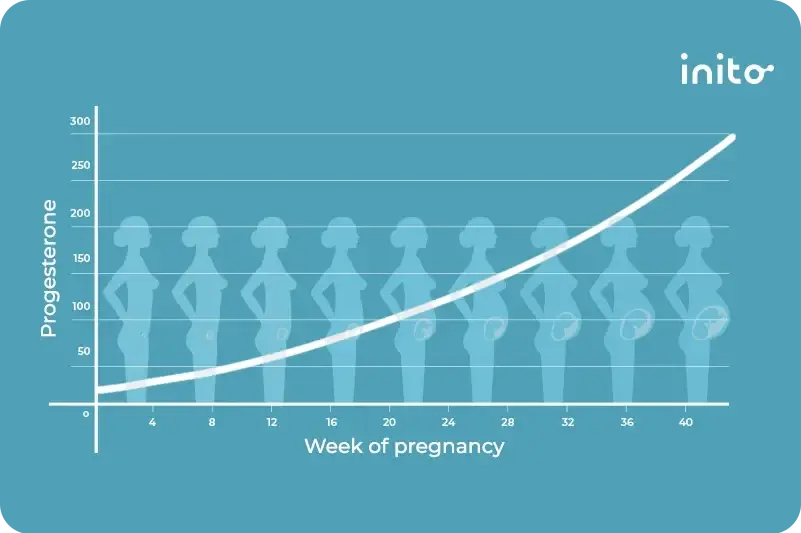
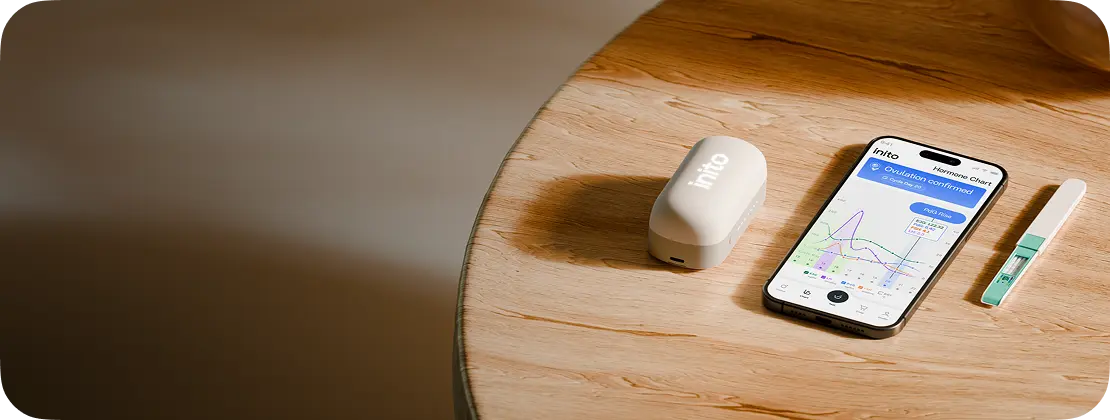
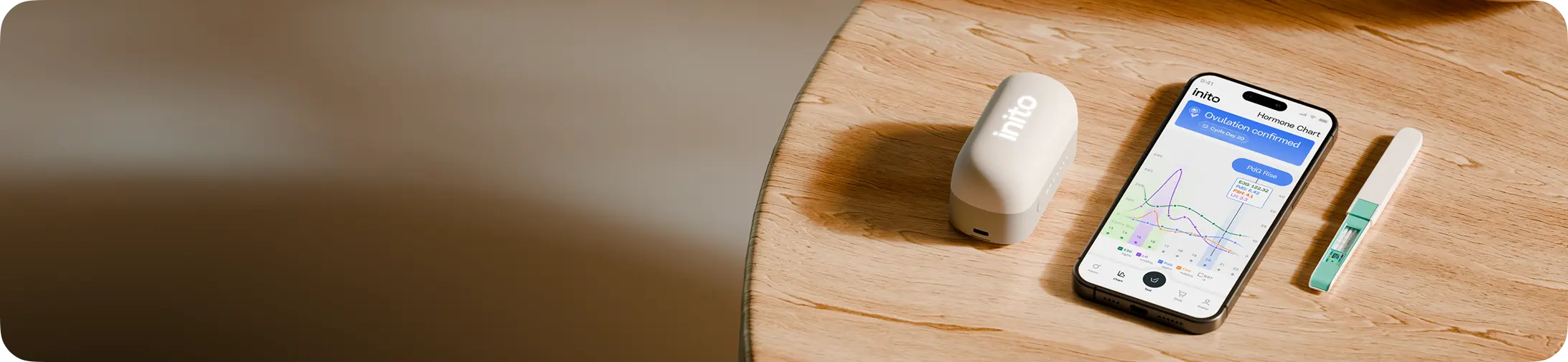
Your luteal phase is the final menstrual cycle phase. It begins after ovulation and lasts until your next period. In this part of your cycle, the follicle that released the egg forms the corpus luteum. This structure has the important job of producing progesterone (as well as a little bit of estrogen). Together, these two hormones help get the lining of your uterus ready to house a fertilized egg. Your rising progesterone levels at this time are a telltale sign that you successfully ovulated. This is because progesterone only rises after ovulation has occurred. Progesterone levels then typically reach their peak around 6 - 8 days past ovulation (DPO). When it comes to the menstrual cycle and fertility tracking, many folks often focus only on their LH levels. But LH can only help you predict when ovulation is around the corner. The Inito Fertility Monitor works a bit differently since it also measures PdG, the urine metabolite progesterone. When you see a steady and consistent increase in your PdG levels with Inito, you can confirm that you’ve actually ovulated.
Here are common symptoms you may experience in the luteal phase:
- Fatigue
- Bloating or constipation
- Mood changes
- Tender breasts
- Cramping or abdominal pain
- Changes in vaginal discharge (usually stickier, thicker, and less in volume)
- Increased urination
- Backaches
Note: You can have the symptoms above whether you become pregnant or not. This is because these symptoms are mainly caused by your rising progesterone levels.
If fertilization happens, the embryo will implant between 6 DPO and 12 DPO (with 8 DPO - 10 DPO being the most common). From there, the placenta will form and begin producing the pregnancy hormone hCG.
If the egg doesn’t get fertilized, that structure called the corpus luteum will begin to break down. This triggers your progesterone levels to drop and signals to your body to shed its uterine lining (aka the onset of your next period).
Know more: Luteal Phase: All the Science, Simplified
Now that you’ve seen the ins and outs of each cycle phase, here’s a quick refresher of each phase at a glance.
Summary of the menstrual cycle
Here’s what goes down with your hormones and body in each cycle phase:
| Cycle phase | What your hormones are doing | What’s going on with your body |
|---|---|---|
| Menstrual phase | Estrogen, progesterone, FSH, and LH are all low | You bleed (this is your uterine lining shedding) |
| Follicular phase | FSH triggers follicles to mature, estrogen begins rising | Ovarian follicles mature, and the uterine lining begins to build back up |
| Ovulation | Estrogen peaks and triggers a surge in LH | Your ovary releases an egg from the dominant follicle. This is the most fertile time in your cycle |
| Luteal phase | Progesterone rises after ovulation; if no pregnancy occurs, progesterone falls in the late luteal phase | Your uterus gets ready for implantation. If implantation doesn’t happen, you start your period |
With all these processes happening in a single cycle, there are a lot of other factors that can cause disruptions. Next, we’ll see what can cause your hormones and these four phases to get out of whack.

See how Inito will fit into your unique fertility journey
Take 5 min free fertility assessment and get a personalised hormone report
What factors affect your menstrual cycle?
With the complex interactions between your brain and body, many factors impact the regulation of your cycle. Irregular cycles can come about from:
- Stress levels
- Exercise (too much or not enough)
- Diet
- Conditions like PCOS and thyroid disorders
- Breastfeeding or pumping
- Certain medications
- Starting or stopping birth control
Sometimes it can be tricky to tell what may be causing hormonal imbalance or cycle changes. Or you may be unsure whether the changes you’re noticing are normal or not. Keep reading for basic guidance on when to get medical attention.
When should you consult a healthcare provider about your cycle?
If any of these scenarios ring true for you, it’s important to talk to your doctor:
- Your cycles last less than 21 days or more than 35 days
- Your periods don’t come regularly
- You’re not pregnant but haven’t had a period for three months or longer
- Your menstrual bleeding is longer than 8 days or extremely heavy
- You have bleeding or spotting between periods
- You have severe pain during menstruation
- You think you may not be ovulating
If you’re not sure how long your periods or cycles are, then it’s a good time to start tracking that information!
Know more: Fertility Hormones Explained: Track Your Cycle with Inito
The better you know your own cycle, the more equipped you are to make decisions in the best interest of your health and fertility!
If this is all still new to you, no need to feel like you’re behind. You’re already in the right place for more tools and information that can assist you on your journey!
Reach your fertility goals with full confidence
FAQs
Contributor

Paige Figueroa
Women’s Health Writer
Was this article helpful?
Share it on

Get a free guide Luteinizing Hormone (LH) by Inito