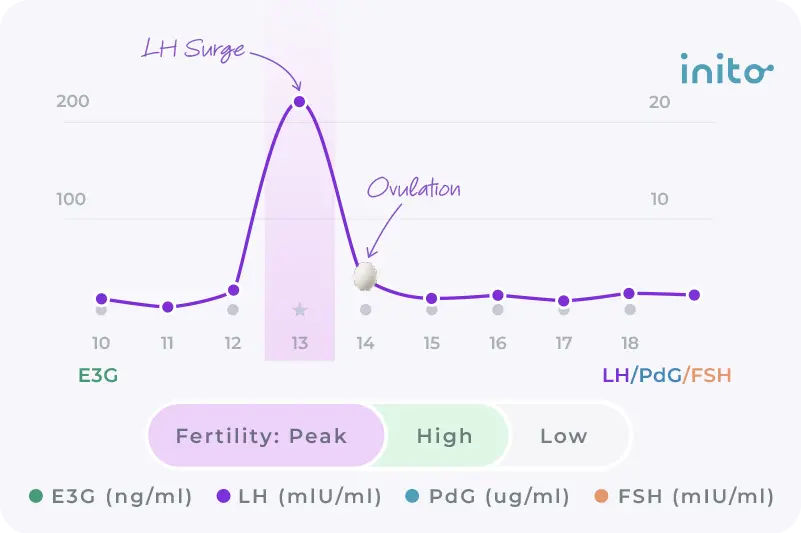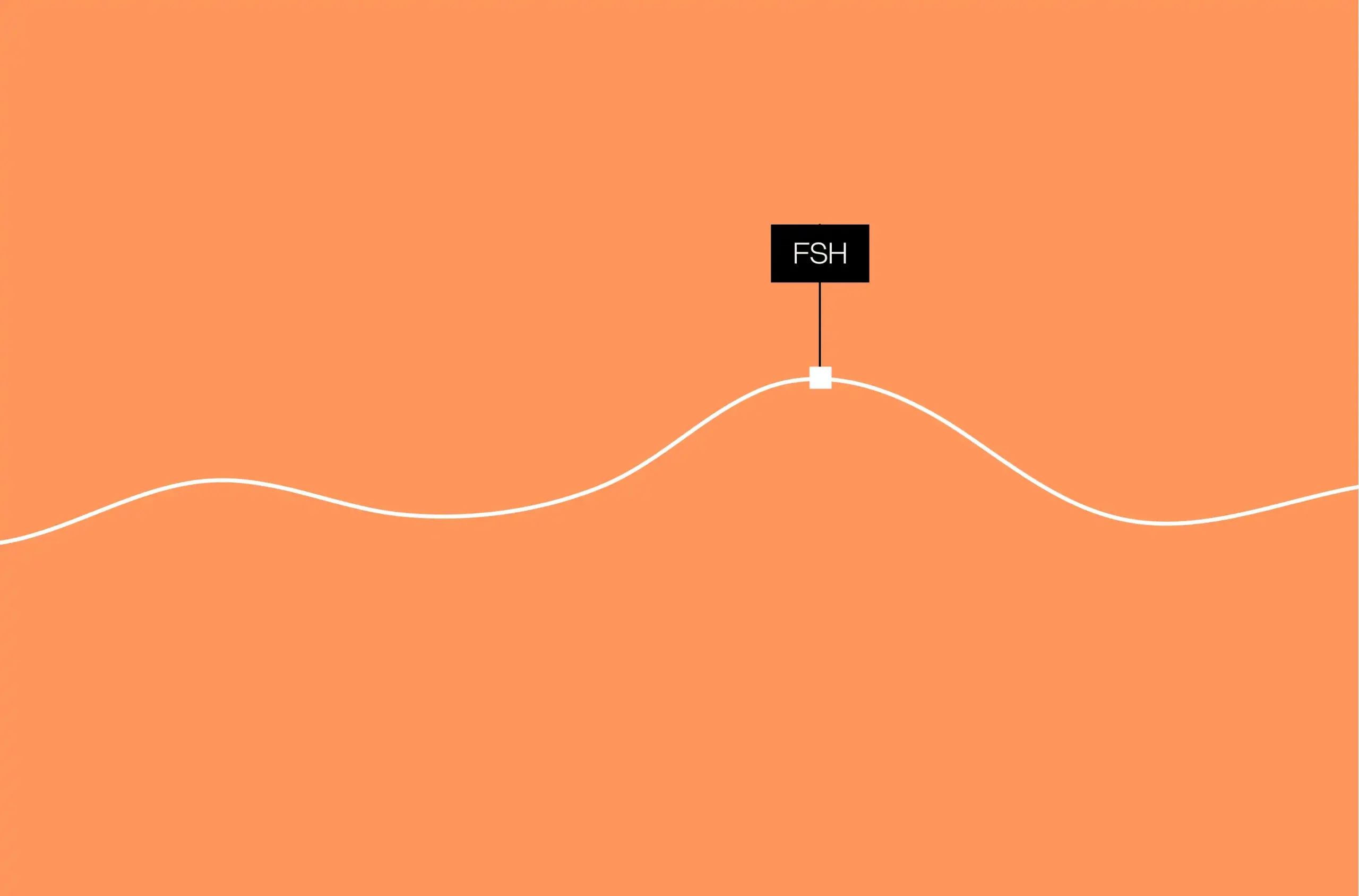

Yes. In your follicular phase, FSH’s key role is to recruit and stimulate the growth of several ovarian follicles. So at this time in your cycle, FSH levels will generally be on the rise.
Just so you know! The FSH levels you see in all the charts below are urine FSH values.
And another thing: to make these examples easier to understand, we’ve recreated the charts using representative hormone patterns. They are not actual user charts.
FSH rising in the follicular phase (“textbook trend”)
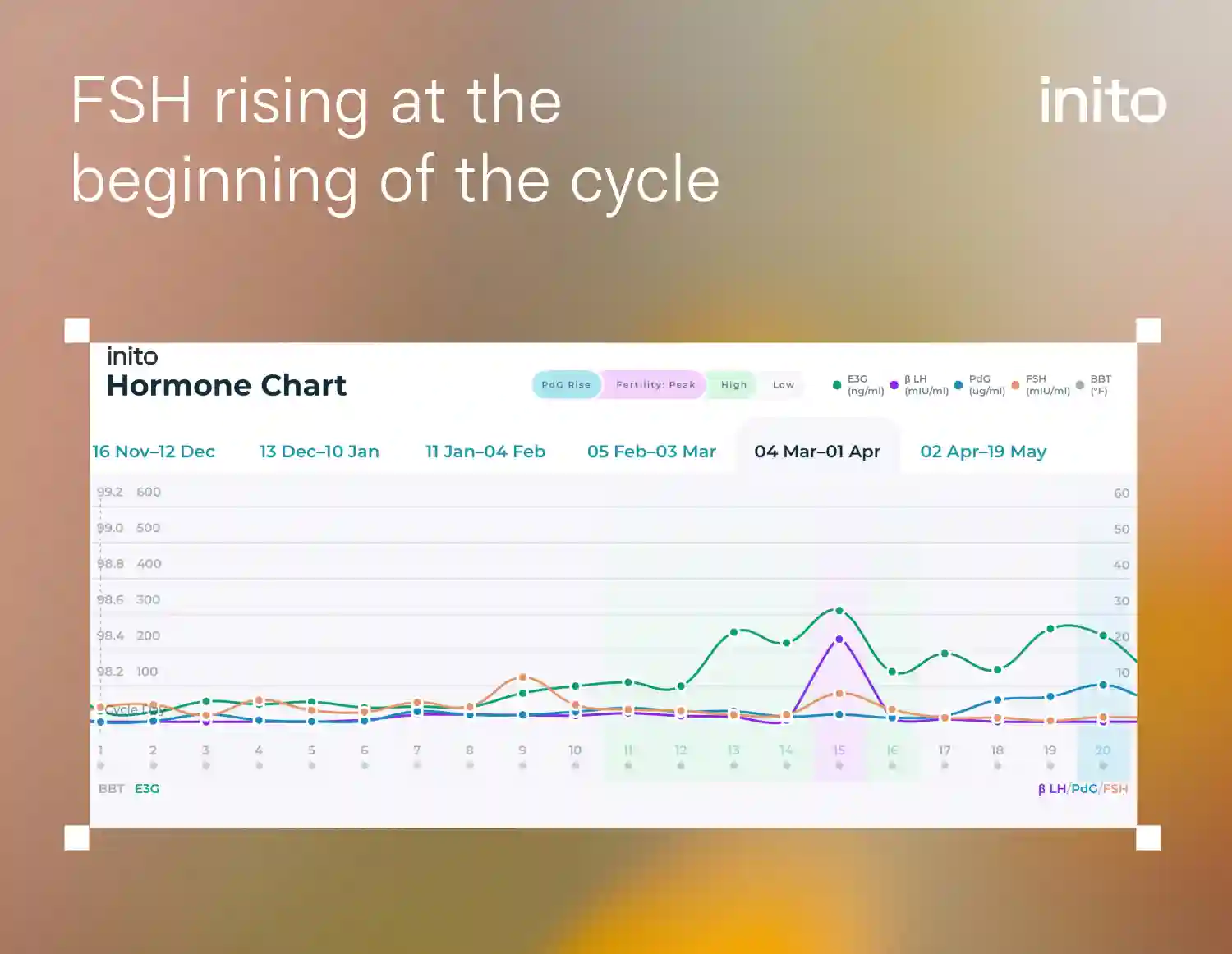
In the above chart, FSH levels are rising slightly in the first few days. This is the most common pattern for FSH as it marks the start of the follicle recruitment process for that cycle.
One small study found that the FSH rose before CD (cycle day) 2 in 25% of cycles, on CD 2 or 3 in 28% of cycles, and on CD 4 or later in 47% of cycles.
No FSH rise in follicular phase (variation)
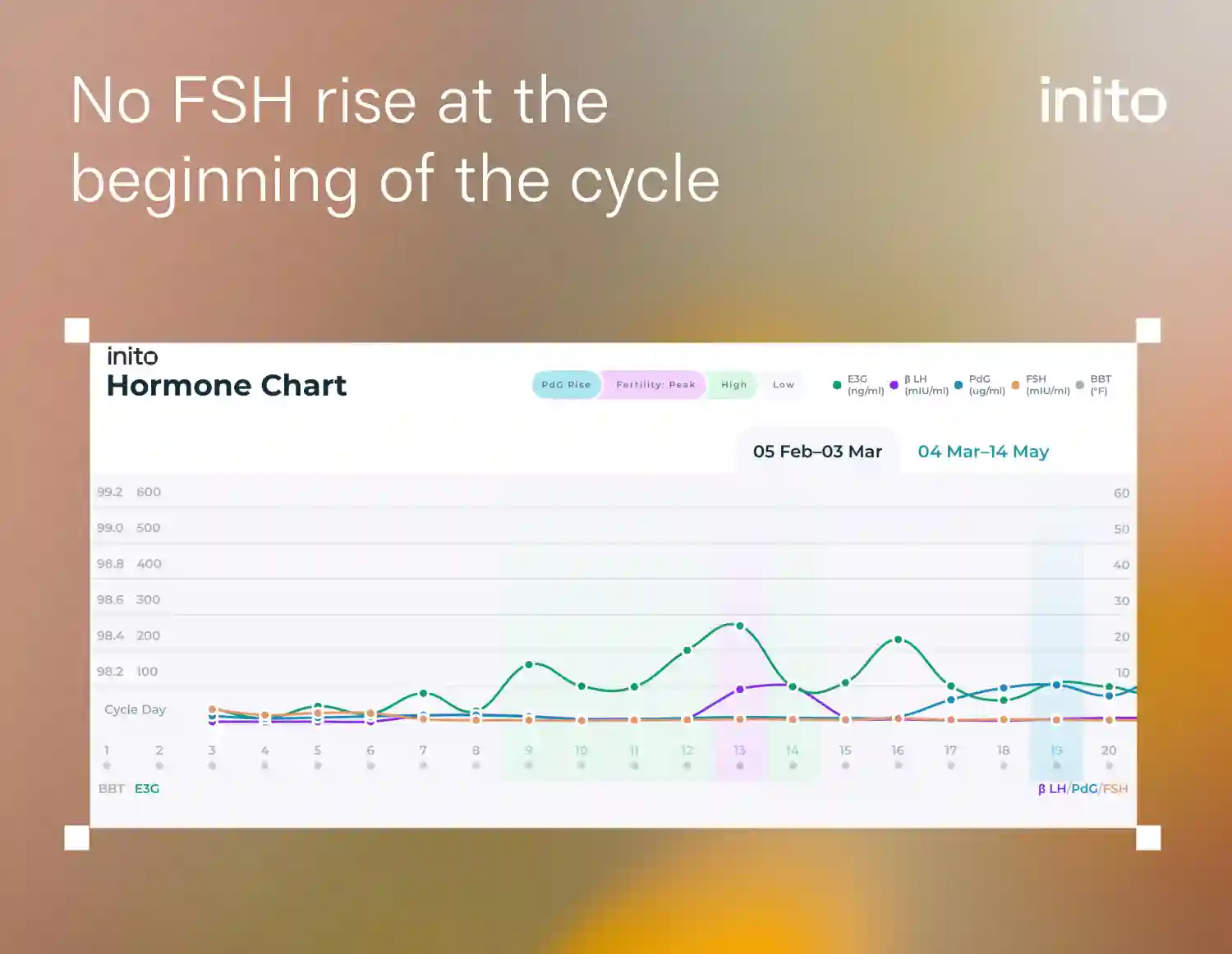
Some women may not have a noticeable rise in FSH in the follicular phase, and this can be typical too. Notice in this user’s chart, estrogen rose on CD 9, and then she had her Peak Fertility on CD 13. Then ovulation was confirmed on CD 19.
So even though her FSH pattern didn’t follow the textbook trend to a T, it still led to ovulation.
Now that you’ve seen what FSH patterns look like early on in your cycle, let’s skip ahead to more exciting times: ovulation!
That depends. For many women, FSH during ovulation will typically spike briefly when LH rises. This is FSH’s way of supporting the final selection of the dominant follicle and aiding its final stage of maturation.
But there are also a few variations.
Remember, these fertility hormones don’t work in isolation. They’re in constant connection with each other. So you can think of FSH running a few steps alongside LH before officially passing on the baton and moving onto the sidelines to take a break.
FSH spikes while LH rises around ovulation (“textbook trend”)
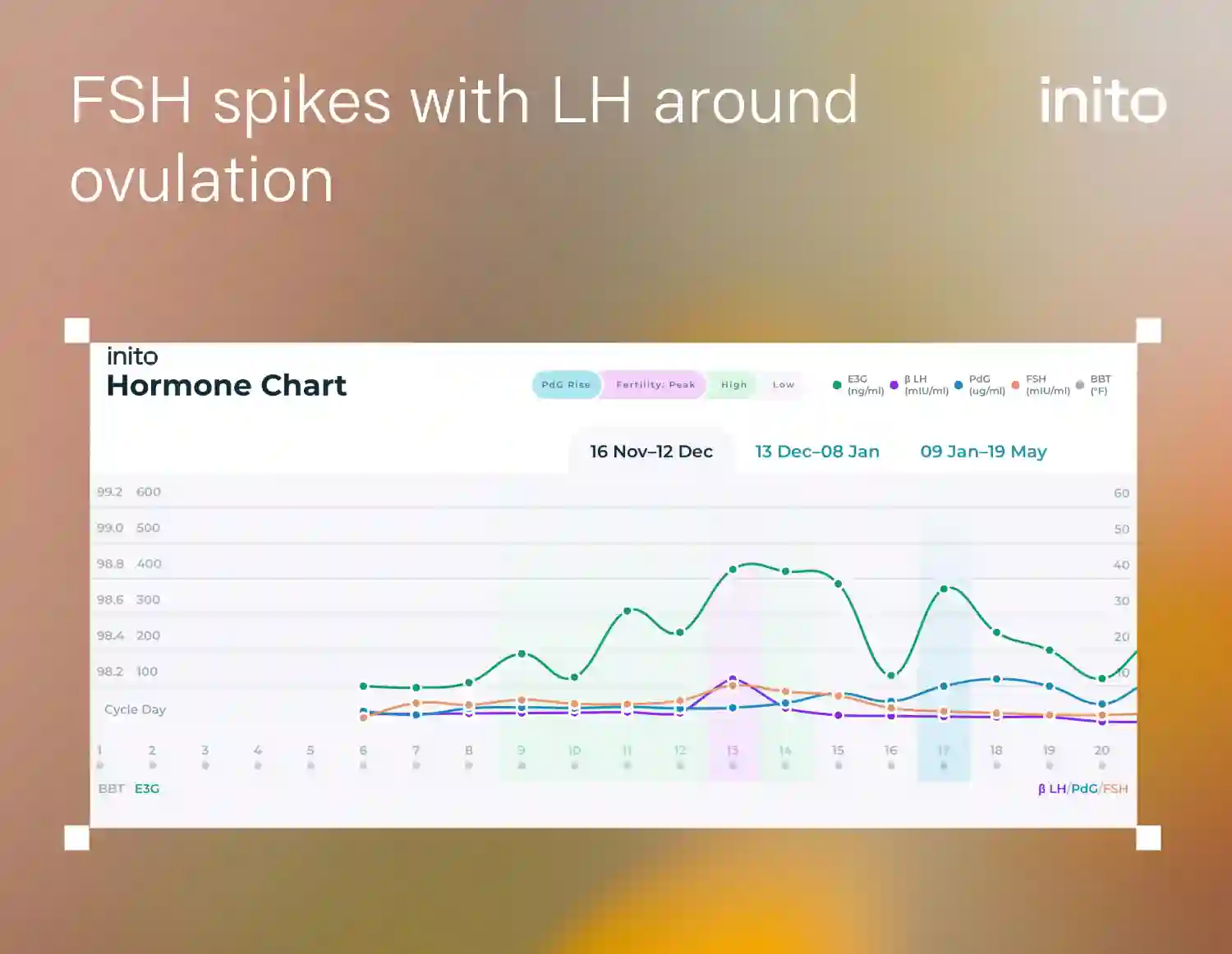
One study found that peak FSH levels coincided with the LH surge in about 53% of cycles. This is the pattern you see in the chart above.
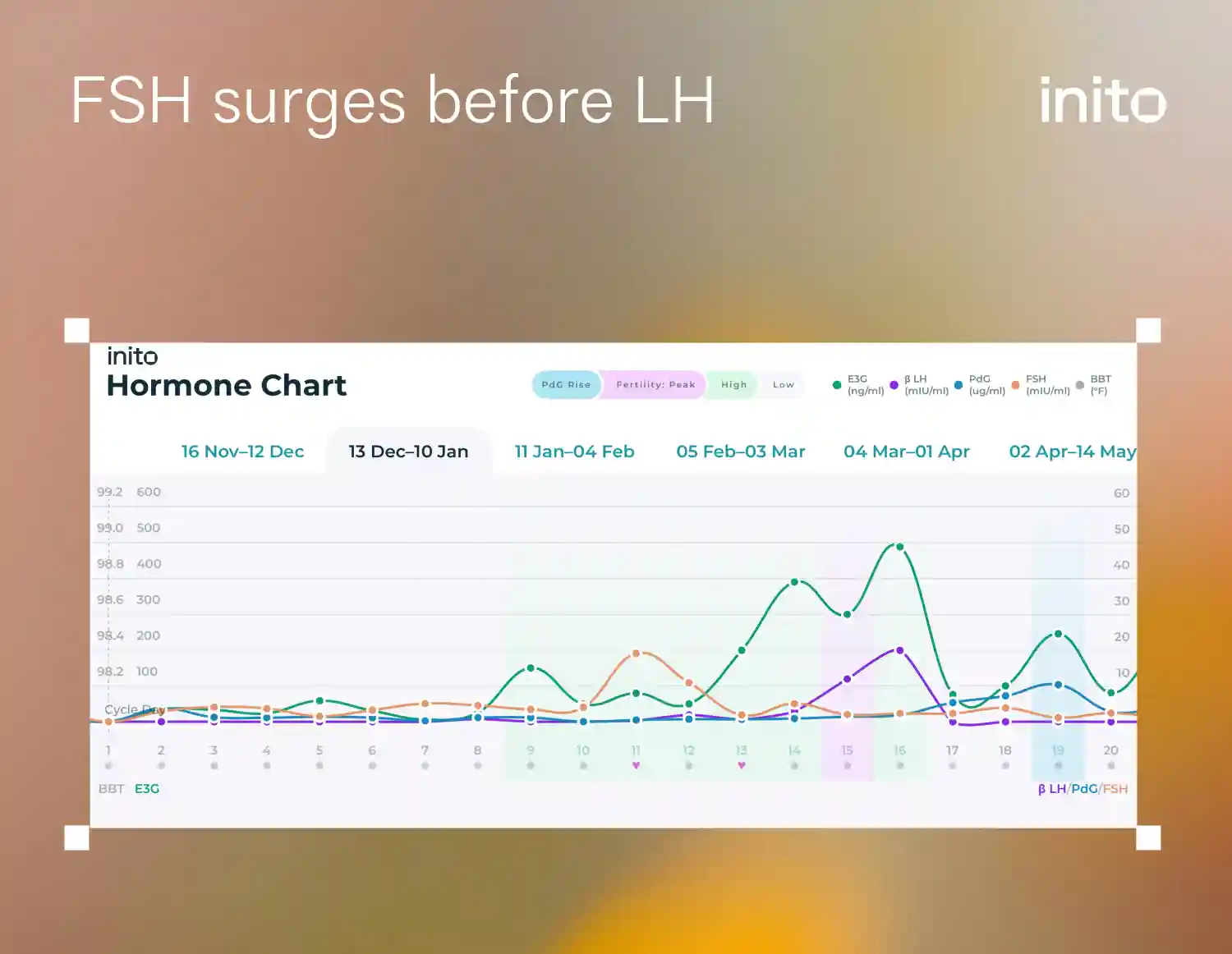
That same study found that in the remaining 47% of cycles, FSH levels surged before LH rose. You can see how that FSH trend plays out in the chart below:
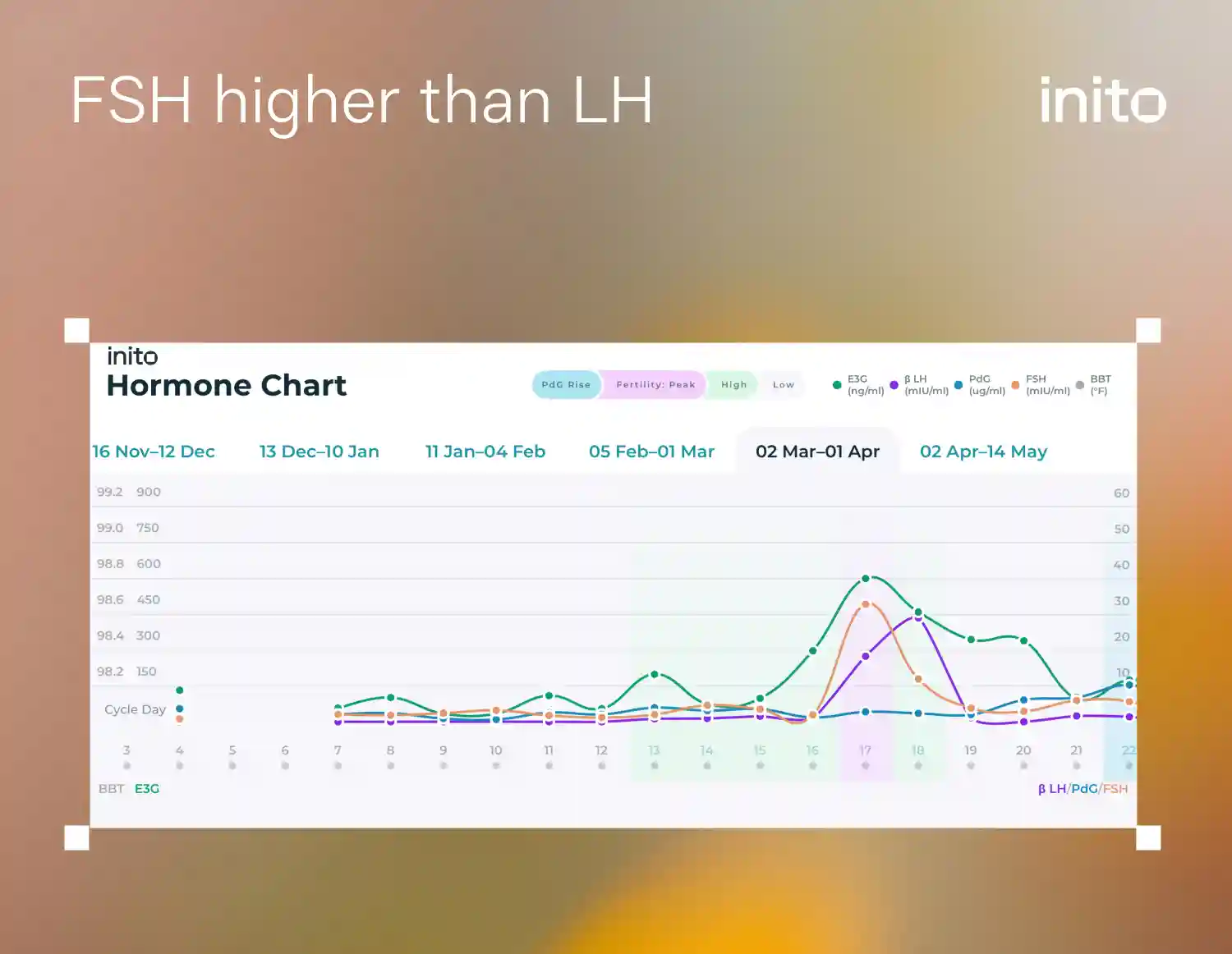
FSH rises higher than LH (variation)
LH typically gets all the attention around ovulation time. But in some cycles, FSH may actually surge even higher than LH. This is not a cause for concern, as evidenced by ovulation being confirmed on CD 22 in the chart below. However, if you feel something is off, you can always consult your doctor.
Know more: What Your FSH & LH Ratio Says About Your Fertility
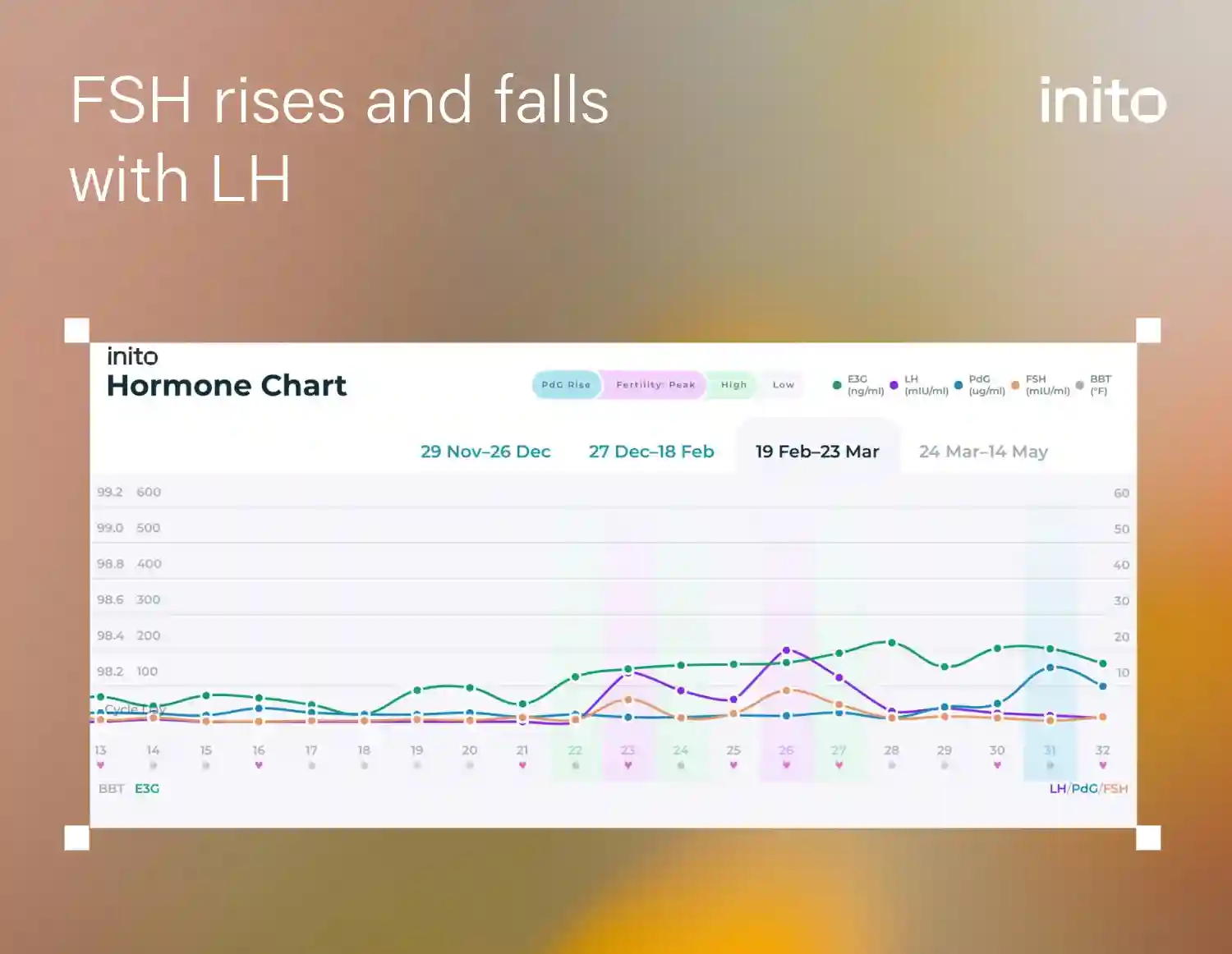
FSH rises and falls with LH (variation)
For some women, FSH and LH seem to work in tandem. This is the pattern that you see in the chart below where FSH rises and falls with LH on CD 23 and 26.
No FSH rise mid-cycle (variation)
Not all cycles will see a rise in FSH around ovulation time. One study found that this can be normal and that a mid-cycle FSH surge may not truly be necessary for ovulation to occur.
In the chart below, you’ll notice that FSH levels remained more or less at baseline levels during the follicular phase, and there was no surge around ovulation day.
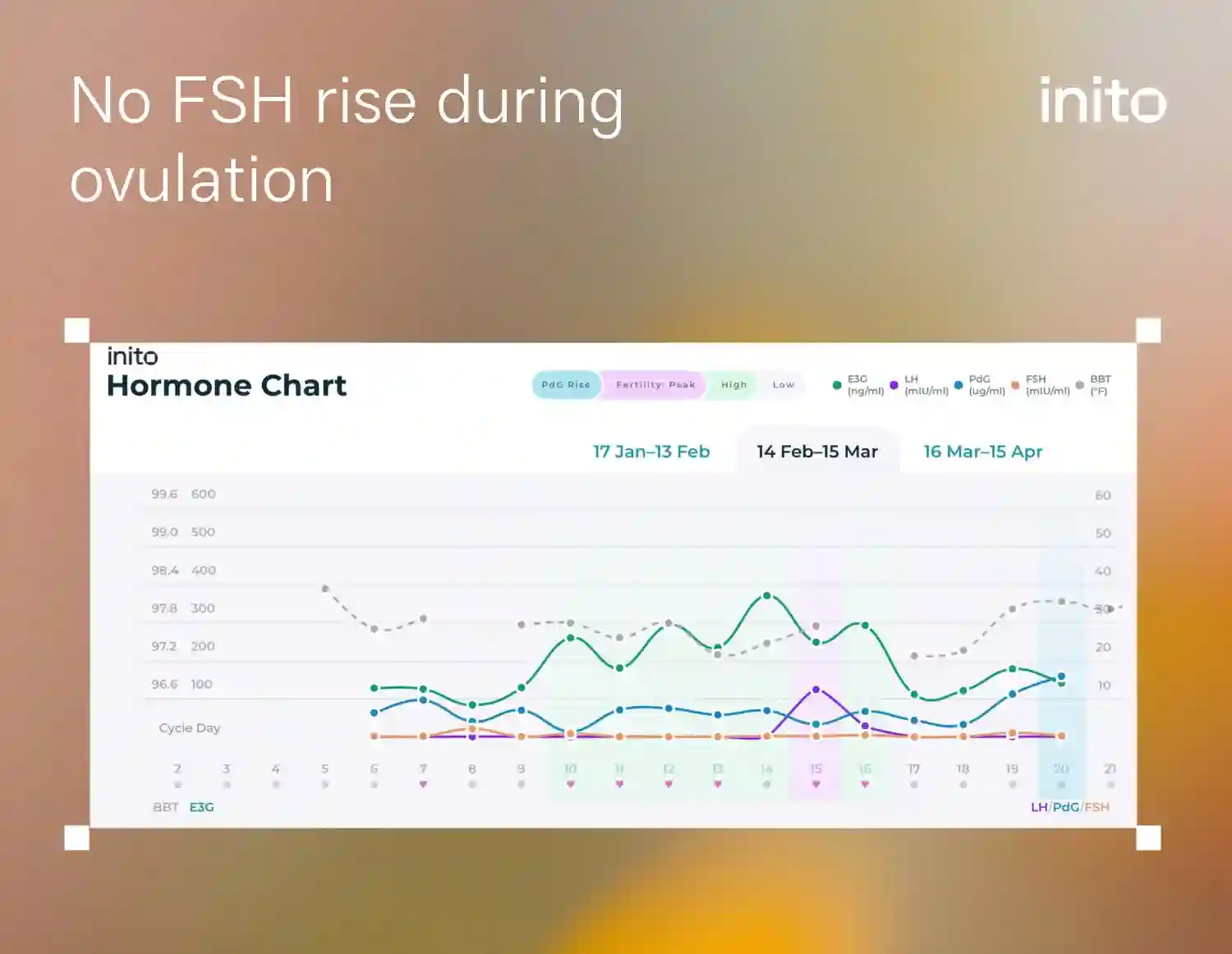
However, this user still ovulated, as confirmed by a rise in their PdG on CD 20. So, if you were wondering “Can you ovulate without an FSH surge?”, you can be rest assured.
Once you ovulate, you enter the luteal phase. Keep reading to see what FSH is up to during this final phase of the menstrual cycle.
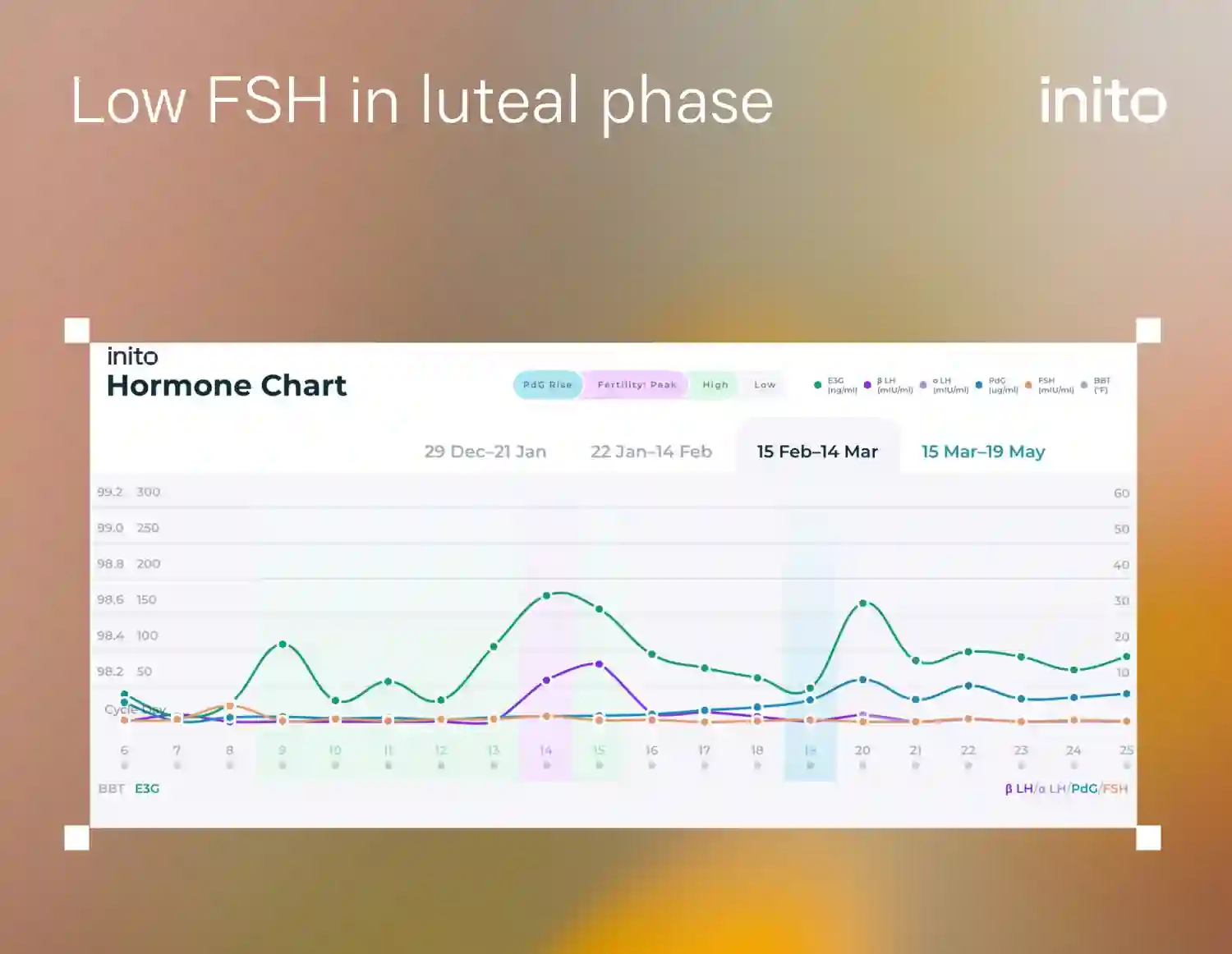
In most cycles, FSH will stay low throughout the luteal phase (the time between ovulation and your next period). Then, once your new cycle begins, it will begin to rise and recruit follicles again.
FSH stays low in luteal phase (“textbook trend”)
In this first chart, you can see that the user’s FSH is hovering around baseline levels post-ovulation through their next cycle.
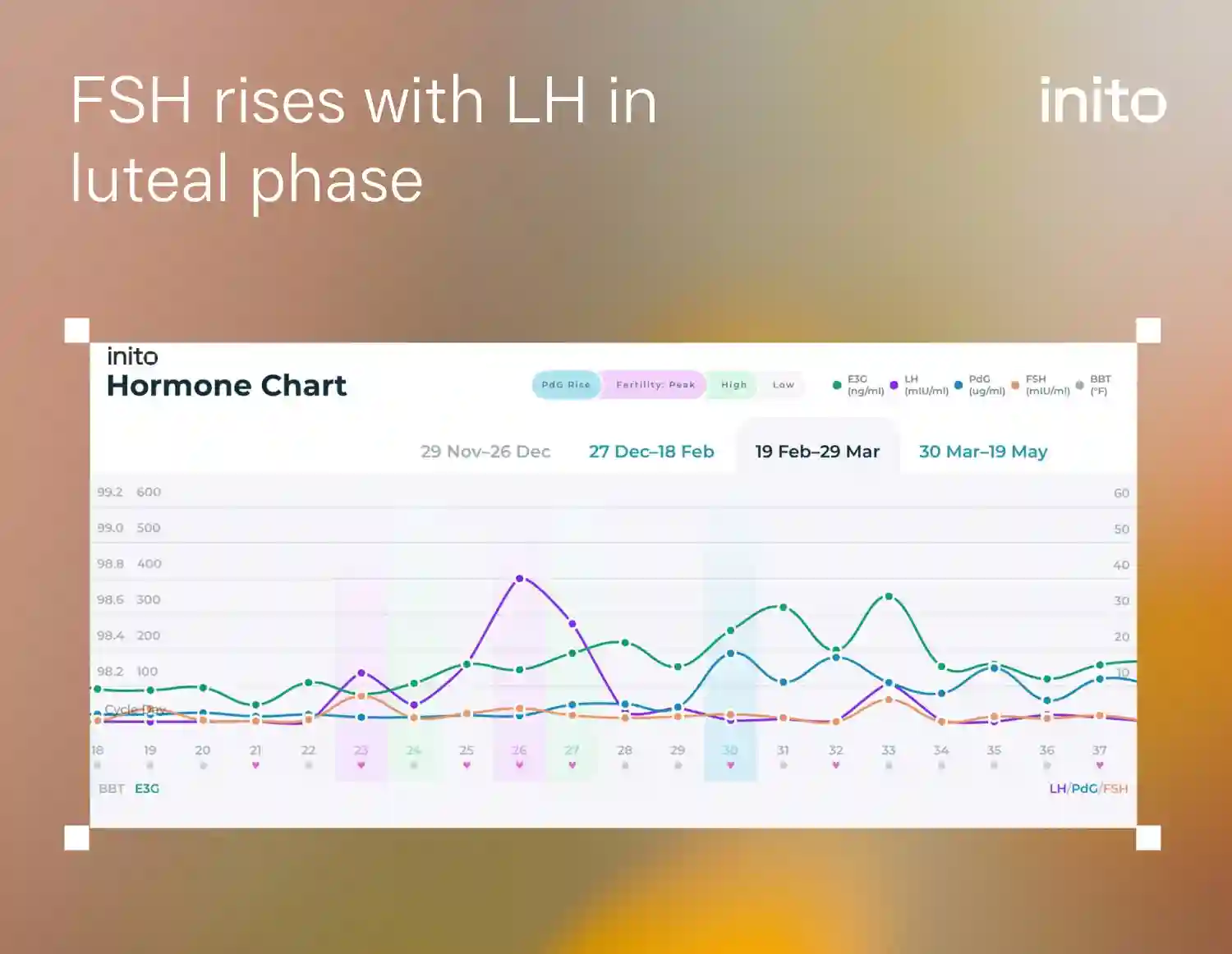
FSH rising with LH in luteal phase (variation)
For some, FSH may rise alongside LH during the luteal phase. This extra boost of LH and FSH may help support the functioning of the corpus luteum. The corpus luteum is vital for progesterone and estrogen production as your uterus prepares to support a pregnancy.
You can see this brief FSH rise on CD 33 in the chart below.
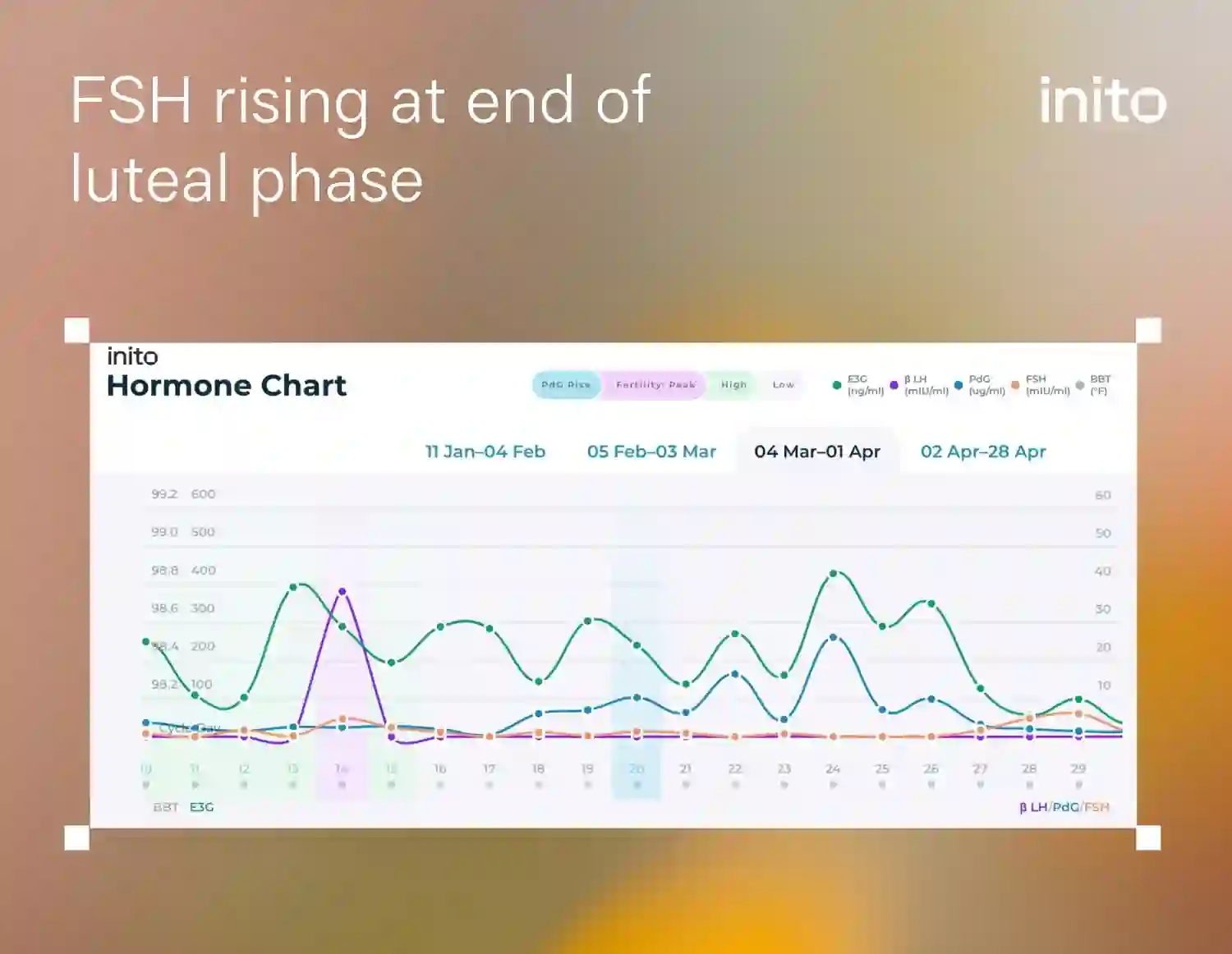
FSH rising at end of luteal phase (variation)
Another pattern you may notice with your FSH is that it begins to rise at the end of your luteal phase. One study found that women experience their initial rise in FSH about 4 days before their period. This rise seems to coincide with when estrogen begins to drop significantly.
You can see this end-of-cycle FSH rise in the chart below. FSH is already preparing for its work of recruiting follicles in the next cycle.
Disclaimer: An increase in FSH late in the luteal phase doesn’t necessarily mean your period is about to begin. Hormone patterns can vary from cycle to cycle, and Inito can’t be used to predict or rule out pregnancy. Use a pregnancy test to confirm pregnancy, and remember—you’re not out until you’re out.
As you can see from all the charts above, FSH trends can vary a good amount. But in case you’re worried about how your FSH levels compare to the patterns you’ve seen here, let’s take a look at why your chart may be different.
TL;DR: Your hormones are pretty dynamic!
In fact, it’s almost like your menstrual cycle and your hormones have a life of their own.
For one, what’s considered a “normal” cycle length ranges from 21 days to 35 days. That leaves a decent amount of variation in the exact timing of hormonal fluctuations.
This is because hormones are naturally released in pulses, so their levels can fluctuate from day to day—and even hour to hour. FSH, for example, has a half-life of about 3–4 hours, so while it’s more stable than some hormones, a single measurement still captures just one moment in time.
On top of that, hormones are very sensitive to lifestyle practices. That means your sleep, diet, exercise, and other daily activities can make your cycle operate differently from other women. And when you make changes to your normal lifestyle habits, your hormones can also look different from one cycle to another.
Here’s how some of these factors may affect FSH levels:
|
Factor |
Effect on FSH |
|
Sleep |
Researchers found that FSH was about 20% lower among women who are short sleepers compared to those who slept for more than 8 hours/night |
|
Stress |
High daily recent stress was associated with 6.2% higher FSH levels |
|
Diet |
Diet can indirectly impact FSH levels by influencing the hypothalamic-pituitary-ovarian (HPO) axis. A severe calorie deficit can suppress the HPO axis, while obesity can alter estrogen and leptin signaling, which negatively impacts FSH. |
|
Exercise |
The relationship between exercise and fertility hormones is nuanced. In general, regular exercise in moderation helps overall hormonal balance and ovulation. |
This is the case with the user below.
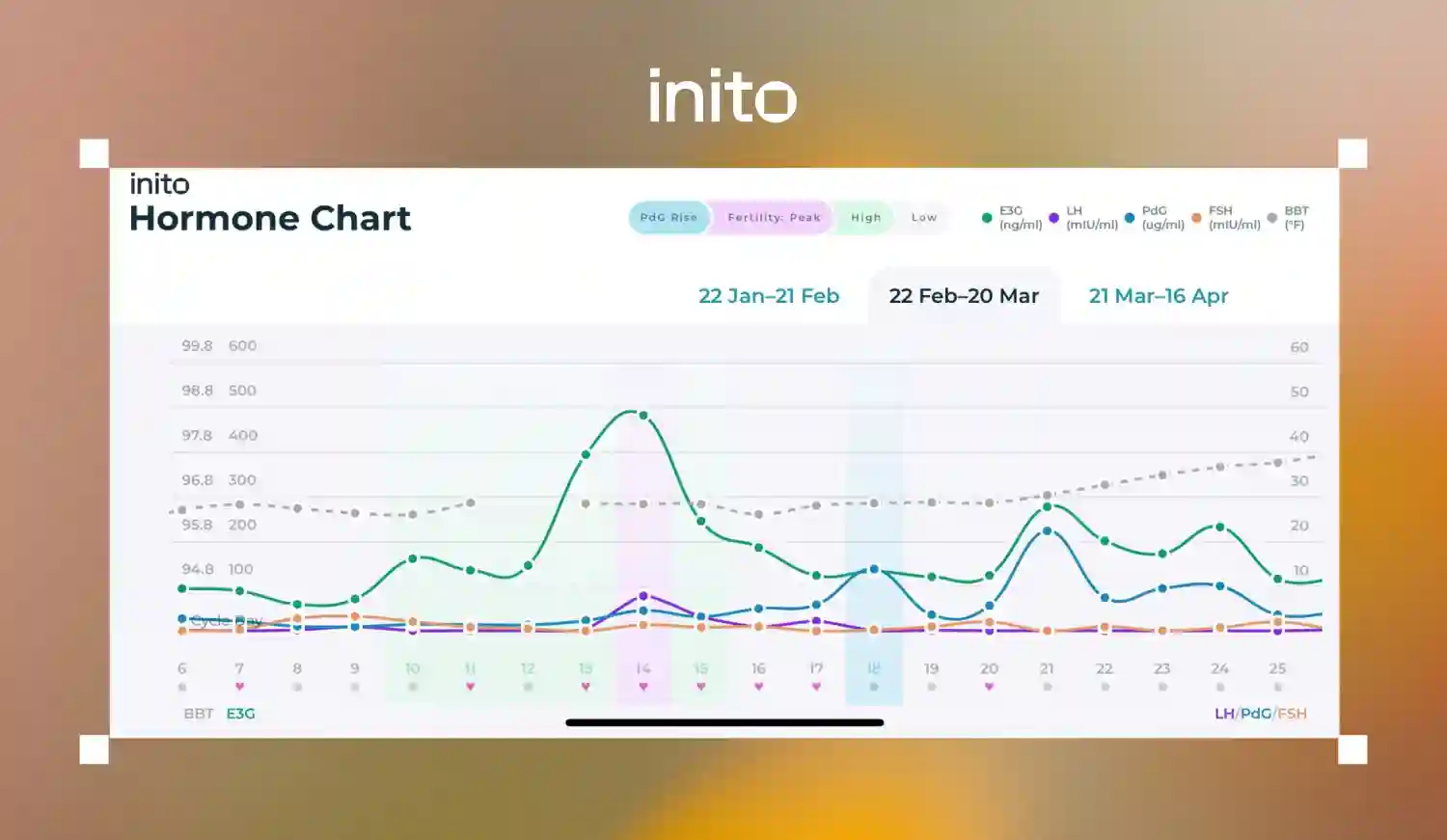
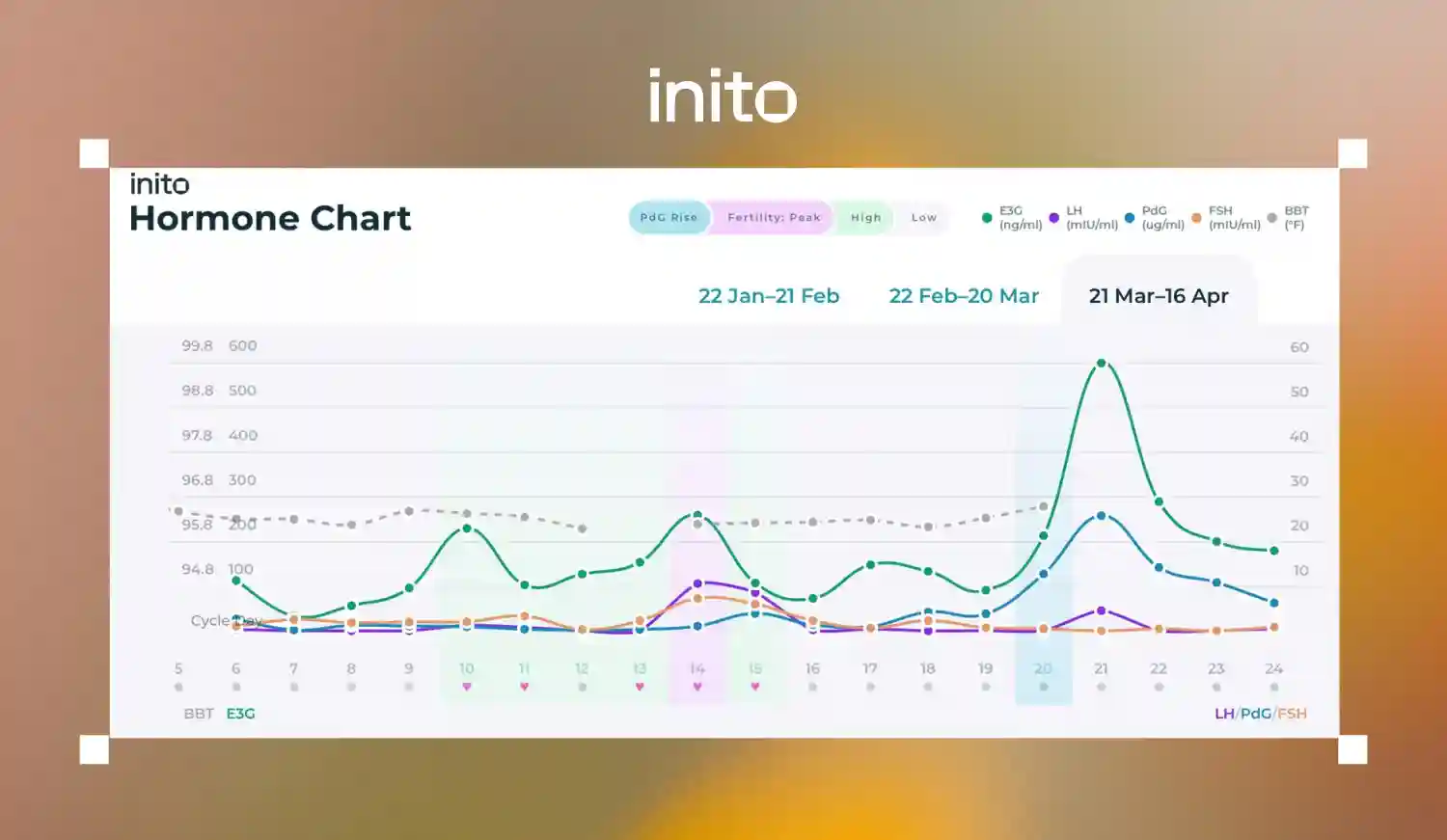
You can see that their FSH pattern changes from the first cycle shown to the second cycle shown.
In the first chart, the user’s FSH stayed around baseline levels throughout the cycle. In their second cycle, we see that FSH rose slightly in the beginning of the cycle to support follicle growth, rose along with LH around ovulation, and showed slight fluctuations post-ovulation as well.
In spite of those differences, they still experienced ovulation in both cycles (CD 15 in both cases).
Know more: Why Does My Period Date Change Every Month?
So, what’s the bottom line here?
When it comes to your FSH levels, try not to get too into the nitty-gritty numbers. Your overall trends are more important to look at than any single hormone value in a given cycle.
And if you’re ovulating each cycle, that’s a great indication that your menstrual cycle is in good shape!
But if you think there’s something off with your FSH levels or you notice changes to your usual hormone trends, it may be a good idea to seek expert guidance.
See the next section for some red flags that may tell you it’s time to talk to your doctor!