Chances of Getting Pregnant with Woman on Top: Does it Make a Difference?

Updated on Oct 28, 2026


If you’ve been trying to conceive for more than a cycle or two, you’ve probably wondered how different sex positions can affect your chances.
Curious specifically about your chances of getting pregnant with woman on top?
As of now, scientific evidence doesn’t show that this position or other sexual positions impact your likelihood of conception. What matters most is that you have sexual intercourse around the time of ovulation and that sperm actually enters the vagina.
If you have your heart set on conceiving, keep reading. You’ll learn what actually happens with sperm post ejaculation. More importantly, we’ll give you a rundown of what to focus your attention on to boost your chances of conception!
Takeaways
- Pregnancy is possible when the woman is on top.
- Current research doesn’t show that sexual positions matter when it comes to your chances of conception.
- Having semen leak after sex isn’t a sign that pregnancy isn’t possible.
- A key factor to focus on for getting pregnant is having regular sex during your fertile window.
- If you haven’t been able to get pregnant within the recommended timeframe for your age (12 months if you’re under 35, 6 months if you’re 35–40, or sooner if you’re over 40), consider getting a fertility evaluation.
What happens leading up to conception?
Conceiving is a multi-step process that begins with ovulation and ends with implantation. Here’s a look at the three major steps involved:
Step 1: Ovulation
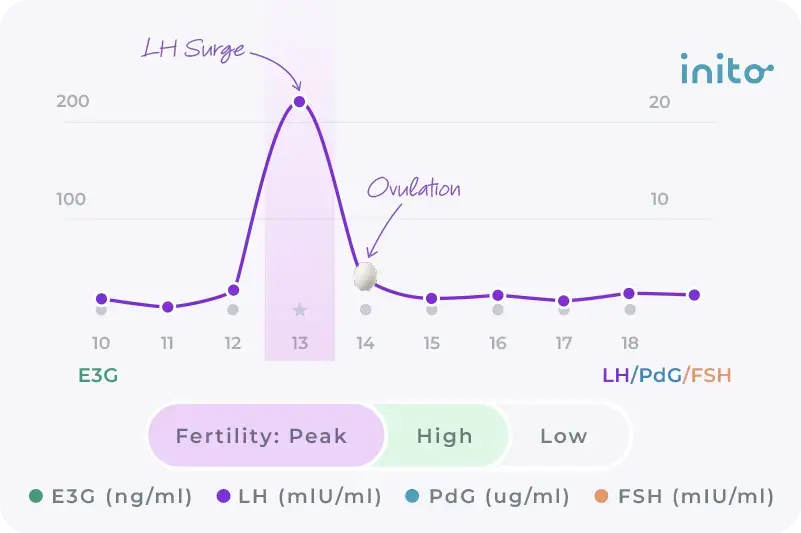
Ovulation happens when the female ovary releases an egg into the fallopian tube. Most women will ovulate about 12 - 14 days prior to the start of their next menstrual period.
This is the step that matters most for deciding when to have intercourse to conceive. Not all days of your cycle give you the same chance of getting pregnant. The days where sex has the best chance at leading to pregnancy are the 5 days before ovulation and the day of ovulation. We call this timeframe the fertile window.
Without ovulation or having sex around the time of ovulation, pregnancy isn’t possible (at least not without other interventions).
Know more: What is Ovulation: Symptoms & Pregnancy
Step 2: Fertilization
Fertilization happens when sperm joins with the egg in the fallopian tube.
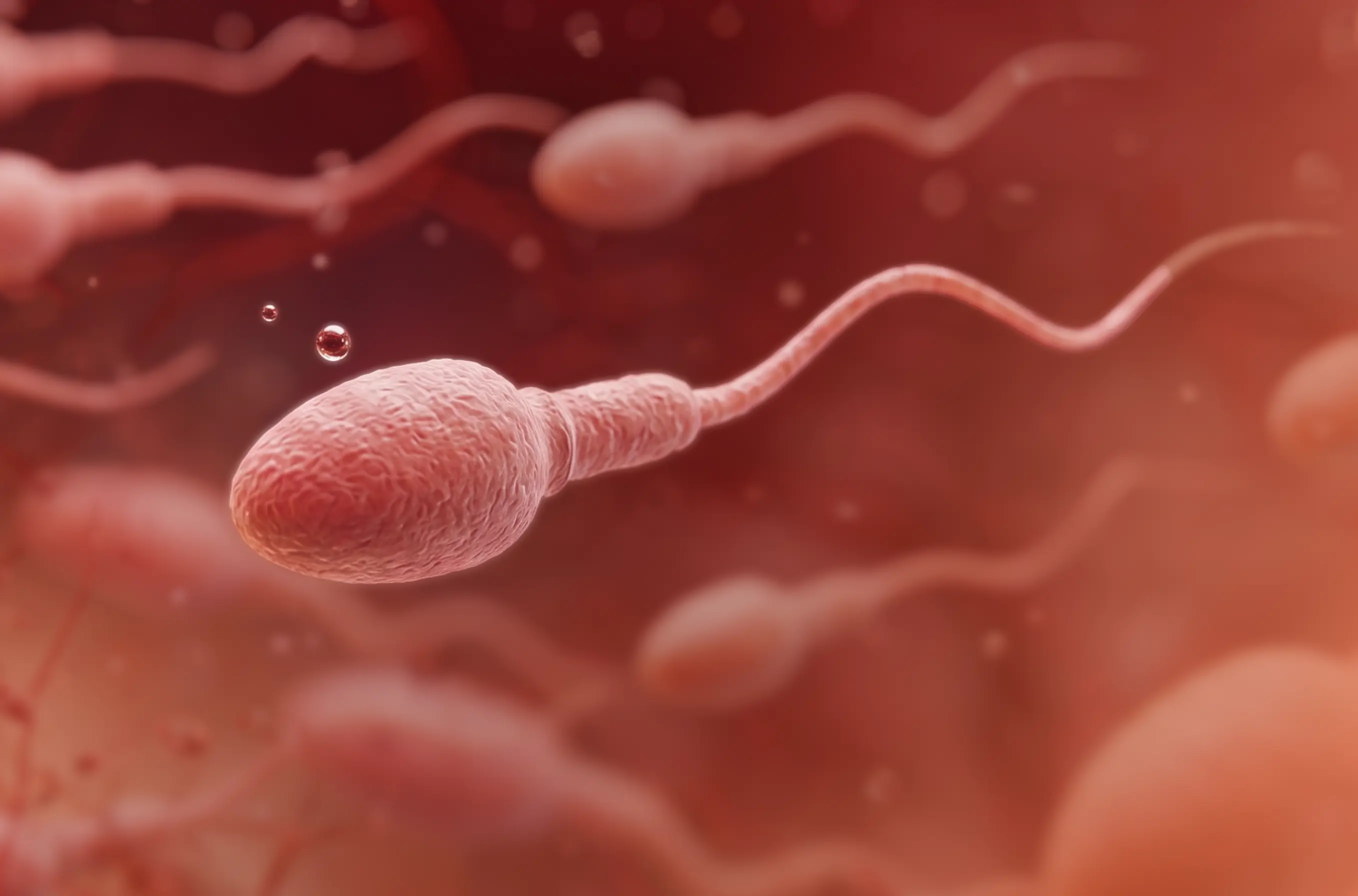
Before getting to the fallopian tube, sperm needs to travel from the vaginal canal, through the cervix, and then through the uterus.
This process happens pretty quickly, though! According to research, sperm arrives in the cervical canal in a matter of seconds. From there, it only takes around a few minutes to reach the fallopian tubes. (More on this later!)
Step 3: Implantation
Once fertilization happens, there’s a chance for implantation. This is when the fertilized egg (the embryo) moves along the fallopian tube on its way to the uterus.
Inside the uterus, it attempts to attach onto the uterine lining (the endometrium). If it attaches successfully, you are officially pregnant!
Now that you’ve seen these three main steps at a glance, let’s zoom back in on how sexual positions factor into the picture.
What are the chances of getting pregnant with the woman-on-top position?
You can get pregnant if you have intercourse in the woman-on-top position.
Maybe you’ve heard that having the female on top makes it more difficult for sperm to travel to the egg. This concern has to do with the idea that gravity may make it more difficult for sperm to travel upwards to reach the cervix.
This may sound plausible in theory. But semen doesn’t rely on gravity to reach its destination. Ejaculation itself is fairly forceful, and the cervical mucus and contractions inside the reproductive tract help with moving sperm.
And sperm travels quickly!
In fact, current research gives us an idea of just how quickly this all happens:
Sperm that’s deposited close to the cervix around a woman’s midcycle can make its way all the way to the fallopian tube in a matter of 15 minutes. And some studies even showed that this transport can happen as quickly as 2 minutes when a female is in her follicular phase. (Remember, the follicular phase is the cycle phase that comes before ovulation).
Know more: Trying to Get Pregnant? Get to Know Your Follicular Phase
Other research involving insemination confirms this speed of sperm travel. In one study, sperm was found inside the fallopian tubes as quickly as 5 minutes after the vaginal insemination. At the 10 - 15 minute mark, even more sperm was found to have made the journey to the fallopian tube.
Other misconceptions about lower chances of conceiving have to do with seeing semen leak out of the vagina. But don’t worry! This doesn’t mean that sperm won’t get where it needs to go. Healthy semen contains millions of sperm. So if you have penetrative intercourse that results in ejaculation, some sperm will almost certainly make their way to the reproductive tract.
Are there benefits to having the woman on top for conception?
Even if there’s no proof that certain sexual positions impact pregnancy chances, there are some potential benefits to woman-on-top.
For many women, being on top allows more control over penetration, including the depth and pace. This can make sex more comfortable. Many women also report being able to reach orgasm more easily in this position.
Even though you don’t need to orgasm for conception to happen, it can make the experience of trying to conceive more pleasurable. There was actually a small study that saw a potential connection between contractions caused by female orgasm and being able to retain semen-like fluid. This study only involved six women, though, and it didn’t examine pregnancy rates. So no true conclusions can be drawn from the study.
That said, it is interesting to think about! And maybe down the road more research will look at this connection.
Know more: How To Confirm Whether Sperm Went Inside?
Wondering about other positions besides woman on top? Let’s see what the research says!
Is there a best sex position to get pregnant?
No, there’s no sex position that’s considered the best for getting pregnant. Current research, including from the American Society for Reproductive Medicine (ASRM), says that sexual positions don’t increase or decrease your chances of pregnancy.
Regardless of the position, sperm enters the cervical canal quickly post-ejaculation. That means that other postcoital routines (like lying on your back) don’t impact fertility either.
If you want to go down the rabbit hole of research, there have been some studies on how certain sexual positions impact the anatomy of intercourse. For example, a study showed the difference in penetration depth for the missionary position and rear-entry position for one couple. But no study has been able to prove a correlation between position and pregnancy rates.
So regardless of how a position affects penetration depth or pleasure, your chances of conceiving are more or less the same.
Know more: Are There Any Best Sex Positions to Get Pregnant?
If you’re wondering what actually does make a difference with pregnancy rates, keep reading! The next section will give you an idea of what to focus on to boost your chances of conception.
What matters more than sexual position?
The most important factor to pay attention to for conceiving is timing intercourse. The days of the menstrual cycle that give you the best chances of pregnancy are your 6-day fertile window. This includes the 5 days before ovulation and the day of ovulation.
Know more: Free Ovulation Calculator: Figure Out Your Most Fertile Days
According to one study, conception only occurred in cases where intercourse fell within this window. In that study, pregnancy chances ranged from 10% to 33%. 10% was seen in cases where ovulation was 5 days before ovulation. 33% was seen when intercourse happened on the day of ovulation.
With this in mind, the ASRM suggests having sex every one or two days during your fertile window for the best chance at conception. Intercourse every 2–3 days also leads to similar pregnancy rates.
Moral of the story? Go with whatever sexual positions are the most pleasurable for you and your partner. And focus instead on knowing when you ovulated. The Inito Fertility Monitor can support you with that. It allows you to both predict your fertile window and confirm ovulation, so you can time intercourse during the days when pregnancy is most likely.
Knowing the signs of ovulation can help too. Many women will see changes in their cervical mucus and sex drive around ovulation time.
Know more: Getting Pregnant: When Are You Most Fertile?
Aside from timing intercourse around ovulation, there are some other factors that impact fertility too. More on these next!
What other factors affect chances of pregnancy?
There are many factors that can impact your ability to conceive. The major ones include:
For men
Sperm quality parameters like:
- Sperm movement
- Sperm shape
In women
- Regularity of ovulation
- Uterine health
- Fallopian tube health
In women and men
Lifestyle habits like the ones below can boost your fertility:
- Avoiding smoking
- Maintaining a healthy weight
- Eating a balanced diet
Know more: Preparing Your Body for Pregnancy: Get Ready!
If you’ve been trying to conceive for some time and haven’t seen results yet, you may wonder how long is too long? Keep reading to see when it’s worth a talk with your doctor.
When to seek help with getting pregnant?
It’s recommended to consult a doctor or get a fertility evaluation if:
- You’re younger than 35 and have been TTC for 12 months
- You’re older than 35, and you’ve been TTC for 6 months
You may want to talk to your healthcare provider even sooner than 6 months if:
- You’re over 40
- You have irregular periods
- You have a known reproductive health condition
- You have endometriosis or previous pelvic infections
- You have concerns about sperm health
Consulting a doctor doesn’t necessarily mean you have to undergo assisted reproductive techniques (ART). But a physician can help evaluate your overall health and fertility and support you in diagnosing any potential roadblocks.
FAQs
Contributor

Paige Figueroa
Women’s Health Writer
Was this article helpful?
Share it on

Get a free guide Luteinizing Hormone (LH) by Inito