


Content table
Getting a negative result from a home pregnancy test (HPT) when you know you’re pregnant can be confusing and distressing.
How can your hCG test be negative when you’re actually pregnant?
Though HPTs are 99% accurate when used correctly, false negative pregnancy test results can happen. There are many reasons why this is possible, even with a blood hCG test.
Let’s look at the most frequent causes of a negative hCG test even if you’re pregnant. Plus, what you should do about it.
Key Takeaways
- A negative test doesn’t always mean you’re not pregnant. Testing too early is the most common cause of a false result.
- Home tests need about 20-25 mIU/mL of hCG to register a positive result. This is a threshold many pregnancies haven’t reached until the day of a missed period.
- Diluted urine, low-sensitivity test kits, user error, ectopic pregnancy, and the hook effect (from very high hCG, often with twins) can all cause a false negative.
- If symptoms like a missed period or nausea persist, retest in 48–72 hours with first-morning urine. Or, ask your provider for a blood test, which is the most reliable way to confirm pregnancy.
- Pregnancy symptoms can overlap with PMS, so they’re not a reliable sign on their own. But if you think you’re pregnant, have symptoms, and keep getting a negative test, it’s worth a call to your healthcare provider. This is not the time to wait and see.
How do home pregnancy tests work?
Every pregnancy test, home or clinical, is looking for one thing: a hormone called human chorionic gonadotropin hCG. The embryo starts producing hCG before implantation. After attachment of the embryo to the uterine lining (implantation), the developing placenta takes over hCG production and levels begin to rise rapidly. Levels roughly double every two days for the first 8-10 weeks.
hCG itself is made of two parts: alpha and beta.
The structure of the alpha subunit is identical to that of a few other hormones (FSH, LH, TSH). But the beta subunit is unique to hCG. This is why you’ll see beta hCG on more precise tests.
There are also two ways to test for it:
- Qualitative hCG blood tests: Just confirm whether hCG is there (this is how most home urine tests work)
- Quantitative tests: Measure the exact amount
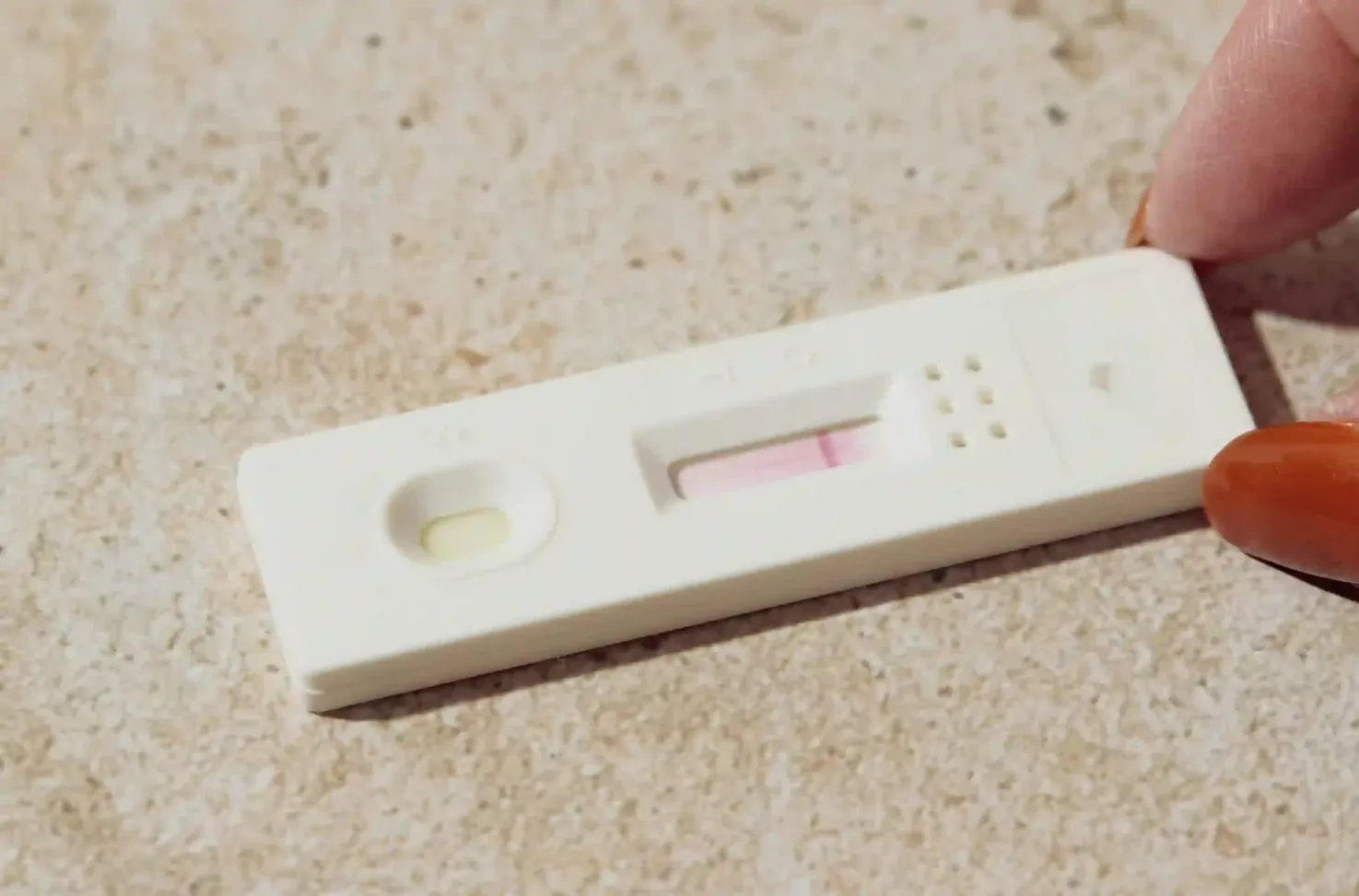
Home urine pregnancy tests (UPTs) work by testing your urine for hCG. You can either hold the test stick in your urine stream or dip the tip into a clean cup of collected urine. Inside that strip, there are antibodies waiting to grab onto hCG if it’s there. This forms what’s called a “sandwich complex” that triggers a color change.
- Two lines = positive
- One line = negative
Used correctly, home pregnancy tests have been shown to have sensitivity up to 100% and specificity around 99.2%.
That word “correctly” matters, though. Most home tests need your hCG to hit somewhere around 20-25 mIU/mL before they’ll flag it. This usually lines up with about four weeks post-conception.
One study found that at 11 days past ovulation, the typical hCG level was about 25.04 mIU/mL. This is right on the edge of what a home urine test can catch, meaning about half of pregnant women testing that early can get a negative test result.
A day or two before that, at 9-10 DPO, average levels were closer to 0.93 mIU/mL — nowhere near enough to register.
This is exactly why the standard advice is to wait until the first day of a missed period before you test.
Know more: How Long After Implantation Does hCG Rise?
Blood tests work the same basic way, but they check your blood sample instead of your urine.
Because hCG shows up in blood before it’s filtered into urine, blood tests tend to catch pregnancy earlier. They can also measure your exact hCG number rather than just yes or no.
So why would a real pregnancy test negative?
A few factors can throw off a home pregnancy test, even when you’re pregnant. Here’s what might be going on.
You tested too early.
This is by far the most common reason.
Implantation doesn’t happen on the same day for everyone.
One study found:
- 29% of pregnancies had implanted six days before a missed period
- 40% by five days before
- 76% by four days before
This means a large number of women testing early simply haven’t built up enough hCG yet, regardless of how sensitive the test is.
That’s why testing is recommended on or after the first day of your missed period. This allows time for nearly all pregnancies to implant and for hCG levels to be detectable.
Of course, that’s only useful if you know when your period is due. Even with regular cycles, ovulation doesn’t always occur on the same day every month, and for those with irregular cycles that “wait and see” advice can feel like more guesswork. This is where tracking your hormones directly, rather than counting days on a calendar, makes the timing clearer. The Inito Fertility Monitor tracks your FSH, LH, estrogen, and PdG levels to predict and confirm ovulation. This means you know your actual ovulation day, as well as how many days post ovulation (DPO) you are and, thus, can know the right day to test.
Your urine was too diluted.
If you’re drinking a lot of water before testing, your urine (and your hCG) gets diluted with it.
And early on in your pregnancy, when hCG levels may not be as high to begin with, this can make all the difference between a positive and a negative test.
However, some pick up on lower hCG levels than others, so the same urine sample could read negative on one brand and positive on another. But to err on the side of precaution, use your first-morning urine to take a test.
Something went wrong with the test itself.
Expired, stored wrong, or read at the wrong time — any of these things can throw off a result even when enough hCG is present.
It may be an ectopic pregnancy.
When a pregnancy implants outside the uterus, hCG tends to rise more slowly or abnormally. This can mean a negative test despite a real pregnancy.
Ectopic pregnancy is a medical emergency. So if you have belly pain, bleeding, dizziness, or fainting, get medical help right away. This is true whether you tested positive or not.
You’re pregnant with twins.
This is the surprising one.
You’d think more hCG would be a test more likely to catch it. But at extremely high levels (like you get with twins or multiple pregnancies), hCG can actually overwhelm the antibodies on the test strip. This is called the hook effect or prozone phenomenon.
The tests can’t process the hormone correctly, so you get a negative not because there’s too little hCG, but because there’s too much.
Know more: Can Twins Cause a False Negative Pregnancy Test?
Even blood tests aren’t immune.
They’re more sensitive than urine tests, but they can still miss an early pregnancy if drawn too soon after conception.
What should you do if you think you’re pregnant and get a false negative test?
If you’re having any of these symptoms of pregnancy:
- A missed period
- Sore breasts
- Nausea
- Fatigue
- Needing to pee constantly
- Mild cramping
- Implantation bleeding,
But the tests say no? Don’t take that as the final answer.
Here’s what to do instead:
- Wait 48-72 hours and test again.
- Test first thing in the morning when your urine is most concentrated.
- Make sure the test isn’t expired and follow the instructions exactly.
- If your period still hasn’t shown up or your symptoms are sticking around, see your healthcare provider for a blood test. It’s a simple draw that will confirm pregnancy. You may need an ultrasound too if your doctor advises.
Why is retesting important?
Though rare, a false negative doesn’t just cost you a little confusion. It can delay a diagnosis that matters. This includes diagnosing an ectopic pregnancy early, when treatment is most effective.
Research shows false negatives happen more in women who already have symptoms like abdominal pain and bleeding. This is exactly when you don’t want to be relying on one urine test alone.
If your gut is telling you something the stick isn’t, trust it enough to check again. A serum beta-hCG blood test is considered the gold standard for confirming or ruling out pregnancy. Think of it like a tie breaker.
Conclusion
A negative hCG pregnancy test feels definitive, but it isn’t always.
Most of the time, a false negative just means you tested a little too early.
Less often, it’s:
- Diluted urine
- A less sensitive kit
- User error
- An ectopic pregnancy
- Hook effect from very high hCG
If your body is telling you one thing and the test is telling you another, give it a few days and try again. Make sure to use first-morning urine and follow the instructions exactly.
And if things aren’t adding up? Let your doctor run a blood test. You deserve a real answer, not just a guess.

FAQs
Testing too early is the big one.
It can also be caused by:
- Diluted urine
- A less sensitive test
- User error
- Ectopic pregnancy
- The hook effect from very high hCG (rarely seen though)
Wait 48–72 hours and test again with first-morning urine.
If:
- Your period still doesn’t come
- Symptoms continue
- You develop severe pain or heavy bleeding,
contact your healthcare provider. They might recommend a blood hCG test and further evaluation.
Yes. Testing too early is the most likely explanation.
Less commonly, an ectopic pregnancy or the hook effect can cause a negative result even when you’re pregnant.
It’s uncommon, but a less sensitive test, diluted urine, or an ectopic pregnancy could explain it.
A blood hCG test can give you a clear answer.
No. A viable pregnancy would have hCG. The embryo starts making small amounts of hCG before implantation, and levels rise after implantation. This is because the developing placenta becomes the main source of production.
Early on, hCG might just be too low for a home pregnancy test to detect it.
It would be unusual. By then, hCG is typically well above what any test needs.
If it happens, see your doctor. They might order a blood hCG test and an ultrasound to determine the cause.
It’s rare, but the hook effect from very high hCG (like with twins) might cause false negative results.
A blood test can sort it out.
Yes, in rare cases.
Twin pregnancies can push hCG high enough to overwhelm the test strip, causing a negative despite a real pregnancy.
It depends on how high your hCG was to start.
It can take anywhere from a few days to a few weeks to clear your system. Your doctor can track this with repeat blood tests.
Most home tests need 20–25 mIU/mL.
Blood tests can detect much lower amounts, which is why doctors use them to confirm pregnancy earlier or clear up an unclear result.
Missed period, sore breasts, nausea, fatigue, frequent urination, mild cramping, and light implantation bleeding. All of these are possible even if a test reads negative.
Most tests turn positive around the time your period would be due. This is about 12–14 days past ovulation, once hCG has had time to build up.
Yes, through the hook effect.
Extremely high hCG from a multiple pregnancy can actually overwhelm the test and give you a false negative result.
Most likely, you tested too early.
Less commonly, diluted urine, a less sensitive test, user error, ectopic pregnancy, or the hook effect could be behind it.
- A Case of a Negative Urine Pregnancy Test in a Multiple Gestation Pregnancy | PubMed Central
- Human Chorionic Gonadotropin and Early Embryogenesis: Review | PubMed Central
- β-Human Chorionic Gonadotropin Dynamics in Early Gestational Events: A Practical and Updated Reappraisal | PubMed Central
- Human Chorionic Gonadotropin | StatPearls
- Strips of Hope: Accuracy of Home Pregnancy Tests and New Developments | PubMed Central
- Can pregnancy tests fail? False positives and negatives | inviTRA
- The hCG assay or pregnancy test | Clin Chem Lab Med
- Three Consecutive False Negative Pregnancy Tests in a Twin Pregnancy: A Case Report | Internet Scientific Publications
- Limitations in qualitative point of care hCG tests for detecting early pregnancy | ScienceDirect
- False negative point‐of‐care urine pregnancy tests in an urban academic emergency department: a retrospective cohort study | ScienceDirect


