How to Calculate DPO Using Your Inito Chart?
Published on Sep 30, 2026


If you’re trying to conceive, you’ve probably come across the term DPO, or Days Past Ovulation. Knowing how to calculate DPO can help you understand your implantation window, when to take a pregnancy test, and where you are in your cycle.
With Inito, calculating DPO is pretty straightforward when you see both Peak Fertility (PF) and Ovulation Confirmed (OC). But in some cases, your results may be unclear, or you may not get all your fertility ratings.
So, how many DPO are you in these situations? This guide walks you through the different scenarios and shows you how to calculate DPO using your Inito chart.
Disclaimer: Inito is meant to help you track your fertile window, confirm ovulation, and calculate your DPO. It cannot be used to determine when implantation occurred or to confirm implantation or pregnancy.
Key Takeaways
- DPO refers to the number of days post-ovulation.
- The most reliable way to calculate DPO with Inito is when you receive both Peak Fertility and Ovulation Confirmed.
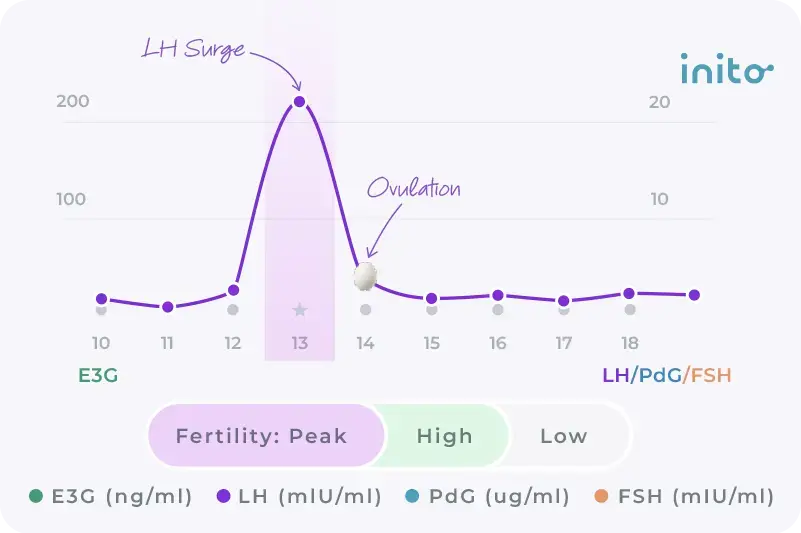
- Peak Fertility means that your LH has risen from your baseline.
- Ovulation Confirmed indicates that Inito detected a steady and consistent rise in PdG, which confirms that your body has released an egg after the last LH surge.
- If you have Peak Fertility but no Ovulation Confirmation, you cannot reliably calculate DPO because ovulation has not been confirmed.
- If you receive Ovulation Confirmation without Peak Fertility, you may still be able to estimate your DPO.
- If you have neither Peak Fertility nor Ovulation Confirmed, DPO cannot be reliably determined from your Inito chart.
What is DPO?
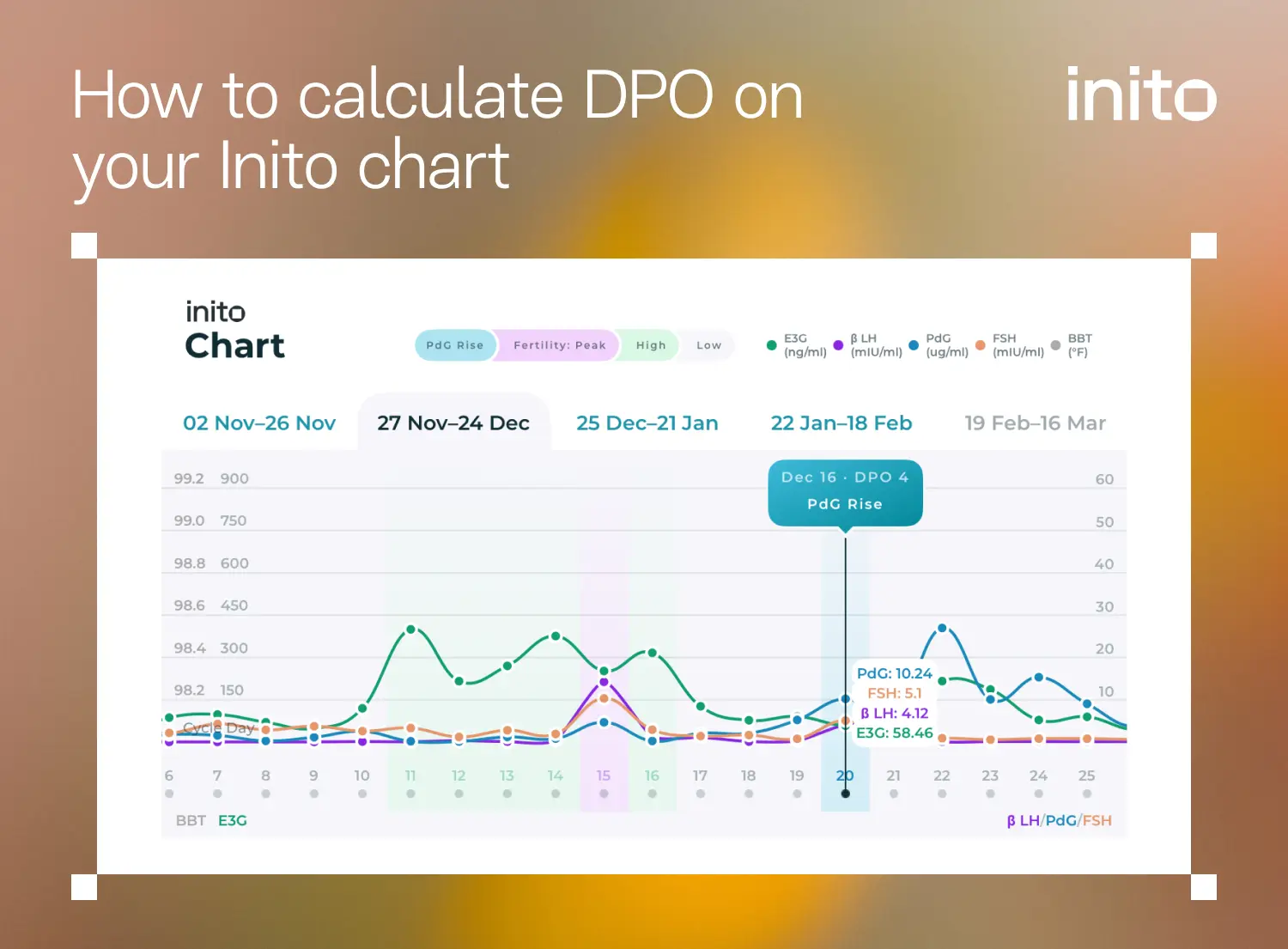
DPO stands for Days Past Ovulation or Days Post Ovulation. It tells you how many days have passed since you ovulated. If you’re wondering how to count DPO or when 1 DPO starts, you first need to estimate your ovulation day.
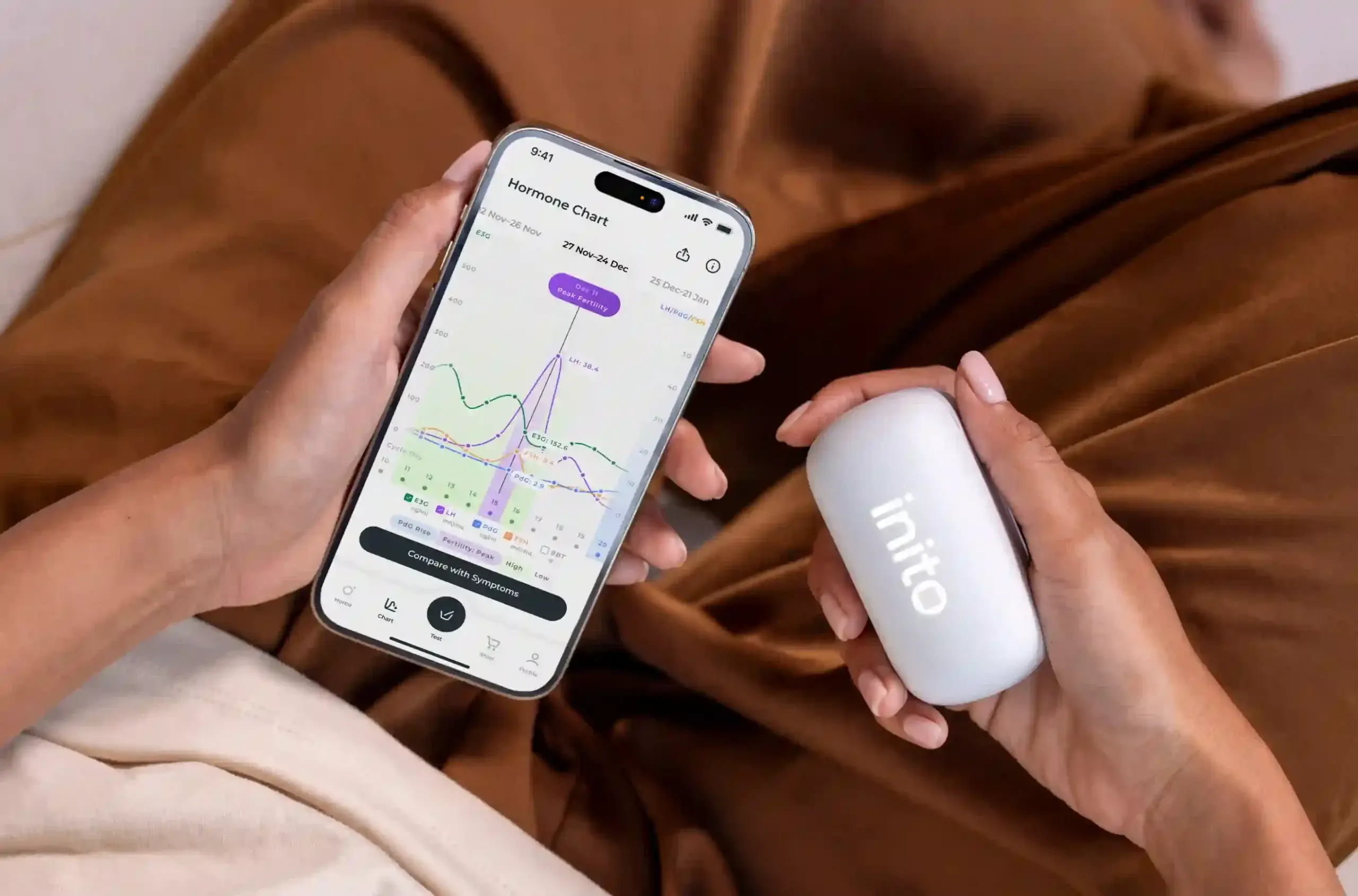
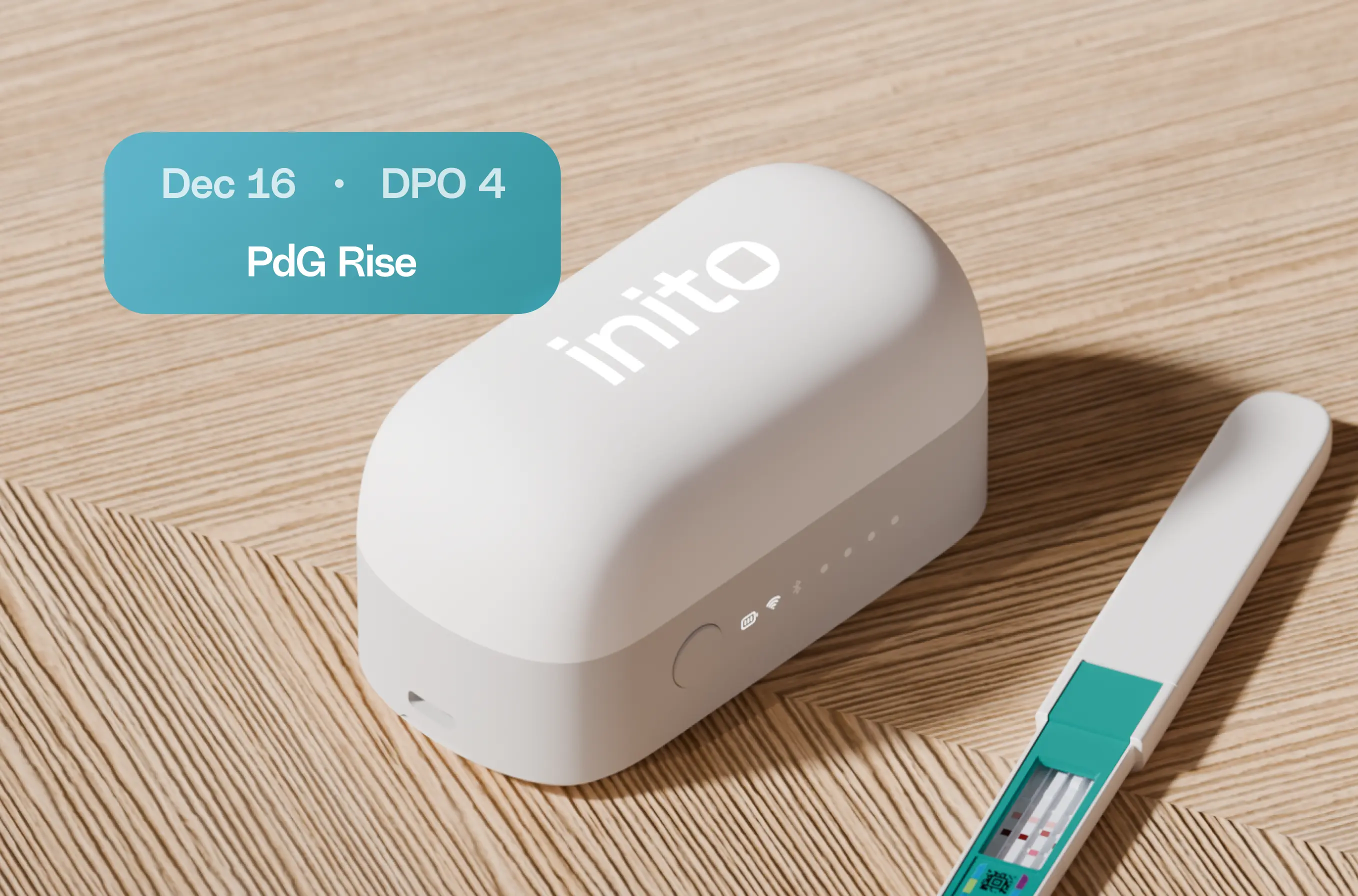
Let’s look at the Inito chart above. Peak Fertility was detected on CD 15, followed by a steady and consistent rise in PdG that confirmed ovulation on CD 20 (December 16). Since ovulation typically occurs about 24–36 hours after the LH surge begins, ovulation likely occurred around CD 16 (December 12), the day after Peak Fertility.
When calculating DPO after an LH surge, ovulation day itself is considered 0 DPO, and the following day is 1 DPO.
| Date | DPO |
|---|---|
| December 12 | 0 DPO |
| December 13 | 1 DPO |
| December 14 | 2 DPO |
| December 15 | 3 DPO |
| December 16 | 4 DPO |
Why Do People Track DPO?
Since you can’t see the exact moment an egg is released, you first need to identify when ovulation most likely occurred. With Inito, ovulation is confirmed when a steady and consistent rise in PdG (urine metabolite of progesterone) is detected following an LH surge.
Tracking Days Past Ovulation can help you understand where you are in the luteal phase and when important fertility and early pregnancy milestones may occur. Many people track DPO to:
- Understand their implantation window
- Estimate when to take a pregnancy test
- Track their luteal phase
- Compare hormone trends and symptoms between cycles
- Better understand hormone patterns after ovulation
For example, implantation typically occurs between 6 DPO and 12 DPO, although it’s more common around 8-10 DPO. Pregnancy tests generally become more reliable as you get closer to your expected period.
Because ovulation can occur on different cycle days from one cycle to another, counting DPO from ovulation can provide more useful context than relying on cycle day alone.
How Do I Calculate DPO When I Have Both Peak Fertility and Ovulation Confirmation?
If you’ve received both Peak Fertility and Ovulation Confirmed, calculating DPO is usually pretty straightforward. Your LH surge helps estimate when ovulation likely occurred, while the subsequent PdG rise confirms that ovulation happened.
You might notice that your LH surge doesn’t look like someone else’s. Some people see one clear peak, while others see double surges, plateau patterns, or more gradual rises. The good news is that once ovulation has been confirmed, the shape of your LH surge matters much less.
Instead, focus on the LH surge that was followed by Ovulation Confirmation and use that to estimate when ovulation likely occurred.
Single Surge
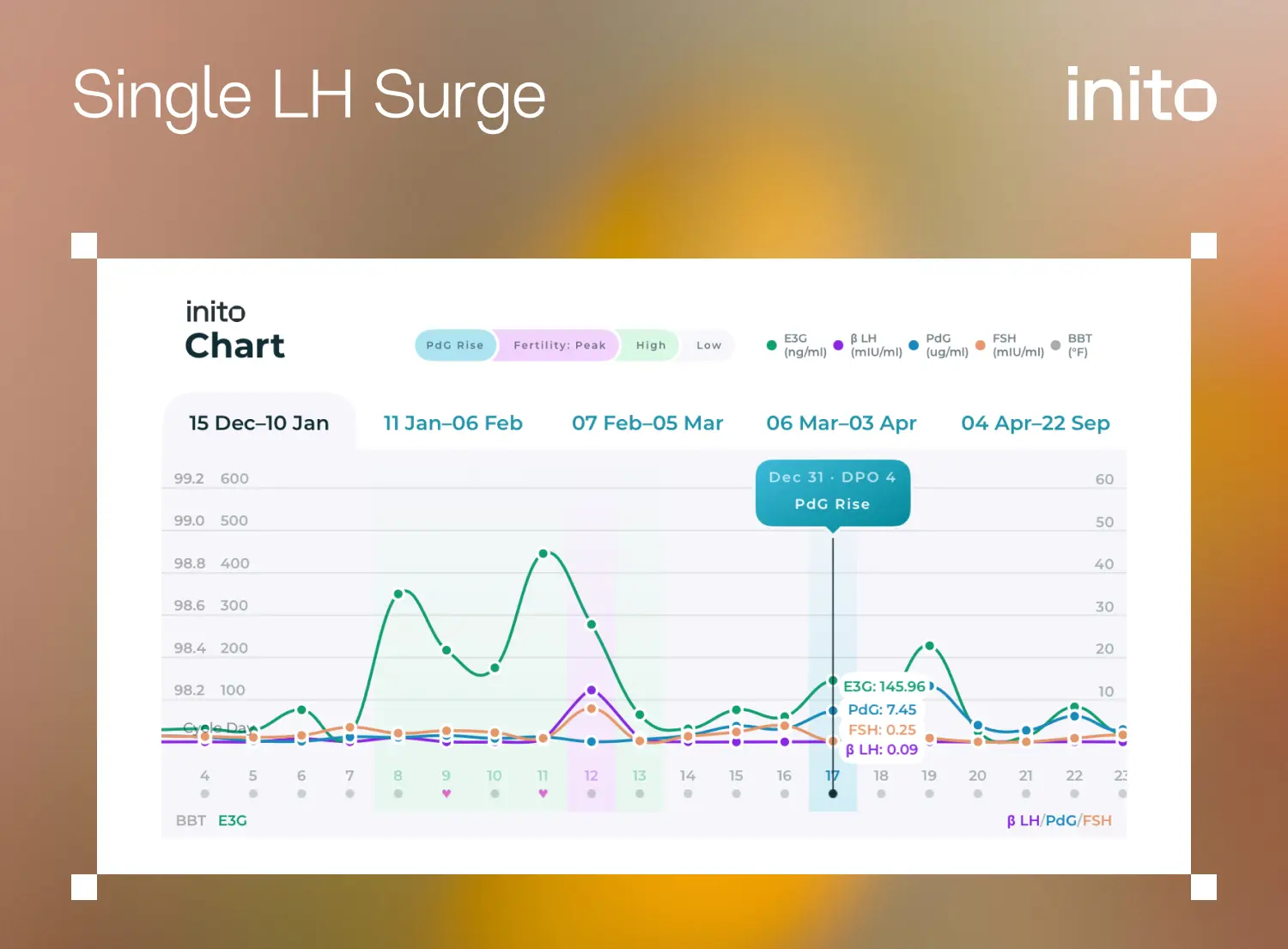
In this example, Peak Fertility was detected on CD 19, and ovulation was later confirmed through a steady and consistent PdG rise. Ovulation likely occurred around CD 20, making CD 20 = 0 DPO and CD 21 = 1 DPO.
This is the most straightforward scenario when calculating DPO after an LH surge.
Double Surge
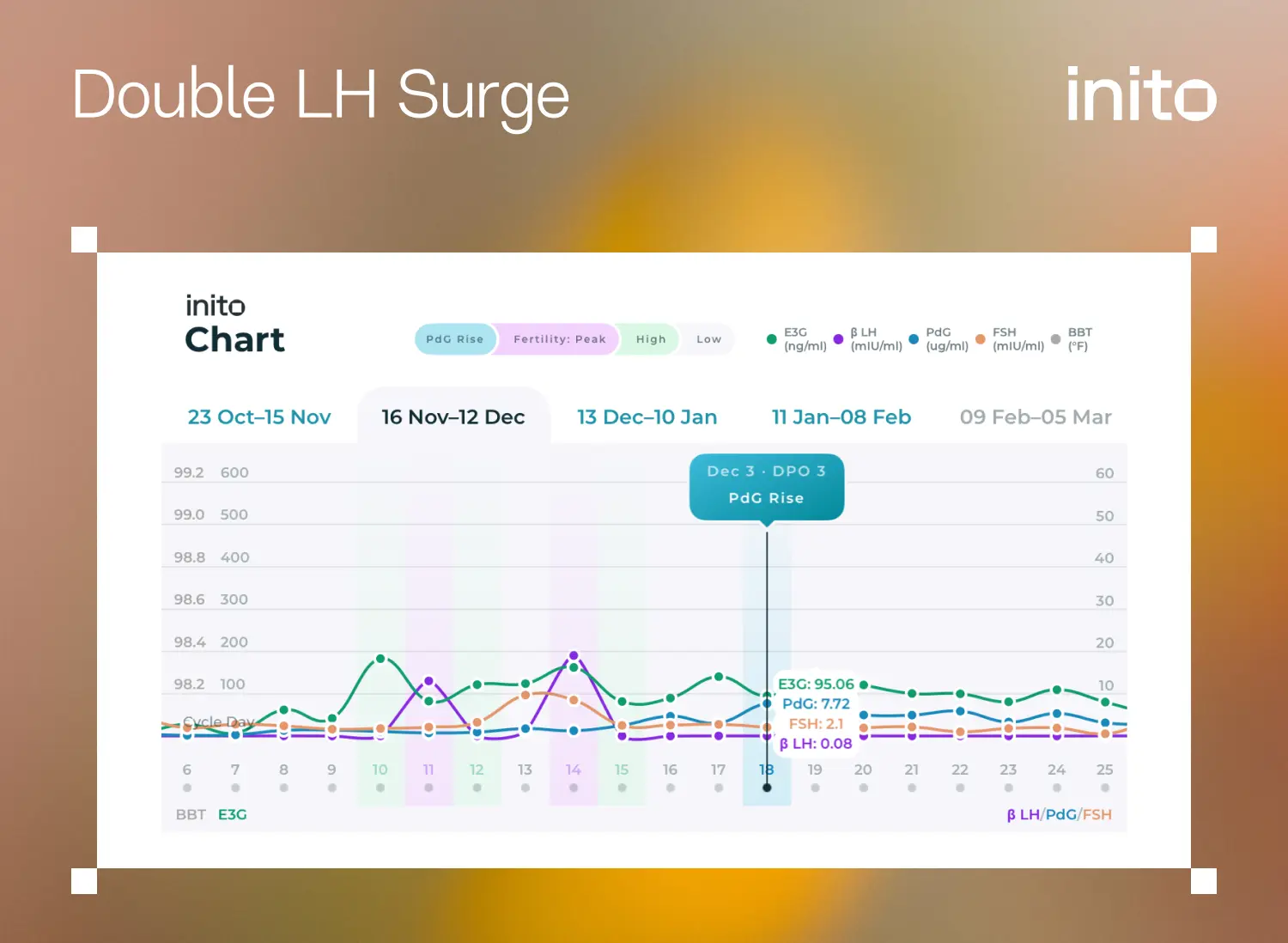
If you have a double LH surge, don’t automatically count DPO from the first surge.
Here, you can see two LH surges before ovulation was confirmed. Since the second surge was followed by a steady and consistent PdG rise, ovulation likely occurred after the second surge. DPO would then be counted from the estimated ovulation day, with the following day being 1 DPO.
Biphasic Surge
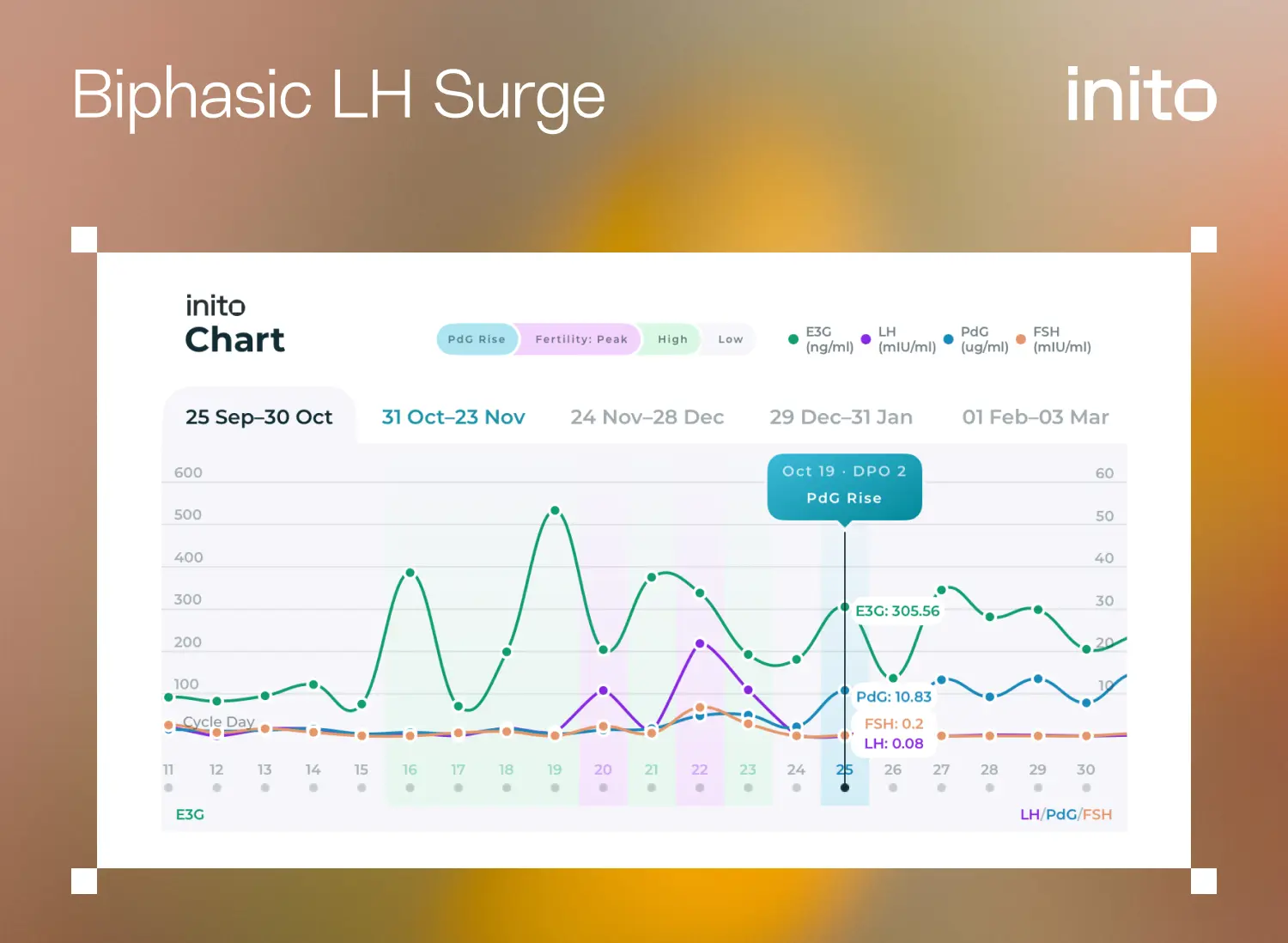
A biphasic LH surge is a type of double surge where LH rises, drops the next day, and then rises again before ovulation occurs.
If your Inito chart shows a biphasic LH surge, the same rule for calculating DPO with a double LH surge applies.
Plateau Surge
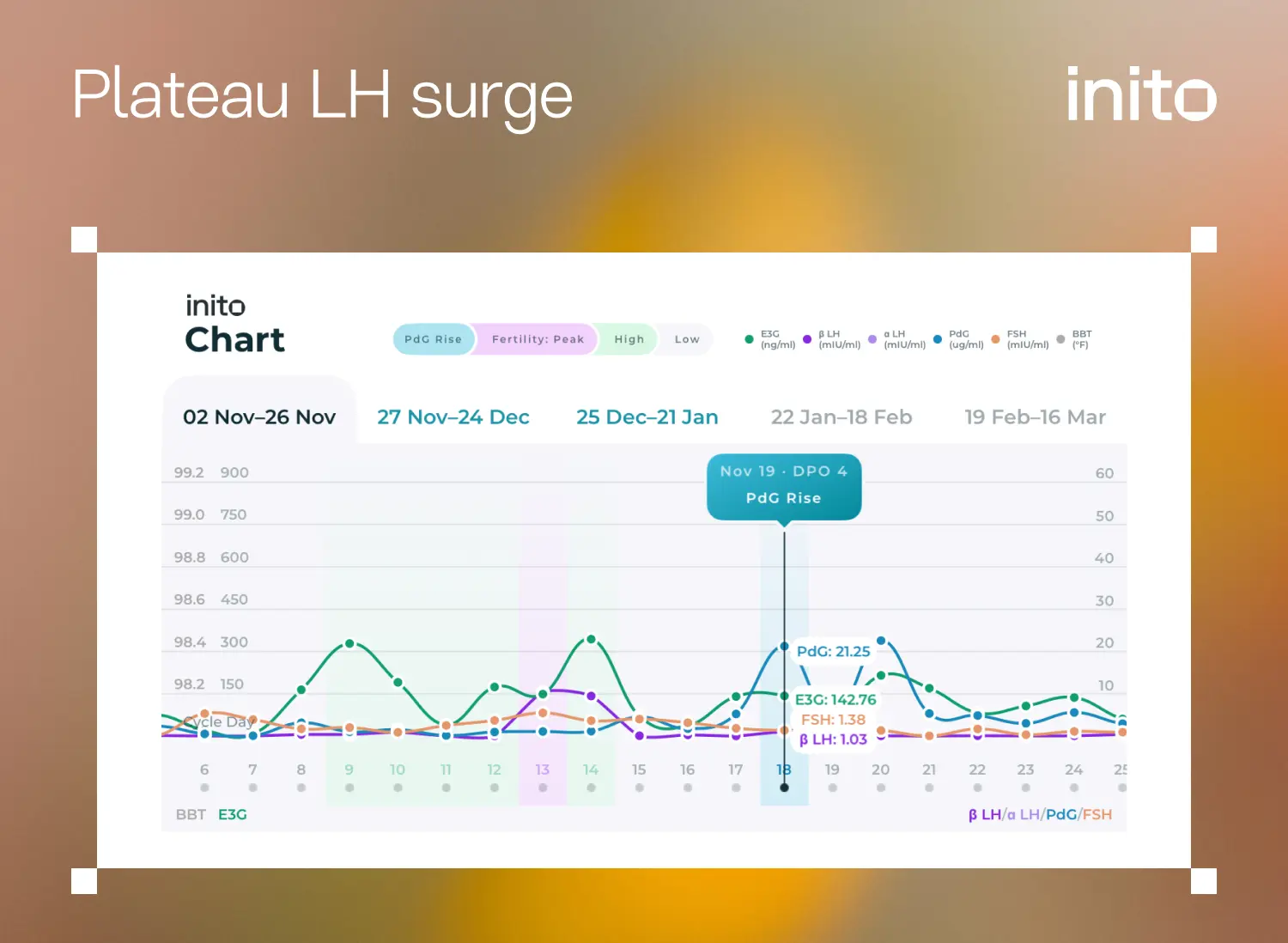
With a plateau LH surge, LH stays elevated for several days rather than showing one sharp peak.
Since ovulation typically occurs around 24-36 hours after LH begins to rise, look at when the LH rise started when estimating your ovulation day. Once you estimate ovulation, consider that day 0 DPO and begin counting Days Past Ovulation from the following day.
Multiple Surges
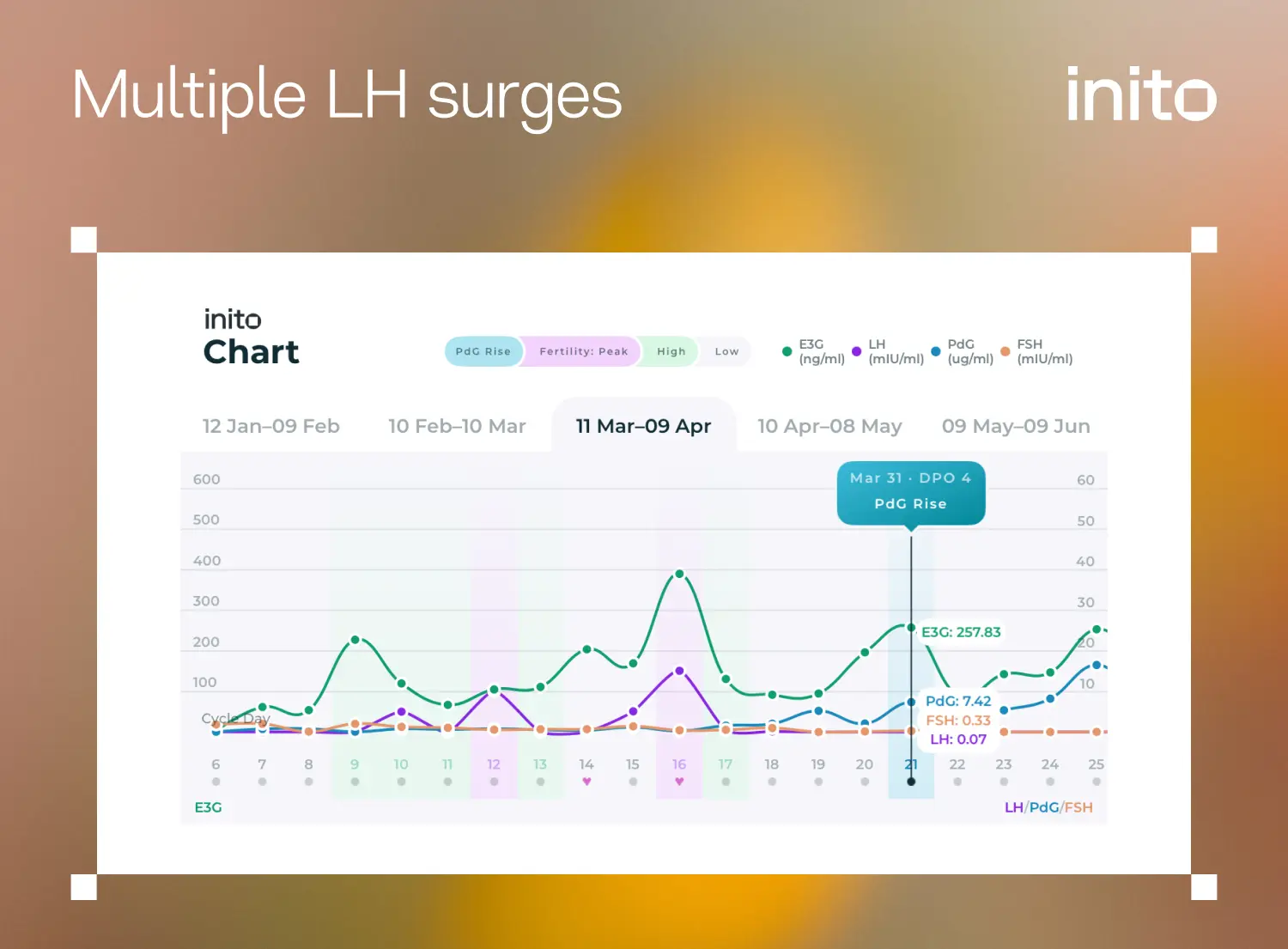
Some cycles include several LH surges before ovulation finally occurs. If your chart looks like this, it can be tempting to count from the first surge, but that’s not always the one that led to ovulation. Instead, look for the surge that was eventually followed by a rise in PdG levels.
The important thing to remember is that DPO is based on when ovulation likely occurred, not on what the LH surge looked like. Once you have both Peak Fertility and Ovulation Confirmed, you can usually estimate DPO with much more confidence, regardless of your surge pattern.
Know more: What Does a Normal LH Level Look Like?
How Do I Calculate My DPO When I Have Peak Fertility but No Ovulation Confirmation?
You may be able to estimate DPO after Peak Fertility, but you cannot know with certainty whether ovulation occurred without a rise in PdG.
That’s because an LH surge only tells you that ovulation is likely approaching–it doesn’t confirm that an egg was released.
Why Might I Have Peak Fertility but No Ovulation Confirmation?
Some situations can lead to this pattern:
Missed Tests
If testing stops too early or there are gaps in testing, the PdG rise may not be captured, meaning ovulation was not confirmed.
Anovulatory Cycles
Sometimes your body gears up for ovulation and releases LH, but the follicle doesn’t release an egg.
In these cases, Peak Fertility may be detected, but ovulation may not occur.
Know more: Anovulation: Everything you need to know about the #1 cause of infertility
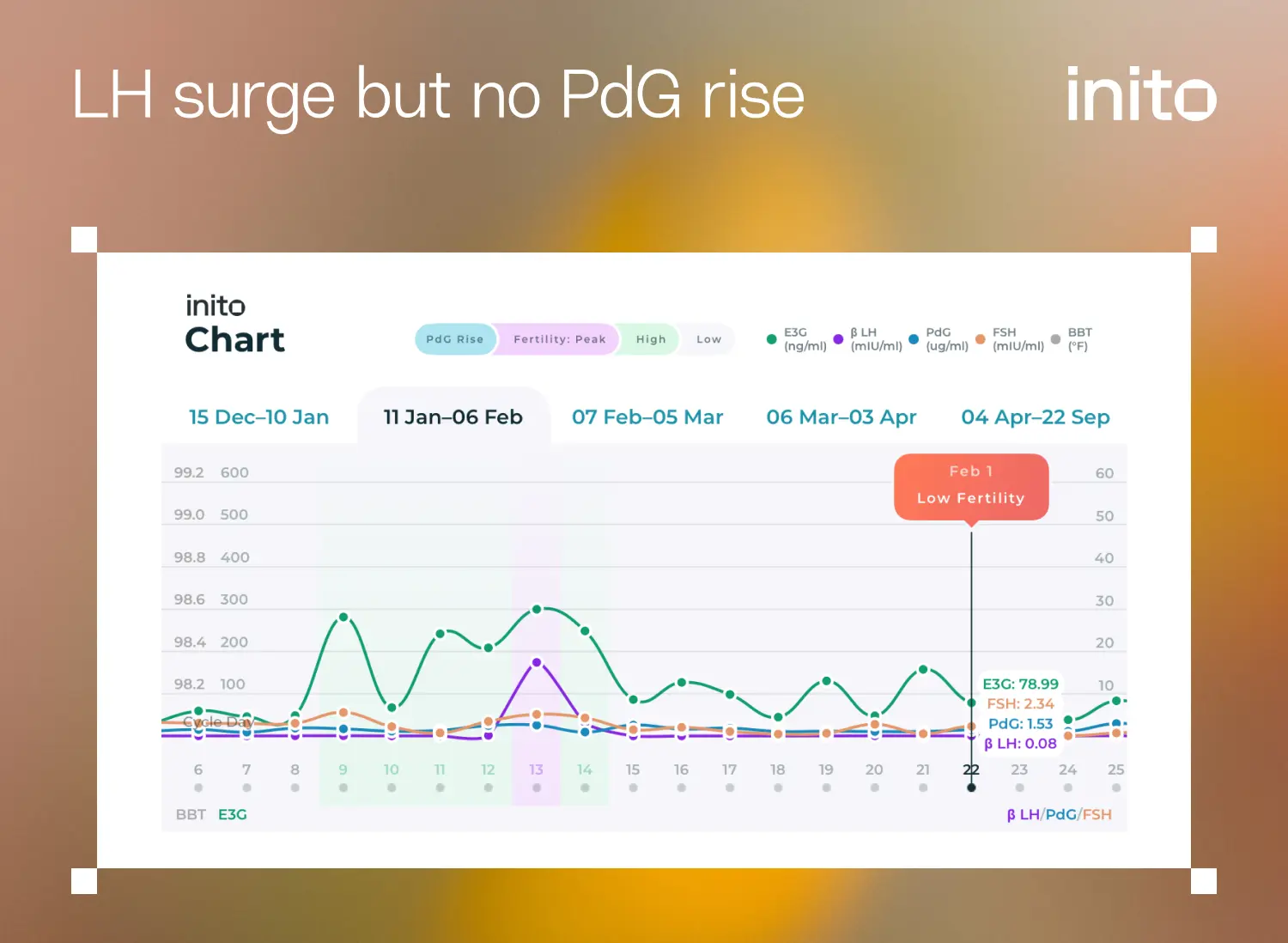
In this example, Peak Fertility was detected, but no sustained PdG rise followed. While you may still be able to estimate how many DPO you could be based on your LH surge, it’s best not to rely on that DPO calculation unless ovulation was confirmed.
It’s also important to remember that occasional anovulatory cycles can happen. However, if you’re experiencing more than two anovulatory cycles per year, it’s worth discussing this with your healthcare provider.
How Do I Calculate My DPO When I Have Ovulation Confirmation but No Peak Fertility?
If you received Ovulation Confirmation but never saw Peak Fertility, there are a couple of reasons this can happen.
You may have missed a few tests
If you started testing later than usual or missed a few tests around ovulation, you may have missed your LH surge.
You had a short/rapid LH surge
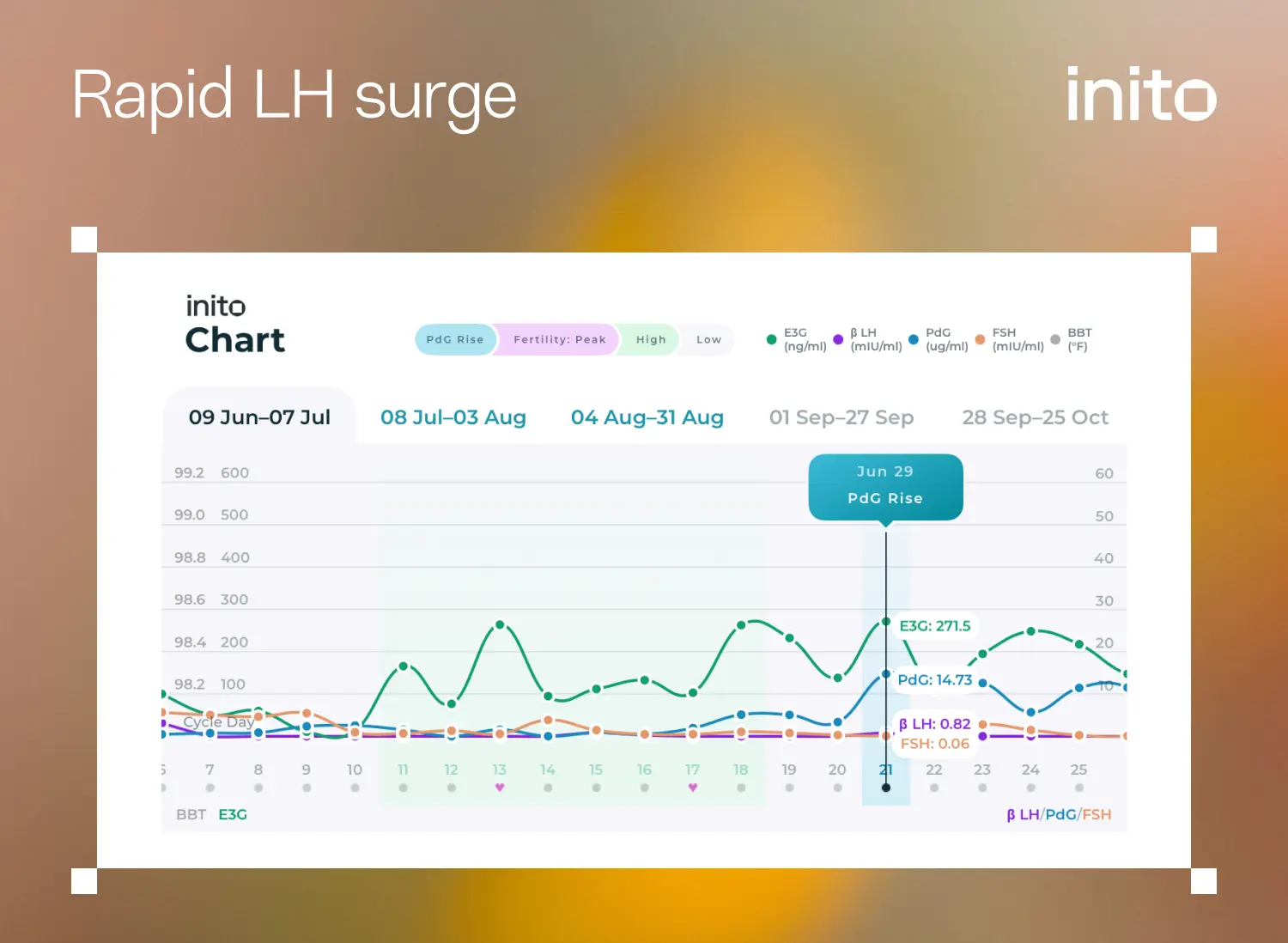
Sometimes, LH surges happen quickly, usually over 2-6 hours, and peak and drop before the next test, making them easier to miss.
In both of these situations, ovulation can still occur. Even though the LH surge wasn’t captured, a rise in PdG afterward can indicate that ovulation likely happened, allowing Inito to confirm ovulation.
How Should You Calculate DPO?
If you’ve received Ovulation Confirmation, you know that ovulation likely occurred several days earlier. While it may be harder to pinpoint the exact ovulation day, the PdG rise still gives you confidence that ovulation occurred.
In this chart, there’s also a small rise in FSH around CD 14. FSH can occasionally rise around ovulation to support the selection of the dominant follicle. So, while the LH surge wasn’t captured, the FSH bump suggests that ovulation may have occurred around this time, followed by the PdG rise that eventually confirmed ovulation. (However, this isn’t always the case, and an FSH rise alone cannot pinpoint when ovulation occurred, especially if there are multiple FSH rises during the cycle.)
And if you think you may have missed your LH surge because of skipped tests, following the app’s recommended testing schedule next cycle can help you calculate DPO more accurately.
How Do I Calculate DPO Without Peak Fertility or Ovulation Confirmation?
If you didn’t receive either Peak Fertility or Ovulation Confirmed, there’s no reliable way to calculate DPO.
That’s because DPO is based on ovulation, and without a detected LH surge or a sustained rise in PdG, it’s difficult to know when, or even if, ovulation occurred.
In this situation, focusing on your hormone trends across the cycle may be more useful than trying to determine how many DPO you are.
Summary
DPO is only meaningful once ovulation day has been identified and confirmed. If you’re unsure about your DPO, focus on your overall hormone patterns rather than a single number. Consistent testing across your fertile window can help provide a clearer picture of when ovulation occurs and make DPO calculations more reliable.
| Inito Results | Can You Calculate DPO? | What This Means |
|---|---|---|
| Peak Fertility + Ovulation Confirmed | ✅ | Most reliable scenario. Use the LH surge associated with a subsequent PdG rise to know your ovulation day. |
| Peak Fertility Only | ❌ | You can estimate when ovulation may have occurred after your LH surge, but ovulation hasn't been confirmed. |
| Ovulation Confirmed Only | You can estimate it | Rapid LH surge or missed tests. |
| Neither Peak Fertility nor Ovulation Confirmed | ❌ | DPO can be estimated by working backward from PdG rise. |
FAQs
Contributor

Inito Team
Health Researchers and Writers
Was this article helpful?
Share it on

Get a free guide Luteinizing Hormone (LH) by Inito