Tracking Your Cycles with Inito: Understanding Your Fertility Results
Published on Jul 22, 2026


Every menstrual cycle tells a unique story. While a menstrual cycle tracker can tell you when your period is due, one of the best ways to track your cycle is to understand how your hormones change throughout it.
From your first Reference Day Test to Ovulation Confirmation, each fertility rating reflects a different stage of your cycle. In this guide, you'll learn what each fertility rating means, how your hormones change throughout the cycle, what to expect next, and why your results may look different from one cycle to another.
Whether you're new to Inito or looking to better understand your hormone patterns, this Inito chart guide will help you make sense of every stage of your cycle.
Key Takeaways
- Your cycle begins on Cycle Day 1, when you start your period.
- Your fertility ratings change as your hormones change throughout the cycle.
- Reference Day testing establishes your baseline for all four key fertility hormones.
- Low Fertility means estrogen and LH have not risen above your baseline levels. This means your fertile window has not opened yet.
- After Low Fertility, rising estrogen leads to High Fertility, signaling that ovulation is approaching.
- During High Fertility, sperm can survive up to five days, increasing your chances of conception.
- Inito then looks for a rise in LH to identify Peak Fertility, your most fertile moment.
- Peak Fertility indicates ovulation will likely occur within the next 24–36 hours.
- After Peak, you enter Waiting for PdG Rise, the phase between LH surge and ovulation confirmation.
- During the Waiting for PdG Rise phase, you are in Low Fertility again since you have crossed your fertile window, and your chances of conceiving are low.
- A steady increase in PdG marks Ovulation Confirmed, meaning the egg has been released.
- The “two-week wait” follows ovulation and is the time to focus on rest and self-care.
- Your chart may vary each cycle due to natural hormonal fluctuations.
How does your fertility journey begin with Inito?
Every cycle begins with your period: this marks Cycle Day 1, or CD 1 for short. During your period, estrogen and progesterone have fallen back to their baseline levels, allowing your body to begin preparing a new group of follicles for the next ovulation. As you log your period in the Inito app, your personalized testing schedule is created for the rest of your cycle. One of the first important milestones you'll see is your Reference Day Test.
Ready to start your fertility journey?
Get Inito Fertility MonitorWhat is a Reference Day Test?
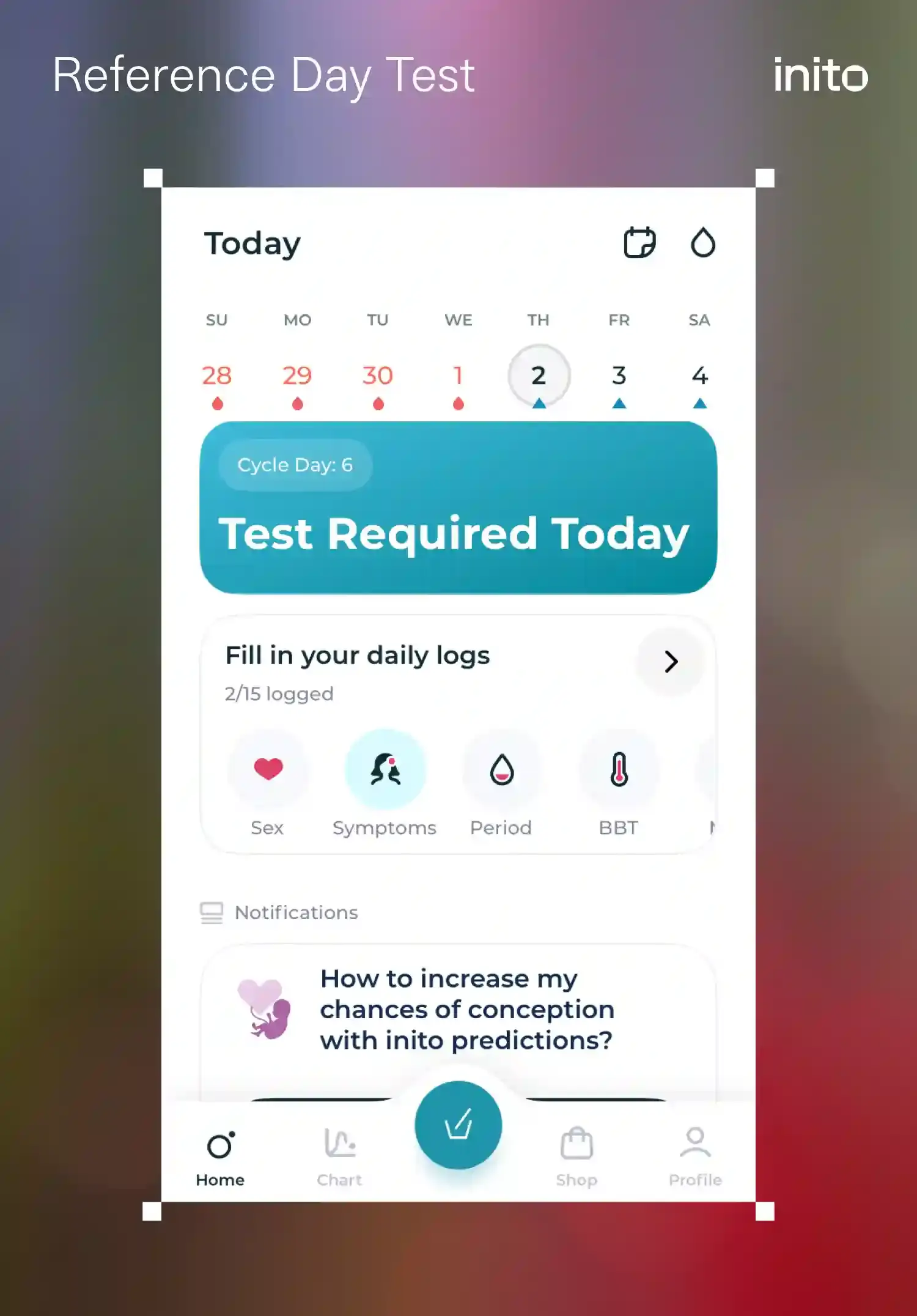
Most users start taking their Reference Day Test on Cycle Day 6 or 7 (This is marked by a blue triangle icon in your Inito calendar).
These are some of the most important tests of your cycle.
What does the Reference Day Test indicate?
Although it may seem like just another test day, it's actually one of the most important tests you'll take during your cycle.
On this day, Inito measures your baseline levels of:
- FSH (Follicle Stimulating Hormone)
- LH (Luteinizing Hormone)
- E3G (Estrogen)
- PdG (Urine metabolite of Progesterone)
These baseline measurements allow Inito to personalize your fertility insights throughout the rest of your cycle. By understanding your starting point, Inito can:
- Pick up even small hormonal shifts
- Pinpoint your actual fertile window
- Detect your LH surge with accuracy
- Confirm ovulation through a rise in PdG
Know more: A Complete Guide to Testing with the Inito Fertility Monitor
Why are the Reference Day tests so important?
Because every woman’s hormonal pattern is different. Your trends might be higher or lower than someone else’s and it may also shift slightly from cycle to cycle. The Reference Day Test ensures that Inito is comparing your upcoming results to your own baseline, not average thresholds. This enables more accurate tracking through the rest of your cycle.
Know more: Best Time to Test with Inito for Accurate Readings
What is Low Fertility in the Follicular Phase?
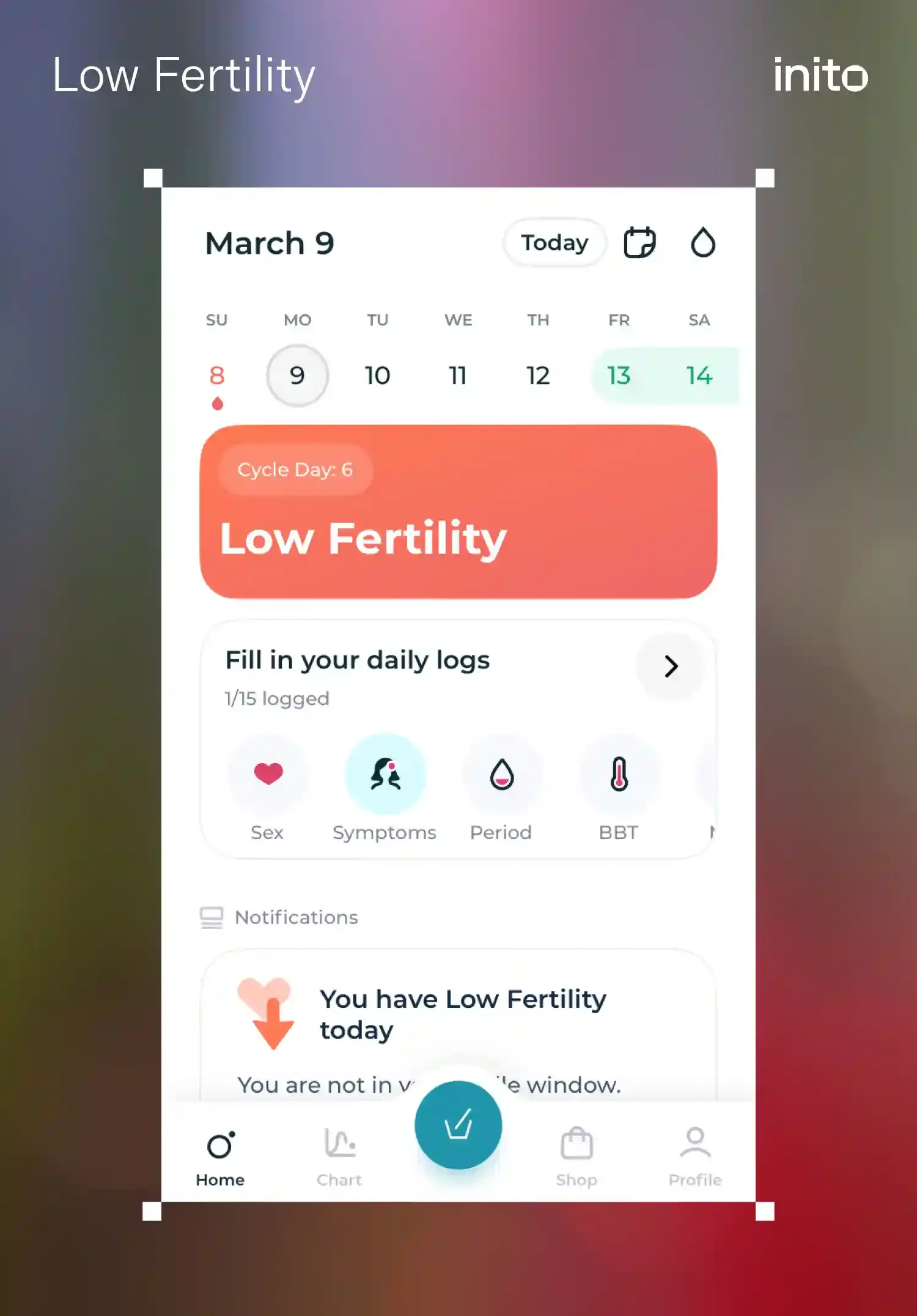
When you first start testing, you’ll likely see Low Fertility (including on your Reference Day tests).
What does Low Fertility mean?
Low Fertility means your estrogen and LH levels haven't yet risen above your baseline, so your fertile window hasn't opened.
If you've just started testing, seeing Low Fertility is exactly what you'd expect. In fact, it's the result you'll likely see most often throughout your cycle.
A Low Fertility result means that your likelihood of getting pregnant is low on this day–and that’s completely okay! In fact, Low Fertility is the result you’ll see most often during your cycle.
Low Fertility at this point in your cycle simply tells you:
- Your estrogen levels have not yet begun rising
- You're still early in your follicular phase
- Your egg is yet to be released
Note: It does not mean that anything is wrong or that your fertility is low. It is expected at the beginning of your cycle.
What can I expect after Low Fertility?
As one follicle becomes dominant, it begins producing more estrogen. Once estrogen rises above your personal baseline, Inito recognizes that your fertile window is opening and changes your fertility status to High Fertility. This is why continuing to test as recommended is so important. These early hormone values help Inito identify the changes that signal your fertile window is approaching.
Know more: Trying to Get Pregnant? Get to Know Your Follicular Phase
What is High Fertility in the Late Follicular Phase?
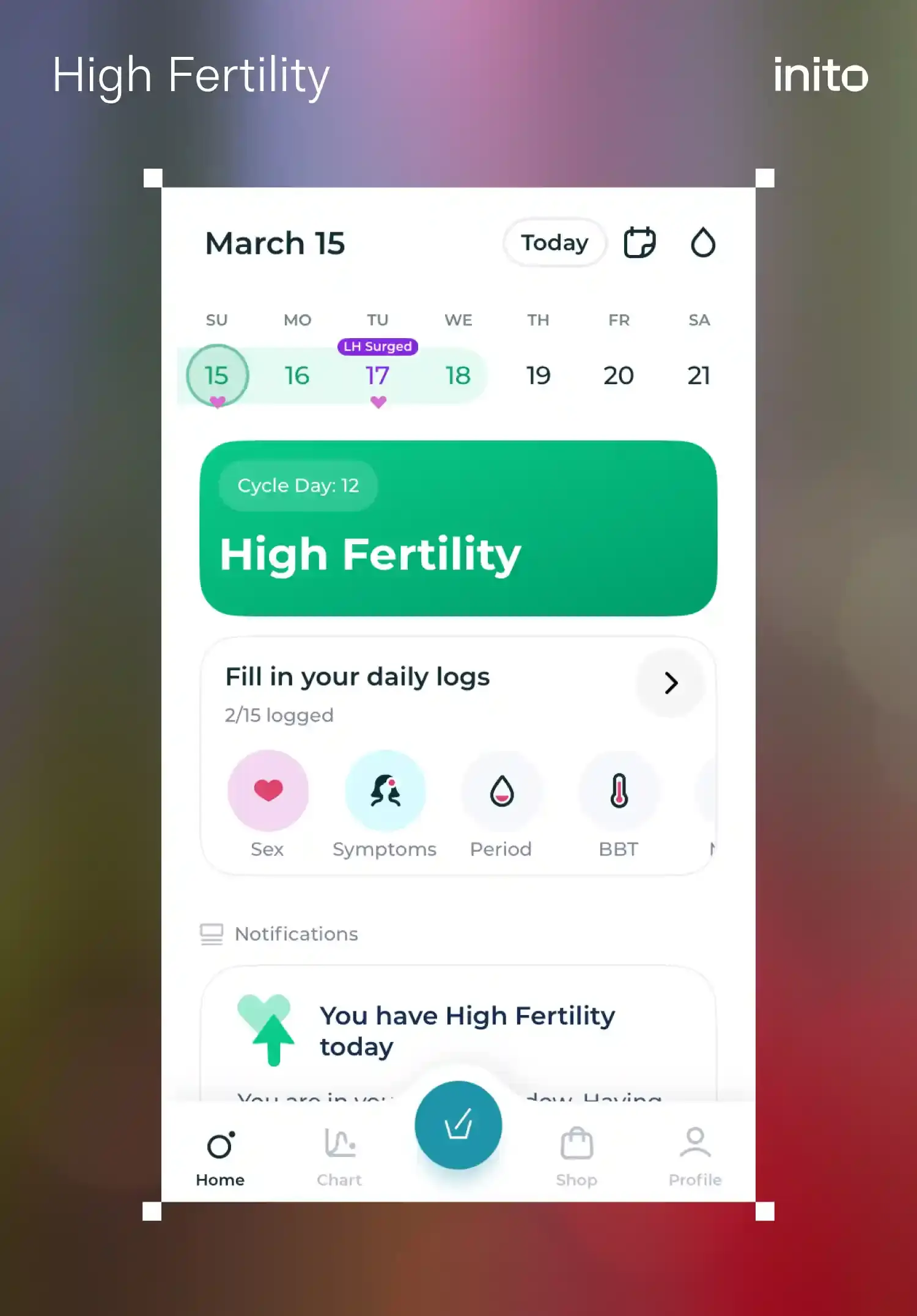
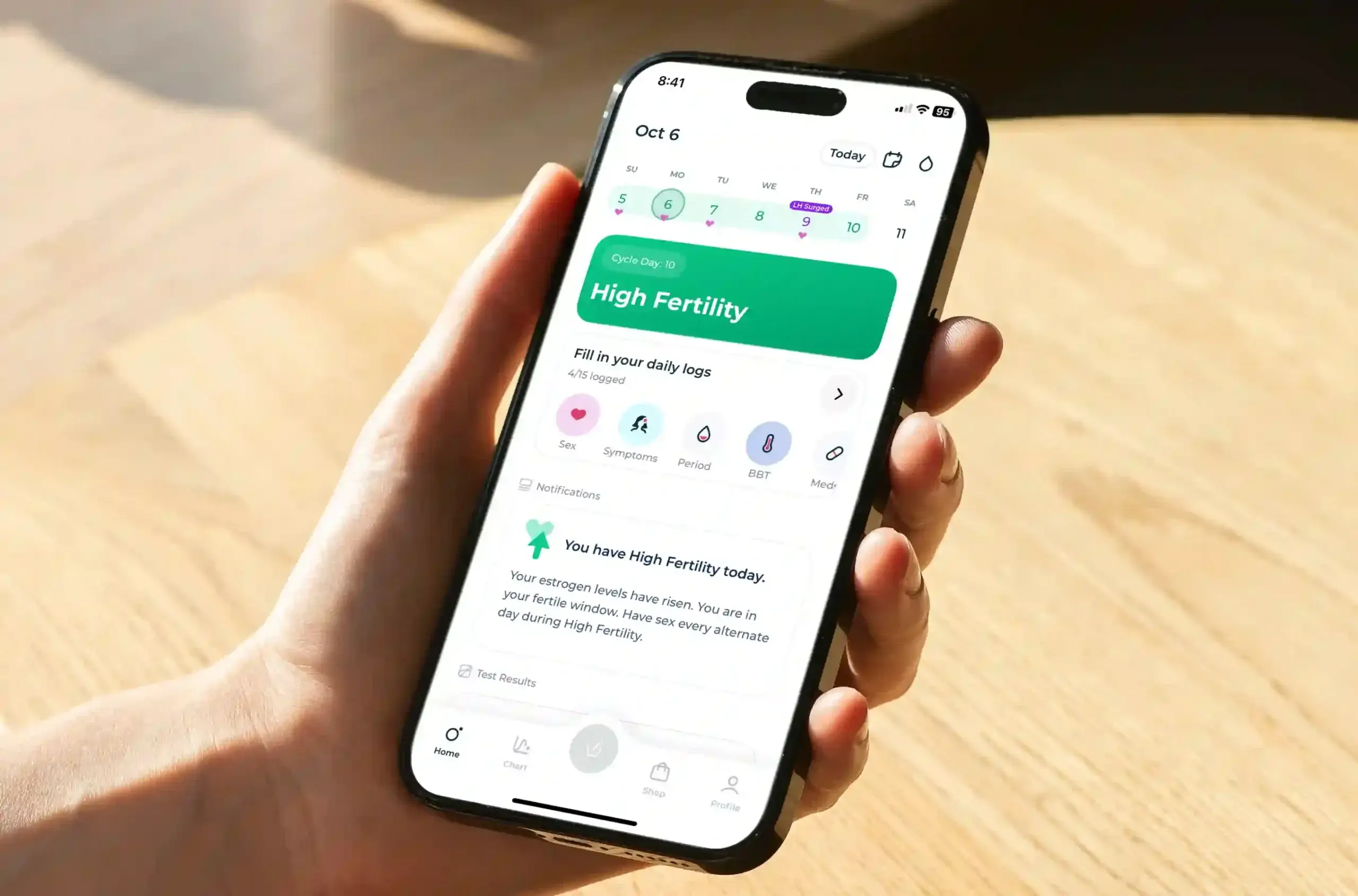
High Fertility is your signal that your fertile window is opening.
What does High Fertility mean?
High Fertility means that your estrogen (E3G) levels have risen above baseline, so your body is preparing to ovulate soon. As your dominant follicle grows, it produces increasing amounts of estrogen. Estrogen typically starts to rise about 3-4 days before the release of the egg. Unlike LH-only tests that typically identify only the day or two before ovulation, rising estrogen allows Inito to pinpoint your fertile window, giving you more opportunities to try on the right days before the egg is released.
What does High Fertility mean in my TTC journey?
Estrogen doesn't just prepare the follicle–it also creates conditions that support conception. During this time:
- Cervical mucus becomes more sperm-friendly.
- Sperm can survive for up to five days.
- Your chances of conception begin increasing.
For couples trying to conceive, this is an ideal time to have intercourse every day or every other day.
What can I expect after High Fertility?
After estrogen has risen, Inito begins watching for a rise in your LH levels. Once LH rises above your baseline, you'll receive Peak Fertility, signaling that ovulation is likely to occur within the next 24-36 hours. So, it’s important to keep testing as and when the app suggests to make sure you don’t miss it. Catching your LH peak is key to identifying your most fertile moment of the cycle.
What does Peak Fertility Mean in My Cycle?
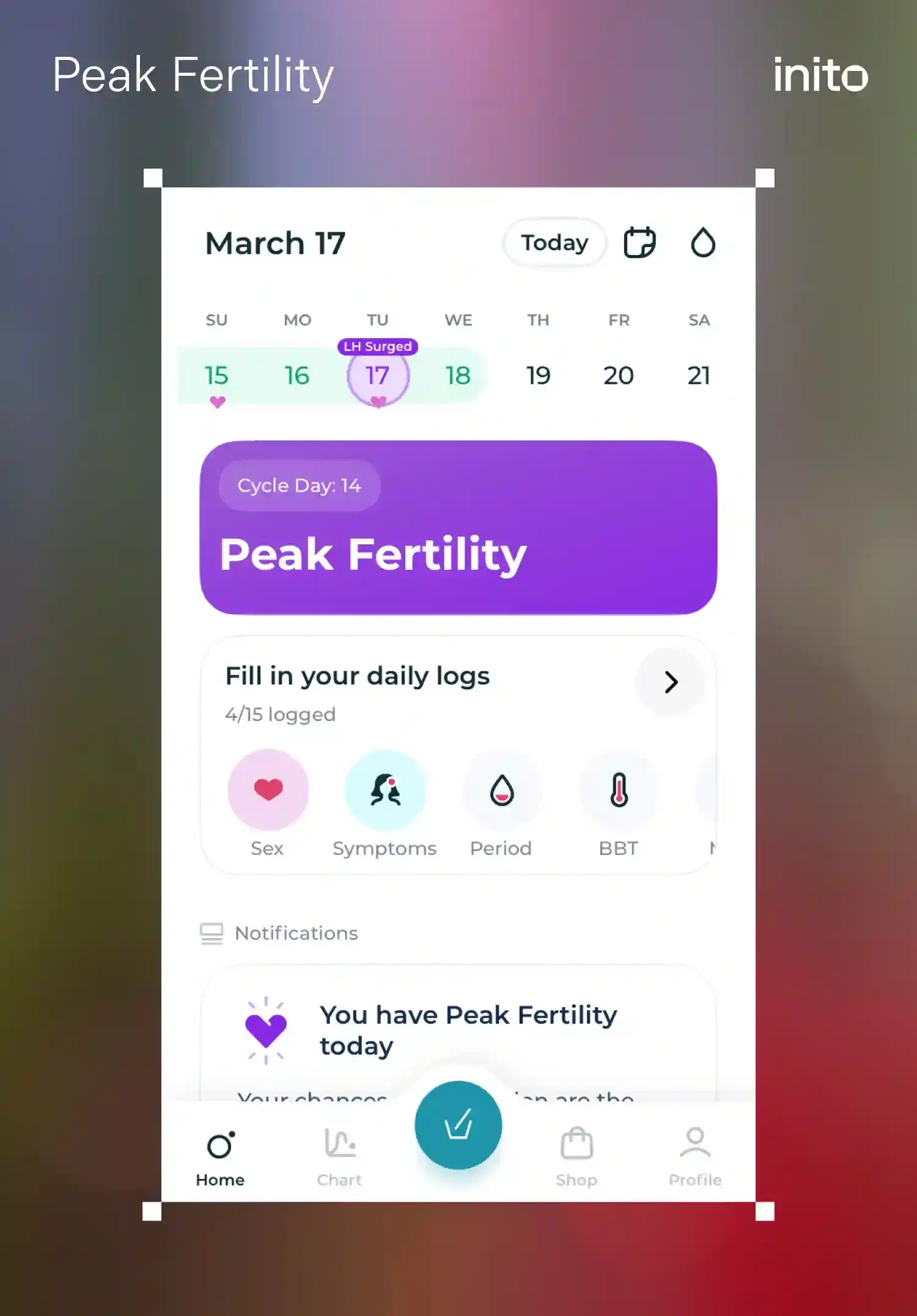
Peak Fertility is when the chances of pregnancy are the highest in your cycle.
What does Peak Fertility mean?
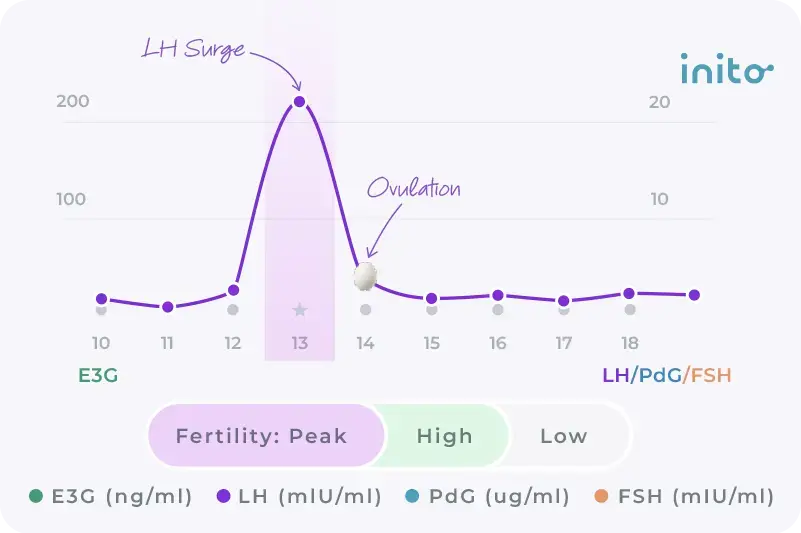
Peak Fertility means Inito has detected an LH surge, indicating that ovulation may occur within the next 24-36 hours. The LH surge is one of the most important hormonal events of your cycle. When LH rises, it triggers the dominant follicle to release the mature egg, a process known as ovulation. This helps you track ovulation with confidence instead of relying on calendar estimates alone.
Know more: How Does LH Surge Impact Ovulation?
What does Peak Fertility mean in my TTC journey?
Peak Fertility represents your highest chance of conception during that cycle. The egg survives for only up to 24 hours after release, so this is one of the best times to have intercourse. This ensures that the sperm are already waiting in the reproductive tract when ovulation occurs.
Know more: What are Your Chances of Getting Pregnant on Ovulation Day?
What can I expect next?
Although an LH surge predicts that ovulation is about to happen, it doesn't actually confirm that the egg has been released.
That's why Inito asks you to keep testing after Peak Fertility.
In the next stage of your cycle, Inito looks for a sustained rise in PdG, the urine metabolite of progesterone, to confirm ovulation.
Waiting for PdG Rise: How Is It Related to Ovulation Confirmation?
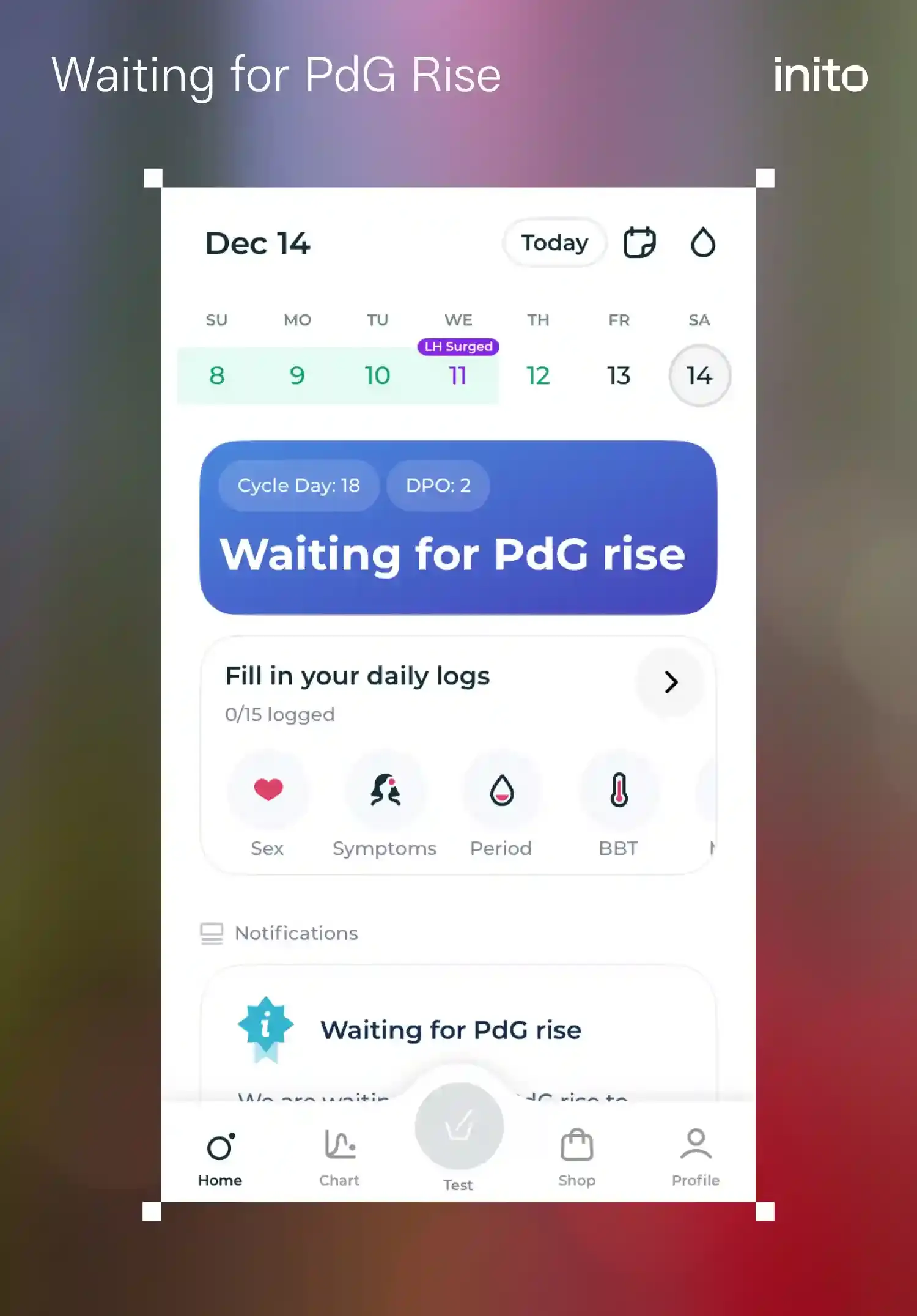
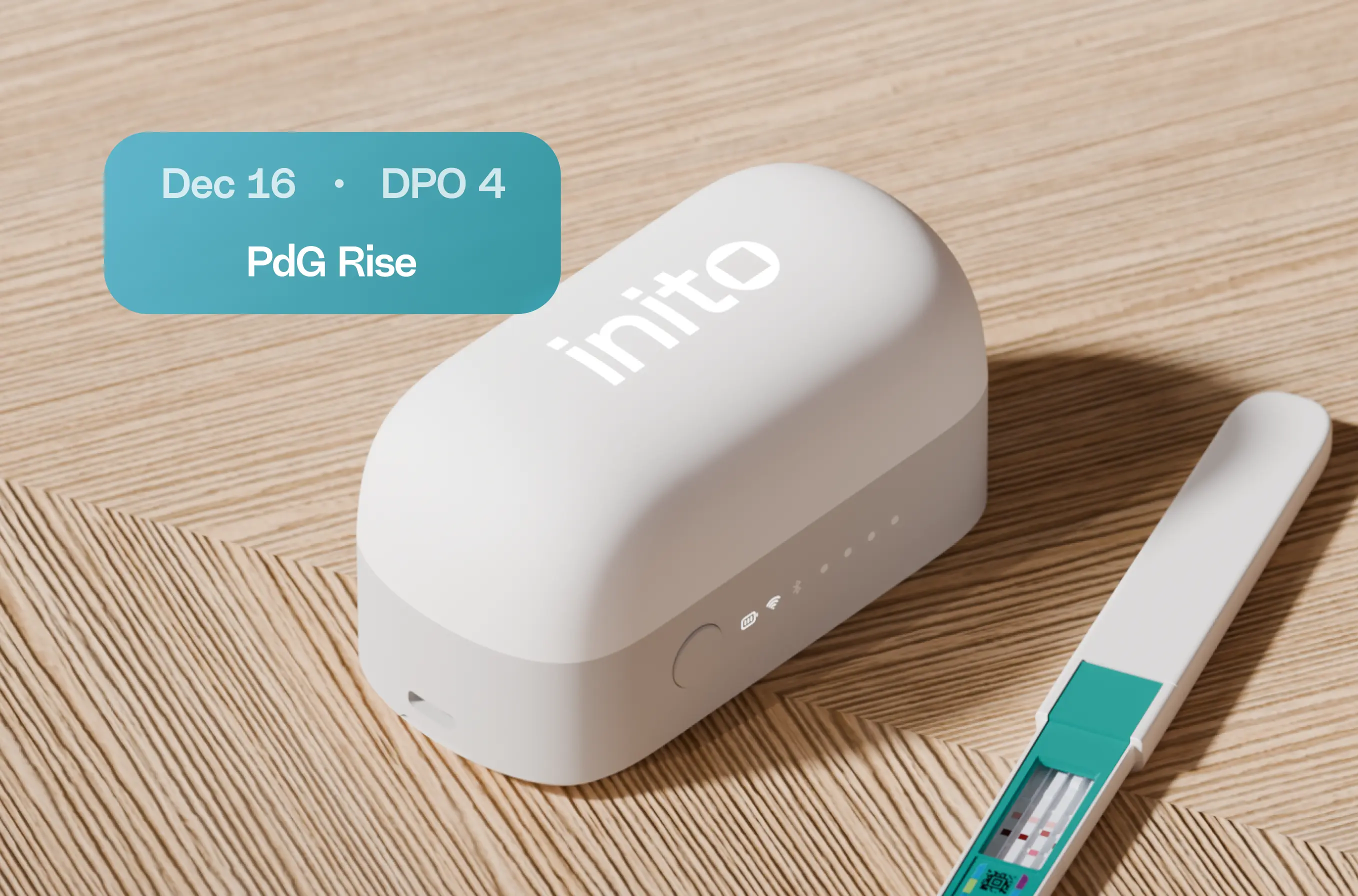
After Peak Fertility, you’ll notice that Inito shows you a result called Waiting for PdG Rise.
What does Waiting for PdG Rise mean?
This is the time between your Peak Fertility and Ovulation Confirmation.
After ovulation, the ruptured follicle transforms into the corpus luteum, which begins producing progesterone. When progesterone increases, PdG (the urine metabolite of progesterone) rises as well. A steady and consistent PdG rise confirms that ovulation has actually taken place–and this is exactly what Inito looks for to mark Ovulation Confirmed.
What does Waiting for PdG Rise mean in my TTC journey?
At this point, your body has done the work needed to support ovulation. This means:
- Your fertile window has likely closed (unless you see another LH surge).
- Your body is transitioning into the luteal phase.
- Inito is tracking your PdG to confirm that ovulation has occurred by tracking your PdG.
What can I expect next?
One of two things may happen:
- Ovulation Confirmation: Once your PdG levels show a sustained rise in the days following your LH surge, you’ll receive an Ovulation Confirmed result.
- Another LH surge: If PdG doesn't rise, you may experience another LH surge before ovulation occurs. This is why Inito continues asking you to test after Peak Fertility—it helps capture both ovulation confirmation and any additional LH surges that may occur.
Know more: PdG Results on Inito Explained: Waiting for Rise, Rising, Confirmed, or Unlikely?
What does Ovulation Confirmed Mean in my Cycle?
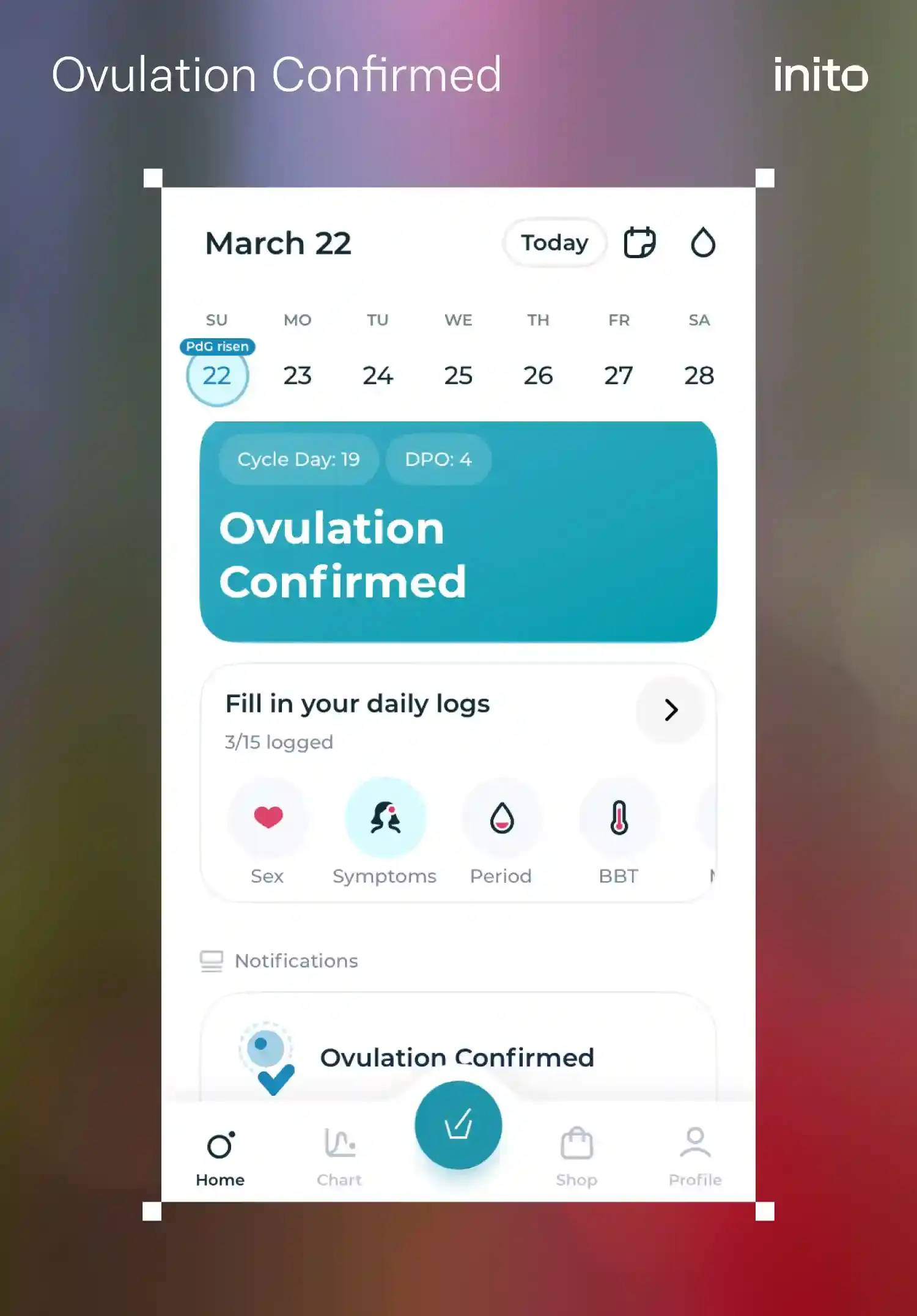
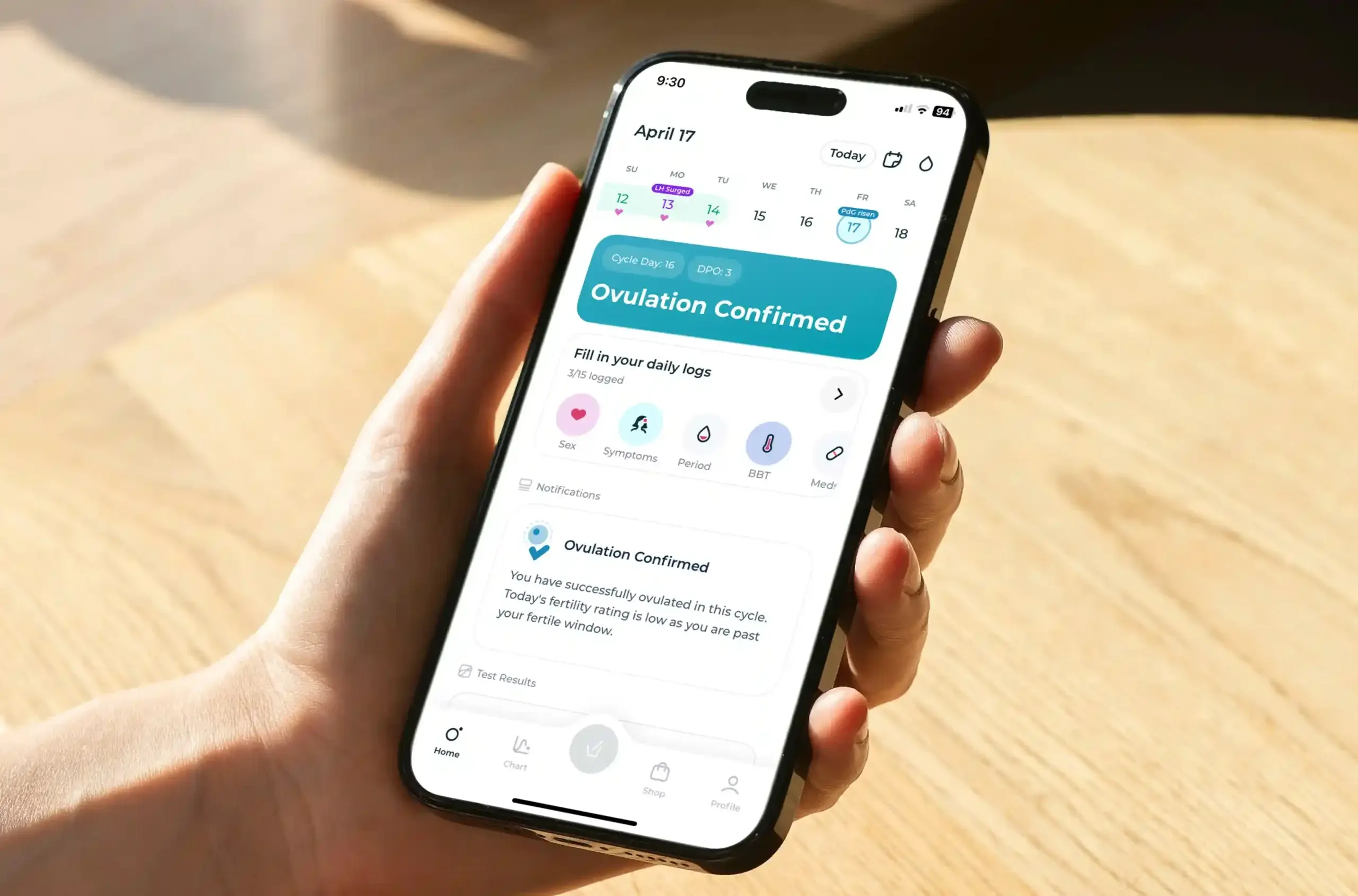
Short answer: Ovulation Confirmed means Inito has detected a steady and consistent PdG rise after your LH surge, indicating that ovulation has likely occurred. Receiving an Ovulation Confirmed result is an important milestone because it means your hormone pattern is consistent with ovulation having taken place. Unlike LH, which predicts ovulation, PdG provides confirmation that your body has responded to the LH surge and released the egg.
When did I ovulate?
Since ovulation typically occurs 24-36 hours after your true LH surge, Inito marks your Ovulation day as Peak Fertility day + 1. This means,
- If the latest Peak Fertility was detected on CD16,
- Your ovulation day = CD17
What can I expect next?
Entering the luteal phase: After ovulation, your body shifts into the luteal phase. During this phase, progesterone remains elevated to help support the uterine lining in case pregnancy occurs.
Do I need to keep testing?
Further testing isn’t required after ovulation has been confirmed. However, some people like to continue tracking to monitor their overall cycle patterns.
The two-week wait: The stretch between ovulation and your next period (or a positive pregnancy test) is often called the two-week wait. It can feel long and emotionally charged, so be gentle with yourself. This is the perfect time to focus on rest, nourishment, and self-care.
Know more: Your Complete Guide to Surviving the Two-Week Wait
How do you calculate DPO on Inito?
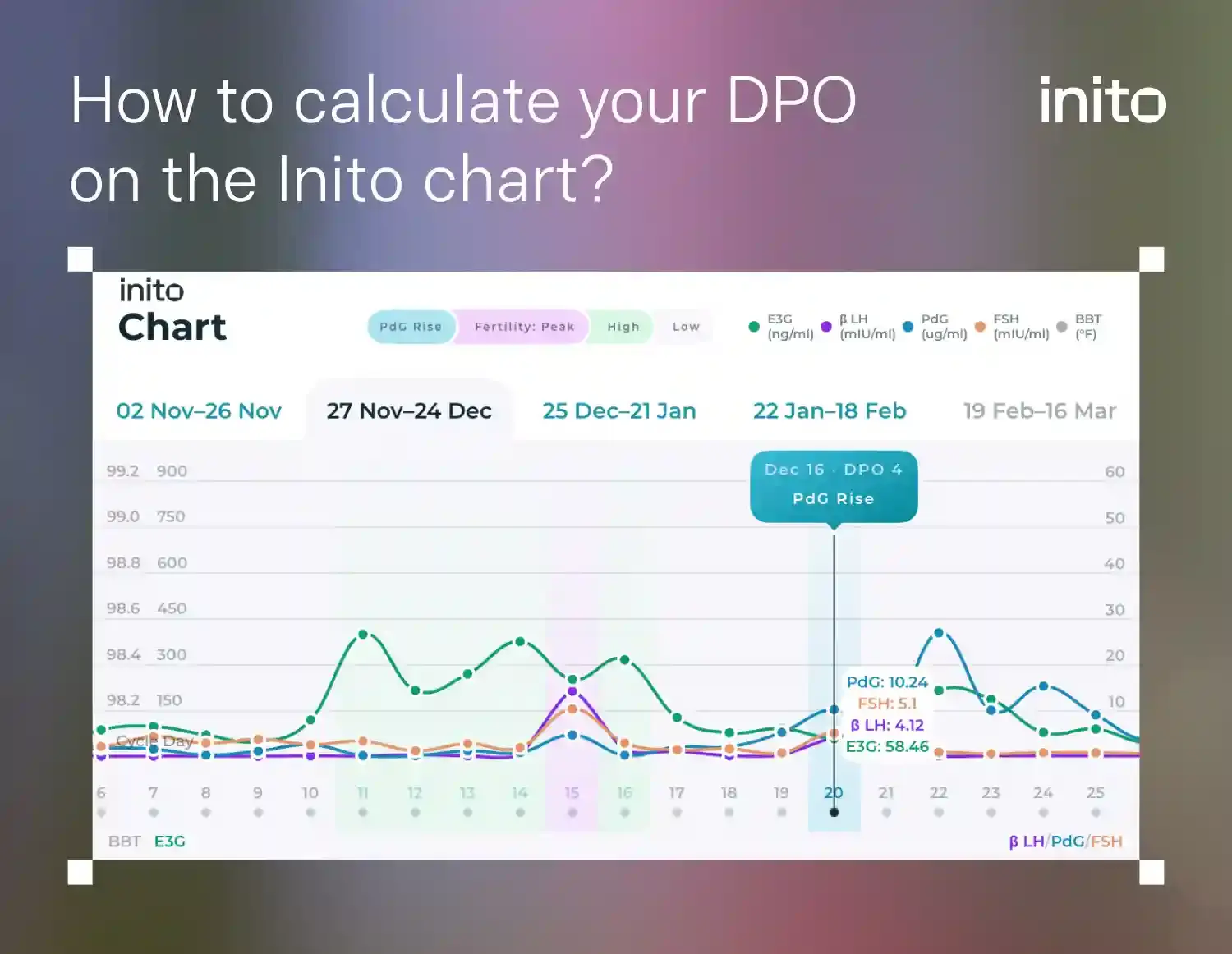
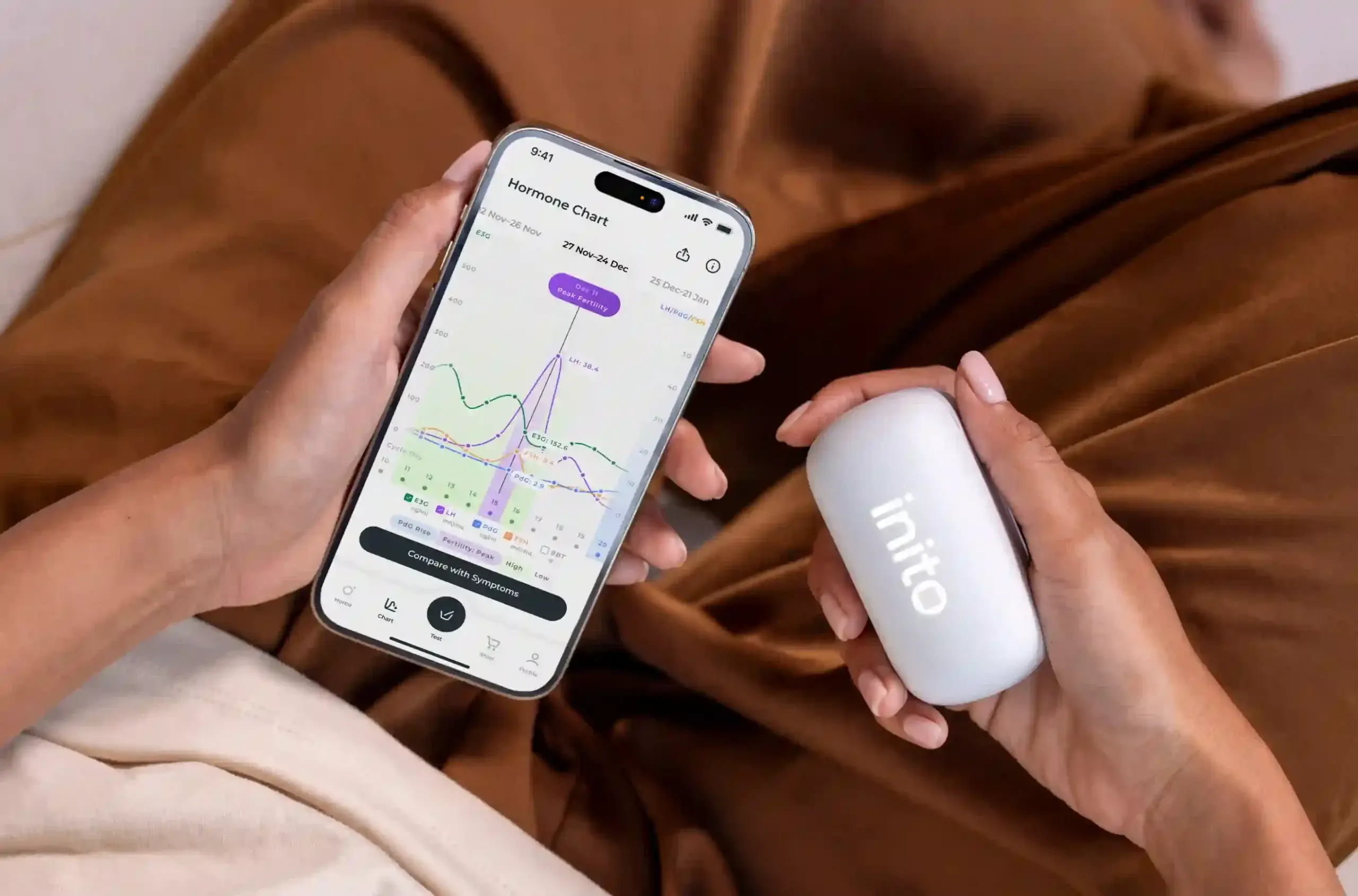
DPO (Days Past Ovulation) tells you how many days have passed since you ovulated. DPO is one of the most useful metrics for fertility charting because it helps you understand where you are after ovulation. Once your PdG has risen steadily after your LH surge, Inito marks the day after Peak Fertility as your Ovulation Day (0 DPO). Each day after that increases your DPO by one.
Example:
- Peak Fertility: CD 15 - December 11
- Ovulation (0 DPO): CD 16 - December 12
- 1 DPO: CD 17 - December 13
- 2 DPO: CD 18 - December 14, and so on.
Note: Inito shows your DPO on the chart only after ovulation is confirmed.
Putting It All Together: How Does Inito Help You Track Your Menstrual Cycle?
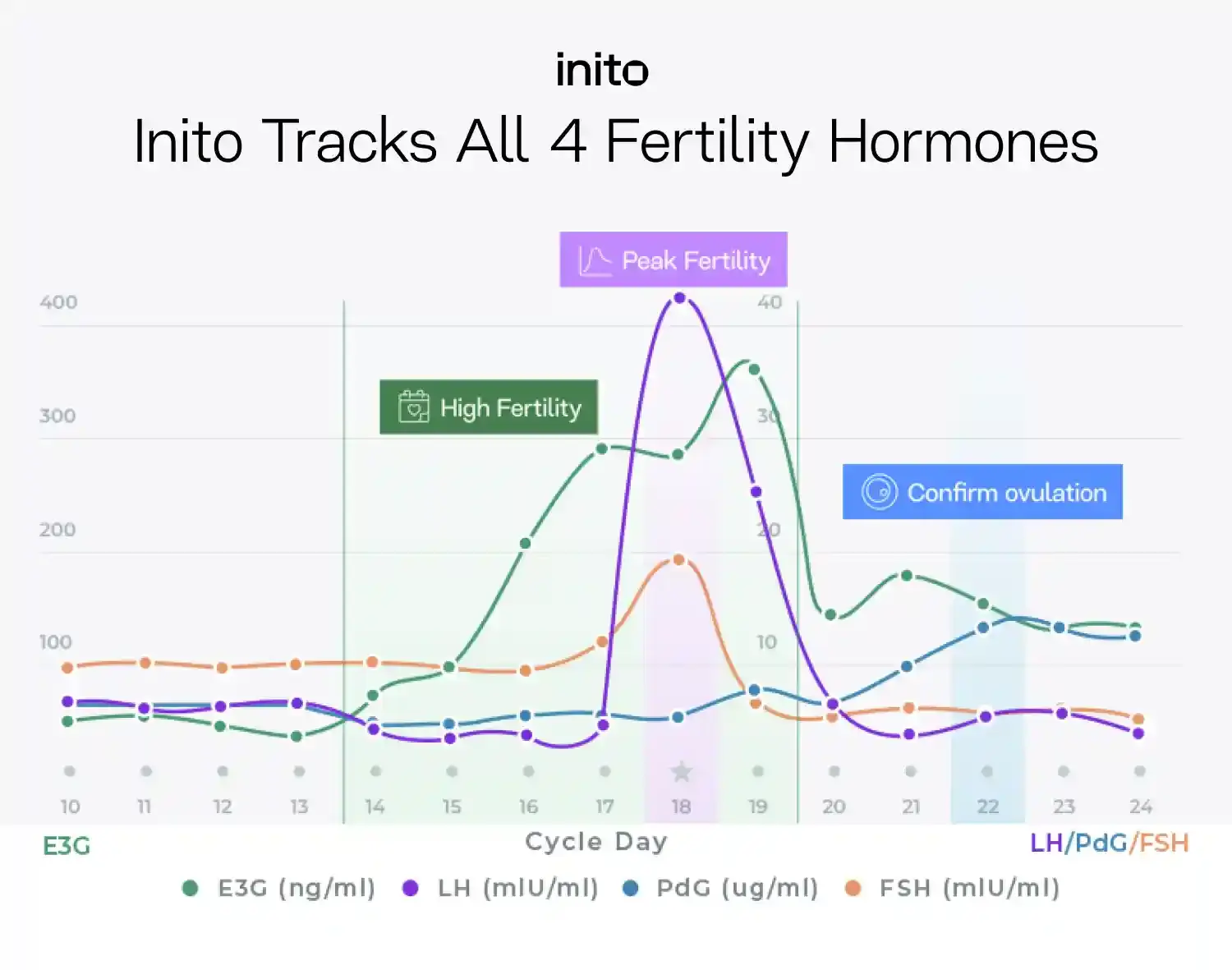
This is how your menstrual cycle tracking looks in the Inito app during a typical ovulatory cycle:
| Where you are in your cycle | What's happening | What you see on Inito | What happens next |
|---|---|---|---|
| Period (CD 1) | Hormone levels reset, and a new menstrual cycle begins. | Period logged in the app | Follow your personalized testing schedule |
| Reference Day Test | Measuring your baseline hormone levels | Reference Day Test | Inito uses this baseline to personalize your fertility insights |
| Early follicular phase | Follicles begin growing, estrogen yet to rise | Low Fertility | Continue testing to track estrogen rise |
| Late follicular phase | Estrogen rises as the dominant follicle matures | High Fertility | Inito starts monitoring for your LH surge |
| Ovulation | LH surges, triggering the release of the egg | Peak Fertility | Continue testing so Inito can look for a PdG rise to confirm if ovulation actually happened |
| Post-Peak Fertility | Progesterone begins rising after ovulation. | Waiting for PdG Rise | Inito checks for a sustained PdG rise to confirm ovulation |
| Luteal phase | Ovulation has been confirmed | Ovulation Confirmed | Your body has done its job! Take it easy, rest, hydrate, and wait until after 12-14 DPO to take a pregnancy test |

See how Inito will fit into your unique fertility journey
Take 5 min free fertility assessment and get a personalised hormone report
Why Does My Chart Look Different?
Cycles can vary from month to month, which means your hormone patterns (and the fertility results you see in Inito) may also look different. Here are some of the most common variations you might notice:
1. Why didn't I get Peak Fertility after several days of High Fertility?
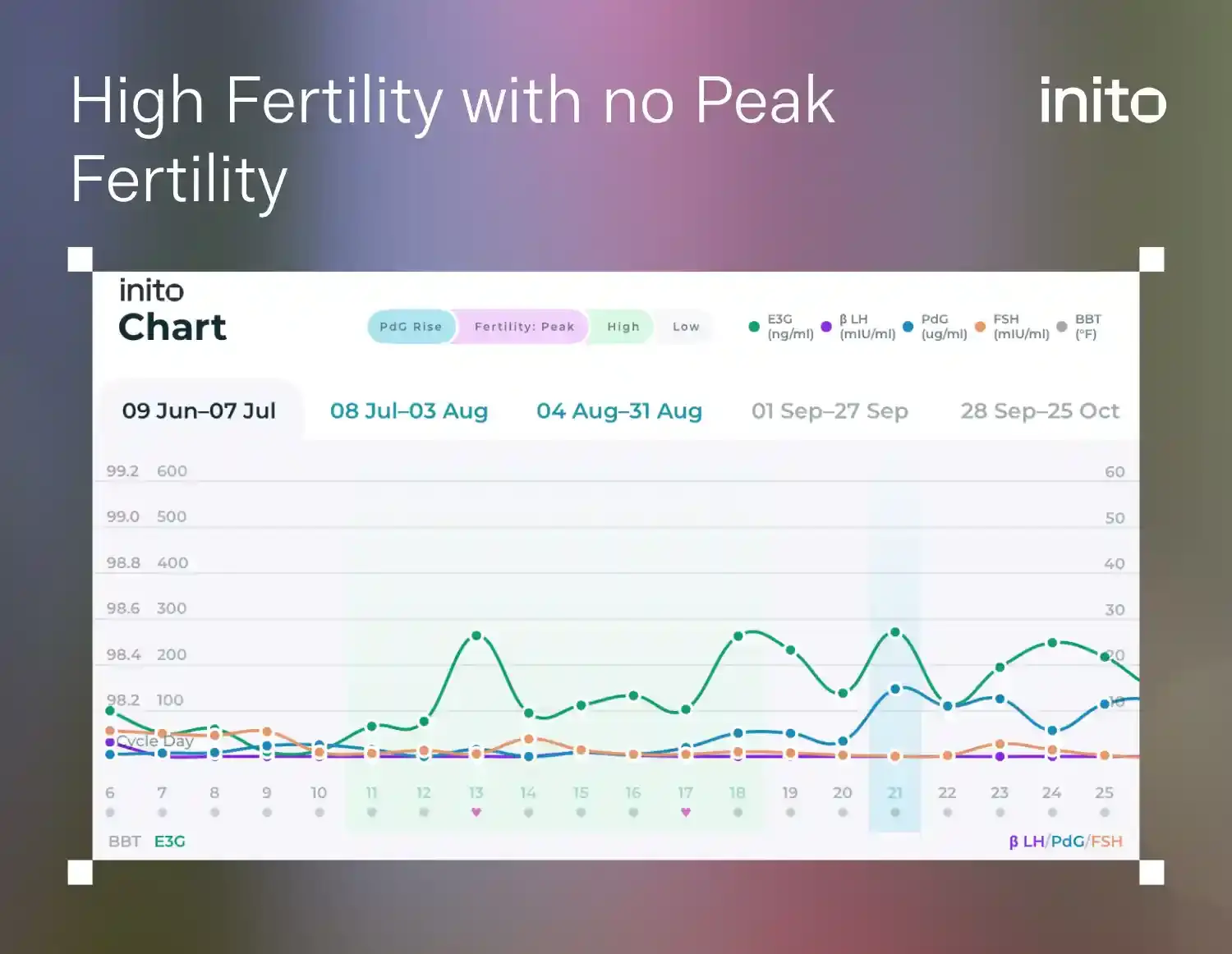
Seeing multiple days of High Fertility without moving into Peak Fertility can happen for a few reasons:
- Early estrogen rise. Your estrogen may have risen earlier than usual, while your LH surge is still on the way. This can lead to an extended High Fertility phase before Peak Fertility. Your LH didn’t rise enough. Your LH surge may not have been strong enough to register as Peak Fertility. Hormone patterns can vary from cycle to cycle, and sometimes the surge is smaller or delayed. A rapid LH surge. LH can sometimes surge and fall within just 2-6 hours. If testing didn’t align with that brief window, you may have missed the surge. Gaps in testing. Skipping tests during your fertile window can create gaps in your hormone data, making it harder for Inito to identify a rapid rise in LH. Consistent testing is key to catching your Peak Fertility.
What to do next:
Keep testing. Follow the testing schedule as per the Inito app. Staying consistent increases the chances of catching important hormonal shifts.
Know more: Can You Ovulate With No LH Surge?
2. Why did I go straight from Low Fertility to Peak Fertility?
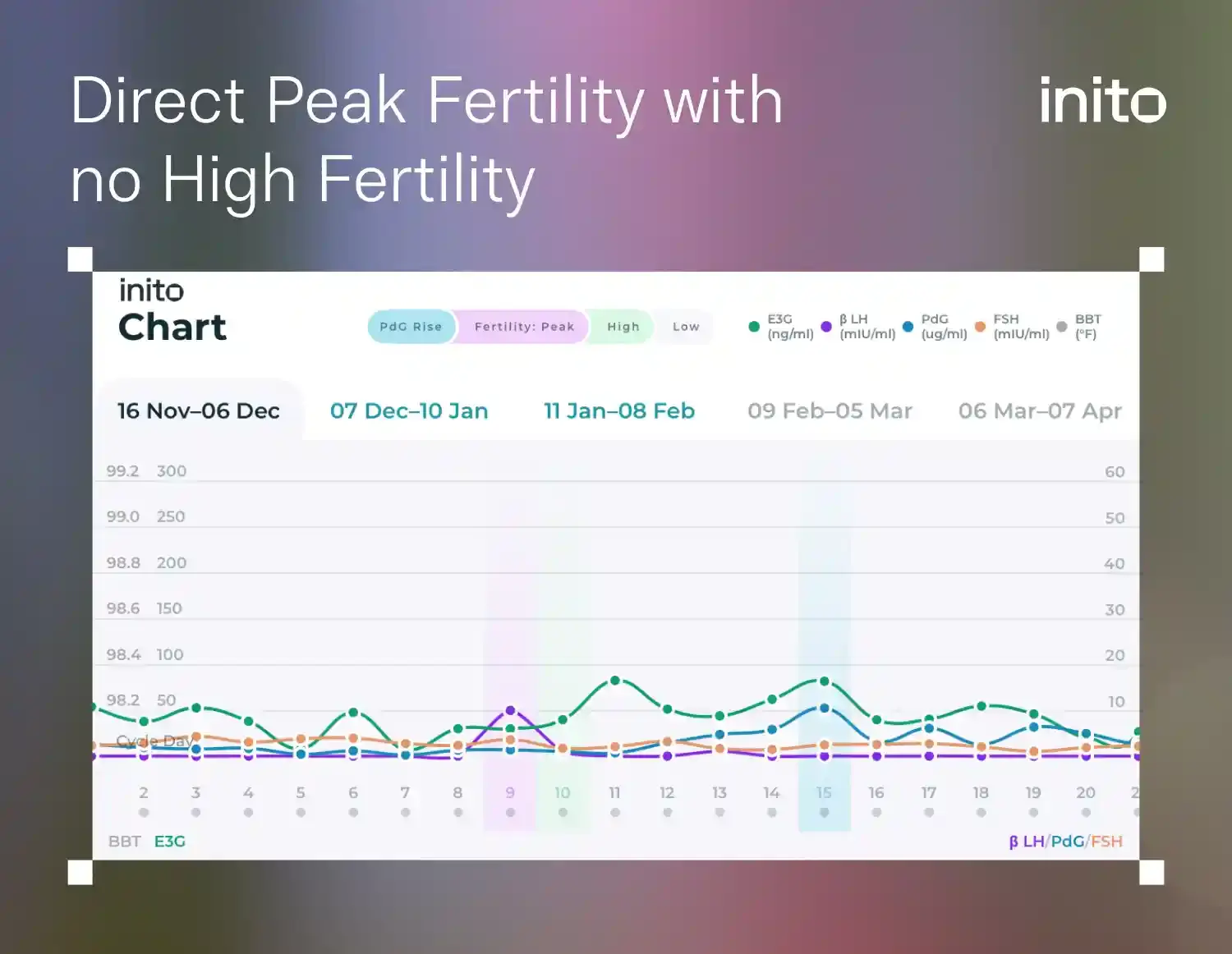
This can happen if:
- Your estrogen didn’t show a significant rise. If your estrogen levels didn’t rise much from your baseline levels, you may not get a High Fertility result.
- Your LH surged earlier than expected. If you had an earlier LH surge, you may jump straight to Peak Fertility without getting High Fertility.
- Missed tests. If you skipped a few tests in the beginning, your fertility ratings may be affected.
What it means:
Your body simply moved into its fertile window faster than usual. The Peak Fertility result is accurate and still indicates ovulation is approaching.
Know more: Early Ovulation: Symptoms, Causes, Treatment, and More
3. “I got another Peak Fertility.”
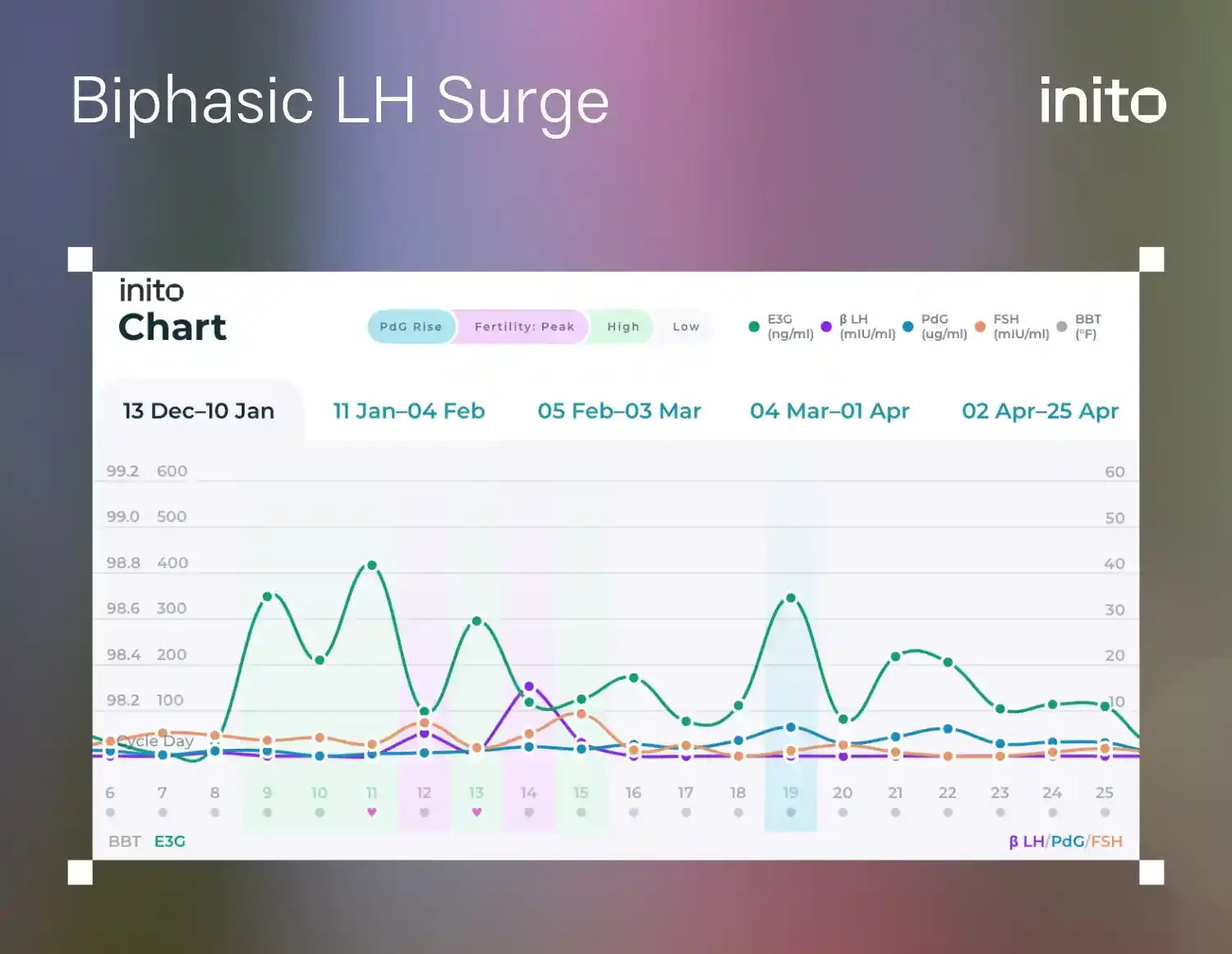
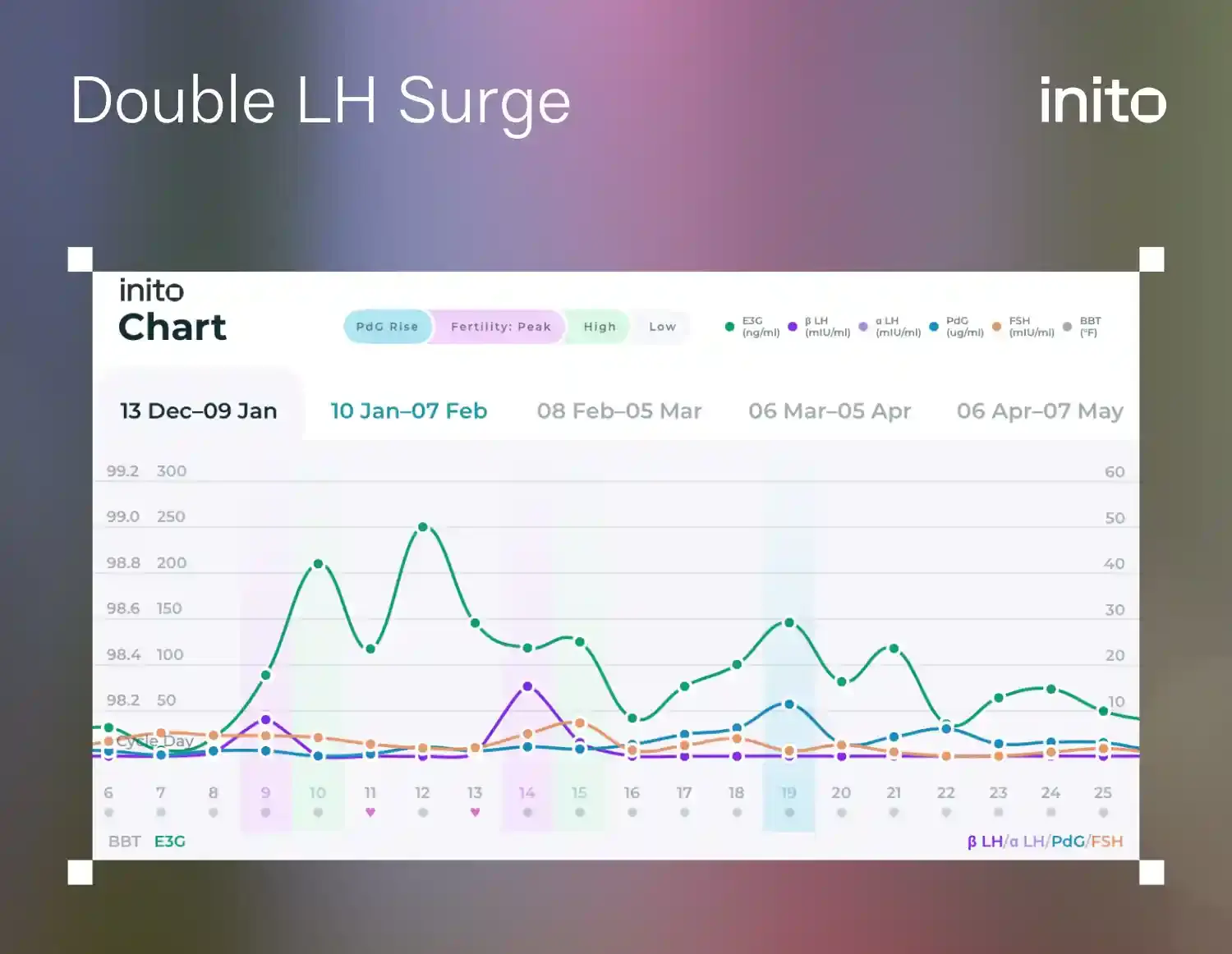
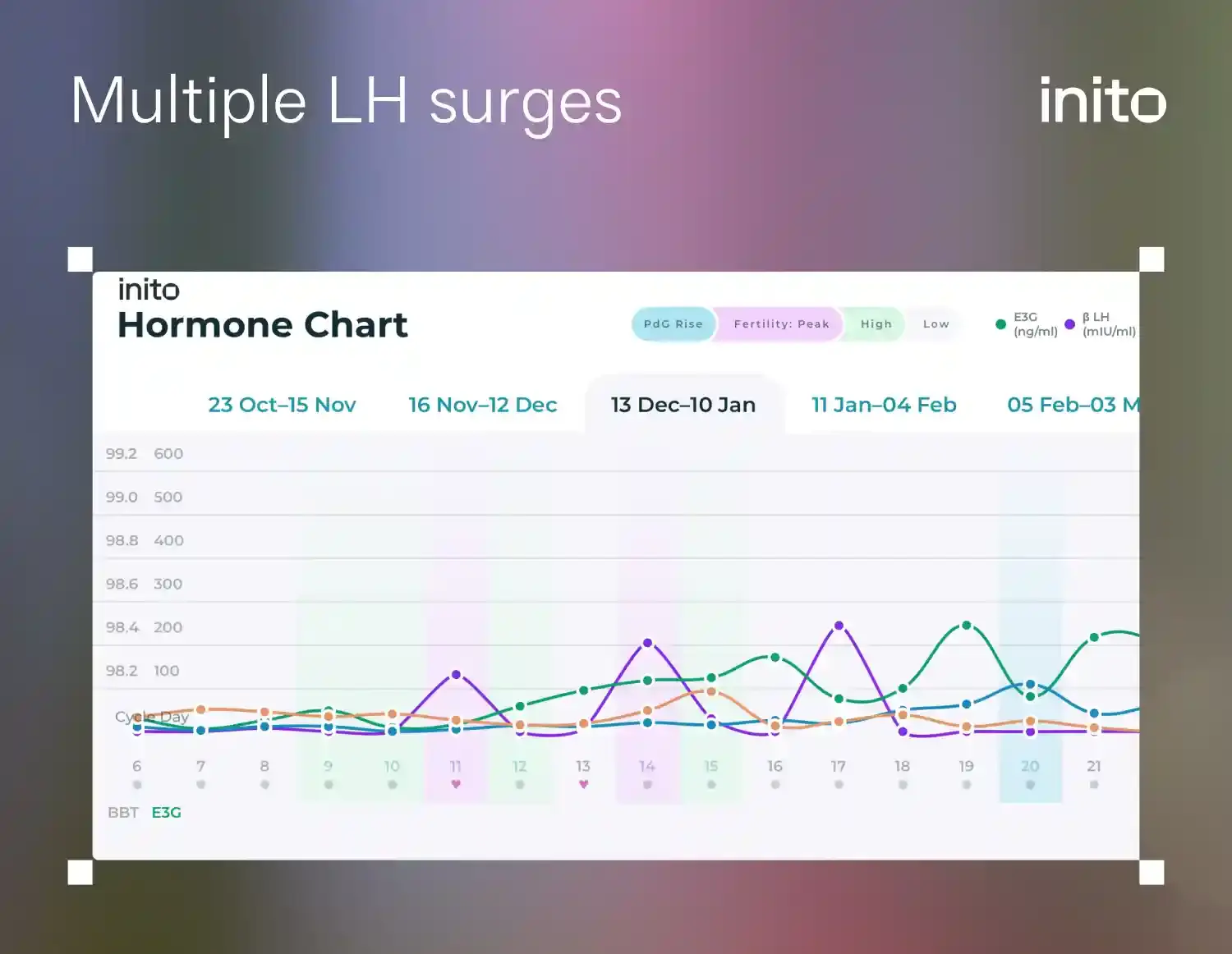
More than one LH surge occurs in over half of cycles, and this can happen because:
- You naturally have a multiple LH surge pattern
- The first LH rise wasn’t strong enough
- Your body attempted ovulation, but didn’t release the egg
During this time, it’s helpful to continue trying to conceive, as your fertile window may still be open.
Which Peak is real?
The Peak Fertility that is followed by a PdG rise is your true ovulatory surge.
What it means:
If the second LH surge successfully triggers ovulation, your PdG levels will begin to rise steadily in the days that follow. Once Inito detects this sustained PdG increase, you’ll receive an Ovulation Confirmed result.
What to do next:
- Continue testing as recommended. Keep testing after Peak Fertility so Inito can track your PdG levels and help confirm ovulation.
- Have intercourse or inseminate during Peak Fertility. If you're trying to conceive, this is still one of your most fertile times.
Know more: False LH Surge Before The Real One
4. “I got only one day of High Fertility before Peak Fertility.”
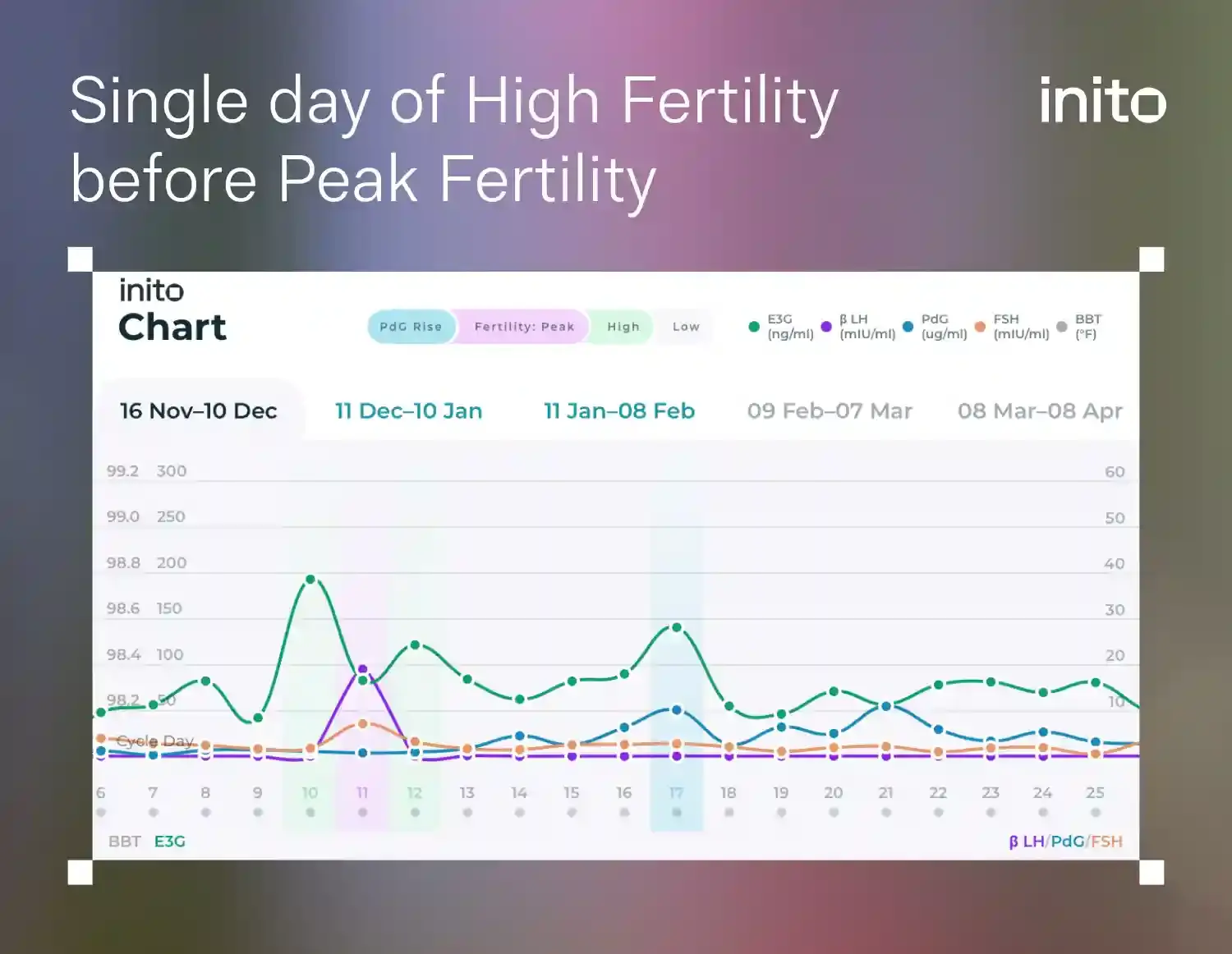
If you’re seeing fewer days of High Fertility before Peak Fertility, it could be because your estrogen took a while to rise, and was immediately followed by an LH surge. Hormone patterns can vary from cycle to cycle, so the number of High Fertility days isn't always the same.
What to do next:
- Continue testing as recommended. Keep testing after Peak Fertility so Inito can track your PdG levels and help confirm ovulation.
- Have intercourse or inseminate during Peak Fertility. If you're trying to conceive, this is still one of your most fertile times.
5. “I got an Ovulation Unlikely result.”
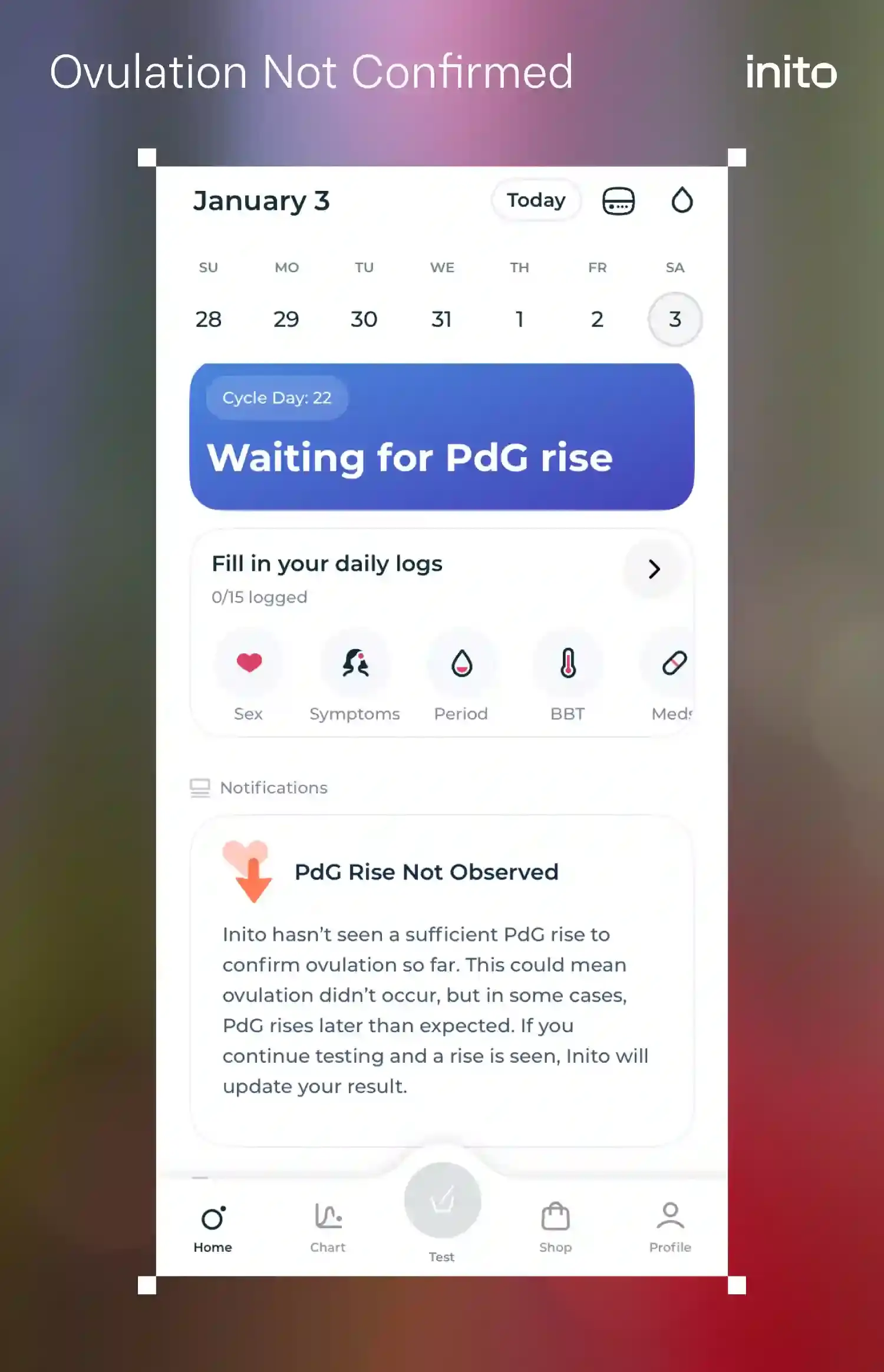
Seeing an Ovulation Unlikely result can be disappointing, but it simply reflects how your hormones behaved this cycle. There are a few reasons this may occur:
- Your LH surge may not have been able to trigger the release of an egg.
- Missed tests or data gaps can sometimes make it harder to clearly identify your hormone pattern.
- Anovulatory cycles can occur once or twice a year, even in healthy women.
What to do next:
- Keep testing in your next cycle to get a clearer picture of your hormone trends.
- If you notice frequent anovulatory cycles, consider sharing your charts with your doctor for personalized guidance.
- Remember, having an occasional anovulatory cycle is common and does not necessarily indicate a fertility problem.
Know more: Anovulation: Everything you need to know about the #1 cause of infertility
Final Thoughts: From Guesswork to Clarity
Once you start understanding your hormone patterns, tracking your menstrual cycle becomes much easier. Instead of guessing when you might ovulate, you can track ovulation with confidence, pinpoint your fertile window, and understand how each hormone changes throughout your cycle.
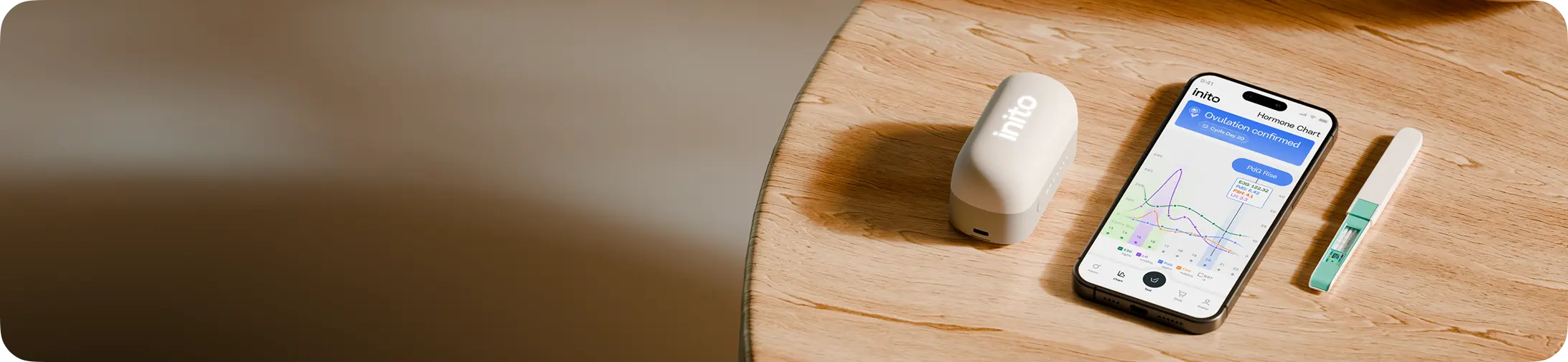
Reach your fertility goals with full confidence
FAQs
Contributor

Team Inito
Health Researchers and Writers
Was this article helpful?
Share it on
Get a free guide Luteinizing Hormone (LH) by Inito