Tests You Should Do in First, Second, and Third Trimesters: Your Guide to Prenatal Tests

Updated on Nov 24, 2026


The tests you’ll do in the first, second, and third trimesters of pregnancy can be tough to keep track of. Prenatal care usually includes several screenings to check your health and see how your baby’s growing.
Some tests are most useful during certain weeks of pregnancy. As per the 2024 U.S. birth statistics, about three in four people who gave birth started prenatal care in the first trimester. Here’s a guide to common prenatal tests, so you’ll know what to expect and what to ask your provider at your next visit.
Key Takeaways
- Early bloodwork checks blood type, Rh status, anemia, and infections.
- An early ultrasound can help estimate your due date.
- Prenatal screening estimates risk. Diagnostic tests can rule out or confirm a condition.
- You can choose NIPT starting at 10 weeks.
- The anatomy scan checks your baby’s development at 18 to 22 weeks.
- Gestational diabetes screening usually happens at 24 to 28 weeks.
What are prenatal tests and why are they needed?
Prenatal tests help your provider check your health, your baby’s development, and track changes from one visit to the next. Tests done during pregnancy include bloodwork, urine tests, and ultrasounds. Some look for anemia, infections, or high blood sugar. Others estimate the chance that your baby has a genetic condition.
When you go in for prenatal care depends on your health and where you live. The WHO (World Health Organization) recommends at least eight prenatal check-ins, with the first in the first 12 weeks. Compared with four visits, eight or more appointments may prevent up to 8 deaths around the time of birth for every 1,000 births. The American College of Obstetricians and Gynecologists (ACOG) recommends starting care before 10 weeks if you can.
Your provider will plan your visits and tests based on the history of your health, test results, and how your pregnancy’s going.
Pregnancy has three stages called trimesters.
- First trimester (through 13 weeks and 6 days): Fertilization happens when sperm meets egg. Your baby’s main organs start to form during this trimester.
- Second trimester (week 14 through 27 weeks and 6 days): Your baby grows, and their organs and body systems keep developing.
- Third trimester (week 28 until birth): Your baby gains weight, and their organs get ready to work after birth.
Knowing which prenatal tests to expect can help you plan for your next visit and think of questions to ask.
Ready to start your fertility journey?
Get Inito Fertility MonitorWhat's the difference between screening tests and diagnostic tests?
Screening tests during pregnancy estimate the chance that you or your baby has a condition. Many routine prenatal checks are screenings. If a screening result is unexpected, diagnostic tests can help rule out or confirm the suspected condition. However, an abnormal screening result does not necessarily mean something is wrong.
What tests are done in the first trimester?
During your first trimester (through 13 weeks and 6 days), you’ll usually have bloodwork and give a urine sample. Your provider will confirm your pregnancy, check your health, and estimate how far along you are. They might also offer an early ultrasound and talk you through genetic screening and other testing options. The WHO recommends having that first visit within the first 12 weeks.
Complete blood count (CBC)
A CBC measures your red and white blood cells, platelets, and hemoglobin. Low hemoglobin can be a sign of anemia. The WHO recommends a CBC as the best screening test to diagnose anemia during pregnancy when it’s available.
Your provider might repeat the test later in pregnancy to check if your blood counts are still at healthy levels.
Blood type, Rh factor, and antibody screen
Your pregnancy bloodwork checks your ABO blood group and Rh status.
Your Rh status tells you if you have an inherited protein called Rhesus, or Rh factor, on the surface of your red blood cells. If you’re Rh-negative and your baby’s Rh-positive, your body might make antibodies that could affect your baby’s red blood cells in a future pregnancy.
Knowing your Rh status early helps your provider plan your care and decide if you’ll need another antibody test.
Infection screening bloodwork
Early pregnancy bloodwork usually checks for infections that could affect you or your baby. Screening guidelines help decide what you’ll need.
- HIV: Early treatment can greatly lower the chance of passing HIV to your baby.
- Hepatitis B and hepatitis C: If you test positive for either infection, follow-up care can help lower health risks.
- Syphilis: Without treatment, syphilis can cause serious health problems during pregnancy and for your baby after birth. Treatment during pregnancy is about 98% effective at preventing syphilis in newborns.
- Rubella immunity: This test checks if you’re protected against rubella, an infection that can affect how your baby develops.
Your provider might also check for tuberculosis, or sexually transmitted diseases like chlamydia, gonorrhea, depending on your age, symptoms, risk factors, and local guidelines.
Urinalysis and urine culture
A urinalysis checks your urine for protein, glucose, blood, and other changes. With a urine culture, the lab checks if bacteria grow from your sample. It can find bacteria that could cause a urinary tract infection (UTI), even if you don’t have symptoms. Your provider uses the culture results to decide if you need treatment.
Early pregnancy ultrasound
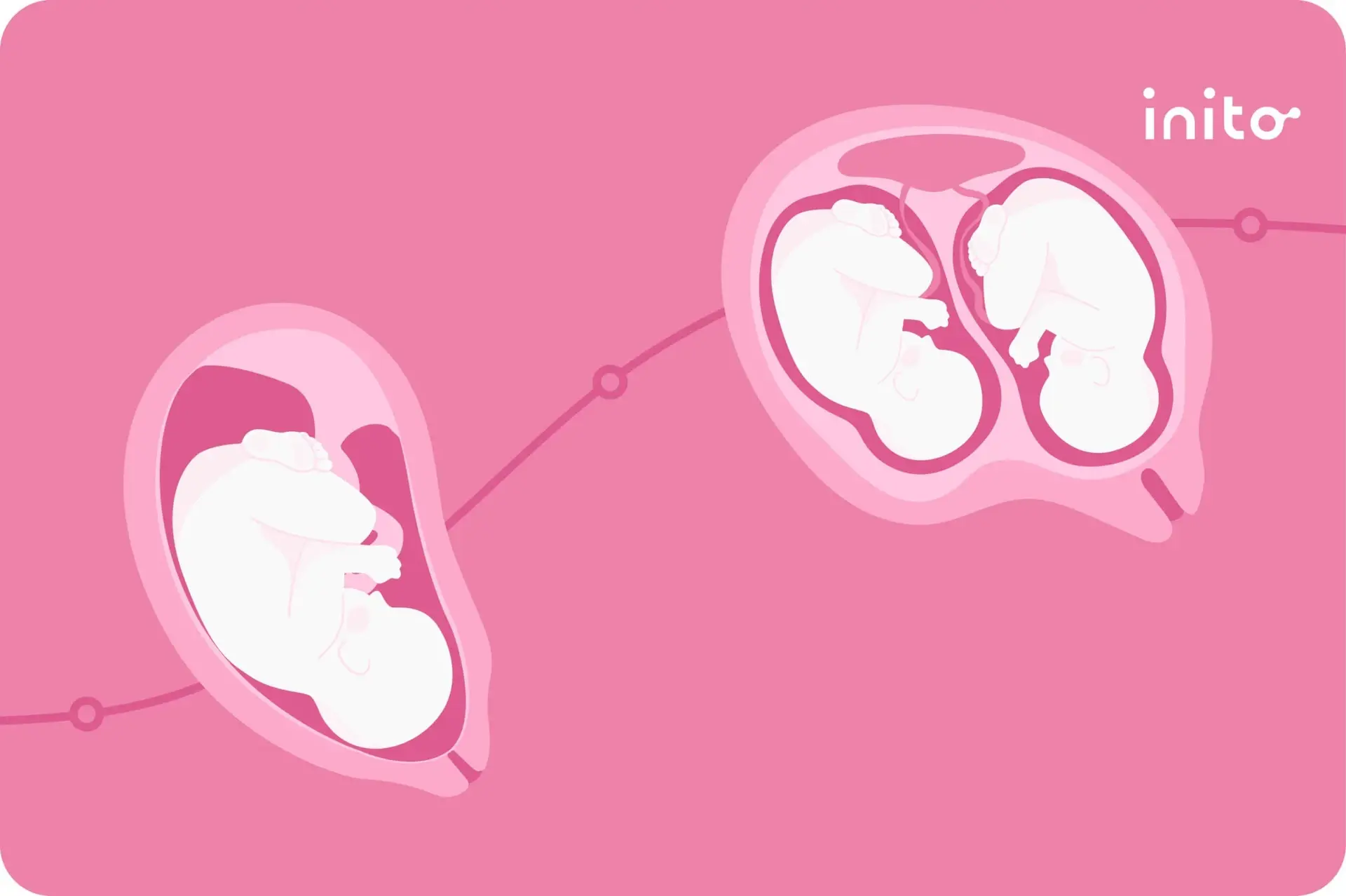
An early ultrasound estimates your due date, confirms that the pregnancy is in the uterus, and checks whether you’re carrying one or more babies.
Screening for chromosomal conditions
First-trimester screening estimates the chance that your baby has a genetic condition linked to their chromosomes, like Down syndrome (trisomy 21).
- Combined first-trimester screening: This includes a blood test and an ultrasound. You’ll usually have the blood test around 10 to 13 weeks. It measures pregnancy-associated plasma protein A (PAPP-A) and hCG. The nuchal translucency (NT) ultrasound measures the fluid-filled space at the back of your baby’s neck. You’ll usually have this from 11 weeks to 13 weeks and 6 days.
A larger measurement may indicate a higher chance of chromosomal conditions like Down syndrome (an extra chromosome 21). It may also be associated with structural abnormalities, particularly heart defects.
- Cell-free DNA screening (cfDNA or NIPT): This blood test looks at small bits of DNA from the placenta in your blood. You can do it as early as 10 weeks. Research shows that cfDNA is highly accurate at screening for trisomies 21, 18, and 13, but it can’t confirm a diagnosis. If you get a positive result, your provider should offer genetic counseling and diagnostic testing, like chorionic villus sampling (CVS) or amniocentesis.
cfDNA is optional, but the ACOG recommends screening for every pregnancy, no matter your age or risk. Your physician can help you decide what’s right for you.
Carrier screening
Carrier screening uses a blood sample or cheek swab to see if you carry genes linked to inherited conditions that you could pass to your baby. You can get this screening before or during pregnancy.
What tests are done in the second trimester?
Common second trimester tests include a detailed anatomy scan and routine screening for gestational diabetes. These tests check your baby’s development and screen for conditions that can show up during pregnancy. Your provider might also take more blood samples.
Fetal anatomy scan (18–22 weeks)
The fetal anatomy scan, also called the mid-pregnancy scan or anomaly scan, is an ultrasound that checks how your baby’s body is forming. It looks at the brain, spine, heart, face, belly, kidneys, arms, and legs. ACOG recommends offering it between 18 and 22 weeks.
The scan can spot some birth defects, but others might only become clear after birth. Genetic testing can find chromosome changes that may help explain some of the unusual results.
Second-trimester genetic screening
If you didn’t have screening in your first trimester, your provider might recommend the quadruple screen. It’s an alternative that is recommended between weeks 15 and 22 that estimates the chance of certain chromosomal conditions and neural tube defects.
A quad scan measures four substances in your blood:
- Alpha-fetoprotein (AFP)
- Human chorionic gonadotropin (hCG)
- Unconjugated estriol (uE3)
- Inhibin A
AFP can be checked on its own to screen for open neural tube defects and might mean an ultrasound or more tests.
Gestational diabetes testing (24–28 weeks)
This type of diabetes affects about 5% to 9% of U.S. pregnancies each year. It develops during pregnancy and often has no symptoms, so routine testing matters even if you feel completely fine.
Testing usually involves a glucose challenge test or an oral glucose tolerance test. Screening usually takes place between 24 and 28 weeks, earlier if you have risk factors.
Repeat bloodwork, if needed
In the second trimester, your provider might repeat a CBC or order other bloodwork based on your first-trimester results, health history, and symptoms. For example, a repeat CBC can help catch anemia that develops later. Your provider might also do more screening based on your chances of getting an infection and local guidelines.

See how Inito will fit into your unique fertility journey
Take 5 min free fertility assessment and get a personalised hormone report
What tests are done in the third trimester?
From week 28 until birth, third trimester screenings help your provider check your health and spot problems that could affect labor or your baby. The tests you’ll need depend on your earlier results, your pregnancy history, and any new concerns, like high blood pressure.
Repeat CBC and infection screening
Your provider might recheck your hemoglobin and blood cell counts if you have anemia or repeat infection screening if needed. The CDC recommends third-trimester HIV screening if you’re at increased risk.
Group B streptococcus (GBS) screening
GBS is a type of bacteria that can live in the digestive and genital tracts without causing symptoms. The CDC recommends routine screening at 36 or 37 weeks of every pregnancy, where your provider uses a simple swab to take a sample from your vagina and rectum.
A positive result means GBS was found. Even if you feel fine, it can pass to your baby during birth and cause a serious infection. The result guides IV antibiotics during labor to help prevent early-onset GBS disease.
Fetal growth ultrasound
If your provider is concerned about your baby’s growth, they might do a third-trimester ultrasound. The scan gives an estimate of your baby’s size and weight, but it’s not exact. It also checks amniotic fluid levels, placental function, and potential pregnancy complications so your provider can follow up as needed and support a healthy pregnancy.
Nonstress test (NST) and biophysical profile (BPP)
Some pregnancies need closer monitoring before birth. When you start testing and how often you’ll need it depends on why you’re being monitored.
- Nonstress test (NST): This screening tracks how your baby’s heart rate changes when they move.
- Biophysical profile (BPP): A full BPP combines an NST with an ultrasound that checks your baby’s movement and the volume of amniotic fluid surrounding them.
You might need these tests if you have diabetes, develop high blood pressure, or there are concerns about your baby’s movement or growth.
Prenatal tests by weeks overview
Here’s a table to help you know what pregnancy testing to expect:
| Pregnancy week | Tests |
|---|---|
| First prenatal visit (ideally before 10 weeks) | CBC, blood type and Rh factor, antibody screen, urine culture, and infection screening |
| From week 10 | cfDNA (NIPT) screening, if chosen |
| Weeks 10–13 weeks 6 days | Combined first-trimester screening, if chosen |
| Weeks 10–13 | CVS, if indicated and chosen |
| Weeks 15–22 | Quad screen or separate AFP test, if appropriate |
| Weeks 18–22 | Fetal anatomy ultrasound |
| Weeks 24–28 | Gestational diabetes screening and repeat CBC |
| Around week 28 | Repeat antibody screen and Rh immune globulin, when indicated |
| Weeks 28–36 | Repeat infection screening, if indicated |
| Weeks 32–36 | Fetal growth ultrasound or additional monitoring, if indicated |
| Weeks 36–37 | Group B streptococcus (GBS) swab |
| Weeks 38–40 | Routine prenatal assessments; NST or BPP if indicated |
Knowing which tests you should do in the first, second, and third trimesters can help you plan ahead.
Your testing schedule depends on your health history, how your pregnancy’s going, and local guidelines. Ask your provider which tests they recommend for you and why.
Reach your fertility goals with full confidence
FAQs
Contributor
Blair Sharp
Women’s Health Writer
Was this article helpful?
Share it on

Get a free guide Luteinizing Hormone (LH) by Inito