

Content table
Home pregnancy has made it easier than ever to find out if you’re pregnant, right from your bathroom. And they’re >99% accurate from the day of your expected period (when used correctly).
At-home hCG testing has expanded well beyond the classic pee-on-a-stick. Today, you can choose between urine tests, finger-prick blood tests, and mail-in quantitative blood tests. Each detects the same hormone in a different way, with different levels of detail. Understanding these home pregnancy tests can help you trust what you’re looking at, instead of second-guessing a line on a stick.
Key takeaways
- At-home pregnancy testing now includes urine tests, finger-prick blood tests, and mail-in quantitative hCG blood tests. Each has different sensitivity, cost, and turnaround time.
- Most home urine tests need hCG above 20-25 mIU/mL to register positive. This usually hits around four weeks post-conception.
- Blood pregnancy tests generally show greater sensitivity than urine tests.
- False negatives are most often caused by testing too early.
- False positives are rare and usually tied to recent pregnancy, fertility medications, or specific medical conditions.
- If you have a negative pregnancy test result but you’re experiencing abdominal pain, bleeding, or dizziness, call your healthcare provider.
What is hCG, and why does it matter?
Human chorionic gonadotropin (hCG) is often called the pregnancy hormone, and for good reason. It’s the hormone every pregnancy test is built around.
The embryo starts producing hCG before implantation. After it attaches to the uterine lining, the developing placenta takes over production and levels start climbing fast. But hCG’s job is more than just signaling pregnancy. This hormone also supports the corpus luteum — a temporary structure in the ovary. And the corpus luteum keeps producing progesterone, the hormone that maintains your uterine lining and supports implantation.
Structurally, hCG has two parts: alpha and beta. The alpha subunit’s structure is identical to that of a few other hormones (FSH, LH, TSH). But the beta subunit is unique to hCG. This is why more precise tests target beta hCG specifically.
Beta hCG tests fall into two categories:
- Qualitative tests: Check whether hCG is present (this is how home urine tests work)
- Quantitative tests: Measure exactly how much hCG is there
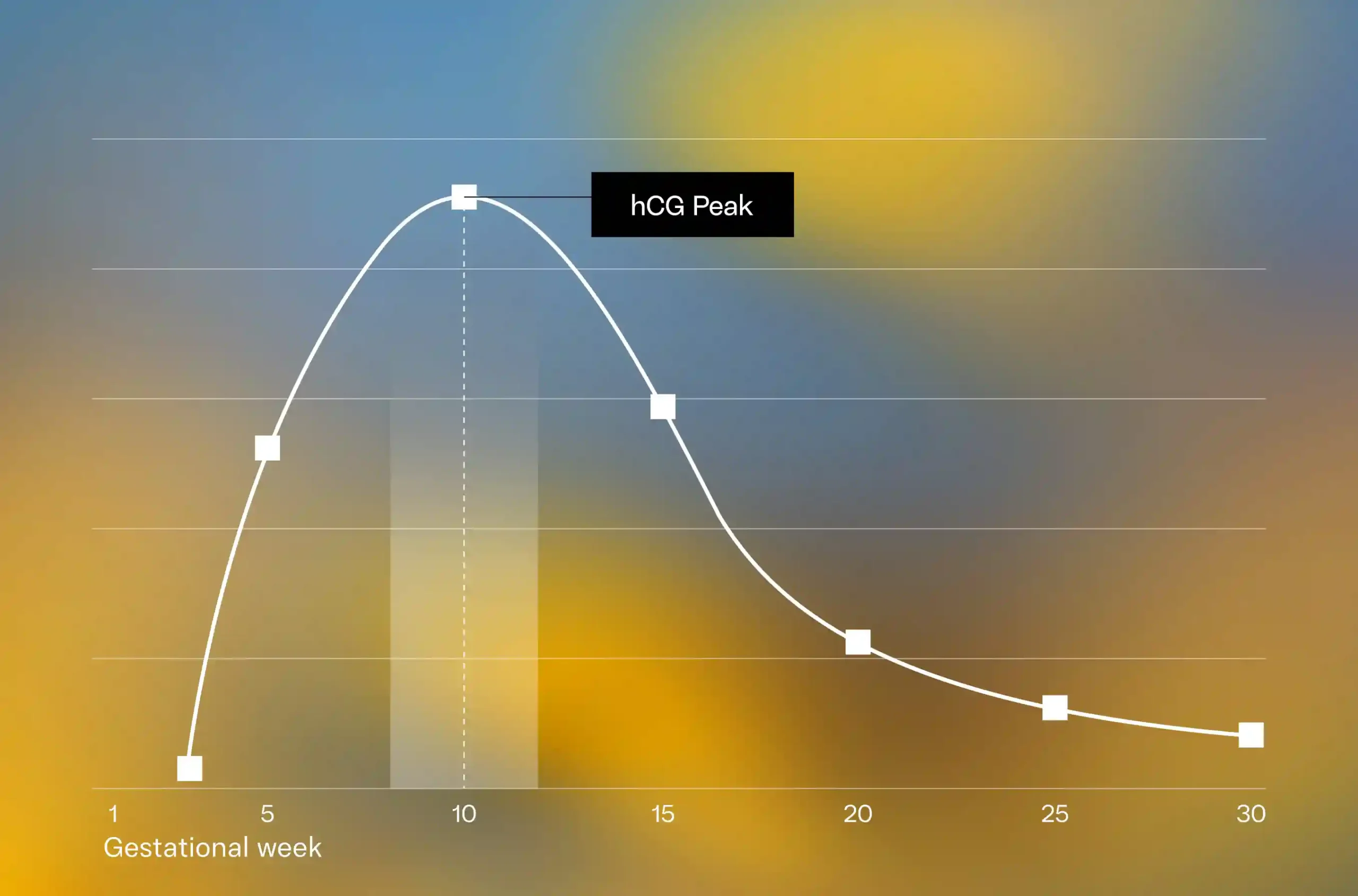
hCG can show up in your blood as early as 6-8 days after fertilization. From there, levels typically double about every 48 hours for the first 8-10 weeks. Other research puts that increase closer to at least a 66% increase every 48 hours in most normal, viable pregnancies.
How does home hCG testing work?
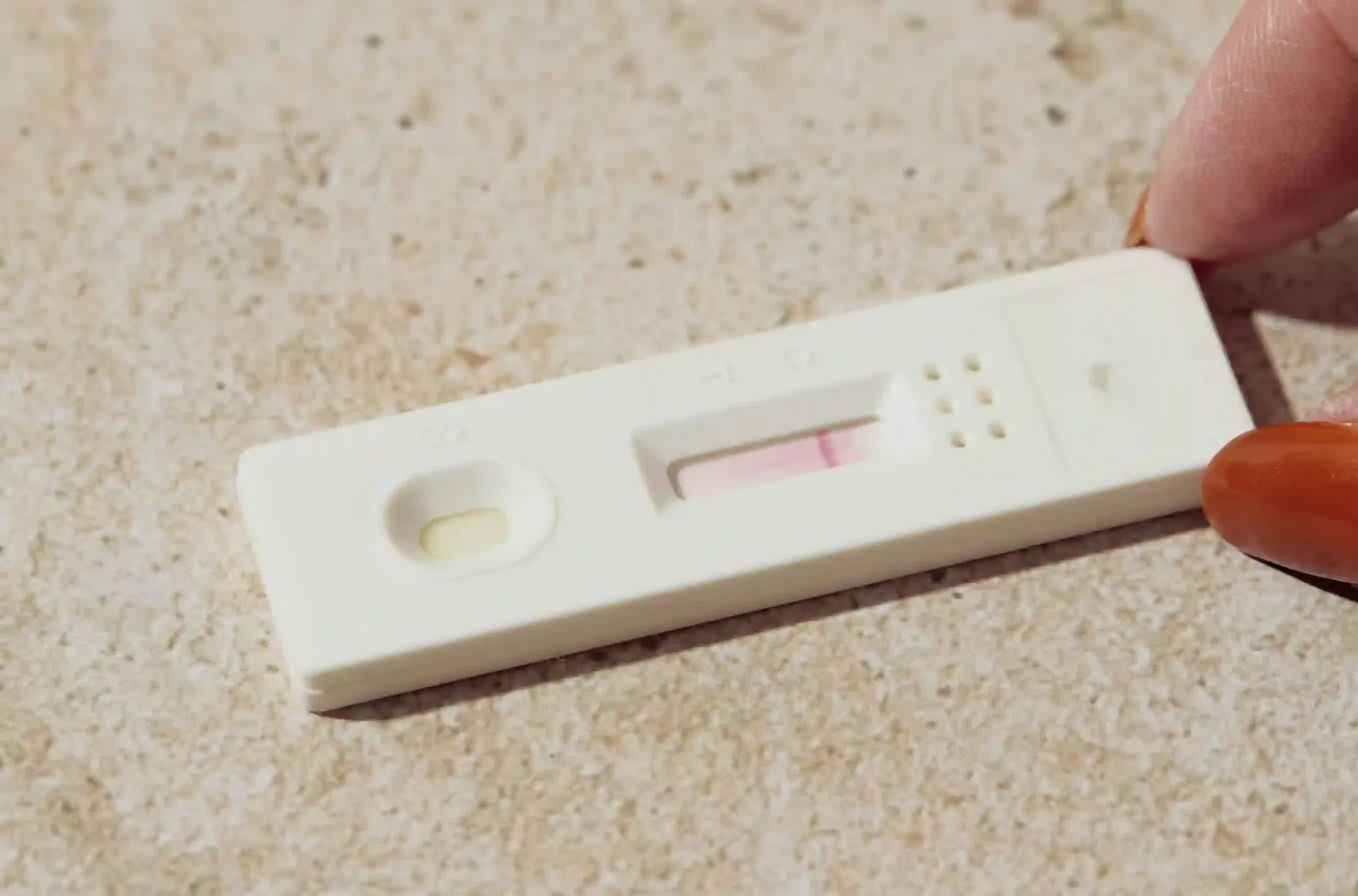
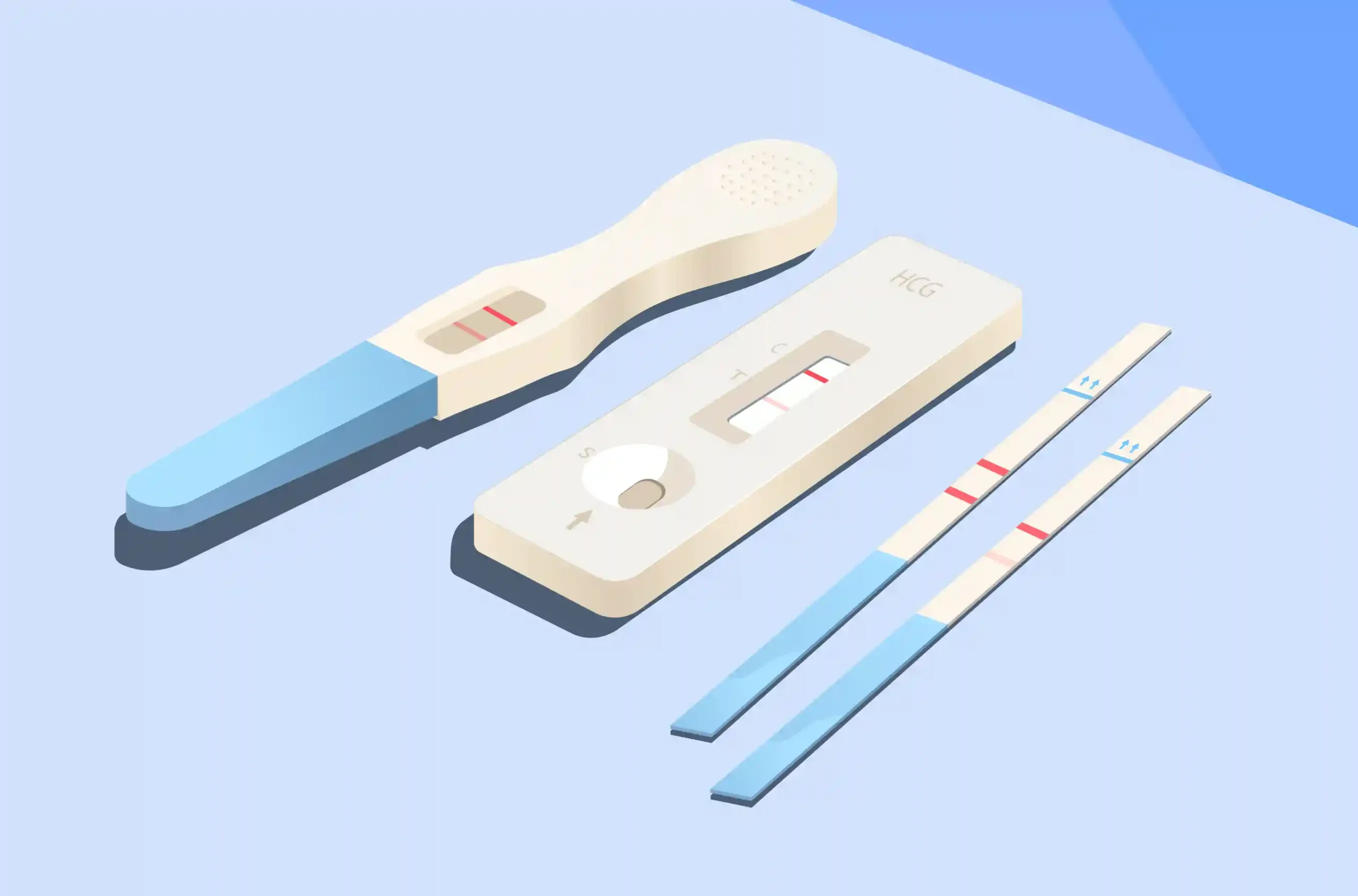
When it comes to detecting hCG at home, you have two main options: urine and blood. Urine pregnancy tests are the most common type. They work by detecting hCG in your urine through an antibody-based immunoassay. This means antibodies bind to hCG and form a “sandwich complex” that produces a visible color line. A positive result shows two lines. A negative result shows just the one control line.
Know more: What Is A Positive Beta hCG Test? How to Decode Your Results
Most home urine tests detect hCG once it climbs above 20-25 mIU/mL. This usually corresponds to about four weeks post-conception — which is exactly why most pregnancy tests suggest waiting one day after your missed period to take a test.
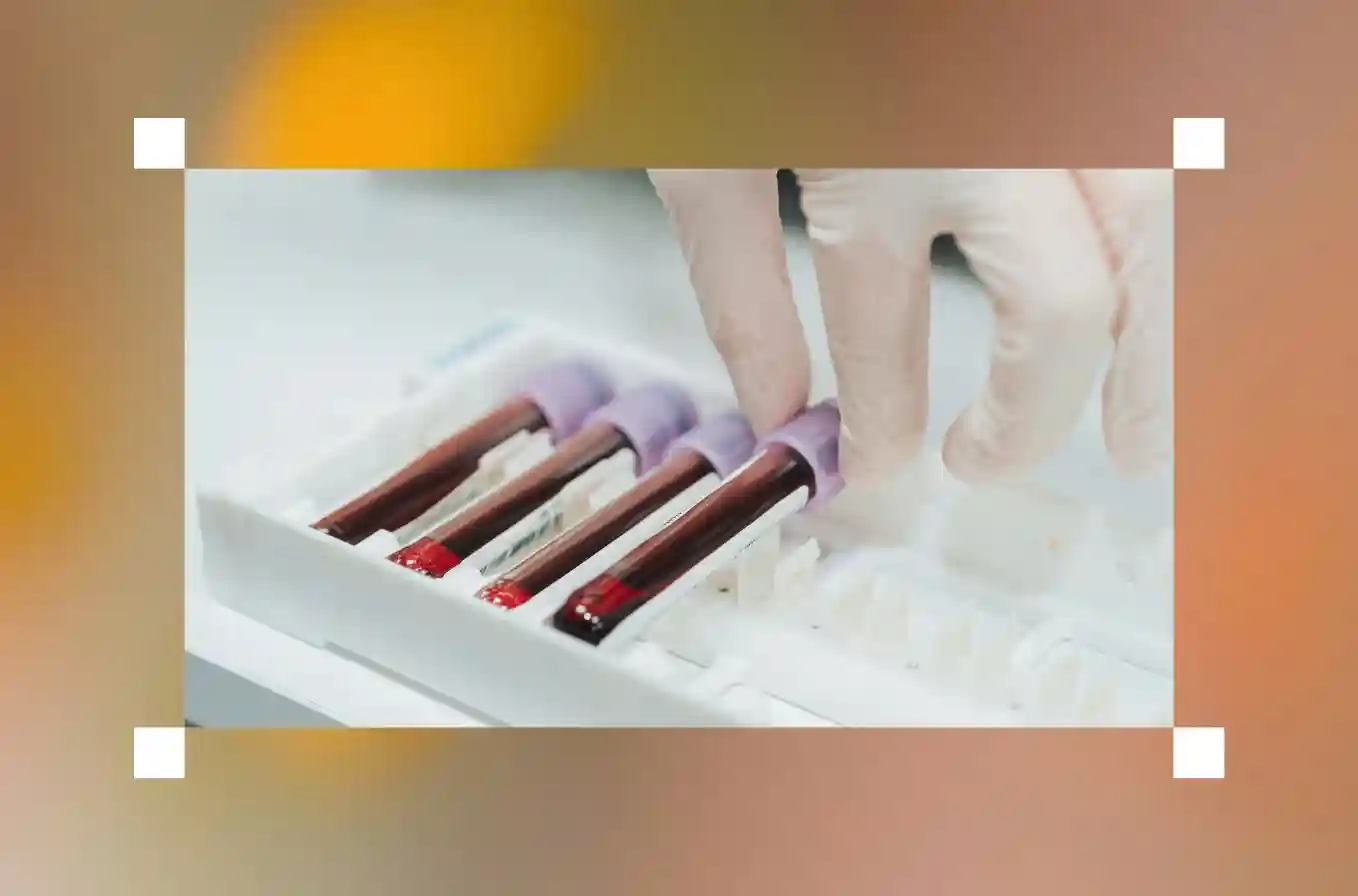
In recent years, blood testing has also become an option, and it works a little differently. Blood tests are usually more sensitive, since hCG shows up in your bloodstream before it’s filtered into urine and builds up there. At-home blood testing also gives you two options. Some at-home blood tests only tell you whether hCG is present (qualitative). Mail-in blood hCG tests – send your sample to a lab, which reports back the actual hCG value (quantitative).
Know more: When to Take a Pregnancy Test After Implantation?
How do you perform an hCG test at home?
Traditionally, home pregnancy tests detect hCG in urine. But newer technologies have introduced at-home blood hCG tests using a small finger-prick sample.
Using a home urine-based hCG test
- Time it right. Test with first-morning urine when you can — it’s the most concentrated. Testing before a missed period raises your chances of a false negative. That’s because hCG needs time to climb above the test’s detection threshold.
- Collect your sample. Either urinate into a clean container or hold the absorbent tip in your urine stream, depending on the pregnancy test.
- Dip the strip. Submerge the absorbent end up to the marked line, typically for about 5 seconds.
- Lay it flat and wait. Most strips develop a result within 5 minutes.
- Read it within the window. Reading too early or too late can create evaporation lines or other misreads.
- Confirm if needed. If the result seems off compared to your symptoms, retest after 48 hours or follow up with a quantitative hCG blood pregnancy test.
Know more : Know What Not To Do Before a Pregnancy Test
Using an at-home finger-prick blood hCG test
- Wash and dry your hands, then clean your fingertip with the provided alcohol swab.
- Use the sterile lancet to draw a small blood sample.
- Collect the blood with the supplied device and transfer it to the pregnancy test cassette.
- Add the buffer solution if the home pregnancy test kit calls for it.
- Place the home pregnancy test on a flat surface and wait the recommended time — usually about 5 minutes.
- Read the result. Two lines is positive, one line (control only) is negative. And no control line means the pregnancy test is invalid.
Some services also offer mail-in blood hCG tests. You collect a finger-prick sample at home, mail it to a certified lab, and get back an exact beta hCG number rather than a simple positive or negative. One study found self-collected finger-prick samples can be a workable alternative to a traditional blood draw for early pregnancy hCG testing. It’s worth noting, though, these aren’t fully “at-home” quantitative tests. You collect the sample, but a lab still runs the actual analysis.
Here’s how the three options stack up against each other.
Urine hCG test | At-home blood test (finger prick) | Mail-in quantitative blood test | |
Sample | Urine | Finger-prick capillary blood | Finger-prick blood, mailed to a lab |
Who analyzes it | You | You | Certified laboratory |
Pregnancy test type | Qualitative | Qualitative | Quantitative (exact beta hCG value) |
Result | Positive/negative | Positive/negative | Exact hCG concentration (mIU/mL) |
Best day to test | From the first day of a missed period | Closer to your expected period | As early as a few days after implantation — labs can detect hCG as low as 1-5 mIU/mL |
Best time to test | First morning urine is recommended (especially during early pregnancy) | Can usually be performed at any time of day | Blood can be collected at any time of day, following the kit instructions |
Affected by fluid intake | Yes — diluted urine raises false-negative risk | No | No |
Accuracy | Sensitivity up to 100%, specifically ~ 99.2% | High agreement with lab methods reported, though independent evidence is still limited | Comparable to standard lab testing |
Time to results | 3-5 minutes | About 5 minutes | 1-5 days |
Approximate cost | $40-100+ |
What can affect the accuracy of an hCG test?
Here are the factors that affect the accuracy of an hCG test.
False-positive blood (serum) test
False-positive blood results are rare, occurring in 1 out of 1,000 to 10,000 tests.
Possible causes include:
- Recent pregnancy (miscarriage or abortion)
- Fertility treatments that use hCG-containing medications
- Conditions like molar pregnancy or choriocarcinoma
- Certain cancers
- Interfering antibodies
- Rare conditions like IgA deficiency or advanced kidney disease
- (Very rarely) a blood transfusion from a donor with circulating hCG
False-positive urine pregnancy test
False-positive urine tests are also uncommon and can stem from:
- Recent pregnancy (after childbirth, miscarriage, or abortion)
- hCG-containing fertility medications
- Blood or excess protein in the urine
- hCG-producing tumors
- Certain medications like methadone
- Simple user error — like reading a home pregnancy test late and mistaking an evaporation line for a positive
- Line eyes — when you want a result bad enough, your eyes can start playing tricks on you. You squint and tilt the test toward the light, and convince yourself there’s the faintest shadow of a second line. At this point, it’s hard to tell if you’re imagining it, or if it’s really there.
False-negative urine pregnancy test
False-negative urine tests are more common, and usually come down to:
- Testing too early, before hCG has risen enough to get detected. This is why testing is recommended after 12-14 days past ovulation (DPO).
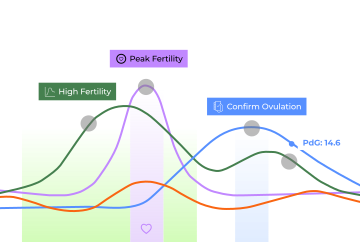
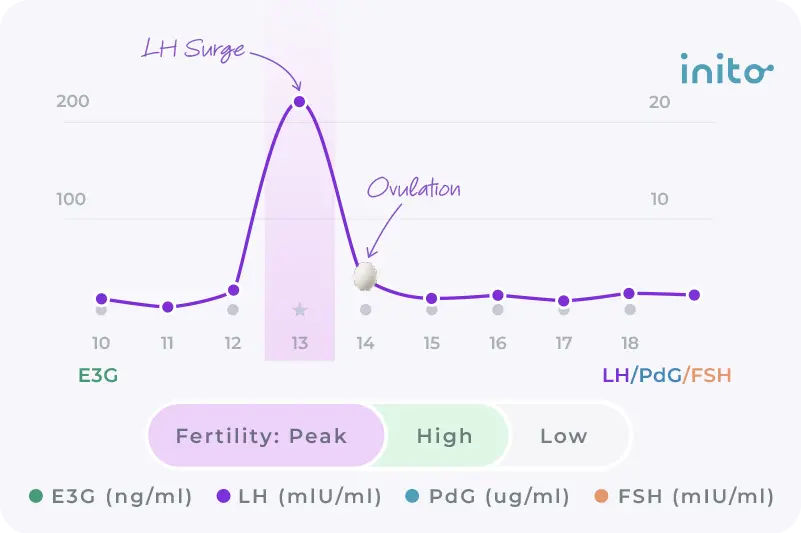
- And this is where Inito Fertility Monitor comes in. Inito tracks four key fertility hormones – LH, Estrogen, PdG (urine metabolite of progesterone), and FSH, which tells you when you ovulate. This lets you know exactly how many DPO you are. This helps you know exactly when to take a pregnancy test, instead of blindly guessing your period date.
- Diluted urine. Blood tests are more stable and aren’t affected by fluid intake the way urine is.
- Low pregnancy test sensitivity. A less sensitive pregnancy test may not detect very low hCG levels. The lower the hCG level a test can detect, the more sensitive it is.
- Improper use. Expired kits, skipped instructions, misread timing.
- Ectopic pregnancy. hCG often rises more slowly or abnormally, which can produce a negative urine pregnancy test despite a real pregnancy. Pain, bleeding, dizziness, or fainting warrant urgent care regardless of test result.
- Twin or multiple pregnancies. Very high hCG levels can overwhelm the test’s antibodies. This is called the hook effect (prozone phenomenon), and can cause a false negative.
Know more: Can Twins Cause a False Negative Pregnancy Test?
False-negative blood (serum) test
False-negative blood results happen for similar reasons. Usually testing too early after conception, or, less commonly, that same hook effect.
What to do after an hCG test?
What you do next depends on your test result and where you are in your cycle.
- A positive result usually means pregnancy, but your healthcare provider might recommend follow-up testing and an ultrasound to confirm and assess the pregnancy.
- If your result is negative but your period hasn’t started, you might want to repeat the test after 48 hours, especially if you tested early.
- An invalid or unclear result necessitates a new test.
- And if your result doesn’t match your symptoms (or if you have severe abdominal pain, dizziness, fainting, or heavy bleeding), seek medical care instead of relying on the test at home alone.
Conclusion
At-home pregnancy testing has made early pregnancy detection more accessible than ever. That goes for a urine strip, a finger-prick blood test, and a mail-in quantitative kit. Each method has advantages, but their reliability comes down to timing, technique, and understanding what each home pregnancy test can and can’t tell you.
A positive or negative result is most useful when read alongside your symptoms and cycle history. If a result is unclear, unexpected, or doesn’t match how you feel, that’s your cue to confirm it with your healthcare provider.

FAQs
An hCG pregnancy test detects pregnancy by detecting the hormone your body produces after implantation. It can’t diagnose complications on its own. That said, doctors don’t usually just rely on one number. Tracking hCG over a series of measurements (a serial test) helps your doctor see whether an early pregnancy is developing the way it should, and whether it’s worth taking a closer look with an ultrasound.
You can use:
- A home urine pregnancy test
- An at-home finger-prick blood test
- A mail-in quantitative blood test that’s analyzed by a lab.
Urine tests give a quick positive/negative result, while blood options can offer more sensitivity or an exact hCG number.
About 2 weeks post-conception, many pregnancies have produced enough hCG to show up on a pregnancy test. This is usually right around the time your period would be due. Testing any earlier increases your risk of a false negative, since hCG may not have risen high enough yet.
The only way to track actual hCG levels is with quantitative blood testing. That’s because home urine tests only give a positive or negative result. A healthcare provider can order repeat blood draws to confirm levels are rising appropriately.
A quantitative blood test via your healthcare provider is the best option. It measures your exact hCG level rather than just detecting its presence. Then, an ultrasound can further confirm and locate the pregnancy.
Test on or after the first day of a missed period for the most accurate result. If you take a pregnancy test earlier and get a negative but still think you’re pregnant, retest in 48 hours.
First thing in the morning, using your first morning urine. That’s when hCG is most concentrated in your urine.
Yes, generally. Blood pregnancy tests can detect hCG earlier and aren’t affected by fluid intake. Urine tests need higher concentrations to register and can be diluted by drinking a lot of water beforehand.
- Detection of early pregnancy forms of hCG by Home Pregnancy Test Devices | ResearchGate
- Human Chorionic Gonadotropin and Early Embryogenesis: Review | PubMed Central
- The Predictive Value of Early β -hCG Levels After Embryo Transfer in In Vitro Fertilization Treatment | Ovid
- β-Human Chorionic Gonadotropin Dynamics in Early Gestational Events: A Practical and Updated Reappraisal | PubMed Central
- Chorionic Gonadotropin Beta Subunit | ScienceDirect
- A Case of a Negative Urine Pregnancy Test in a Multiple Gestation Pregnancy | PubMed Central
- Human Chorionic Gonadotropin | NIH
- Can pregnancy tests fail? False positives and negatives | inviTRA
- Proof-of-concept study: Remote capillary blood collection for hCG analysis in early pregnancy | European Journal of Obstetrics & Gynecology and Reproductive Biology
- Strips of Hope: Accuracy of Home Pregnancy Tests and New Developments | PubMed Central
- Pregnancy | FDA
- Home Pregnancy Test Blood: A UK Guide to Early Detection and Results | Repose Healthcare
- How Much Does a Pregnancy Test Cost? | GoodRx
- The hCG assay or pregnancy test |
- Archive.org
- Three Consecutive False Negative Pregnancy Tests in a Twin Pregnancy: A Case Report | Internet Scientific Publications