Positive Ovulation Test But No Egg White Cervical Mucus
Published on Feb 29, 2024


So you got a positive ovulation test, but you're confused because you don't have egg white cervical mucus (EWCM).
Is it possible to ovulate without the expected sticky mucus?
Yes, it is!
This is because your cervical mucus correlates to your estrogen levels while ovulation tests measure LH.
Typically, there is a rise in estrogen around ovulation, which causes EWCM. But this may not always occur.
This would cause you to get a positive ovulation test (because of a surge in LH) but no EWCM.
Before we get into the causes behind no EWCM, let's first review how your cervical mucus changes throughout your menstrual cycle.
Key Takeaways
- It is possible to ovulate but not have EWCM.
- Cervical mucus changes throughout the month according to estrogen levels.
- Many factors could cause you to get a positive ovulation test with no EWCM. A few examples are as follows:
- Not properly checking your cervical mucus
- Infections, medications, and products that change your cervical mucus
- Not testing correctly with ovulation tests
- Only tracking your LH levels without confirming with your PdG levels
- For best results, try combining different tracking methods.
How Does Cervical Mucus Vary Throughout the Menstrual Cycle?
Have you ever noticed the discharge you often find in your undies changes throughout the month?
Sometimes it appears dry and sticky. And other times it is stretchy and slippery.
This is because your estrogen levels directly affect the thickness and quantity of cervical mucus. And since your estrogen levels fluctuate throughout the month so does your cervical mucus.
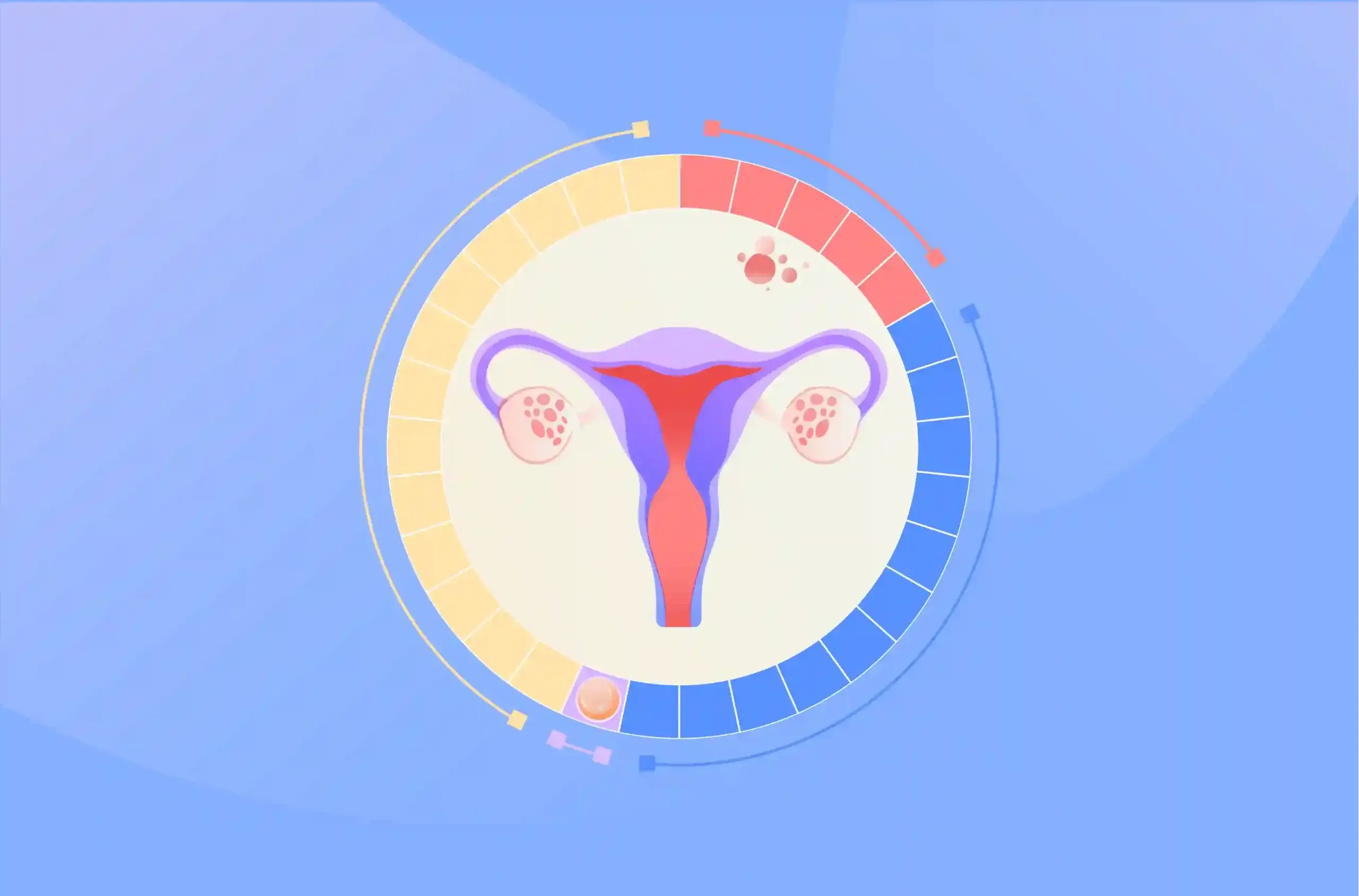
Let's break down how your cervical mucus changes according to your menstrual cycle.
During menstruation, you may not observe much cervical mucus due to menstrual blood. Your estrogen levels are low during your period anyway, so there's not much cervical mucus production during this time.
After your period is over, you will notice an increase in the amount of mucus, and the consistency will be dry and sticky.
And as you move closer to ovulation the more creamy and liquidy the mucus becomes.
Once you are in your fertile window, your estrogen levels start rising. The high estrogen levels cause your cervical mucus to become clear, stretchy, and slippery. This is why it is often compared to raw egg whites. This is your fertile mucus which is important for the survivability of sperm as it travels in your reproductive tract.
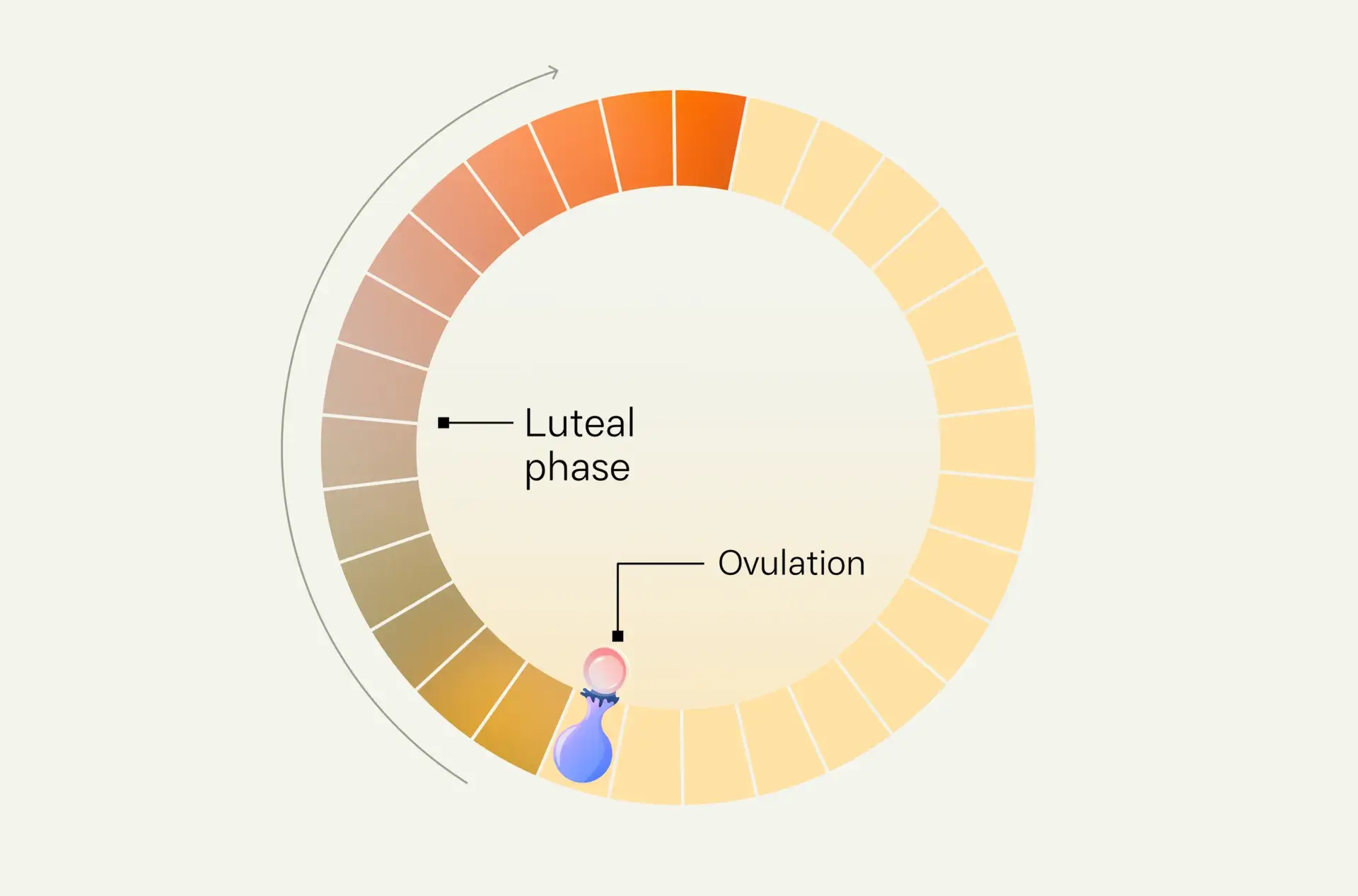
Once ovulation is over, your cervical mucus flips the script and becomes thick and scanty. This is also when your PdG levels start to rise.
Note- your PdG levels will only rise if ovulation occurs. This is why tracking PdG can be so helpful if you're trying to conceive!
Know More: Cervical mucus 101: What can your cervical mucus tell you about your body?
So, if EWCM is the standard during the fertile window, why might you not experience it after getting a positive ovulation test?
Ready to start your fertility journey?
Get Inito Fertility MonitorWhy Am I Getting a Positive OPK but No Cervical Mucus?
First, let's quickly review what ovulation tests do.
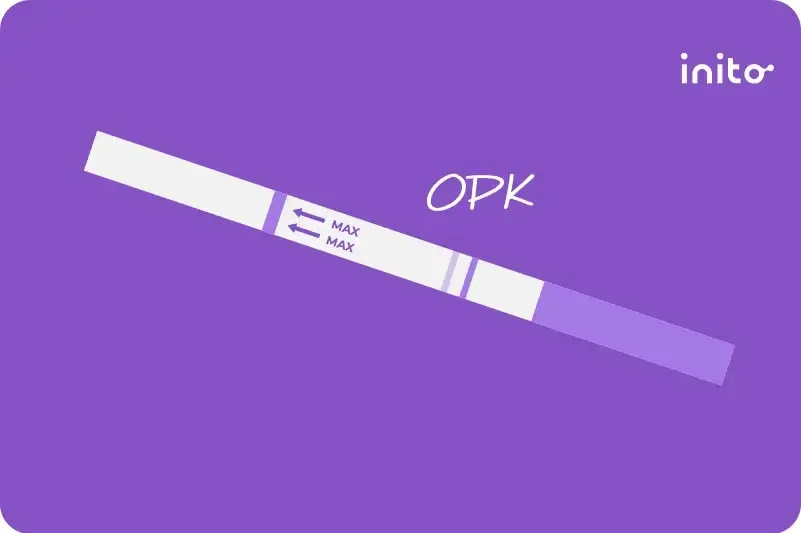
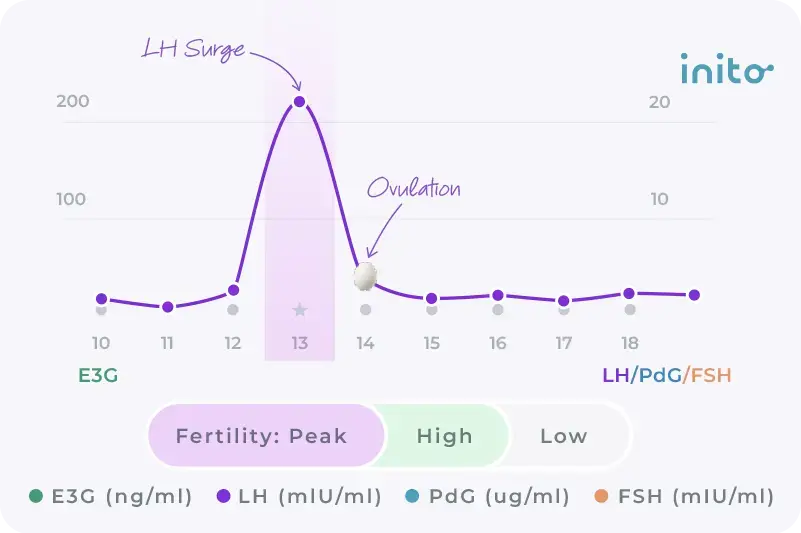
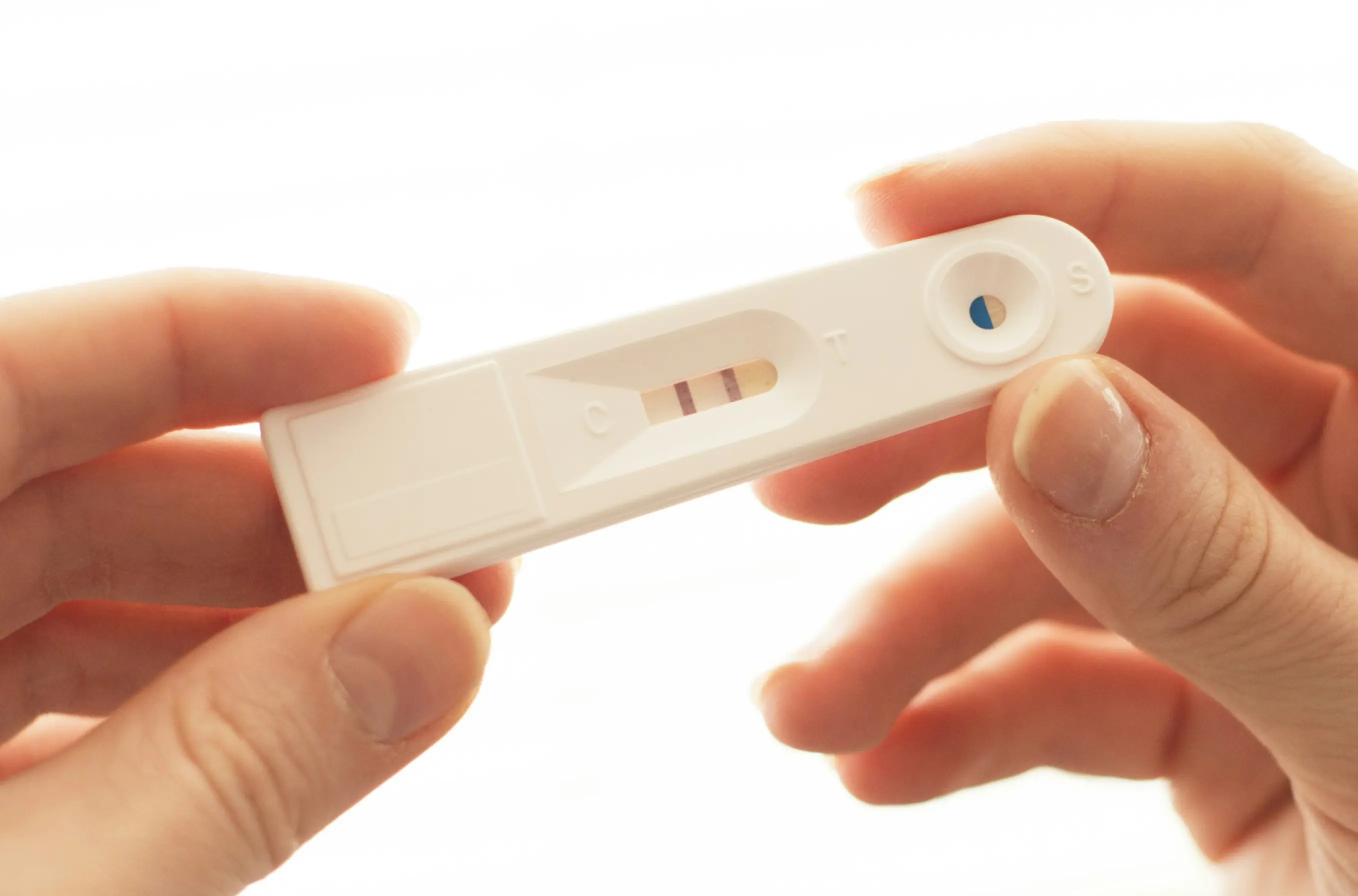
Ovulation tests or ovulation predictor kits (OPKs) predict when you are going to ovulate by measuring how much luteinizing hormone (LH) is present in your urine.
LH levels typically rise around 24-36 hours before ovulation. You can catch this LH surge (and know when to hit the sheets) when you use an ovulation test.
It makes sense to assume that once you get a positive ovulation test, you will have EWCM since this is when you are most fertile.
But what happens if you don't?
Buckle up because there are a lot of possibilities!
We can group these possibilities into 3 overarching categories:
- LH surge without estrogen surge
- Factors related to cervical mucus
- Factors related to ovulation tests
Let's look at each individually.
LH surge without estrogen surge
As you approach ovulation, estrogen and LH rise. Estrogen often beats LH to the punch, surging first. This rise in estrogen actually stimulates the surge in LH.
But it doesn’t always happen this way!
Rising estrogen levels have a domino effect. First, it stimulates your brain to release gonadotropin-releasing hormone (GnRH), which then stimulates your pituitary gland to secrete LH.
You may be thinking that estrogen is required for an LH surge. However, research shows that LH surges can occur even if estrogen levels are low.
It may be possible to have a surge in LH without a rise in estrogen, and this is likely normal.
In these cases, you can get an LH surge but no egg white cervical mucus.
Learn More: LH Surge But No Estrogen Surge: Is It Possible?
Factors related to cervical mucus
Many underlying factors can affect your cervical mucus. Let's look at a few.
Physiological
As we reviewed, your cervical mucus changes throughout the month according to your estrogen levels. But you may produce less cervical mucus compared to other women.
This is not necessarily a bad thing, but it may make it more difficult to track changes in your cervical mucus.
This is why it is recommended to use more than one tracking method when trying to conceive.
You may not be checking your CM properly
To get a good sample of cervical mucus, you need to know how to check for it accurately. Obtaining a sample from your underwear or toilet paper may not always be accurate, so it’s best to use your fingers.
Follow the guidelines below for how to check for cervical mucus. You should do this consistently every day for a couple of cycles. The more you practice the better you will get!
Step 1. Wash your hands with soap and water. Sing your heart out to the alphabet while doing so!
Step 2. Gently insert a clean finger into the vagina to obtain a sample of your cervical mucus.
Step 3. Remove your finger from inside your vagina and roll the cervical mucus in between your finger and your thumb.
Step 4. Pull your fingers apart to determine its consistency. (If it stretches and resembles egg whites, then you are fertile. If it's dry and sticky, then you're not ovulating).
Know more: Cervical mucus 101: What can your cervical mucus tell you about your body?
Factors altering cervical mucus
Your hormones are not the only factor that can affect your cervical mucus.
Changes in your health or daily routine can also impact your cervical mucus.
Here are a few things to look out for if you're having trouble tracking your cervical mucus.
Vaginal infections
When you have a vaginal infection, you often experience abnormal vaginal discharge. This discharge varies in smell, consistency, and color. This makes it difficult to check your cervical mucus accurately.
Medications
The following medications can change your cervical mucus:
- Antihistamines, decongestants, and antidepressants may decrease the amount of vaginal secretions.
- Clomiphene citrate, a fertility medication, can reduce the amount and quality of your cervical mucus.
- The birth control pill: While you're on oral contraception, you may experience a thick, white vaginal discharge throughout the month. And then when you stop taking the pill, it takes about 2-3 months for your hormones to regulate. So your cervical mucus may be all over the place during this time.
Feminine hygiene products and douching
Harsh products and methods like douching can clear out the natural secretions of your cervix and vagina.
Dehydration
Dehydration reduces the amount of secretions you produce since you are depleted of fluids.
Breastfeeding
Cervical mucus is often not reliable during breastfeeding. Your cervical mucus may not accurately represent your hormones during this time.
Perimenopause
Around perimenopause, your estrogen levels start to naturally decline. Decreased estrogen levels cause decreased cervical and vaginal secretions.
Factors related to ovulation tests
Ovulation tests are accurate 9 out of 10 times, but many factors can affect their accuracy.
Not testing correctly
There is room for human error when using ovulation tests. If you don't use the tests correctly, you run the risk of getting an inaccurate result.
Here are some tips for using them correctly:
- Make sure to test the strips for validity. Sometimes strips can be faulty!
- Follow the manufacturer's instructions.
- Try to use your first-morning urine so it's concentrated.
- Avoid drinking large amounts of fluid right before testing, as it will dilute your urine.
False positive on OPKs
There are many reasons you may get a false positive OPK. These include the following:
Anovulatory cycles
Occasionally, you may have cycles when your LH surges but ovulation does not occur. This can happen once or twice in a year and is nothing to worry about. But if it happens too often, it's worth consulting an HCP.
Polycystic ovarian syndrome (PCOS)
This is a type of hormonal imbalance where you have high androgen levels that cause multiple cysts to develop in your ovaries. This can affect ovulation and cause you to have high LH levels throughout the cycle.
Different surge patterns
While textbooks have us believe that LH levels rise as a single sharp surge, this isn't always the case. LH surges actually vary by their onset and pattern such as biphasic surge, plateau surge, multiple surges, etc. Different surge patterns can cause inaccurate OPK results.
Know more: LH Levels & Surges: What Does a ‘Normal' LH Level Look Like?
Cross-reactivity with hormones like FSH, TSH, or hCG
Hormones like LH, TSH, and hCG have similar molecular structures. Some ovulation tests are not able to differentiate between the hormones which can result in cross-reactivity.
Medications
Fertility medications such as danazol, hCG, and clomiphene can throw off the results of your ovulation test.
If you want to learn more about false positive OPKs check out this blog: False Positive on an Ovulation Test: 6 Reasons They Happen
Only tracking your LH levels
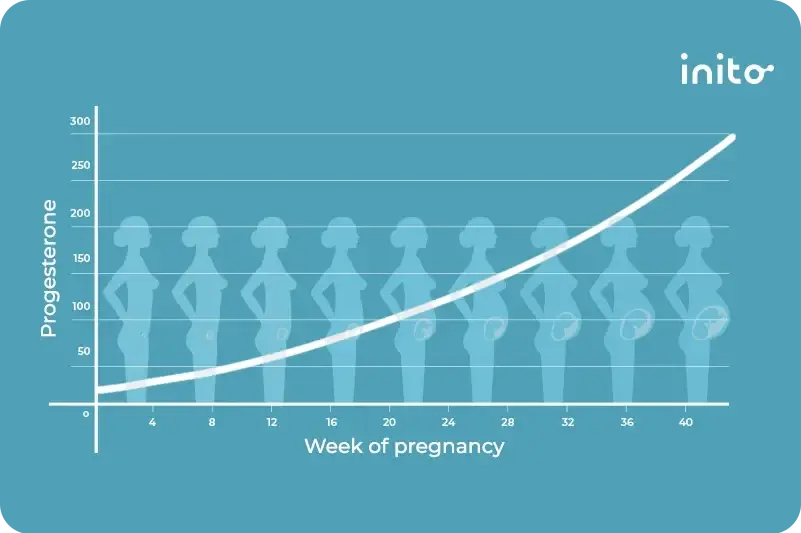
LH levels are helpful in predicting when you are about to ovulate. But they cannot confirm ovulation. Only blood progesterone levels or PdG (a urine metabolite of progesterone) can do that.
Progesterone is the hormone that rises after ovulation. Once the egg gets released, the ruptured follicle forms the corpus luteum. This structure produces progesterone thereby confirming that you actually ovulated.
And LH levels will not clue you into your cervical mucus. Only estrogen can do that.
If you're only tracking your LH levels, you're missing out on a lot of insights into your fertility.

See how Inito will fit into your unique fertility journey
Take 5 min free fertility assessment and get a personalised hormone report
Are OPKs or Cervical Mucus More Accurate?
OPKs and cervical mucus alone cannot paint the full portrait of your fertility. This is for a few reasons:
- Ovulation tests only measure LH levels
- Cervical mucus may clue you into your estrogen levels, but it can vary based on many factors
- Neither ovulation tests nor cervical mucus can confirm ovulation
Tracking cervical mucus alone is around 48-76% accurate. And ovulation tests have to be used correctly for optimal accuracy.
Learn more: How Accurate Are Ovulation Tests?
This is why it is recommended to combine tracking methods.
Let's take a look at a few scenarios that could occur when you combine tracking methods and what they mean.
- Positive ovulation test but no egg white cervical mucus and no PdG rise = ovulation did not occur, likely an anovulatory cycle
- Positive ovulation test, no cervical mucus, and rise in PdG = ovulation occurred but sperm may have difficulty traveling and surviving in the reproductive tract because cervical mucus is low
- Negative ovulation test, PdG rise, and EWCM = since PdG rose and cervical mucus resembled egg whites then it is likely it was a false negative on the OPK.
- Negative ovulation test, no cervical mucus, and rise in PdG = Since PdG rose there is a good chance you ovulated but got a false negative on the OPK.
- Positive ovulation test, EWCM, and PdG rise = the best possible scenario! You ovulated and had the cervical mucus to prove it.
From these scenarios, you can see things get a little bit confusing. And if we’re honest, a bit stressful!
All these different combinations could have you scouring the internet for hours in search of answers.
That’s why it’s helpful to measure multiple fertility hormones to get a clearer picture of what’s going on.
The Inito Fertility Monitor takes out all the guesswork and stress of tracking your fertility. It measures the four fertility hormones (estrogen, LH, FSH, and PdG) in urine. These hormones help you pinpoint when you’re in your fertile window and confirm if you’ve ovulated or not, all on a single test strip.
No more spending hours on Reddit threads trying to figure out if you ovulated or not!
Note: If you feel like something is off with your hormones or your fertility, don’t hesitate to talk to your healthcare provider.


Reach your fertility goals with full confidence
FAQs
Contributor

Holly
BSN, RN
Was this article helpful?
Share it on

Get a free guide Luteinizing Hormone (LH) by Inito