Content table
The luteal phase can be a confusing time. Many symptoms overlap, it’s easy to overanalyze every change, and the two-week wait can make it difficult to know what’s actually happening in your body.
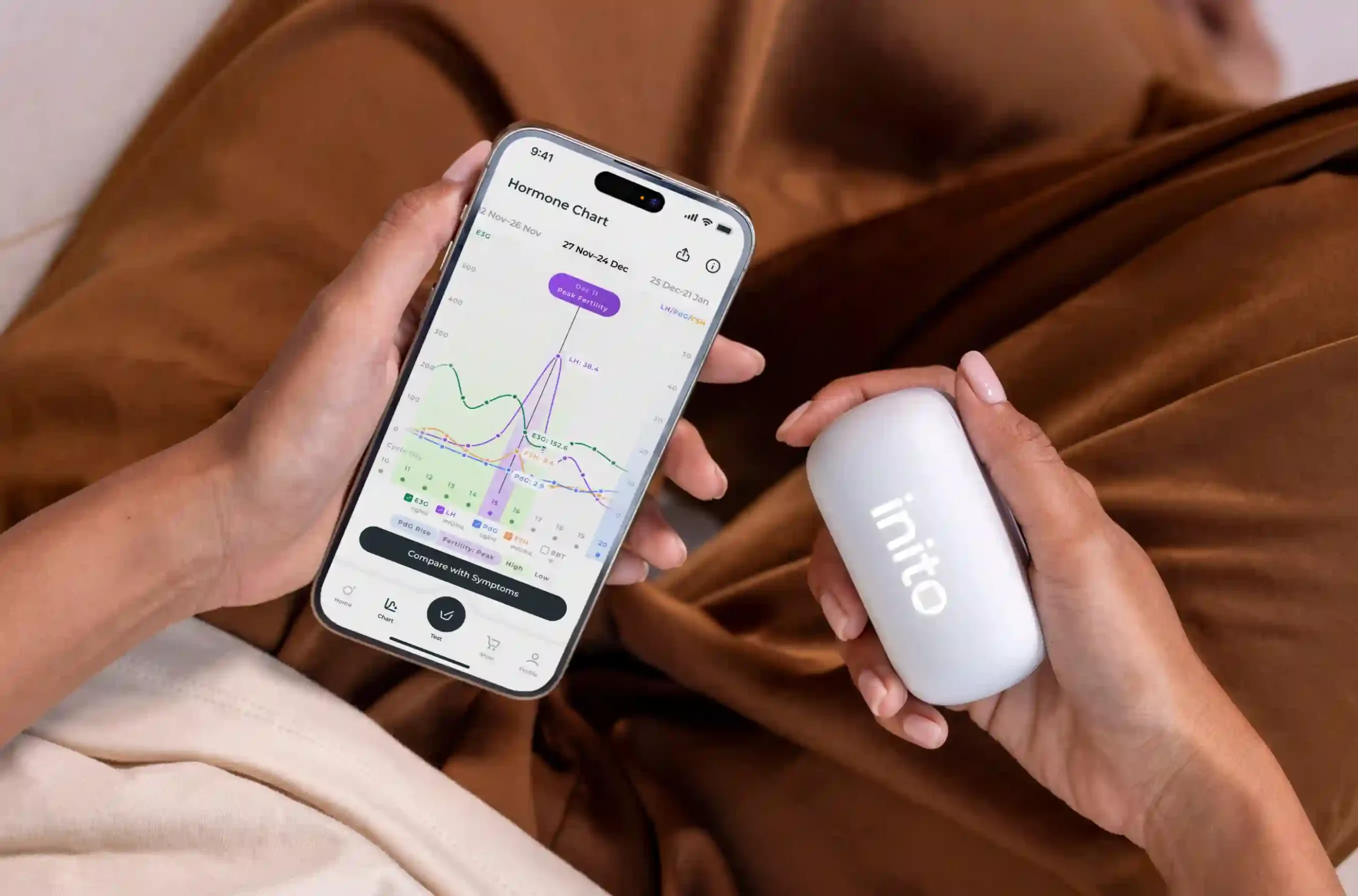
Here’s how you can use Inito to better understand your luteal phase and what your hormone patterns may be telling you.
Disclaimer: Inito is a fertility monitor that helps you track and confirm ovulation and gives you insights into your unique cycle and hormone trends. It is not designed to detect or monitor implantation or pregnancy.
Key Takeaways
- The luteal phase refers to the second half of your cycle after ovulation.
- Luteal phase length usually falls between 12-14 days, but some variation is normal.
- A steady and consistent increase in PdG helps confirm ovulation.
- Progesterone and its urine metabolite PdG typically rise a few days after ovulation and peak around 6-8 DPO.
- A consistently short luteal phase (<11 days) may point to an underlying issue.
- Tracking DPO helps you better interpret symptoms and time pregnancy tests accurately.
- Many early symptoms overlap, making hormone trends more reliable than guesswork.
- Taking a pregnancy test early can lead to unnecessary confusion and false negatives.
- Tracking symptoms alongside hormones helps you understand your unique patterns.
What is the luteal phase?
The luteal phase is the latter half of your menstrual cycle: the time after ovulation and before your next period begins.
It typically lasts 12-14 days, and during this phase, progesterone becomes the dominant hormone. Its role is to prepare your uterine lining for a possible pregnancy by making it thicker and more supportive for implantation.
If pregnancy doesn’t occur, progesterone levels drop, and your period begins, marking the end of the luteal phase.
Know more: Luteal Phase: All the Science, Simplified
What hormones does Inito measure in the luteal phase?
Inito measures four key fertility hormones during the luteal phase (and throughout the rest of your cycle as well):
- FSH (follicle-stimulating hormone)
- LH (luteinizing hormone)
- E3G (urine metabolite of estrogen)
- PdG (urine metabolite of progesterone)
While all four continue to be measured after ovulation, each hormone plays a different role during the luteal phase.
- FSH: FSH remains at low levels during the luteal phase because its primary job (stimulating follicle growth for that cycle) is complete. Occasionally, it may rise to support corpus luteum function or to help prepare for the next menstrual cycle.
- Estrogen: Although estrogen is often associated with the follicular phase, it continues to play an important role after ovulation. Many people experience a second, smaller rise in estrogen in the luteal phase (specifically, the mid-luteal phase), which works alongside progesterone to support the uterine lining.
- LH: LH after ovulation typically fall back toward baseline. Tracking LH alongside your other hormones provides context for when ovulation occurred and helps you better understand your overall hormone pattern. It can also help boost the functioning of the corpus luteum.
- PdG (urine metabolite of progesterone): After ovulation, the corpus luteum begins producing progesterone. In urine, this is measured as PdG. PdG tracking with Inito helps confirm ovulation.
By tracking all four hormones together, Inito provides a more complete picture of what’s happening during the luteal phase.
How can you track your luteal phase with Inito?
Here’s how you can use Inito in your luteal phase:
1. Confirm ovulation (not just predict it)
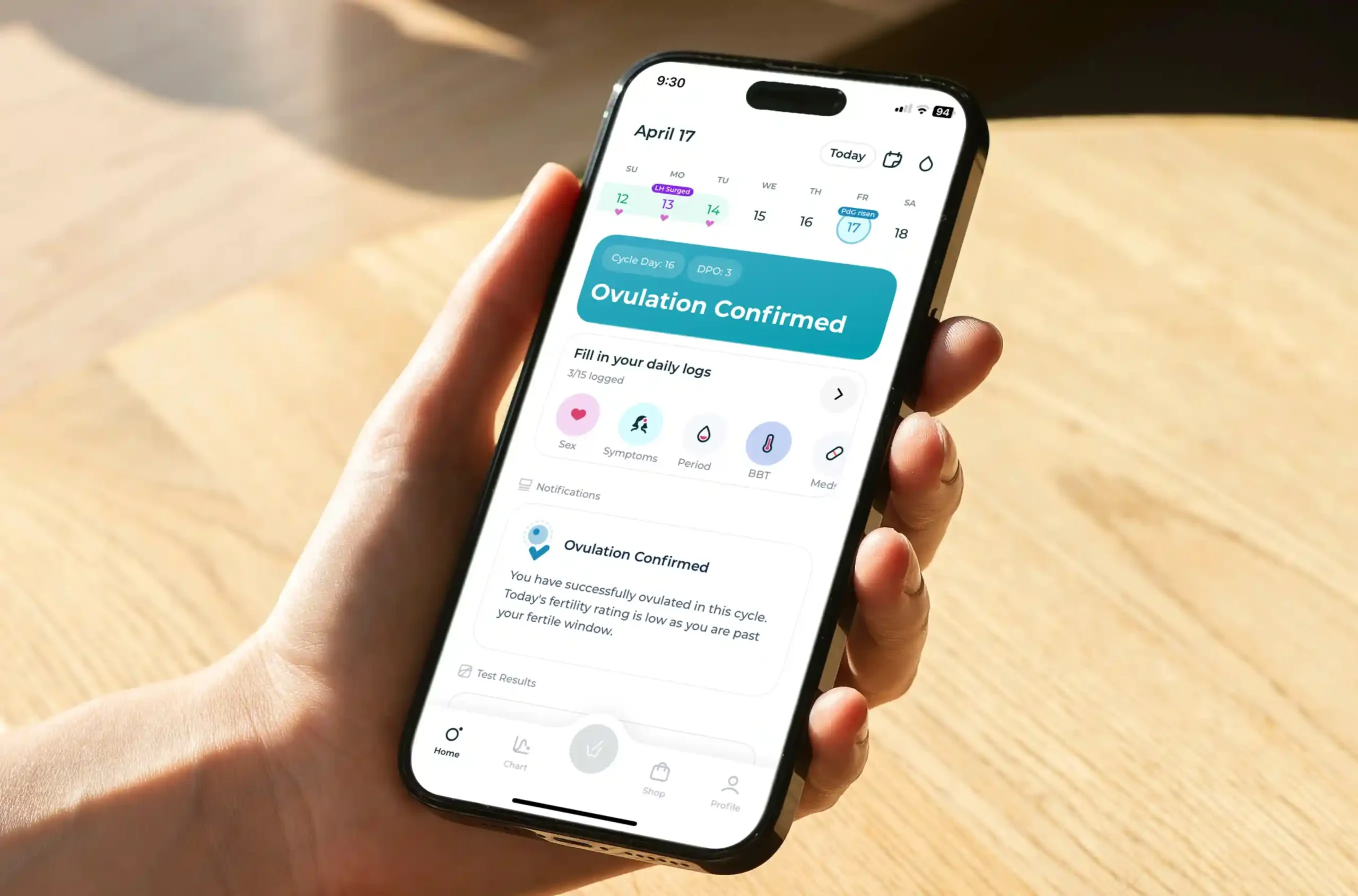
One of the most important things Inito helps you do is confirm that ovulation actually happened.
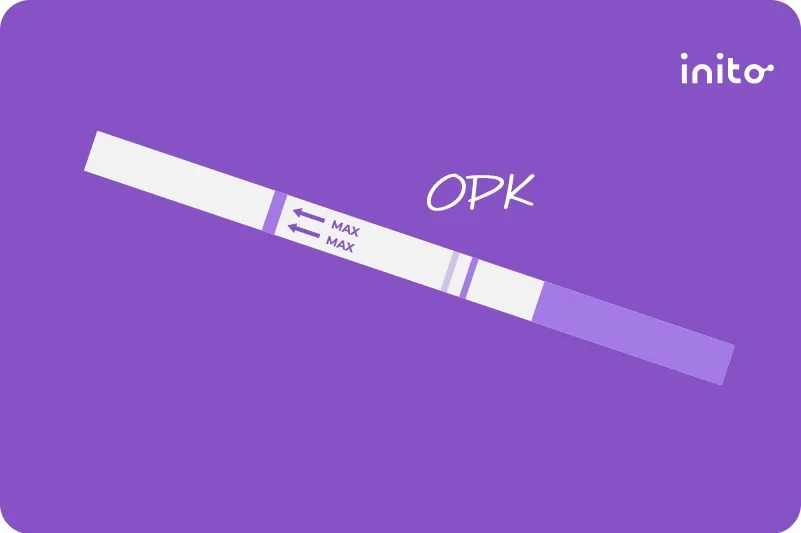
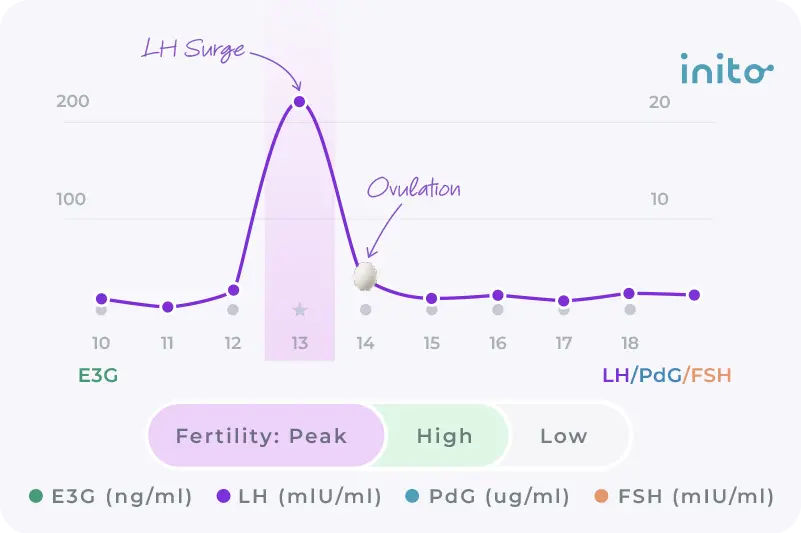
Ovulation predictor kits (OPKs) detect LH, which rises before ovulation. But LH alone can only predict ovulation; it cannot confirm that the egg was released.
That’s where PdG (a urine metabolite of progesterone) comes in. PdG rises soon after ovulation. It can take a few days to increase and typically peaks around 6-8 days past ovulation (DPO).
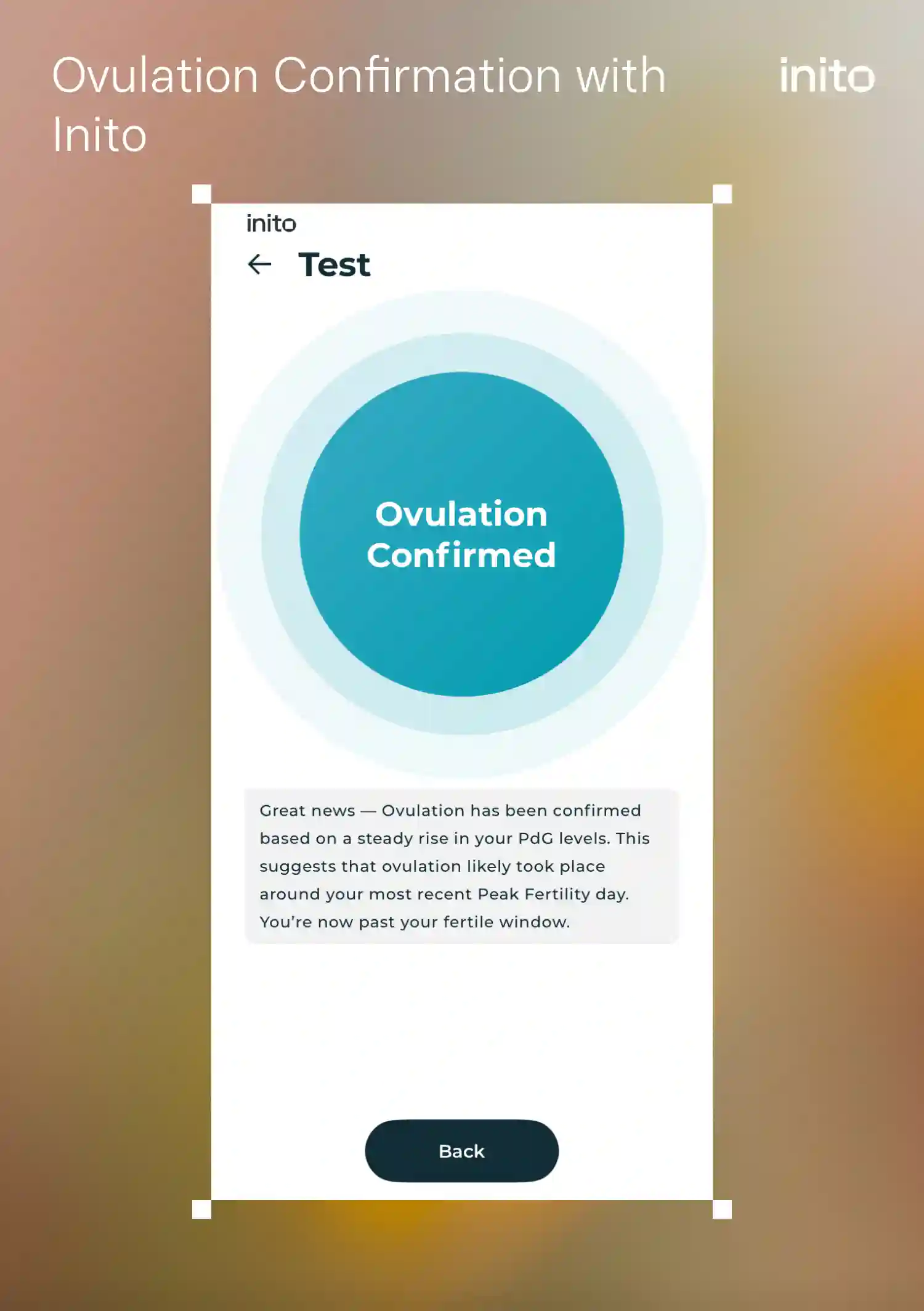
Tracking a steady and consistent rise in PdG is key because it confirms that your body has released an egg and successfully transitioned into the luteal phase.
Why this matters:
- Anovulation (when ovulation doesn’t occur) is the leading cause of infertility.
- Around 25-30% of female infertility cases are linked to not ovulating.
- It often goes unnoticed without hormone tracking.
2. Track your luteal phase length
Your luteal phase length is a critical but often overlooked fertility marker. The typical luteal phase range is 12-14 days, although it can vary between 11-17 days. In a study involving over 600,000 cycles, researchers found that the mean luteal phase length was actually 12.4 days.
A short luteal phase is defined as ≤11 days (this includes the day of ovulation).
Why this matters:
A consistently short luteal phase may indicate a luteal phase defect (LPD), a condition where the body either:
- Doesn’t produce enough progesterone, or
- Doesn’t respond to progesterone effectively
Research shows:
- 13% of ovulatory cycles have a luteal phase <10 days
- 18% of cycles have a luteal phase <12 days
- 35% of early pregnancy loss and ~4% of recurrent pregnancy loss are linked to luteal insufficiency
So, when progesterone support is inadequate, the uterine lining may not develop enough for implantation or may struggle to maintain a pregnancy.
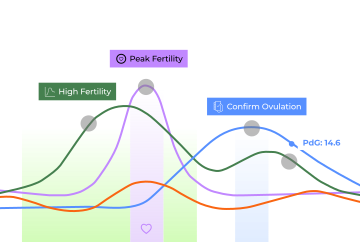
Take a look at this Inito hormone chart after ovulation, where the luteal phase is about 10 days long:
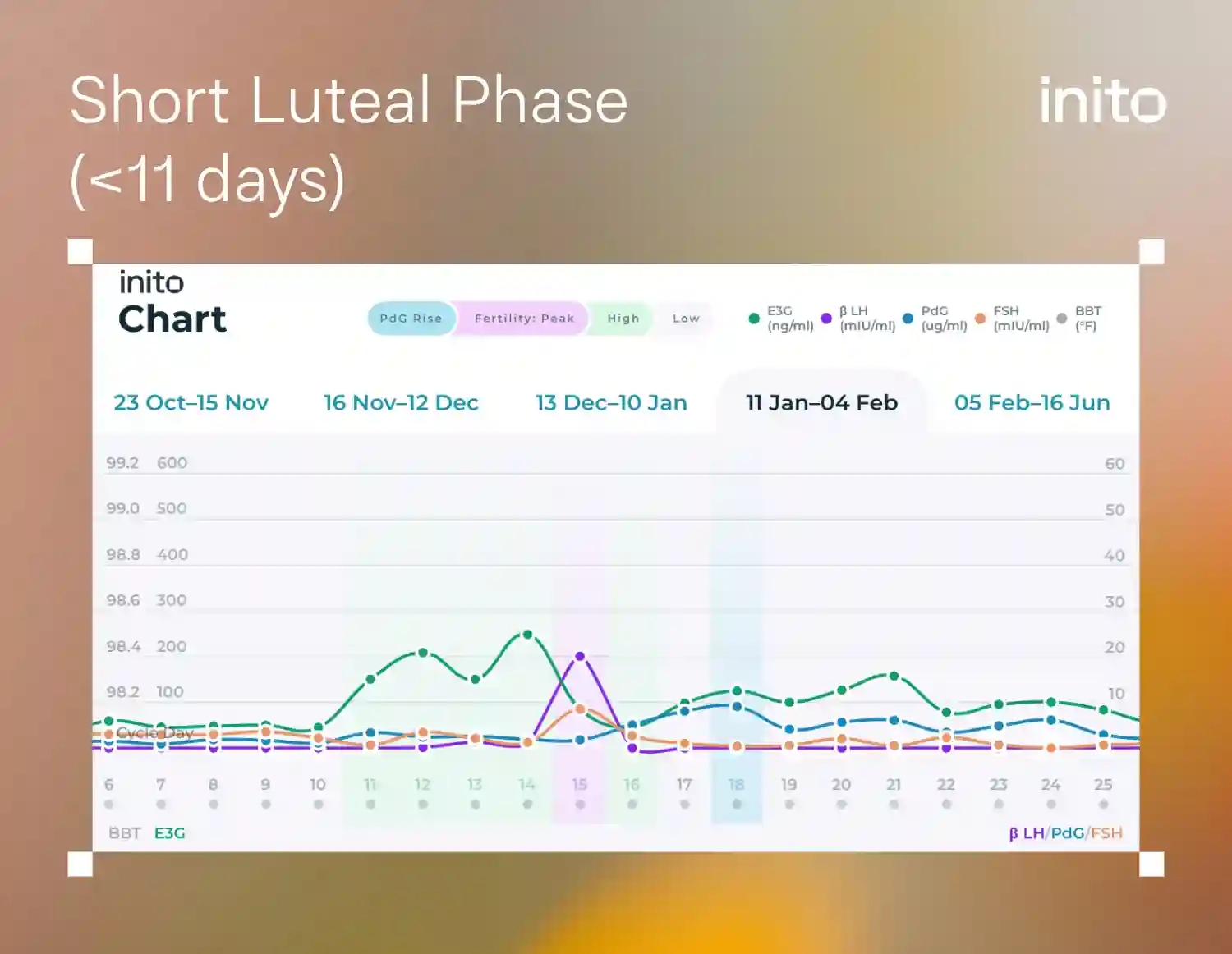
If you notice that your luteal phase is spanning less than 11 days consistently across cycles, discuss with your healthcare provider to better understand what your body might need.
Note: Inito can help you understand your hormone patterns, but it can’t diagnose medical conditions or confirm pregnancy. Tracking your luteal phase length across multiple cycles can provide helpful context for discussions with your healthcare provider.
Know more: How to Lengthen the Luteal Phase? Fertility’s Game-Changer!
3. Know exactly how many DPO you are
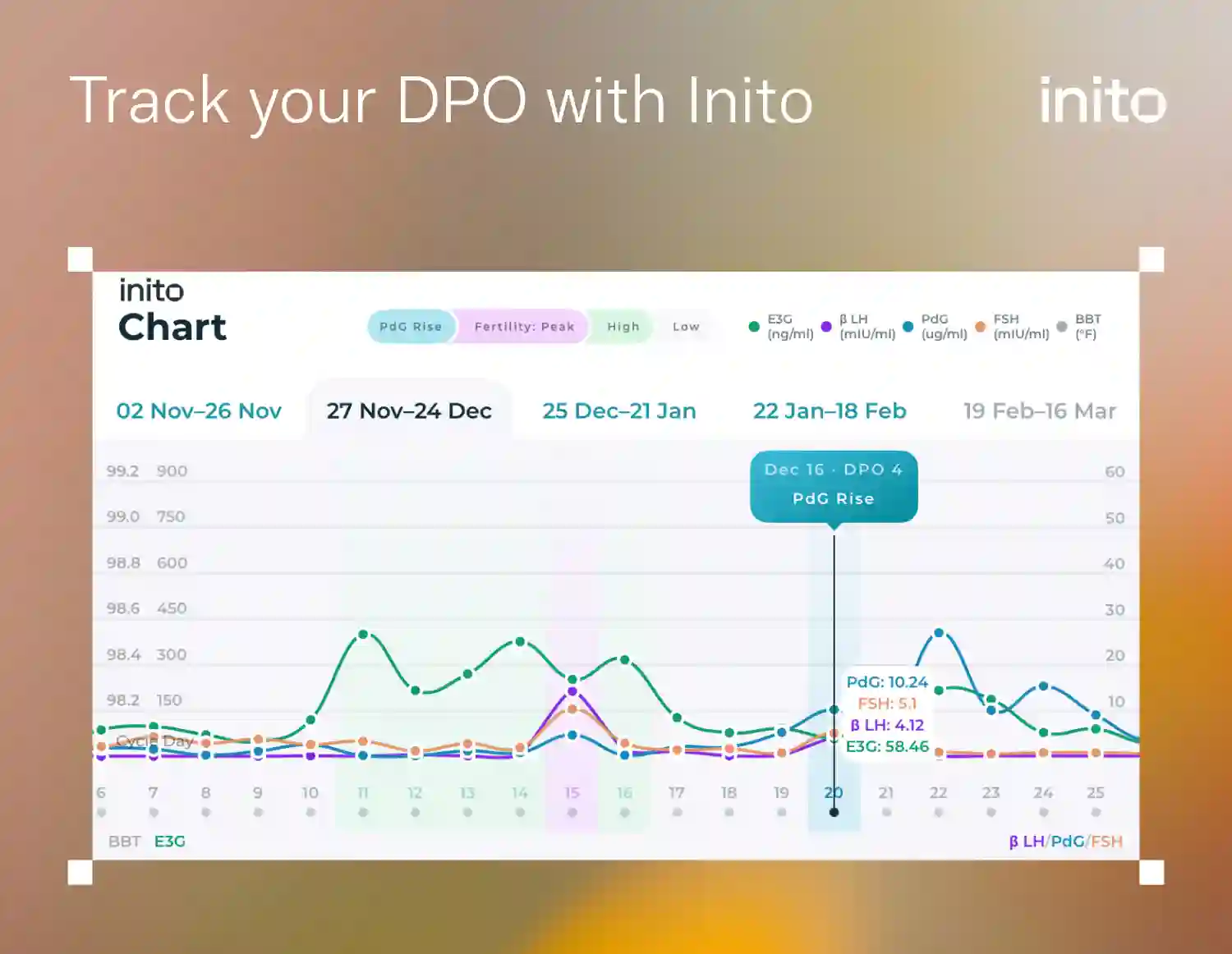
Once ovulation is confirmed, Inito tracks your Days Past Ovulation (DPO) accurately.
This might seem like a small detail, but it changes how you interpret your entire luteal phase.
Why this matters:
- Symptom clarity:
For example, spotting around 8-10 DPO might feel like an early period, but it could also be implantation-related.
Know more: PMS vs Pregnancy Symptoms You Should Know - Better testing decisions:
Nearly 41% of women take pregnancy tests too early (more than 4 days before their expected period).
What’s more, those who test very early are over 5x more likely to get a negative result before eventually testing positive–simply because it’s too soon.
So, testing earlier in the luteal phase is far more likely to give you a negative–even in cycles that may later turn positive. Waiting just a few extra days can significantly improve how reliable your result is.

That’s why knowing your DPO matters. It helps you time your test better and avoid unnecessary stress and confusion.
Know more: How Soon After Ovulation Can You Test for Pregnancy?
4. Track symptoms alongside hormone trends
Your luteal phase isn’t just about hormones; it’s about how those hormones show up in your daily life.
With Inito, you can correlate your luteal phase hormone patterns to your symptoms:
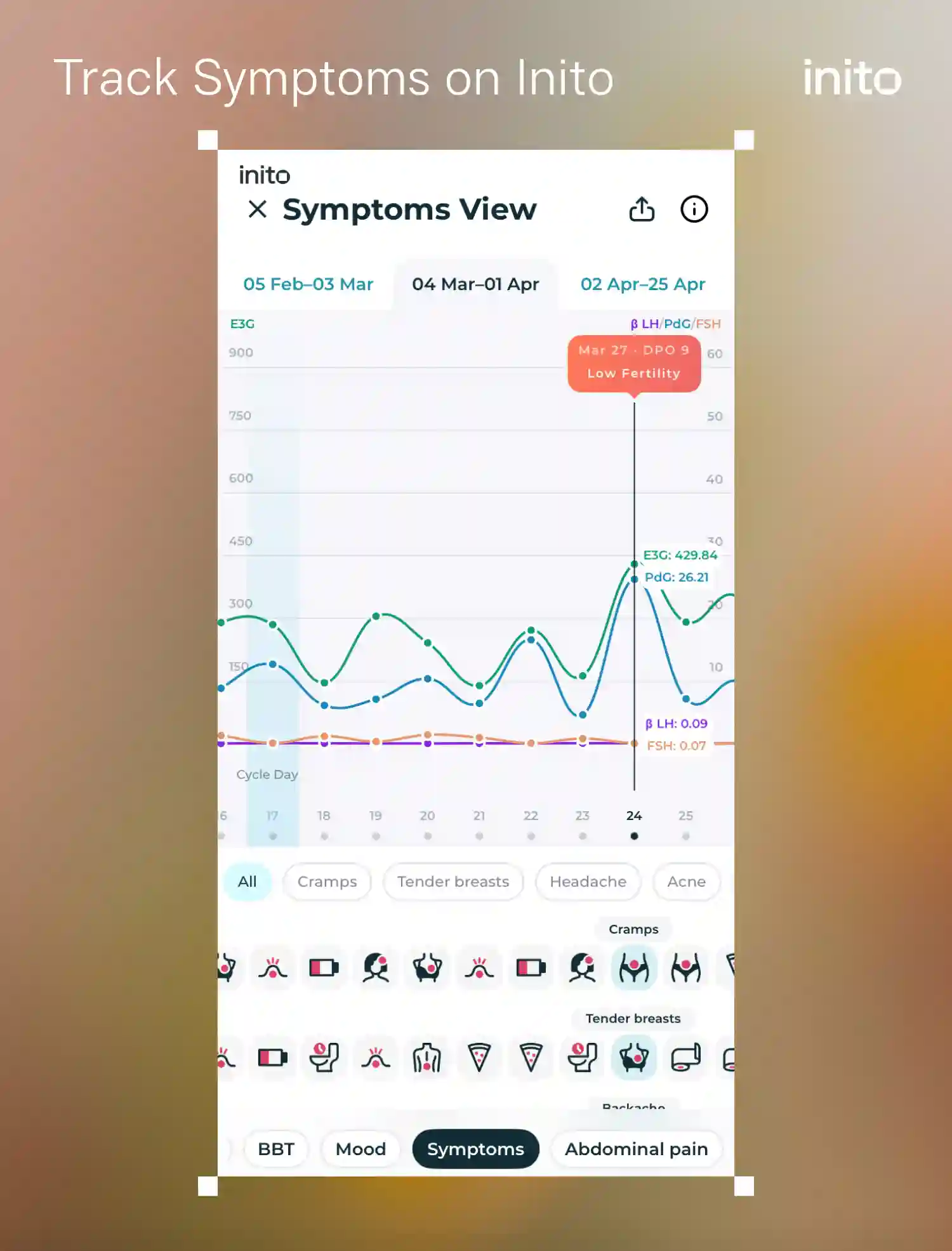
- Mood changes
- Energy levels
- Sleep patterns
- Physical symptoms like bloating or cramps
Over time, this helps you:
- Spot patterns unique to your body
- Anticipate PMS or luteal-phase shifts
- Proactively adjust your nutrition, workouts, and rest based on your luteal phase patterns
In the long term, instead of just reacting to symptoms, you can start preparing for them.
Know more: Cycle Syncing: What it Is and How to Start
When you look at it together, here’s what you’re tracking and how each of these helps you better understand your cycle:
What you’re tracking | Why it matters |
Ovulation confirmation | Confirms that egg release actually happened |
Luteal phase length | If your luteal phase is consistently shorter than 11 days, it’s worth talking to your doctor |
Days Past Ovulation (DPO) | Can help guide testing decisions and symptom interpretation |
Hormone trends + symptoms | Helps you understand your unique patterns |
What if your luteal phase looks different?
Not every cycle will look the same, and that’s expected. Hormones can fluctuate from cycle to cycle.
However, some patterns are worth paying closer attention to:
- No confirmed ovulation for 2-3 cycles
- Luteal phase consistently less than 11 days
- Severe symptoms that interfere with daily life (PMS or PMDD-like patterns)
These trends don’t automatically mean something is wrong. But they can be helpful signals to discuss with a healthcare provider.
What if I’m on progesterone supplements? Will Inito still be helpful?
If you’re taking progesterone supplements, it’s important to understand how they can affect your results.
Progesterone supplements can influence your PdG levels. If you’re PdG tracking with Inito, remember that Inito cannot differentiate between progesterone coming from a supplement and what your body is producing naturally. So, if PdG starts rising after you begin a supplement, it may reflect the supplement rather than your body’s own hormone production, which can give you a false positive result.
That’s why it’s generally recommended to start progesterone supplements only after ovulation has been confirmed. (Although if you’ve been prescribed progesterone supplements, it’s best to have a conversation with your doctor to know when to start taking them.)
Note: Inito has not been tested for use with progesterone supplements. You cannot use it to track the efficacy of your supplements or manage your dosage.
Take the example below. These charts compare two cycles from the same user. Even though she was taking progesterone supplements in one cycle, her PdG levels actually trended lower than they did in a cycle without supplements.
What if your PdG isn’t rising enough in the luteal phase?
If your PdG rise seems delayed, trends lower than expected, or is inconsistent, it can feel concerning. But here are a few things to keep in mind:
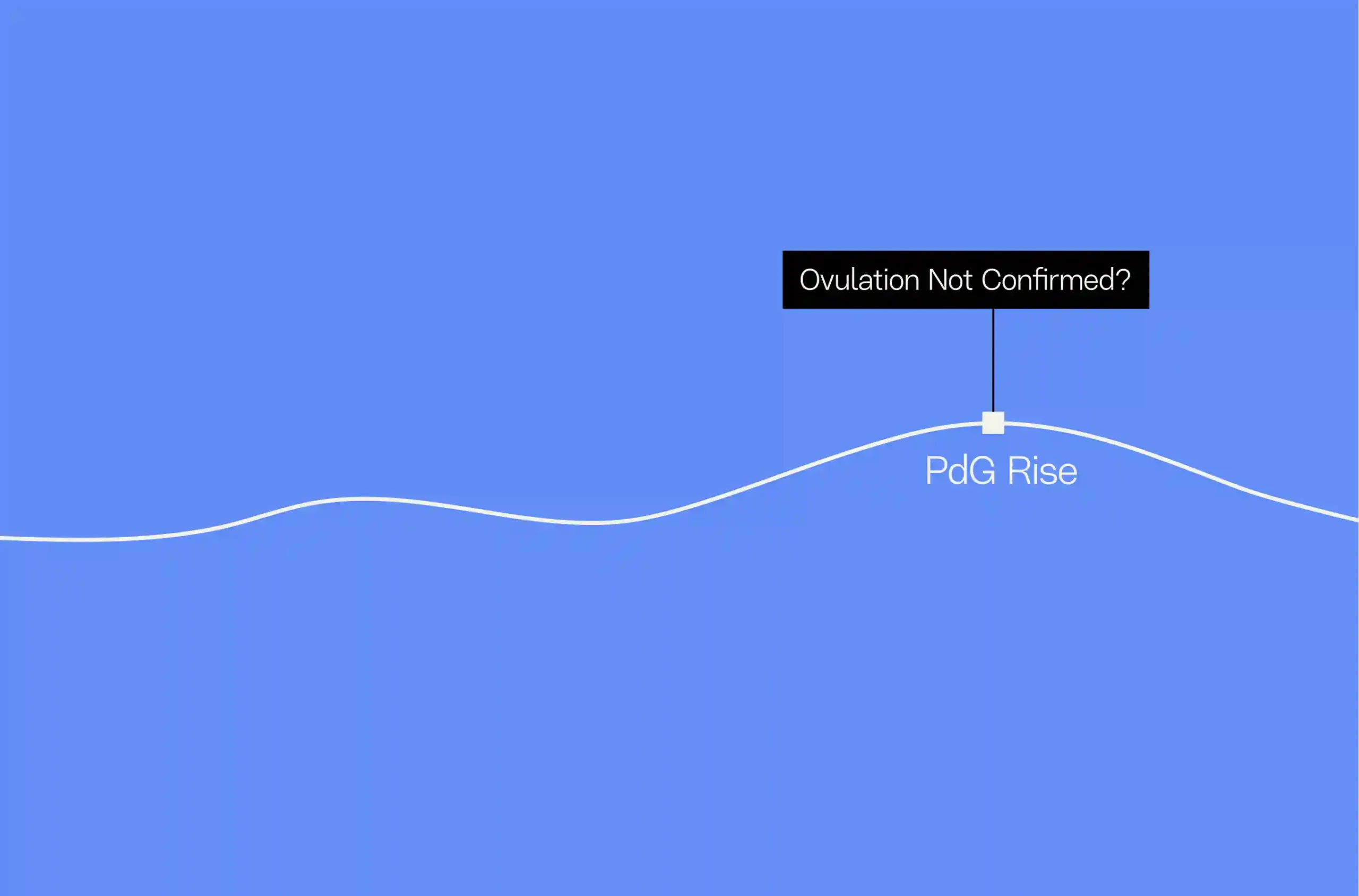
- PdG doesn’t rise instantly. It can take a few days after your LH surge to confirm ovulation.
- Hormones are released in pulses, so day-to-day variation can happen.
- Inito measures PdG, which is the urine metabolite of progesterone. Hydration, urine concentration, and timing of testing can all have an effect on PdG values.
So, instead of focusing on a single value, look for a steady and consistent increase over multiple days.
Know more: PdG Results on Inito Explained: Waiting for Rise, Rising, Confirmed, or Unlikely?
And if you consistently notice that PdG does not rise across multiple cycles, or you feel that your PdG levels seem to trend low, it’s worth discussing with your doctor.
What should you do during your luteal phase?
Here are a few things to keep in mind during the luteal phase:
Avoid testing too early
The two-week wait (TWW) can feel long, but testing too early often leads to unnecessary confusion.
Waiting until closer to your expected period can give you more reliable results.
While some pregnancy tests can give you results from as early as 4 days before your tentative period (around 10 DPO), it is best to take a pregnancy test until after your missed period.
Know more: Your Complete Guide to Surviving the Two Week Wait
Support your body with balanced habits
Your luteal phase is a time when your body is naturally shifting toward rest and recovery.
- Moderate exercise (like walking, yoga, strength training)
- Balanced nutrition (focus on whole foods, stable energy)
- Adequate rest and sleep
These can help you feel more stable during this phase.
Know more: Best Foods to Eat During the Luteal Phase
Build awareness, not anxiety
The goal of tracking isn’t to overanalyze every symptom.
It’s to build awareness over time and understand your patterns, not to react to every fluctuation.
Find support when you need it

Whether it’s a partner, the Inito community, or a guided program, having support during the luteal phase can make a big difference, especially during the TWW. Hearing from others on a similar journey, sharing experiences, or simply knowing you’re not alone can make this phase feel more manageable.
Sometimes, just understanding what’s happening in your body is enough to ease uncertainty.

Summary
The luteal phase doesn’t have to feel like a guessing game.
With Inito, you can:
- Confirm whether ovulation actually happened
- Understand your luteal phase length
- Track DPO accurately
- Correlate hormone patterns and symptoms
Over time, this turns confusion into clarity and helps you make more informed decisions about your cycle.
FAQs
You can. While further testing is optional once ovulation is confirmed, many users continue testing during the luteal phase to track their hormone trends after ovulation.
Inito asks you to keep testing after Peak Fertility to confirm if ovulation has actually happened. A steady and consistent rise in PdG confirms egg release. Continuing to test is helpful to track this PdG rise or, in case you experience another LH surge later in your cycle, Inito helps you catch that rise as well.
Inito continues to measure FSH, LH, estrogen, and PdG during your luteal phase. During this phase, PdG is especially important for confirming ovulation, while the other hormones provide additional context about your cycle.
Hormones naturally continue to fluctuate during the luteal phase. For example, PdG rises after ovulation and estrogen may have a second, smaller rise as well. Day-to-day variation is expected, so it’s more helpful to look at overall trends than individual values.
Once ovulation is confirmed, further testing is optional. Some users choose to stop testing for that cycle, while others continue to track hormone trends throughout the luteal phase.
PdG doesn’t necessarily increase the moment ovulation occurs. It usually takes a few days for it to rise, and it typically peaks around 6-8 days post-Peak Fertility.
Yes. Hormone levels naturally vary between cycles. Looking at trends across multiple cycles can provide a better understanding of what’s typical for your body than focusing on one cycle alone.
Was this article helpful?
- Medline ® Unexplained infertility
- Diagnosis and treatment of luteal phase deficiency: a committee opinion (2021) – practice guidance | American Society for Reproductive Medicine
- Real-world menstrual cycle characteristics of more than 600,000 menstrual cycles | npj Digital Medicine
- A prospective evaluation of luteal phase length and natural fertility – PMC
- Pregnancy Test Use and Timing of Pregnancy Detection in a Prospective Cohort of Pregnancy Planners – PMC
- Strips of Hope: Accuracy of Home Pregnancy Tests and New Developments – PMC
- Accuracy of home pregnancy tests at the time of missed menses – American Journal of Obstetrics & Gynecology