


Content table
Human chorionic gonadotropin, also known as hCG, is one of the earliest and most important hormones during pregnancy. hCG levels fluctuate by week in pregnancy.
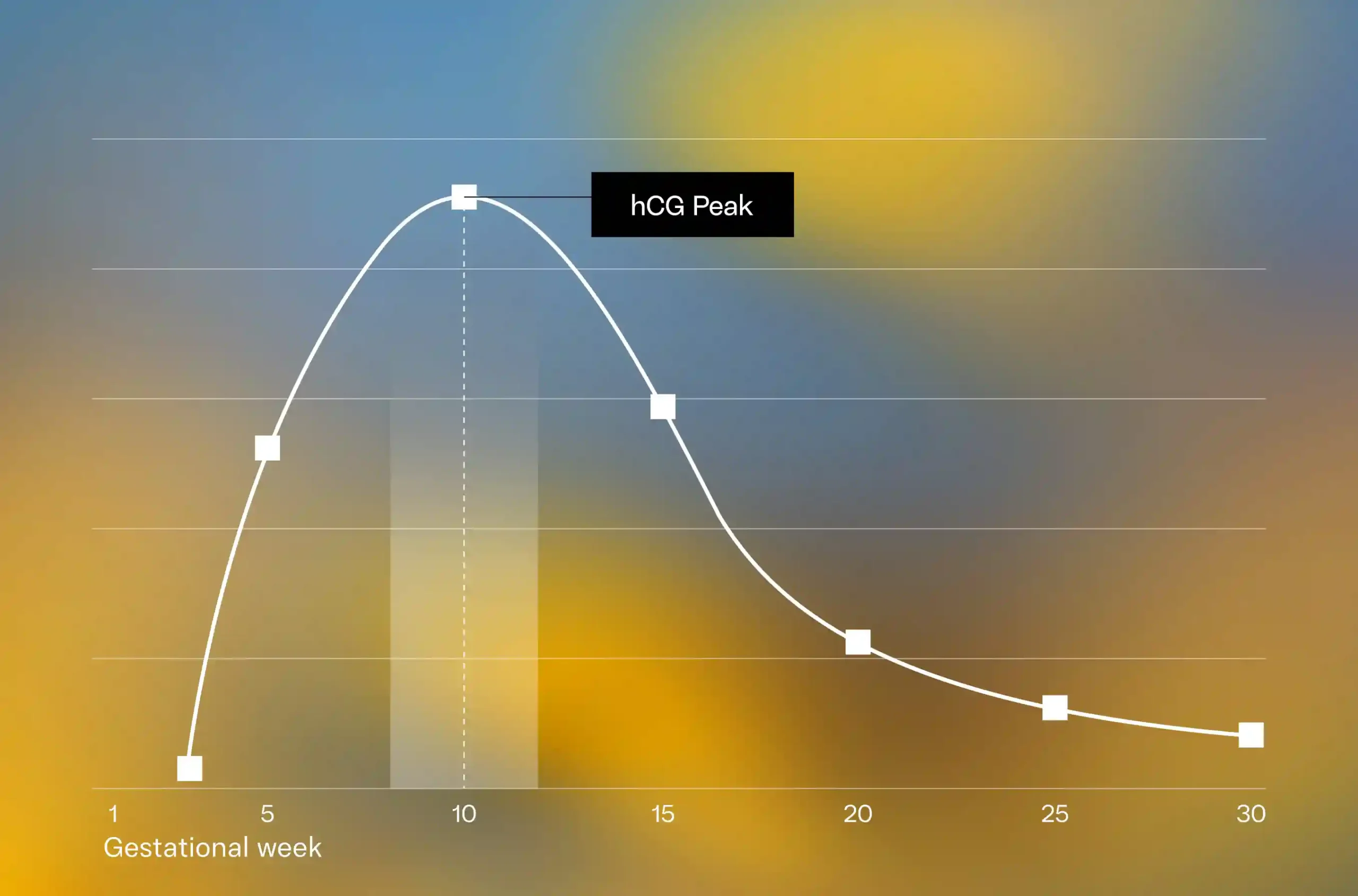
hCG first appears in your blood about 6 to 8 days after fertilization. hCG levels in early pregnancy rise rapidly, doubling every 48 hours. By week 10, hCG peaks, then gradually declines and stabilizes for the next two trimesters. Once you give birth, your levels return to baseline after a few weeks.
Understanding your hCG levels by week in pregnancy can help you make sense of your pregnancy test results. Here’s what you should know about typical patterns of hCG.
Key Takeaways
- hCG is the hormone that’s detected in pregnancy tests.
- hCG plays an essential role in maintaining early pregnancy.
- hCG peaks around 10 weeks, and then gradually declines before stabilizing for the rest of pregnancy.
- Blood tests are more sensitive than urine pregnancy tests done at home.
- Normal hCG levels vary widely between pregnancies.
- Trends over time, instead of a single value, tell more about your pregnancy.
- Contact your healthcare provider if you notice bleeding, abdominal pain, or dizziness after getting a positive pregnancy test.
What Is hCG and Why Does It Matter?
hCG is known as the pregnancy hormone. Before implantation, the embryo makes hCG. Later, the developing placenta takes over hCG production. hCG supports early pregnancy. It maintains the corpus luteum, a temporary structure in the ovaries that produces progesterone. Progesterone is another hormone essential for the uterine lining and implantation.
Pregnancy tests detect hCG in your blood or urine. There are different forms of hCG. Each form is produced by certain cells at different stages of pregnancy.
hCG has two parts, known as alpha and beta subunits. The structure of hCG’s alpha subunits is the same as in other hormones, including:
- FSH (follicle-stimulating hormone)
- LH (luteinizing hormone)
- TSH (thyroid-stimulating hormone)
hCG’s beta subunits are what set hCG apart from other hormones. Beta hCG is more specific, so it’s what pregnancy tests are looking for. Beta hCG tests can provide qualitative or quantitative measurement. A qualitative test, like a home urine test, checks if hCG is present. A quantitative test, like a blood test, measures the actual amount of hCG.
Know more: hCG Doubling in Pregnancy: Why It Matters
How Do Pregnancy Tests Detect hCG?
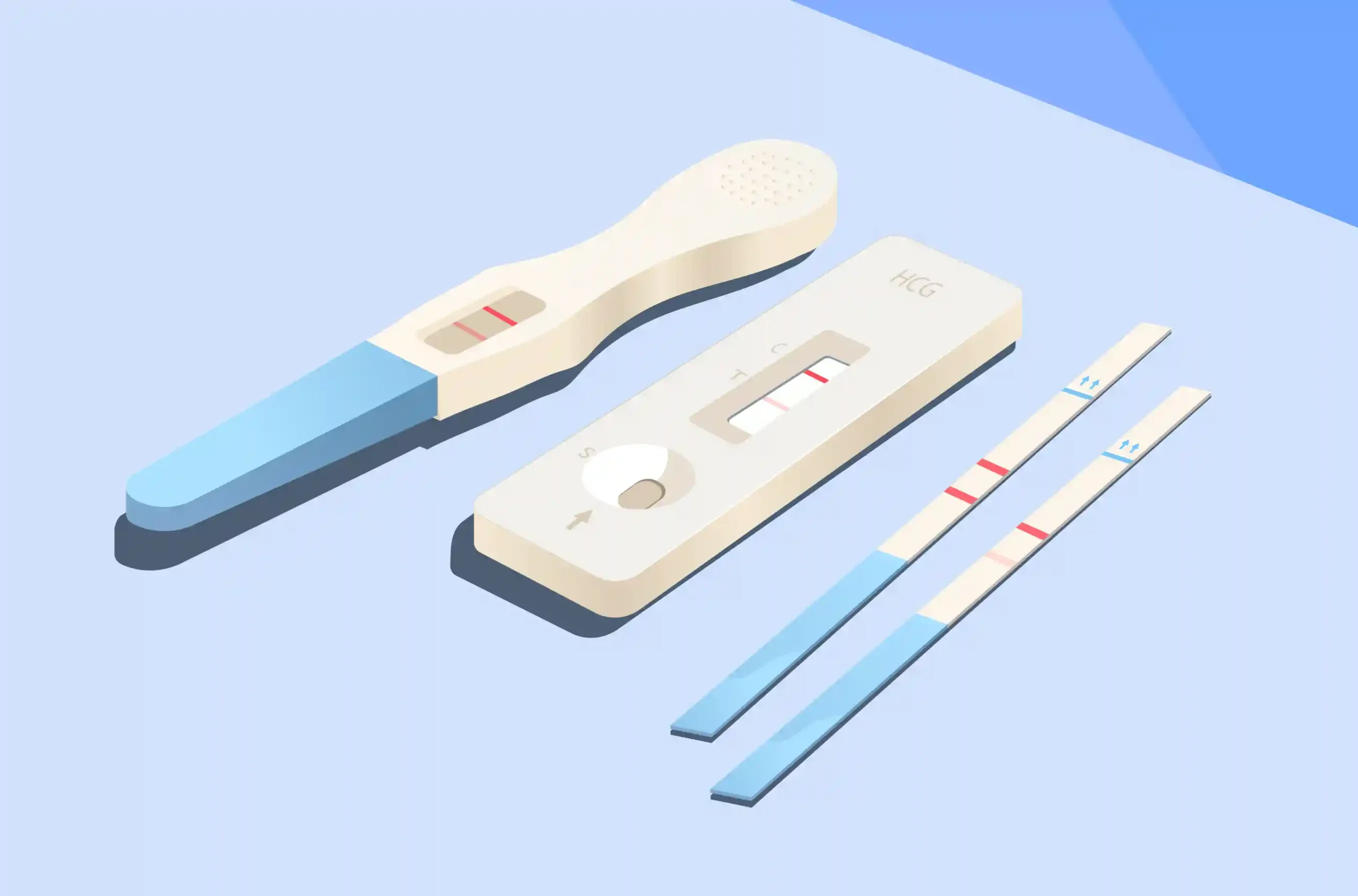
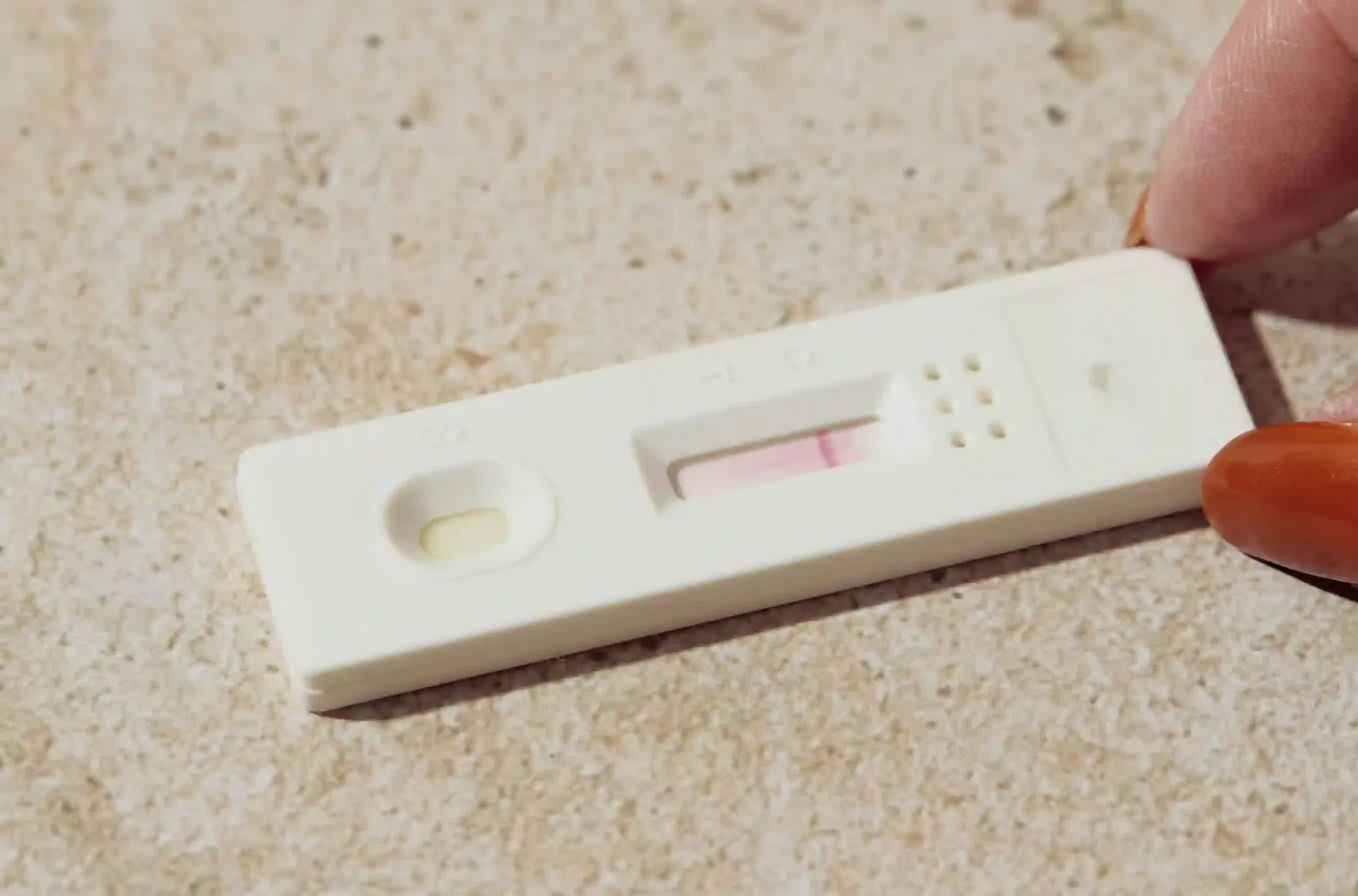
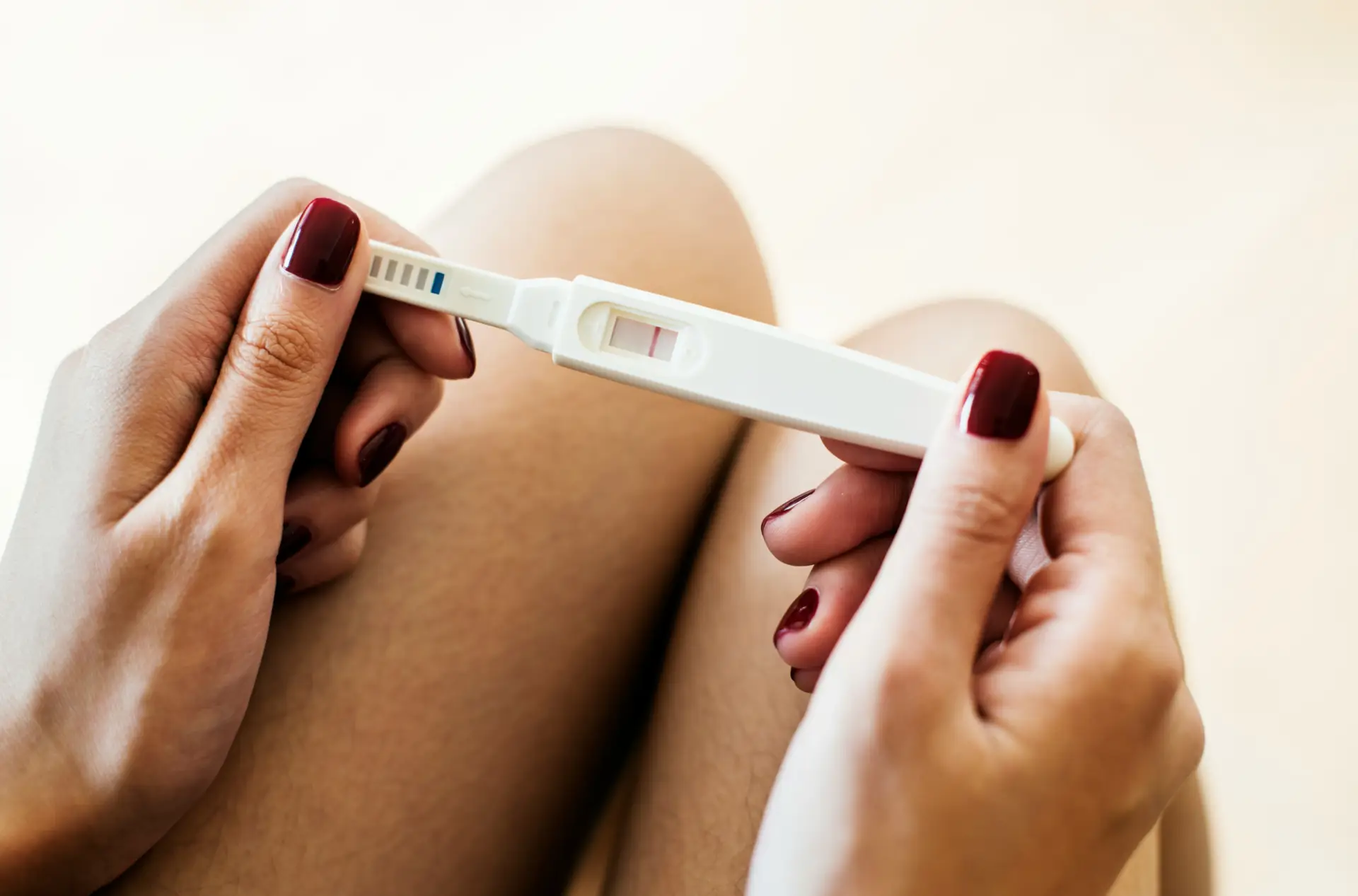
Urine pregnancy tests use a method called antibody-based immunoassay. Antibodies are proteins that bind to the hCG in urine. Urine tests use antibodies to make a “sandwich complex.” This complex includes hCG antigen and antibodies. It forms a visible color line on the test strip, meaning the pregnancy test is positive. A positive result shows two lines. A negative result (not pregnant) shows only the control line.
Most home urine tests detect hCG when levels are over 20 to 25 mIU/mL. This is the usual amount of hCG at about 12 to 14 days past ovulation.
Know more: How Long After Implantation Does hCG Rise?
Blood pregnancy tests are generally more sensitive than urine pregnancy tests. hCG appears in the blood first. It takes time for hCG to be filtered from the blood into the urine. A blood pregnancy test detects the amount or quantity of hCG.
Know more: When to Take a Pregnancy Test After Implantation?
What Are the Average hCG Levels Each Week of Pregnancy?
The hCG levels chart outlines the typical blood hCG ranges by week of pregnancy. Note: These values are general reference ranges. Your actual numbers may be different.
hCG Levels Chart By Week of Pregnancy
Week # | hCG Blood Levels (mIU/mL) |
3 | 5-72 |
4 | 10-708 |
5 | 217-8,245 |
6 | 152-32,177 |
7 | 4,059-153,767 |
8 | 31,366-149,094 |
9 | 59,109-135,901 |
10 | 44,186-170,409 |
hCG blood levels rise from week to week in the first trimester. The general trend increases each week. But there’s a big range of “normal” values. Regardless of the exact value, hCG levels peak around week 10. After that, hCG may steadily decline until about week 16. hCG levels then stay consistent, somewhere between 20,000 and 200,000 mIU/L, for the rest of pregnancy.
Once you give birth, hCG drops quickly, then continues to gradually decline. It takes roughly 3 to 4 weeks after giving birth for hCG to go back to prepregnancy levels. If your hCG levels were very high during pregnancy or some placental tissue remains in the uterus, hCG may stay high for longer. If hCG levels don’t fall as expected, your healthcare provider may check for pregnancy tissue that was left behind or a rare condition called gestational trophoblastic disease.
Read more: Pregnant But hCG Rising Slowly: What to Know
How Do hCG Levels Change Each Week?
Here’s what you should know about shifting hCG levels by week in pregnancy.
hCG in Early Pregnancy: Weeks 3 to 4
hCG production begins shortly around embryo implantation, around the 3rd week. During this early stage, hCG levels start to rise rapidly as the pregnancy develops.Levels are still low but increasing quickly. Changes over time matter more than one single measurement.
Rapid Rise: hCG Levels in the 5th Week of Pregnancy
During the first few weeks of pregnancy, hCG rises dramatically. One study of 203 women with uncomplicated pregnancies found that serum hCG levels increased from 32,660 units/liter (U/L) (1 mIU/mL = 1 IU/L or U/L) at 4–6 weeks.Another study reported that hCG can go up 66% or more within 48 hours in early viable pregnancies.
hCG Levels in the 6th Week of Pregnancy and Beyond
hCG continues to increase rapidly during weeks 6 to 8. One study found that in some women hCG levels doubled every 48 to 72 hours. Another study found median hCG levels rising to 15,571 U/L at 6-8 weeks, although individual values varied widely.
Peak hCG Levels at Weeks 8 to 10
hCG reaches its highest levels around 9 to 10 weeks of pregnancy. Studies show that average hCG levels peak to 75,000 mIU/mL at 9 weeks and 74,655 mIU/mL at 10 weeks. In one study, hCG concentrations got up to 200,000 mIU/mL by 8 to 10 weeks.
hCG Decline Begins: Weeks 10 to 12
After reaching its peak, hCG levels in pregnancy gradually go back down. Average levels decrease from 74,655 mIU/mL at 10 weeks to 62,493 mIU/mL at 11 weeks. By 12 weeks, levels may be down to 56,004 mIU/mL. In other studies, average levels decreased to 38,585 mIU/mL by 10 to 12 weeks. This decline is normal. The placenta develops and becomes fully functional around the end of the first trimester. Ultimately, the placenta takes over hCG hormone production.Once the placenta can independently support the pregnancy, the body no longer needs such high levels of hCG. After this transition, hCG levels typically stabilize at a lower range. hCG remains relatively steady for the rest of pregnancy.
Continued Gradual Decrease in Weeks 12 to 16
hCG levels continue to decrease after the first trimester. Different studies show different values, but they all reflect the same trend.One study showed hCG levels around 22,314 mIU/mL after 12 weeks. Another study found average hCG levels fall to:
- 52,367 mIU/mL at 13 weeks
- 47,267 mIU/mL at 14 weeks
- 37,303 mIU/mL at 15 weeks
- 29,614 mIU/mL at 16 weeks
More research states that at 15 weeks, hCG levels are at 30% of their peak. By 20 weeks, levels stabilize around 18% of peak levels. Then, they’re relatively steady until delivery.
Why Does hCG Vary for Different Women?
Although hCG follows a general pattern, normal levels can vary significantly. That’s why it’s important to remember that a single hCG reading doesn’t provide enough information about pregnancy.
Healthcare providers usually also consider:
- Gestational age (pregnancy in weeks)
- The rate of hCG increase over time
- Ultrasound findings
- Clinical symptoms
One study looked at about 8000 women and found that these factors affected hCG levels:
- The type of test or laboratory method used: Different tests and laboratories may use different assays, leading to slight variations in hCG results.
- Differences between individuals and pregnancies: Normal hCG levels vary widely from one person and one pregnancy to another.
- BMI: Higher maternal BMI is associated with lower circulating hCG levels in early pregnancy.
- Smoking: Smoking has been linked to lower hCG concentrations during pregnancy in some studies.
- Ethnicity: Average hCG levels may differ slightly among different ethnic populations.
- Number of previous pregnancies: Previous pregnancies (parity) may influence hCG levels, although the effect is generally small.
- Weight of the placenta: Larger placentas tend to produce more hCG than smaller placentas.
- Severe pregnancy nausea (hyperemesis gravidarum): Women with hyperemesis gravidarum often have higher-than-average hCG levels.
- Sex of the baby: Pregnancies with a female fetus tend to have slightly higher hCG levels than those with male fetuses.
hCG results should be considered as one part of the bigger picture of your pregnancy journey. While reference ranges can be helpful, you shouldn’t compare your results to others.
Why Are hCG Levels Important to Know?
hCG is an important marker of early pregnancy. It helps confirm pregnancy and monitor early development. Abnormally high or low hCG levels or slow-rising hCG have been linked with pregnancy complications, including pregnancy loss, preeclampsia, preterm delivery, and poor fetal growth.
High levels may happen with:
- A mistake in calculating how far along you are
- Multiple pregnancy (twins or triplets)
- Molar pregnancy (a rare condition)
Know more: hCG Levels Twins: Key Indicators for Twin Pregnancy
Low levels may happen with these conditions:
- Ectopic pregnancy
- Impending miscarriage
- Anembryonic pregnancy
However, a low hCG value may still be normal if levels are rising appropriately. It’s always best to reach out to a healthcare provider to understand what’s happening before jumping to conclusions.
Know more: Understanding Ectopic Pregnancy hCG Levels
How Does hCG Change After InVitro Fertilization (IVF)?
In IVF pregnancies, early beta hCG levels can be helpful to know. One study looked at 755 women undergoing IVF. Researchers found that higher beta hCG levels 12 and 14 days after embryo transfer was associated with better pregnancy outcomes. The same was true if hCG increased at a faster rate. The study mentioned these beta-hCG thresholds for higher chances of live birth:
- Day 12 after embryo transfer: hCG at or above 205.5 mIU/mL
- Day 14 after embryo transfer: hCG at or above 535 mIU/mL
However, beta hCG values alone can’t accurately predict pregnancy success. Your results should always be viewed alongside other findings.
When Should You See a Doctor?
Most variations in hCG levels are normal. But it’s important to contact your healthcare provider if you have a positive pregnancy test and any of the following symptoms:
- Severe belly pain
- Heavy vaginal bleeding
- Dizziness or fainting
These signs may indicate an ectopic pregnancy or miscarriage.
You should also seek medical advice if your hCG levels aren’t rising as expected or are unusually high. If you receive conflicting pregnancy test results, like false positive or false negative results, see your doctor. You may need a repeat blood hCG test and an ultrasound to see what’s going on. Reach out to your doctor if you’re concerned. You can get peace of mind and help, if needed.

FAQs
hCG starts rising around the time of implantation. The hormone can usually be detected in the blood about 6–8 days after fertilization. It then rises rapidly during early pregnancy, often doubling every 48–72 hours in viable pregnancies.
There’s no single “good” hCG level for early pregnancy. Ideal hCG ranges vary, depending on how many weeks pregnant you are. By the third week of pregnancy, a normal blood hCG level can be anywhere between 5 and 72 mIU/mL. By week ten, the normal range is from 44,186 to 170,409 mIU/mL. As long as the trend is increasing at a good rate, the actual value isn’t always as important.
Yes, but in a healthy early pregnancy, hCG should generally continue to rise. If hCG levels go down in early pregnancy, there might be a problem. Overall, hCG levels in early normal pregnancies should be rising consistently.
There’s no specific hCG target level. The most important thing is that hCG continues rising as expected. Sudden drops or leveling off too soon are a possible sign of miscarriage.
There’s nothing you can do to increase hCG yourself. hCG production depends on how the pregnancy is progressing. Following healthy habits and staying in touch with your healthcare team increase your chances of pregnancy success.
The only way to know for sure if your hCG level is rising is through repeated blood hCG tests. Some women also feel symptoms, like nausea, breast tenderness, or fatigue, but these can vary. As a result, you can’t rely on your symptoms to predict if hCG is rising appropriately.
hCG levels can’t tell if you have an ectopic pregnancy. hCG that rises more slowly than expected or doesn’t match ultrasound findings may raise suspicion and requires further evaluation.
A decrease in hCG during early pregnancy isn’t normal. It should be seen as a serious issue that needs to be checked by your doctor. Falling hCG levels in the first trimester could mean a pregnancy loss or another complication. But diagnosis requires repeat hCG testing and an ultrasound. After the first trimester, hCG levels naturally decline as the placenta takes over hormone production. hCG naturally declines later as pregnancy progresses beyond the first trimester.
hCG usually stops doubling every 48 hours, as pregnancy progresses. During early pregnancy, hCG may double every 48-72 hours. The rate of increase gradually slows as total hCG levels rise. Around 9 to 10 weeks of pregnancy, hCG reaches its peak. Then, levels naturally decline and stabilize.
- The Predictive Value of Early β -hCG Levels After Embryo Transfer in In Vitro Fertilization Treatment | Nigerian Journal of Clinical Practice
- β-Human Chorionic Gonadotropin Dynamics in Early Gestational Events: A Practical and Updated Reappraisal | Obstetrics and Gynecology International
- Human Chorionic Gonadotropin and Early Embryogenesis: Review | International Journal of Molecular Sciences
- hCG, the wonder of today’s science | Reproductive Biology and Endocrinology
- Chorionic Gonadotropin Beta Subunit | ScienceDirect
- Human Chorionic Gonadotropin | StatPearls
- Can pregnancy tests fail? False positives and negatives | inviTRA
- hCG blood test – quantitative | MedlinePlus
- hCG (Blood) | University of Rochester Medicine
- Predicting the Decline in Human Chorionic Gonadotropin in a Resolving Pregnancy of Unknown Location | Obstetrics and Gynecology
- Early pregnancy reference intervals; 29 serum analytes from 4 to 12 weeks’ gestation in naturally conceived and uncomplicated pregnancies resulting in live births | Clinical Chemistry and Laboratory Medicine
- Table 1 Gestational age specific, total population reference ranges for hCG in 8065 women | Springer Nature Link
- Reference ranges and determinants of total hCG levels during pregnancy: the Generation R Study | European Journal of Epidemiology
- Poor prognosis for successful pregnancy with slow rising beta-human chorionic gonadotropin (hCG) levels even with fetal viability at eight weeks | Fertility and Sterility
- Early Pregnancy Loss (Spontaneous Abortion) | StatPearls