


Content table
If you’re trying to conceive, you’ve probably thought a lot about your most fertile days. But you may also wonder: when are you least fertile?
The chances of pregnancy are highest during your fertile window and lower outside of it. Ovulation usually happens 12-14 days before your next period, so the exact fertile days can shift depending on your cycle length.
One study found that when ovulation happened around cycle days 12-16, the chances of being in the fertile window were lower early in the cycle, increased after day 7, and were highest around mid-cycle. But these patterns can vary, especially if your cycle is longer, shorter, or irregular.
Even small shifts in ovulation can change your fertile window. That’s why relying only on calendar dates may not always be accurate.
Understanding your least fertile days can help if you’re trying to get pregnant or if you just want to understand your body better.
Key Takeaways
- For most cycles, the chances of pregnancy are low outside of your fertile window.
- The least fertile days are usually right after your period in longer cycles, and after ovulation during the luteal phase.
- Ovulation usually occurs about 12 to 14 days before your next period.
- Sperm can survive for up to five days inside the female reproductive system.
- Women with short or irregular cycles can ovulate earlier than expected.
- The fertile window usually lasts about six days, including the four days before ovulation, ovulation day, and one day after ovulation.
- Birth control pills use hormones to help stop ovulation.
- Stress, illness, travel, and hormone changes can shift your fertile days.
What Happens During the Menstrual Cycle?
On average, a menstrual cycle lasts between 21 and 35 days, starting on the first day of your period. This is called cycle day 1, or CD1. Bleeding usually lasts around 2–8 days.
After that, your body starts preparing for ovulation. Follicles in the ovaries begin to grow with the help of follicle-stimulating hormone, or FSH. One follicle usually becomes dominant and continues to mature. As it grows, it produces estrogen, which helps prepare your body for ovulation.
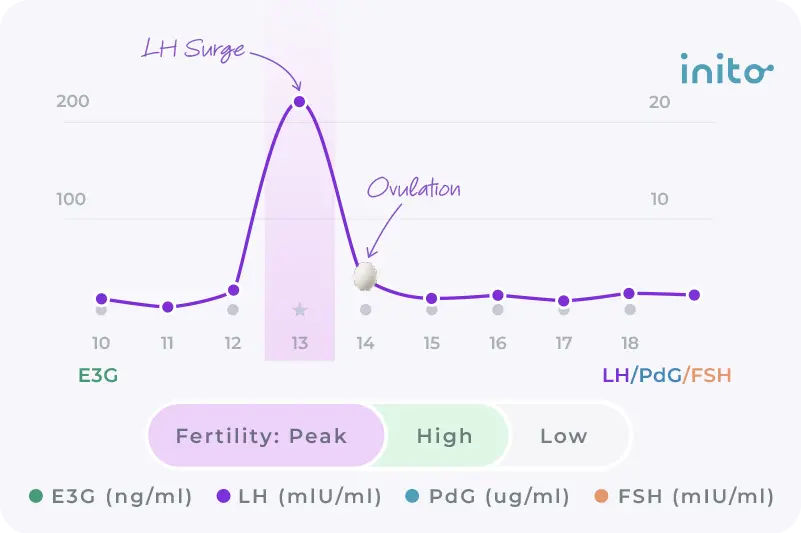
Once the egg is ready, luteinizing hormone, or LH, rises quickly. This LH surge tells the follicle to release the egg. This is ovulation.
After ovulation, the released egg moves through the fallopian tube toward the uterus. It can survive there for about 24 hours. Ovulation usually happens around 12–14 days before your next period.
For pregnancy to happen, sperm need to meet the egg during this time. Sperm may remain viable in the female reproductive tract for as long as five days, which is why sex before ovulation can still lead to pregnancy.
After ovulation, progesterone levels rise to support a possible pregnancy. If the egg is not fertilized, progesterone drops. Then bleeding starts again, and your next period begins.
What Is the Fertile Window Compared to Less Fertile Days?
Sperm survival is only up to 5 days in the female reproductive tract. The egg survives for only about 24 hours after ovulation. Conception chances are highest during a 6-day window during your menstrual cycle.
Outside this fertility window, the chances of getting pregnant are much lower.
Fertile window:
- Four days before ovulation
- The day of ovulation
- One day after ovulation
Less fertile days:
- Before the egg is released
- After the egg is no longer viable
- If hormonal conditions aren’t ideal for fertilization
When Are Your Least Fertile Days?
Your least fertile days usually depend on when you ovulate, and how long your menstrual cycle is.
Least fertile days after your period
If your cycle is regular, the days during your period and right after it ends are usually considered your least fertile days. At this point in the cycle, hormone levels are at their lowest, ovulation hasn’t happened yet, and no mature egg is available for fertilization.
But this can look different if you have a short menstrual cycle, around 21 days or less. Ovulation usually happens 12-14 days before your next period, so in a 21-day cycle, that could be around cycle days 7-9.
For example, if your period starts on March 1 and lasts about five days, ovulation may happen around March 7-9, because the follicular phase is shorter than usual. That means your fertile window could overlap with your period or start right after it ends.
As sperm can remain viable inside the female body for up to 5 days, sex on March 5 or 6 — during the last days of your period or right after — can lead to pregnancy.
Know more: Can You Get Pregnant Right After Your Period?
Least fertile days right, after ovulation, before your period,
The late luteal phase is the time just before your next period starts. Since ovulation has already passed and the egg survives for only about 24 hours, fertility is usually much lower during this phase.
At this point, your hormones are focused on supporting a possible pregnancy rather than preparing for another ovulation, so the chances of conception are lower.
If your cycles are irregular, your fertile window can be harder to predict.
When Are You Least Fertile on the Pill?
When you take the contraceptive pill correctly, there aren’t really “fertile” or “least fertile” days, because hormonal birth control works continuously.
Birth control pills can help to prevent pregnancy in a few ways:
- Stops ovulation: The pill suppresses FSH and LH, the hormones that would normally trigger ovulation. Without ovulation, no egg will be released for fertilization.
- Thickens cervical mucus: This creates a barrier that makes it difficult for sperm to move through the cervix and reach an egg.
- Changes the uterine lining: The lining becomes less receptive, making implantation less likely even if fertilization happens. Implantation occurs when a fertilized egg embeds in the uterus and pregnancy begins.
After stopping the pill, your body may need time to find its rhythm again. For some people, this can last around 2–6 months.
But fertility can come back faster than you might expect. You could ovulate within a few weeks, which means pregnancy is possible even before your first period. About 83% of women conceive within one year after stopping birth control.
If you’ve stopped taking the contraceptive pill, fertility can start coming back within a few weeks. But it can look different for everyone.
If you miss pills, take them inconsistently, or switch birth control methods, the pill may not work as well. That means ovulation can happen again, and pregnancy becomes possible.
Know more: Can You Get Pregnant on Birth Control? Experts Answer
How Can You Track Your Fertile Window?
Up to 47% of menstrual cycles can vary by as much as 7 days, which can make it harder to predict your most fertile days.
Here are some ways to track your fertile window:
Method | How it works | Fertility sign | Pros vs cons |
Cervical mucus tracking | Tracks changes in cervical mucus throughout your cycle to identify your fertile window. | Clear, slippery, and stretchy “egg white” mucus | Pro: Natural and easy to do at home. Con: May vary or be hard to track consistently |
Basal Body Temperature (BBT) | Measures your resting temperature each morning to confirm ovulation has happened. | Slight rise in BBT (around 0.5–1°F) | Pro: Can help confirm ovulation after it happens. Con: Does not predict fertile days in advance. |
Pelvic Ultrasound | Tracks follicle growth and endometrial lining to help identify ovulation timing and uterine readiness. | Mature follicle and thickened uterine lining | Pro: Very accurate. Con: Expensive, time-consuming, and requires clinic visits. |
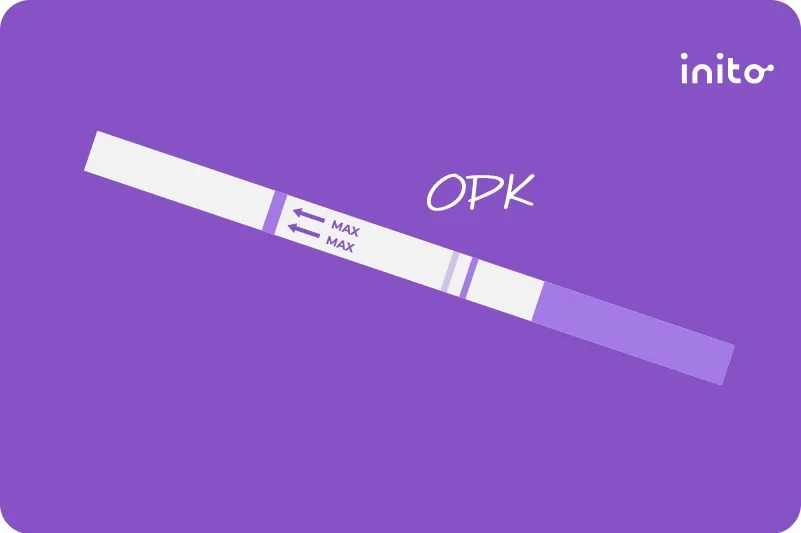
Ovulation Predictor Kits (OPKs) | Detects luteinizing hormone (LH) in urine to show ovulation may happen soon. | Positive LH surge | Pro: Can help predict ovulation. Con: Does not confirm that ovulation actually happened. Anovulatory cycles may be missed. |
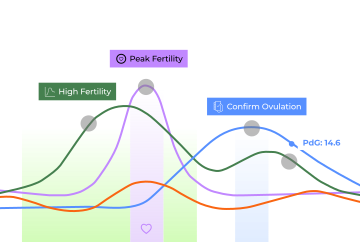
At-home fertility monitor like the Inito Fertility Monitor | The Inito Fertility Monitor tracks FSH, estrogen, LH, and PdG on a single test strip. | Steady, consistent rise in PdG after the LH surge | Pro: Convenient, at-home use. Confirms ovulation with over 99% specificity. |
What Factors Can Shift Your Fertile Days?
Your fertile days can shift from cycle to cycle because of changes in your hormones, health, lifestyle, and overall routine.
Here are some common factors that can affect when you ovulate:
- Age: Fertility can slowly start to decline in your late 20s to early 30s, then more noticeably after the mid-to-late 30s as egg quality and quantity decrease. Most women lose fertility before menopause, around age 45.
- Stress, illness, or poor sleep: Things like emotional stress, fever, infections, major life changes, burnout, or several nights of poor sleep can affect hormone balance and delay ovulation.
- Travel or physical strain: Changes in routine, time zones, or heavy exercise can temporarily shift ovulation timing.
- Diet and exercise changes: Balanced nutrition and moderate exercise can support healthy hormones, but sudden diet or workout changes can throw your cycle off.
- Stopping birth control: As your hormones regulate, ovulation may be slightly unpredictable.
- Medical Disorders: Disorders like polycystic ovary syndrome (PCOS), thyroid disease, or endometriosis can interfere with ovulation and hormone regulation.
- Postpartum or post-miscarriage: Shifting hormones can make your cycles irregular for a little while.
- Perimenopause: Hormone changes and lower egg quality can significantly reduce fertility and make ovulation less regular.
- Certain medications: Some medications can affect hormone levels or ovulation.
All of these factors can change when ovulation happens, which means your fertile window may shift from one cycle to the next.
So, When Are You Least Fertile?
Your least fertile days usually happen outside your fertile window, when there isn’t a viable egg available for fertilization.
This includes the phases before and after ovulation, when the egg is yet to be released, or is no longer viable. Cycle length and ovulation timing can vary, so low-fertility days aren’t always easy to predict.
If you’re taking hormonal contraceptive pills correctly, ovulation is consistently suppressed. That means there are no clear “most fertile” or “least fertile” days.
Timing sex around your fertile window is important if you’re trying to conceive. Your best chances are during the 4 days before ovulation, on ovulation day, and the day after.
Relying only on calendar dates can be confusing, especially if your cycles are irregular. Fertility monitors like Inito can make it easier to understand your ovulation timing, so you can time sex accordingly and also confirm if ovulation is actually happening.

FAQs
It’s possible, especially if you have a short cycle or ovulate early. Sperm can also survive in the female body for up to 5 days.
The best way is to track ovulation and have sex during your fertile window, especially in the days leading up to ovulation.
Yes. If you ovulate early and sperm survive long enough in the body, pregnancy can still happen. This is especially common in shorter cycles. For example, in a 20-day cycle, ovulation may happen soon after your period ends, which can increase your chances of sperm meeting the egg.
You’re least fertile outside your fertile window, especially after your period ends but before your fertile window begins, and after ovulation during the luteal phase.
Fertility is generally lower during the late luteal phase and, in longer cycles, right after your period.
Pregnancy is most likely during the 6-day fertile window, which covers the four days before ovulation, the day ovulation occurs, and the following day.
Yes, especially if your cycle is short or ovulation happens earlier than expected.
Yes. While the chances may be lower, pregnancy is still possible if sperm survive until ovulation.
Research suggests that by age 30, most women have lost around 90% of the eggs they were born with, leaving roughly 12% of their original ovarian reserve remaining.
As you age, your hormone levels change, and both the quality and number of eggs naturally decline. This can make ovulation less predictable and getting pregnant harder over time.